
Cargo Insurance for Movers: Safe Transit for Your Relocation Clients
Moving companies face real financial exposure every day. Damaged goods, lost items, and transit accidents can cost thousands and damage your reputation with clients.
Cargo insurance for movers protects your business from these risks while giving your clients peace of mind. We at Saberlines Insurance Services help moving companies understand their coverage options so they can operate confidently and legally.
What Cargo Insurance Actually Covers
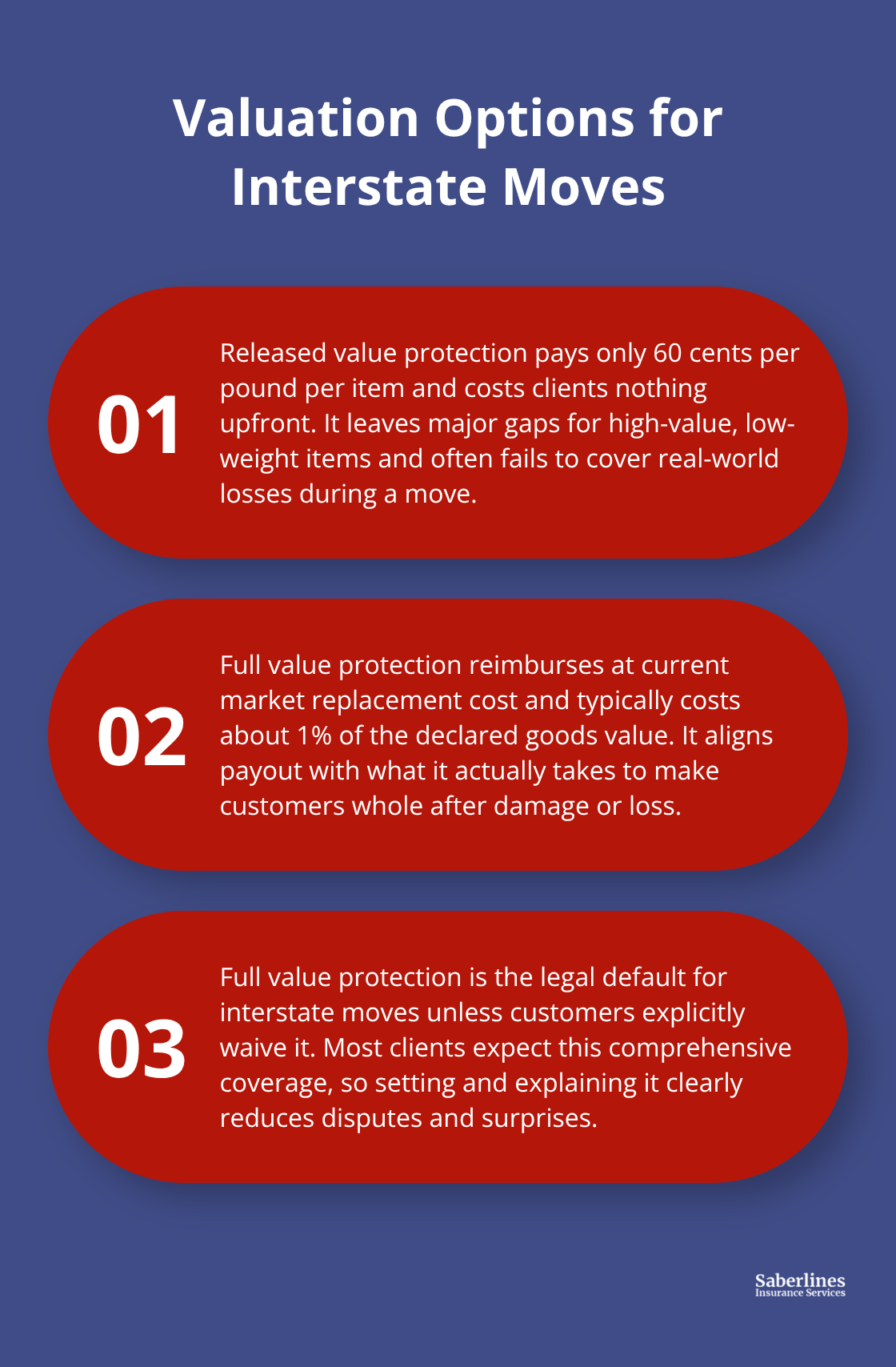
Cargo insurance for movers protects the goods your clients entrust to you during transit and temporary storage. This coverage pays for loss or damage from accidents, theft, fire, and weather-the real hazards that happen on moving day. Standard cargo policies reimburse at the current market value of damaged items after you subtract the deductible your company chooses. The Federal Motor Carrier Safety Administration requires interstate movers to offer two liability options: released value protection, which pays only 60 cents per pound per item at no extra charge, and full value protection, which covers replacement cost and typically costs about 1 percent of the declared goods value. A single damaged antique dresser worth $15,000 illustrates why released value falls short-it would pay only a fraction of actual losses. Full value protection is the default for interstate moves unless customers explicitly waive it, so most of your clients expect comprehensive coverage. Warehouse legal liability coverage extends protection to goods stored in your facility, covering fire, theft, water damage, and other perils while items sit waiting for delivery or customer pickup.
Real Risks That Drain Your Profit
Motor-vehicle accidents, theft, vandalism, and natural disasters cost moving companies tens of thousands annually. A single accident involving a fully loaded truck can trigger claims exceeding $50,000, and without proper cargo coverage, your company absorbs that loss directly. Weather events cause significant damage too-rain seeps into boxes, floods affect warehouse inventory, and extreme temperatures ruin sensitive items. Theft from vehicles and storage facilities remains a persistent problem in the industry, particularly for high-value shipments on long-distance routes. These aren’t hypothetical scenarios; they happen regularly, which is why cargo insurance separates sustainable operations from businesses that collapse after one major incident. Interstate movers must maintain Federal Motor Carrier Safety Administration minimum liability coverage of $750,000 for vehicles under 10,001 pounds and $1,000,000 for heavier trucks, verified through Form BMC-91 or BMC-91X. Non-compliance results in fines and loss of operating authority, making this requirement both a legal mandate and a financial safeguard.
How Claims History Shapes Your Premiums
Insurance costs for moving and storage operations average about $526 monthly, or $6,312 annually, but your actual premium depends heavily on claims history. Three years of clean operations qualify your company for preferred rates, while multiple claims make coverage harder to obtain and significantly more expensive. Insurers review motor vehicle records annually for all drivers, so traffic violations and accidents directly impact your premium.
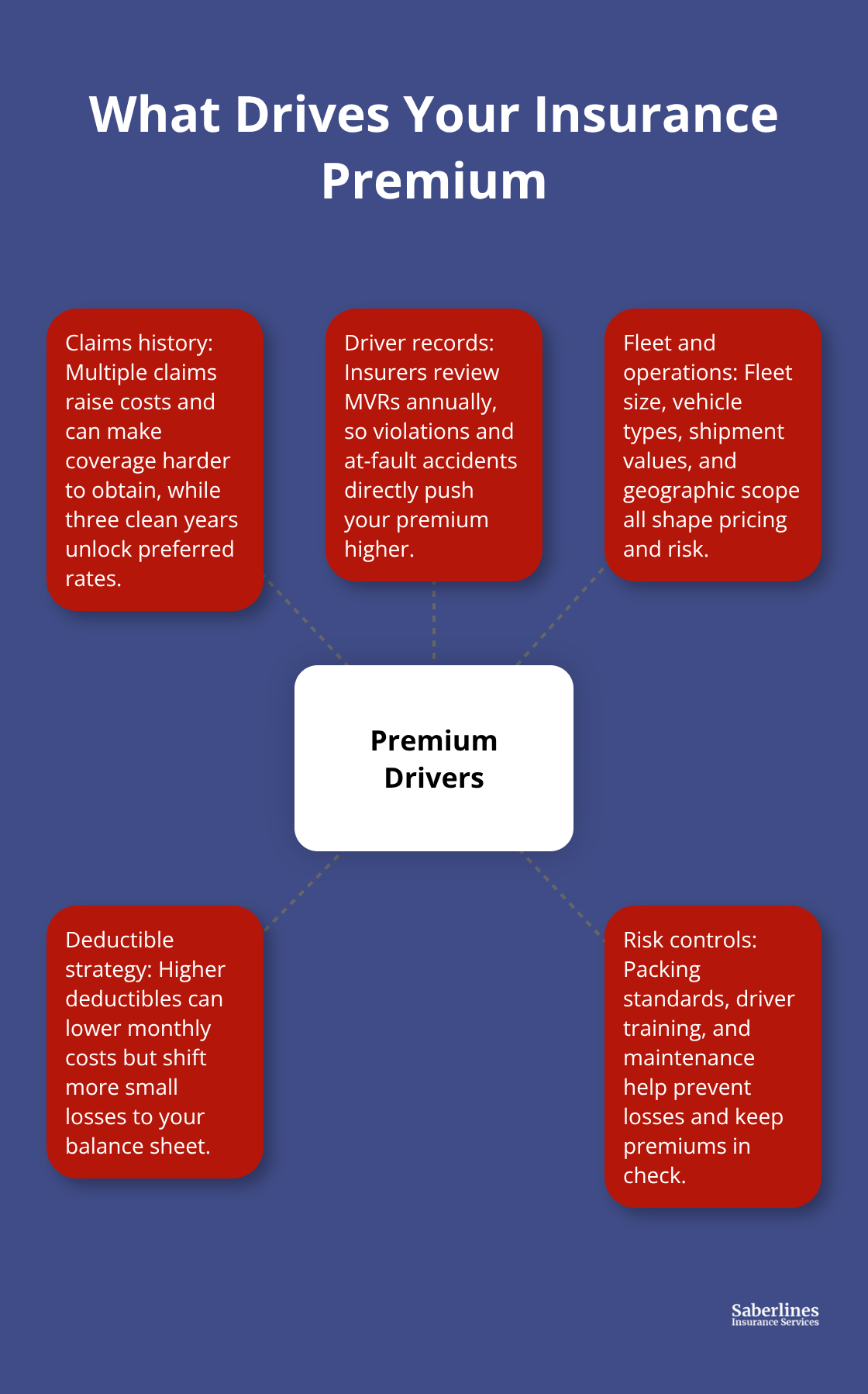
Fleet size, vehicle types, geographic scope, and the value of shipments you typically handle all factor into pricing, but loss history remains the single biggest driver. This means that preventing cargo damage through proper packing procedures, driver training, and vehicle maintenance directly reduces what you pay for insurance. Working with a specialized moving and storage insurance broker gives you access to risk management guidance that identifies operational weaknesses before they become expensive claims. Your next step involves understanding the specific coverage types available and how to match them to your operation’s actual exposure.
Types of Cargo Coverage for Moving Companies
All-Risk vs. Limited-Peril Protection
All-risk cargo insurance and limited-peril options exist because moving companies handle vastly different shipments and face different exposure levels. All-risk coverage protects against loss or damage from accidents, theft, fire, weather, and other perils that occur during transit and temporary storage. This broad approach makes sense for companies moving high-value items regularly or operating across multiple states where weather and road conditions vary unpredictably. Limited-peril coverage restricts protection to specific named hazards, typically accidents and theft, which reduces your premium but leaves gaps for weather damage, vandalism, or natural disasters. The choice between these approaches depends entirely on what you actually move and where you move it.
A local residential mover in Arizona faces different weather exposure than a company handling interstate shipments through flood-prone regions or snow zones. Interstate movers must comply with Federal Motor Carrier Safety Administration minimum liability requirements of $750,000 for vehicles under 10,001 pounds and $1,000,000 for heavier trucks, but your cargo coverage should exceed these minimums if your typical shipment values justify it. A single high-value move involving antiques, artwork, or pianos demands scheduled coverage with limits appropriate to those items, not generic per-pound valuations.
Valuation Methods Shape Your Financial Exposure
Released value protection pays 60 cents per pound per item at no cost to your clients, but this approach leaves you absorbing nearly all losses beyond that threshold. Full value protection, typically costing 1 percent of declared goods value per Federal Motor Carrier Safety Administration guidance, reimburses at current market replacement cost and is now the legal default for interstate moves unless customers explicitly waive it. Your choice between these valuation methods directly affects both what you pay for insurance and what your company actually recovers when damage occurs.
Deductibles and Premium Costs
Your deductible-the amount your company pays before insurance kicks in-should reflect your cash flow capacity and typical claim severity. A $2,500 deductible costs less than a $500 deductible but forces your company to absorb smaller claims outright. Moving and storage insurance averages $526 monthly or $6,312 annually according to industry data, but companies with three years of clean claims history qualify for preferred rates that can undercut this average significantly.
Insurers review your motor vehicle records annually, meaning driver safety records directly impact pricing. Higher deductibles work well if your operation handles mainly residential goods with lower per-item values, while companies moving corporate relocations or high-value shipments benefit from lower deductibles that distribute risk more evenly with the insurer. The specific coverage you select ultimately determines whether a major incident strengthens or threatens your business. Understanding how to evaluate insurance providers against your actual operational needs separates companies that operate sustainably from those that face coverage gaps when claims arise.
Picking an Insurance Partner That Understands Moving Operations
Why Generalist Brokers Fall Short
Selecting the right cargo insurance provider requires more than comparing premium quotes. You need a partner who understands moving company operations specifically, not a generalist carrier applying standard commercial templates to your business. Most insurance brokers lack moving industry expertise, which means they either underprice coverage relative to your actual exposure or miss critical gaps entirely.
A broker specializing in moving and storage operations knows that a fully loaded long-distance truck presents different risks than a local residential move, that weather patterns vary by region and season, and that high-value shipments demand scheduled coverage separate from standard per-pound valuations.
Document Your Operation Before Requesting Quotes
Start by documenting your actual operation: fleet size and vehicle types, typical shipment values and item categories, geographic scope of moves, storage facility square footage and climate control, and your claims history over the past three years. This information becomes your baseline for comparing what different providers actually offer versus what they claim.
Interstate movers must maintain Federal Motor Carrier Safety Administration minimum coverage of $750,000 for vehicles under 10,001 pounds and $1,000,000 for heavier trucks, but your cargo coverage should exceed these minimums if your typical shipments justify it.
Ask Specific Questions When Comparing Providers
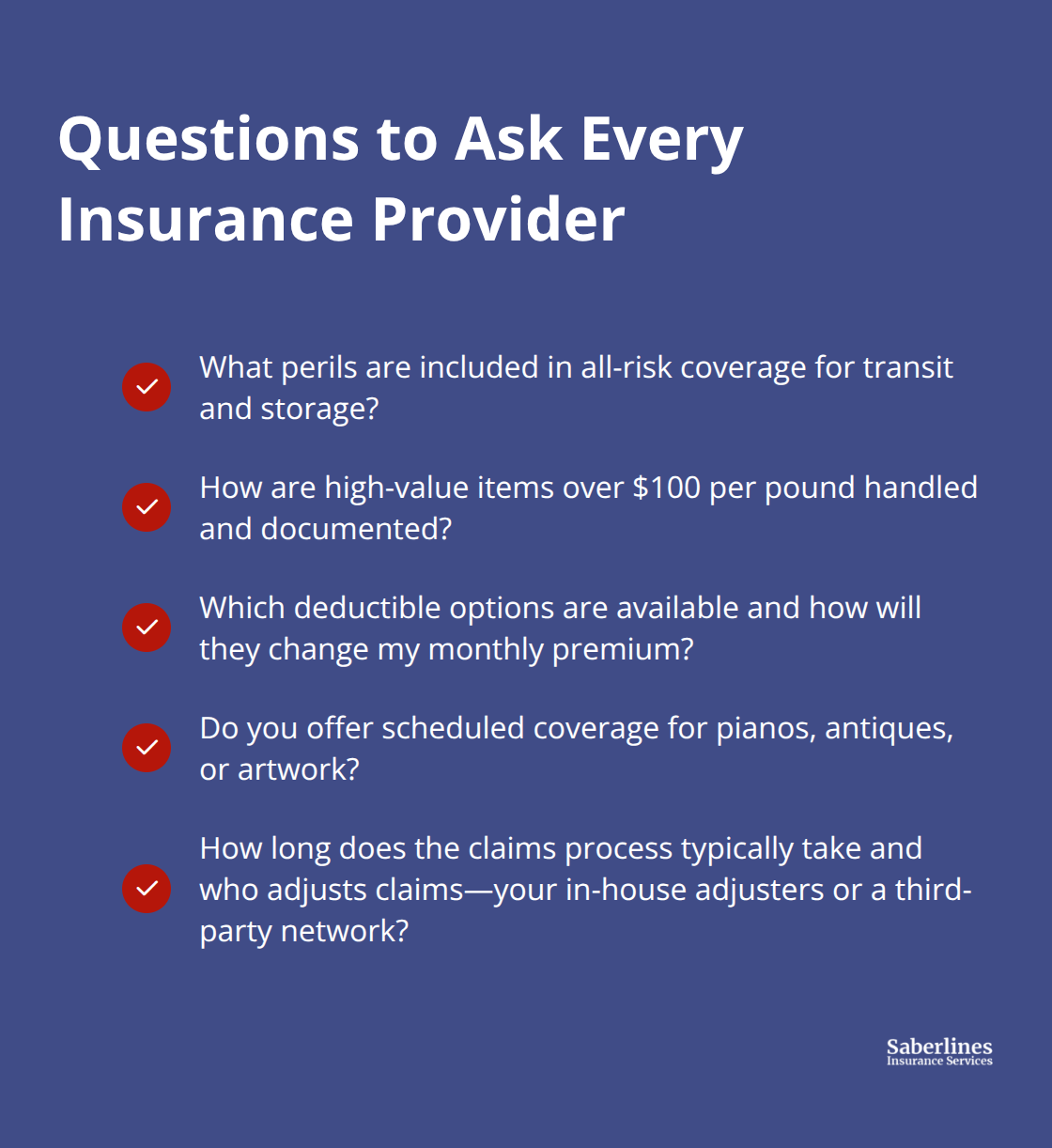
Request quotes from at least three providers and ask each one specific questions: What perils does all-risk coverage include in their policy? How do they handle high-value items over $100 per pound? What deductible options exist, and how do they affect your monthly premium? Do they offer scheduled coverage for pianos, antiques, or artwork? How long does their claims process typically take, and who adjusts claims-in-house adjusters or third-party networks?
A provider offering same-day certificate issuance and in-house claims adjustment by U.S.-licensed adjusters resolves claims faster than those routing claims through external networks, which matters when you need funds to cover customer refunds or repairs quickly.
Verify Credentials and Request References
Verify that any provider you consider holds proper licensing and carrier ratings. Insurance underwriters should carry an A.M. Best rating of A or higher, indicating financial stability and claims-paying ability. Check whether the carrier maintains an active presence in your state-some carriers limit coverage to specific regions or exclude high-risk areas.
Ask your broker whether the provider participates in industry affiliate programs or holds certifications that signal credibility within the moving sector. Request references from other moving companies using that provider, and contact them directly to ask about claim experiences and whether the insurer actually paid what was promised.
Match Coverage to Your Specific Vulnerabilities
Assess whether the broker understands your specific operational vulnerabilities. If you operate a warehouse facility, the provider must offer separate warehouse legal liability coverage that protects goods stored in your building from fire, theft, and water damage-not just cargo in transit. If you handle corporate relocations or office moves, you need higher per-shipment limits than a company moving primarily household goods.
A broker who asks detailed questions about your operations, client base, and loss history signals that they will match coverage to your actual risk profile rather than selling a one-size-fits-all package. Moving and storage insurance averages $526 monthly or $6,312 annually according to industry data, but three years of clean claims history can qualify your company for preferred rates that undercut this average significantly. Insurers review motor vehicle records annually for all drivers, so a broker who proactively discusses fleet safety and driver training demonstrates they understand how to help you manage premiums over time rather than just securing the lowest initial quote.
Final Thoughts
Cargo insurance for movers separates thriving operations from businesses that collapse after a single major incident. The coverage protects your company from financial devastation when accidents, theft, weather, or natural disasters damage client belongings, and it demonstrates to your customers that you take their possessions seriously. This trust strengthens your reputation in a competitive market and directly affects your ability to win repeat business and referrals.
Three concrete steps move you forward. Document your actual operation-fleet composition, typical shipment values, geographic scope, and storage capacity-to establish your baseline for accurate quotes and identifying coverage gaps. Work with an insurance broker who specializes in moving and storage operations rather than a generalist, and ask specific questions about all-risk versus limited-peril options, deductible choices, claims timelines, and whether adjusters work in-house or through external networks. Verify that any provider you select understands your specific vulnerabilities, whether that means warehouse legal liability for stored goods, scheduled coverage for high-value items, or higher per-shipment limits for corporate relocations.
Companies with three years of clean operations qualify for preferred insurance rates that reduce your annual costs significantly, and proper cargo insurance for movers also ensures compliance with Federal Motor Carrier Safety Administration minimum liability requirements of $750,000 for vehicles under 10,001 pounds and $1,000,000 for heavier trucks. When you match coverage to your actual risk profile rather than purchasing generic protection, you eliminate overpaying for unnecessary coverage while avoiding dangerous gaps that could threaten your company. Contact Saberlines Insurance Services to discuss your cargo insurance needs with brokers who understand moving operations from the ground up.
The information provided in this blog is for general informational purposes only and does not constitute legal, financial, or insurance advice. Coverage options, terms, and availability may vary. Please consult with a licensed professional for advice specific to your situation.