
Workers Compensation Quotes: Quick Compare for Small Fleets
Running a small fleet means managing multiple risks at once. Workers compensation quotes can vary dramatically based on your operation, and comparing them properly saves thousands annually.
At Saberlines Insurance Services, we help fleet owners cut through the confusion and find coverage that actually fits their budget and needs. This guide walks you through the comparison process step by step.
Why Your Fleet Needs Workers Compensation Coverage
Legal Requirements Demand Coverage
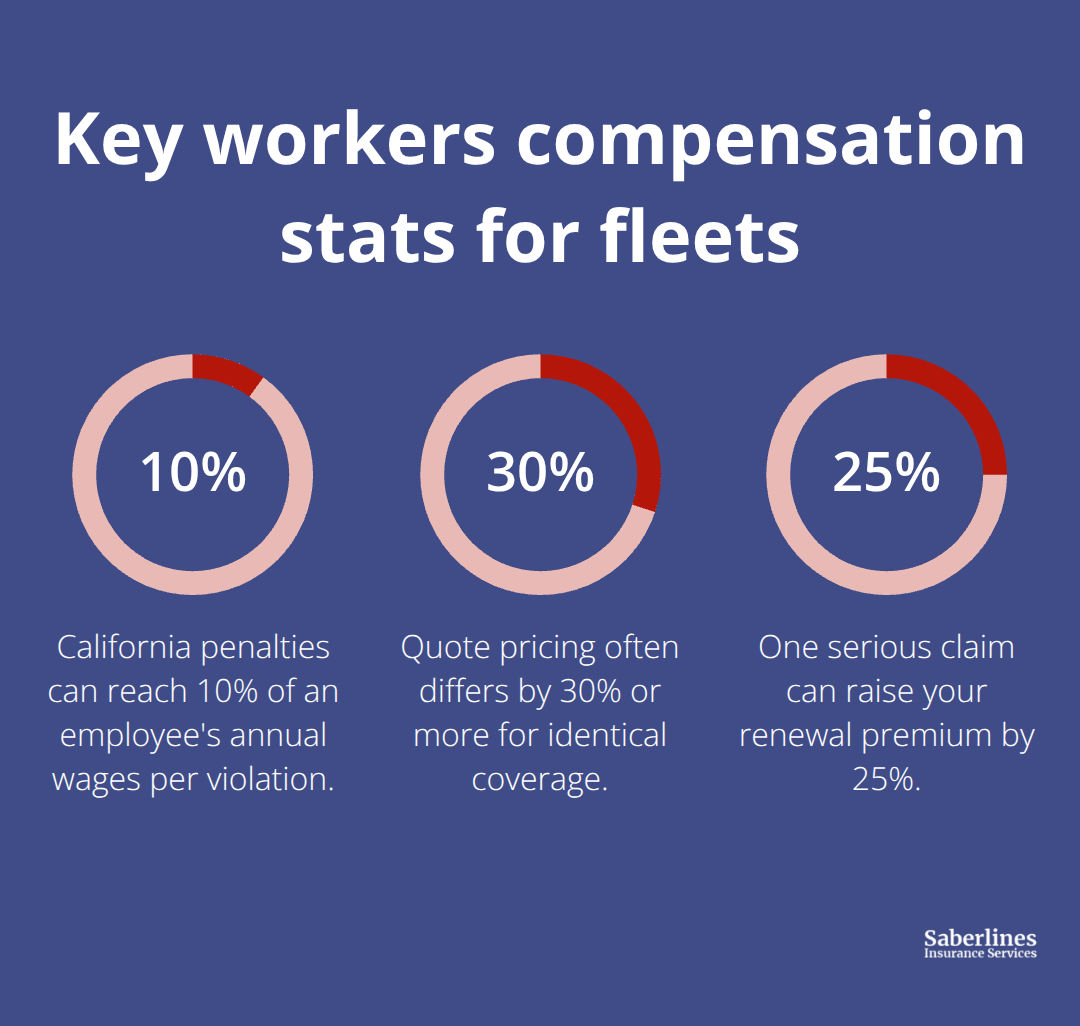
Workers compensation insurance isn’t optional for fleet owners with employees. Most states require it, and the consequences of operating without it are severe. If you have even one employee on payroll, your state likely mandates workers compensation coverage. Operating without it triggers fines ranging from thousands to tens of thousands of dollars annually, depending on your state and fleet size. California, for example, imposes penalties of up to 10% of the employee’s annual wages for each violation.
Personal Liability Puts Your Assets at Risk
Beyond fines, you face personal liability. If an employee gets injured and you lack coverage, they can sue you directly, putting your personal assets at risk. A single serious workplace injury costs $50,000 to over $1 million in medical bills, lost wages, and legal fees. That money comes directly from your business account or personal savings.
Fleet Operations Create Real Hazards
Fleet operations carry genuine hazards that injure workers regularly. Drivers face traffic accidents, loading injuries, and repetitive strain issues. According to the Bureau of Labor Statistics, transportation and warehousing workers experience injury rates significantly higher than the national average across all industries. Your employees could suffer back injuries during cargo handling, sprains from vehicle accidents, or other work-related conditions that require immediate medical attention and ongoing care.
Coverage Protects Your Business and Employees
Without proper coverage, a single claim can derail your entire operation. You’ll struggle to pay employee medical bills while managing reduced productivity. Your reputation suffers when employees can’t trust you to support them after an injury. Insurance protects both your business finances and your employees’ wellbeing. It covers medical treatment, rehabilitation, and partial wage replacement when workers can’t work. Most importantly, it keeps you compliant with state law and operating legally.
Now that you understand why coverage matters, the real challenge becomes finding quotes that actually fit your operation. Different carriers price policies differently based on your specific fleet characteristics, and comparing multiple quotes reveals where you can save money without sacrificing protection.
How to Get Accurate Quotes for Your Fleet’s Needs
Document Your Fleet’s Exact Composition
Comparing workers compensation quotes requires knowing exactly what you need before you contact insurers. Fleet size matters enormously because it determines your payroll exposure and risk classification. A five-vehicle operation with three employees faces completely different pricing than a twenty-vehicle fleet with fifteen workers. Start by documenting your current employee count, their job titles, and annual payroll figures. This data shapes every quote you receive.
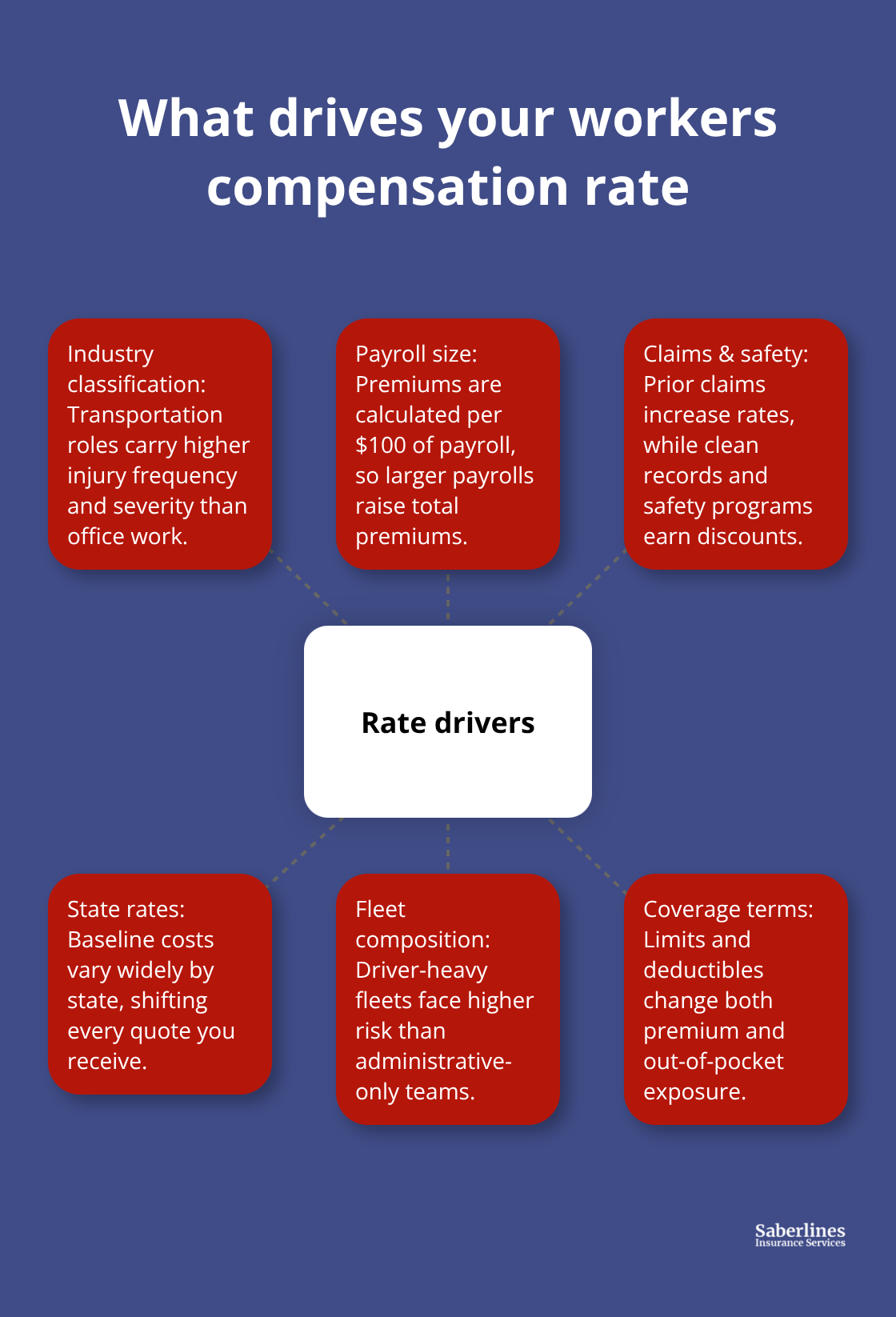
Next, identify which employees drive vehicles versus those who handle warehouse operations or administration. Drivers typically cost more to insure than office staff because they face higher injury risk. Your state also matters significantly-workers compensation rates vary wildly across states. According to the National Council on Compensation Insurance, average workers compensation costs per $100 of payroll range from $0.66 in South Dakota to $3.87 in New Jersey. Knowing your state’s baseline helps you recognize when quotes seem unusually high or low.
Request Multiple Quotes with Consistent Information
Gathering multiple quotes reveals where real savings exist. Contact at least three to five carriers simultaneously because pricing differences often exceed 30 percent for identical coverage. When you request quotes, provide each insurer with the same information so comparisons stay valid. Specify your fleet composition, driver experience levels, any previous claims, and your safety programs. This consistency prevents apples-to-oranges comparisons that waste your time.
Compare Coverage Details, Not Just Premiums
Once quotes arrive, focus on comparing actual coverage limits and deductibles, not just premiums. A cheaper quote with a $10,000 deductible creates different financial exposure than one with a $2,500 deductible. Calculate your true cost by adding the premium to what you’d pay out-of-pocket for a typical claim. Request quotes that include medical cost limits, wage replacement percentages, and employer liability coverage amounts so you can make genuine comparisons across carriers.
Leverage Industry Expertise for Better Pricing
Fleet owners operating in California, Texas, and Florida often find that working with specialists produces better-priced quotes because agencies with transportation expertise understand fleet risk differently than generalist carriers. Saberlines Insurance Services, founded in 1999 and licensed in California, specializes in trucking and passenger transportation, helping fleets secure workers compensation coverage alongside commercial auto and other protections. With this specialized knowledge, you gain access to carriers who price transportation risks more accurately than those serving general commercial markets.
Now that you understand how to gather and compare quotes effectively, the real question becomes which factors actually drive your rates up or down.
Key Factors That Impact Your Workers Compensation Rates
Industry Classification Sets Your Base Rate
Your industry classification determines your base rate more than almost anything else, and transportation companies pay substantially more than office-based businesses. The National Council on Compensation Insurance assigns each business a classification code that reflects injury frequency and severity for that specific type of work. Drivers fall into high-risk classifications because they face traffic accidents, loading injuries, and repetitive strain conditions daily. A fleet operation with drivers typically pays two to three times more per employee than a business with only administrative staff.
Your specific job duties matter enormously. A driver-salesman who spends half their time in an office receives classification differently than a full-time delivery driver, which directly impacts your premium. Some carriers adjust your classification based on whether your fleet operates locally versus long-distance, since highway driving carries higher injury risk than city delivery routes.
Payroll Size Multiplies Your Total Exposure
Your payroll directly multiplies your exposure, so larger fleets with more employees always pay higher total premiums. Workers compensation premiums are calculated per $100 of payroll, meaning a fleet with $500,000 in annual payroll pays significantly more than one with $200,000, even if their per-employee risk is identical. The number of workers matters because each additional employee increases your statistical exposure to claims.
However, payroll size creates a hidden opportunity. Some carriers offer premium discounts at specific payroll thresholds. A fleet approaching the $1 million payroll mark might find that adding one more employee triggers a volume discount that actually lowers their per-employee rate.
Claims History and Safety Record Control Your Costs
Your claims history and safety record function as the most controllable factor affecting your rates, and this is where fleet owners can create immediate savings. Carriers penalize fleets with prior claims (sometimes dramatically). A single serious claim can add 25 to 50 percent to your next renewal premium, while two or more claims within three years might trigger a 75 to 100 percent increase.
Maintaining a clean claims record for three to five years qualifies you for experience modification discounts that reduce your premium by 10 to 20 percent. Documented safety programs, driver training records, and vehicle maintenance logs demonstrate risk management to underwriters and often justify lower rates. Carriers increasingly want evidence of active safety culture-accident prevention meetings, driver qualification files, and incident reporting procedures-not just the absence of claims.
Final Thoughts
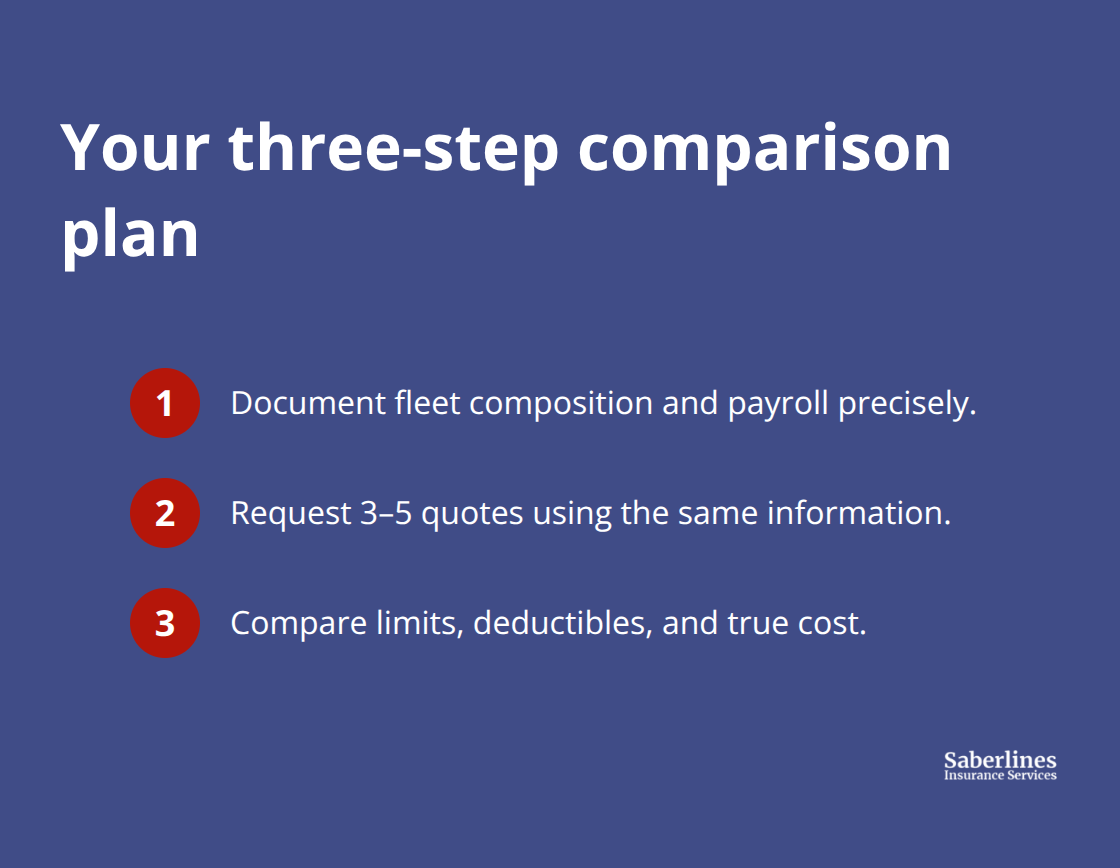
Comparing workers compensation quotes for your small fleet reveals savings of 20 to 30 percent or more because carriers price transportation risk differently based on your specific operation. You now understand the three-step process: document your fleet’s exact composition, request multiple quotes with consistent information, and compare coverage details rather than just premiums.
This approach takes a few hours but saves thousands annually.
Your claims history and safety record function as the most powerful levers for reducing costs. A documented safety program, driver training records, and clean claims history over three to five years qualify you for experience modification discounts that lower your premium by 10 to 20 percent. These aren’t theoretical savings-they’re concrete reductions that carriers apply immediately when they see evidence of active risk management.
Saberlines Insurance Services has helped transportation fleets since 1999 secure workers compensation quotes and coverage alongside commercial auto, cargo, and other protections they need. Our team understands how carriers price fleet operations differently than general commercial businesses, which means we access better rates and coverage options than you’d find requesting quotes independently. We handle the comparison process, negotiate with carriers familiar with transportation risk, and match your coverage to your actual operation.
The information provided in this blog is for general informational purposes only and does not constitute legal, financial, or insurance advice. Coverage options, terms, and availability may vary. Please consult with a licensed professional for advice specific to your situation.