
Trucking Insurance Rate Factors: What Drives Your Premiums
Your trucking insurance premiums don’t appear out of nowhere. Insurance companies calculate rates based on specific, measurable factors that directly impact risk.
At Saberlines Insurance Services, we’ve seen firsthand how driver history, vehicle operations, and claims records shape what you pay. Understanding these trucking insurance rate factors gives you the power to identify where you can improve and reduce costs.
How Your Driving Record Affects What You Pay
At-Fault Accidents and Rate Increases
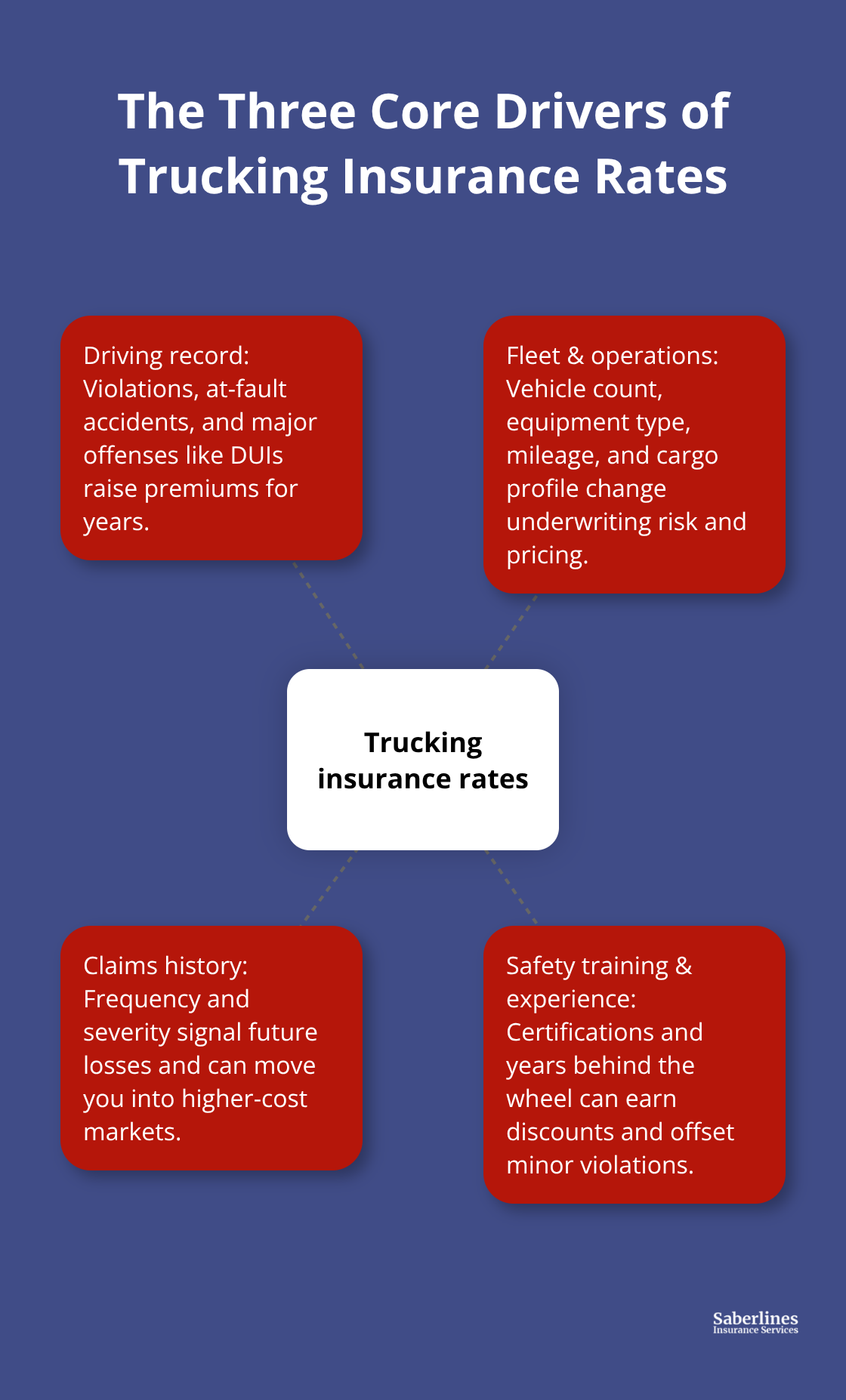
Your personal driving record is the single most important factor insurers examine when calculating your trucking insurance premium. A clean record with zero at-fault accidents keeps your rates competitive, while even one at-fault accident can increase your premium by 20 to 40 percent depending on the severity and your insurer’s underwriting guidelines. Insurance companies track violations through the Motor Vehicle Report, which captures everything from speeding tickets to DUIs. A major violation like a DUI can spike your rates by 50 percent or more for three to five years.
Minor Violations and Compliance Issues
Minor violations such as speeding tickets typically add 5 to 15 percent to your annual premium. The impact compounds when violations stack up-a driver with three violations in two years faces substantially higher costs than one with a single incident from five years ago. Your compliance record matters equally, meaning violations of FMCSA regulations, logbook infractions, or equipment failures directly influence your insurability. Drivers with clean FMCSA records and no safety violations maintain the lowest possible rates in their category.
Experience and Safety Training Benefits
Years behind the wheel matter significantly, though experience alone doesn’t guarantee low rates. Drivers with 10 or more years of commercial trucking experience typically qualify for better rates than those with fewer than three years of experience, often receiving discounts of 10 to 20 percent. However, this advantage disappears if recent violations or accidents appear on the record. Safety training certifications can offset some rate increases from minor violations.
Completing defensive driving courses or obtaining a Certified Professional Driver credential shows insurers you’re committed to safety and can reduce premiums by 5 to 10 percent. These investments in your professional development signal to underwriters that you take risk management seriously. Your driving history determines your starting point, and maintaining a clean record going forward is the fastest way to control costs. What you do next-how you operate your vehicle and manage your fleet-shapes whether your rates stay stable or climb higher.
How Your Fleet and Operations Impact Premiums
Fleet Size and Rate Structure
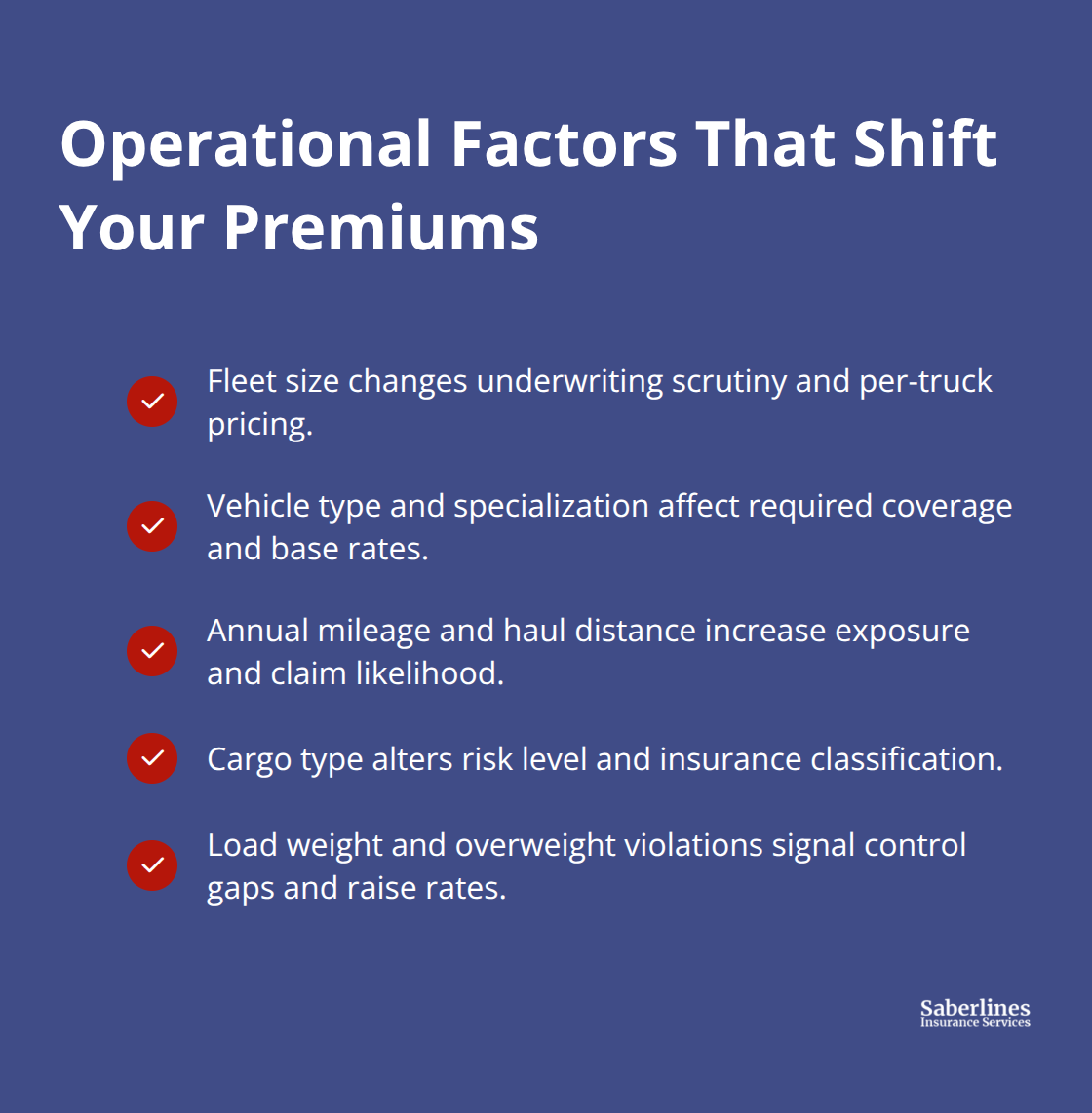
Your vehicle specifications and how you operate them are the second pillar of trucking insurance pricing, and they matter far more than most operators realize. Fleet size directly influences your rates because larger operations attract different underwriting scrutiny than single-truck owner-operators. An owner-operator with one tractor pays substantially different premiums than a five-truck fleet, even if all drivers have identical records. Insurers view larger fleets as more complex risk management challenges, which can push rates up by 15 to 30 percent compared to single-vehicle operations. However, fleet size also creates leverage for negotiating better rates across multiple vehicles, so growing from one truck to three typically reduces your per-truck cost.
Vehicle Type and Cargo Specialization
Vehicle type matters equally-a dry van hauler faces lower premiums than a hazmat tanker operator because hazmat cargo requires specialized liability coverage and stricter regulatory compliance. Specialized equipment like flatbeds, refrigerated trailers, or lowboys commands higher premiums due to increased accident risk and cargo value exposure. The type of freight you haul directly determines your insurance classification and the coverage limits insurers require.
Mileage, Distance, and Exposure Risk
Annual mileage and hauling distance are among the strongest predictors of claims frequency, which is why insurers scrutinize these numbers carefully. A regional operator running 50,000 miles annually within a 300-mile radius pays considerably less than a long-haul operator covering 120,000 miles across multiple states. The Federal Motor Carrier Safety Administration reports that accident rates increase with exposure, meaning the more time your trucks spend on the road, the higher your statistical likelihood of a claim.
Cargo Type and Load Management
Cargo type amplifies this risk calculation dramatically-hauling electronics or general merchandise costs far less to insure than transporting fuel, explosives, or high-value freight. Load weight also plays a role because heavier loads increase stopping distance and rollover risk, particularly on curves or in adverse weather. Overweight violations don’t just create regulatory fines; they signal to insurers that your operation lacks proper load management controls, triggering rate increases of 10 to 25 percent. How you manage your loads and maintain compliance with weight regulations directly impacts what insurers charge you. These operational factors set the stage for the third major component of your premium calculation-what your claims history reveals about your actual loss experience.
What Your Claims History Reveals About Your Risk
Your claims history is where insurance companies separate operators who actually manage risk from those who just talk about it. Insurers treat your past claims as the most predictive indicator of future losses, which means one claim can haunt your rates for three to five years. The frequency of your claims matters far more than a single incident. An operator who files two claims in two years signals chronic operational problems, while someone with one claim in ten years demonstrates statistical bad luck.
How Loss Ratios Shape Your Rates
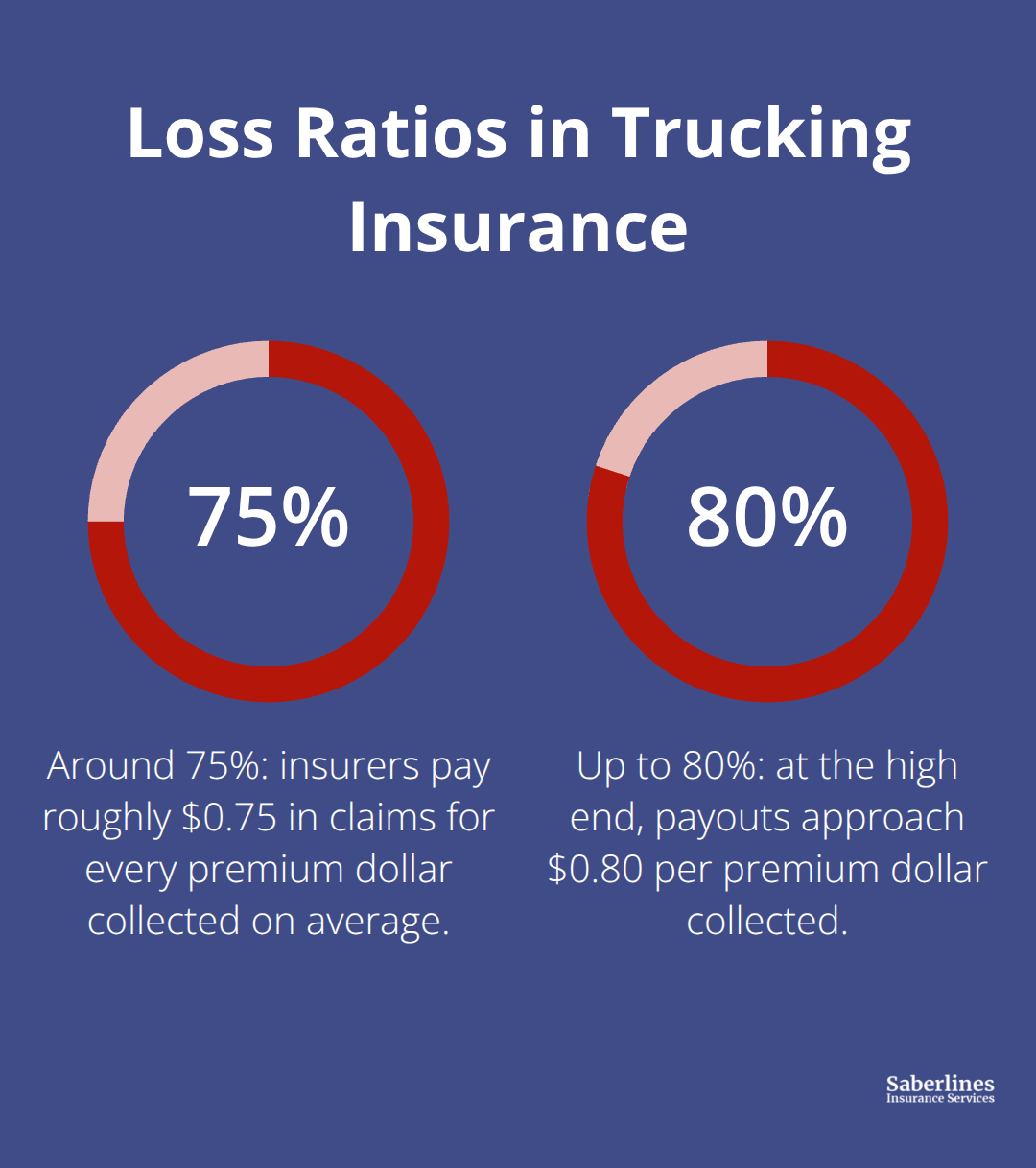
Insurers use loss ratios to quantify claim patterns, comparing the total claims paid out against premiums collected within your classification. If your loss ratio sits above the industry average for your cargo type and vehicle class, expect rate increases of 20 to 50 percent at renewal. The trucking industry loss ratio averages around 75 to 80 percent according to the National Association of Insurance Commissioners, meaning insurers pay out 75 to 80 cents in claims for every dollar collected in premiums. When your operation exceeds this benchmark, underwriters view you as unprofitable to insure at standard rates.
Claim Severity and Underwriting Scrutiny
Severity of individual claims creates lasting damage to your premium structure. A minor fender-bender with $5,000 in damages affects your rates differently than a jackknife accident causing $75,000 in liability exposure. Large claims trigger underwriting reviews that scrutinize every aspect of your operation, from driver qualifications to maintenance records to load securement practices. If your claims show patterns of preventable accidents, insurers assume you lack proper safety protocols and charge accordingly.
Experience Modification Factors and Rate Classification
The frequency and cost of your claims directly determine whether you qualify for preferred rates or get pushed into the hard-to-place market where coverage costs significantly more. Operators with clean records qualify for experience modification factors below 1.0, meaning they pay less than the base rate for their class. Those with poor claims histories face factors above 1.0, multiplying their base premium substantially. A safety program that reduces preventable accidents (implemented over six months) delivers immediate return on investment through lower premiums at your next renewal.
Final Thoughts
Your trucking insurance rate factors-your driving history, fleet operations, and claims record-aren’t arbitrary or hidden. They’re measurable, documented, and within your control to improve. Driver experience and a clean record form your foundation, while vehicle specifications and operational choices amplify or reduce that foundation. Your claims history then validates whether you actually manage risk or simply hope for the best.
Lowering your premiums starts with identifying which factors you can control immediately. Completing a defensive driving course costs a few hundred dollars and reduces premiums by 5 to 10 percent. Implementing a safety program that prevents jackknife accidents and load shifts delivers measurable returns within six months, while reducing annual mileage through route optimization or regional focus lowers your exposure risk.
We at Saberlines Insurance Services help owner-operators and fleets across California navigate these rate factors and secure affordable coverage. Whether you need commercial auto, cargo, physical damage, or workers’ compensation, we market your risk to find the best rates available. Get a fast, affordable quote at Saberlines Insurance Services and see how understanding your rate factors translates into real savings.
The information provided in this blog is for general informational purposes only and does not constitute legal, financial, or insurance advice. Coverage options, terms, and availability may vary. Please consult with a licensed professional for advice specific to your situation.