
Freight Liability for Movers: Shielding Goods Across the Route
Moving companies face real financial risk every day. Damaged cargo, lost shipments, and third-party claims can drain your bottom line fast.
At Saberlines Insurance Services, we know that freight liability for movers isn’t just about following regulations-it’s about protecting your business from losses that standard policies won’t cover. This guide walks you through the coverage gaps, claim types, and how to build protection that actually matches your operation.
What Standard Coverage Actually Leaves Exposed
Freight liability for movers operates differently than most business insurance policies. Standard commercial auto policies typically cap cargo coverage at $5,000 to $10,000, according to industry data from the American Moving and Storage Association. This sounds reasonable until you move a household worth $75,000 or a commercial shipment valued at $200,000. The gap between what your policy covers and what you actually transport creates massive financial exposure. Many movers face this gap only after a claim, when the insurance company points to exclusions buried in page twelve of their policy. Moving companies often operate with inadequate protection because they never read the fine print or assumed their existing policy handled freight liability.
The Real Limits of Standard Policies
Standard commercial auto policies exclude or severely limit coverage for cargo damage, especially when negligence during loading, transport, or unloading causes the damage. If a sofa gets damaged because a mover drops it, standard policies often classify this as a maintenance issue rather than a covered loss. Water damage from rain during transit, theft from an unlocked vehicle, and damage from improper securing frequently fall outside coverage. Deductibles on standard policies also run high-often $1,000 to $2,500 per claim-which means smaller damages come directly from your pocket. The exclusion for third-party property damage presents another problem: if your moving truck damages a client’s doorway, wall, or driveway, standard auto policies may not cover the full cost of repairs. Specialized freight liability coverage eliminates these gaps by covering the cargo itself, the condition it arrives in, and liability for accidental damage to the client’s property during the move.
Why Moving Operations Need Separate Protection
Moving companies operate in an environment where loss happens regularly. The American Moving and Storage Association reports that approximately 1 in 200 shipments results in a claim, which means a company moving 50 households per month should expect 3 claims annually. Without dedicated freight liability coverage, these claims compound quickly. Your business liability policy won’t protect cargo. Your auto policy won’t fully protect cargo. Multiple partial coverages create confusion about who pays what, and gaps inevitably emerge when you need the coverage most. Specialized freight liability policies are built specifically for moving operations-they account for the reality that damage occurs during loading, in transit, and during unloading. Coverage limits scale with your actual cargo values rather than forcing you into a one-size-fits-all policy. The cost difference between inadequate coverage and proper protection runs just $50 to $150 per month, depending on your operation size and claims history.
Moving Beyond One-Size-Fits-All Solutions
Standard policies treat all cargo the same way, but your operation handles vastly different shipments. A residential move requires different protection than a commercial relocation or specialty item transport. Your cargo values fluctuate month to month, yet standard policies lock you into fixed limits that either leave you exposed or force you to overpay for coverage you don’t need. Freight liability policies designed for movers adapt to your actual business. You can adjust coverage limits as your operation grows, add protection for high-value items, and remove unnecessary coverage when your shipment mix changes. This flexibility means you pay for what you actually need-not what an insurance company assumes you need. The next step involves understanding exactly what types of claims occur most frequently in moving operations and how different coverage options handle them.
Types of Freight Liability Claims
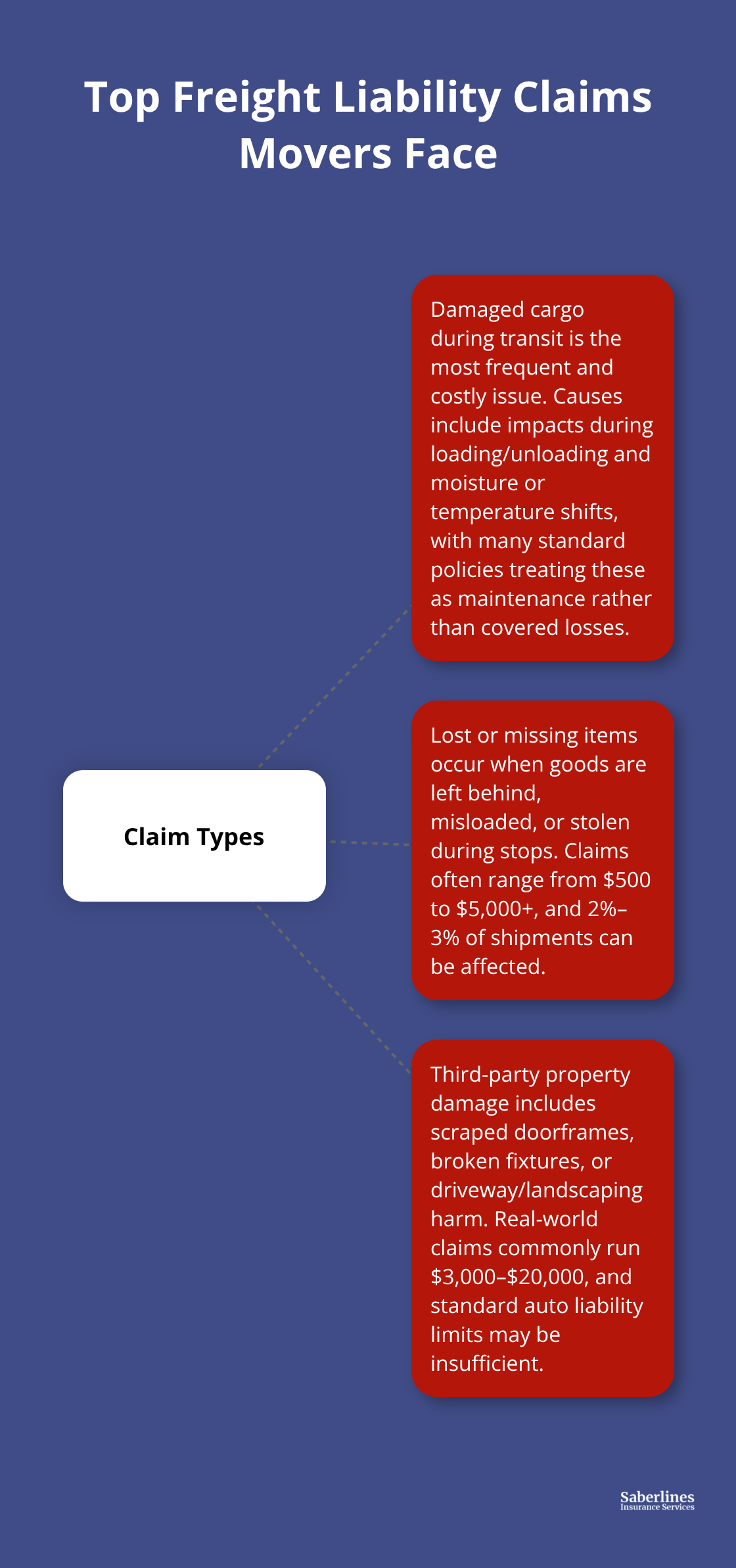
Damaged cargo during transit represents the largest financial drain for most moving operations, and the numbers tell a stark story. The American Moving and Storage Association reports that damage claims average between $2,500 and $8,000 per incident, with high-value household moves often exceeding $15,000 in losses. Furniture gets scratched when dollies hit doorframes, mirrors crack from improper wrapping, and electronics fail after exposure to moisture or extreme temperature shifts during transport. Standard policies treat these as maintenance problems rather than insurable losses, leaving movers to absorb the cost directly.
What Damaged Cargo Actually Costs
Clients expect compensation regardless of your policy language. A client who paid $5,000 for a move won’t accept a $500 payout when their $3,000 sofa arrives damaged. Freight liability coverage designed for movers covers these exact scenarios, paying out based on the actual replacement or repair cost rather than forcing you to negotiate with an unhappy customer. The financial impact extends beyond the immediate claim-damaged goods damage your reputation and reduce the likelihood that clients refer you to others.
Lost or Missing Items Create Compounding Problems
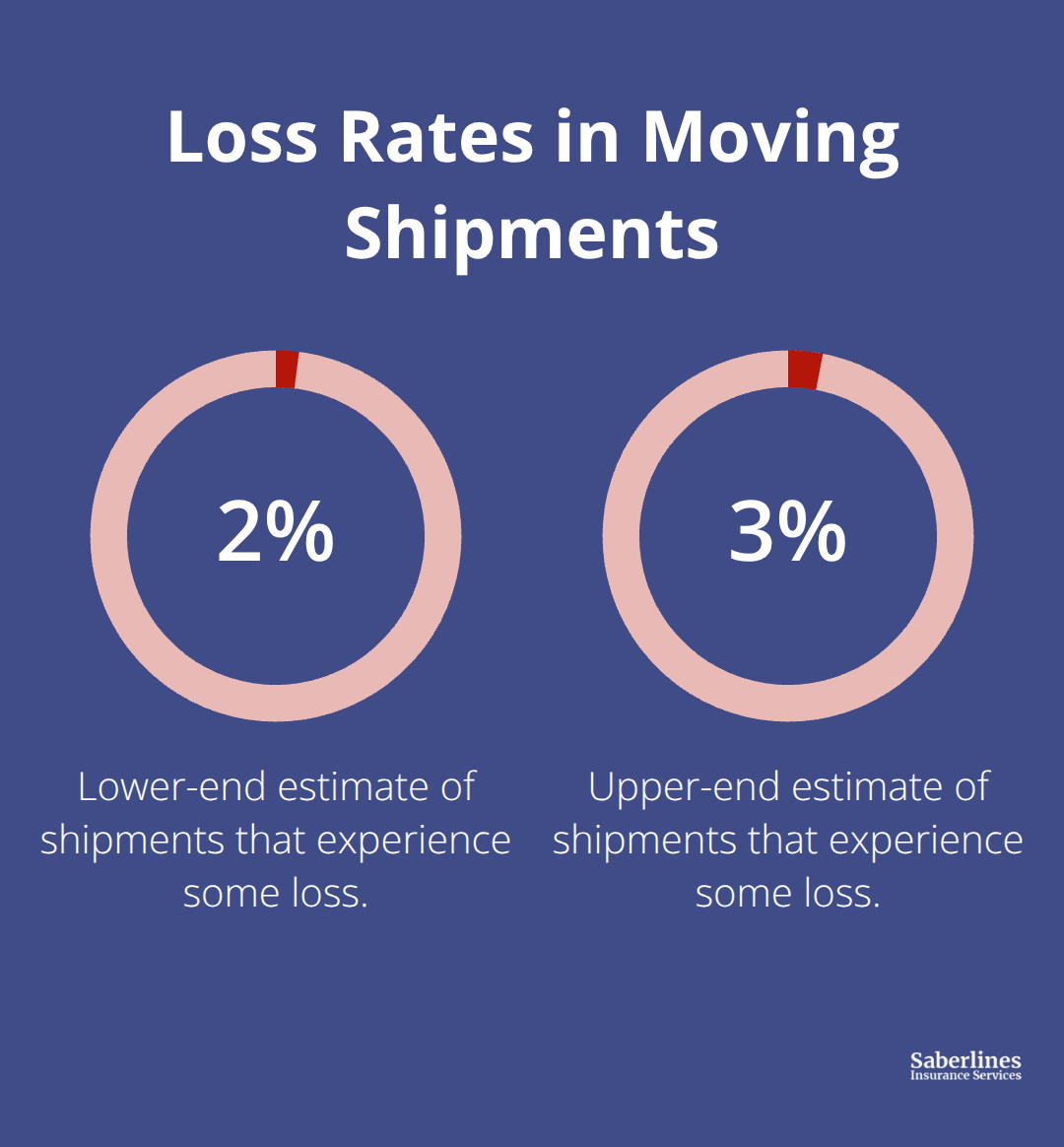
Industry data shows that approximately 2 to 3 percent of shipments experience some loss, whether from items left behind at the origin, accidentally placed in the wrong truck, or stolen during stops. A single missing jewelry box, collection of tools, or set of heirloom dishes can trigger claims ranging from $500 to $5,000 or higher. These losses often result from honest mistakes during the chaos of loading multiple households, yet clients hold you liable.
Specialized freight liability policies cover these losses up to the declared value of the shipment, protecting your business from the financial impact of human error during complex operations.
Third-Party Property Damage Hits Unexpectedly
Third-party property damage claims strike when your moving truck or crew damages something that doesn’t belong to the client’s cargo. Your truck scrapes a doorframe while exiting a narrow hallway, a crew member breaks a light fixture, or the moving vehicle damages the client’s driveway or landscaping. These incidents happen regularly in moving operations, yet standard commercial auto policies often cap liability coverage at $25,000 to $100,000, which sounds adequate until you face a lawsuit over a damaged deck or structural damage to a home. Real-world claims in this category run $3,000 to $20,000 depending on the property involved.
One moving company damaged a client’s hardwood floors during an unload, resulting in a $12,000 claim for refinishing the entire room. Freight liability policies include coverage for accidental damage to client property during the moving process, separating this risk from your vehicle liability and ensuring you have adequate limits. The distinction matters because your auto policy typically covers vehicle-related damage, not damage caused by crew actions during loading or unloading. A crew member dropping a mirror onto tile flooring creates liability that falls outside standard vehicle coverage. Dedicated freight liability policies handle these gaps directly, and understanding how to evaluate coverage options becomes your next priority.
How to Choose the Right Freight Liability Coverage
Calculate Your Actual Cargo Values
Start with a straightforward calculation: list every type of shipment your operation handles over a typical month, then assign a realistic value to each category. Residential moves averaging $50,000 in household goods require different limits than specialty transport averaging $150,000 in commercial equipment or antiques. The American Moving and Storage Association reports that movers handling high-value items face claims that regularly exceed $10,000, yet many operations carry limits capped at $5,000 or $10,000. Your cargo value assessment should reflect your actual business mix, not an industry average.
Pull your last twelve months of billing data and calculate the average shipment value, the highest single shipment value, and the percentage of moves that fall into each value category. This data becomes your foundation for selecting appropriate coverage limits. A company moving fifty households monthly at an average value of $60,000 per household needs coverage reflecting that reality, not a generic policy designed for movers handling $20,000 average shipments.
Account for Your Operational Risk Profile
Risk exposure extends beyond cargo value to include your loading and unloading practices, vehicle conditions, crew experience levels, and whether you operate in urban areas with tight access or suburban routes with wider clearances. A moving company operating in dense urban environments faces higher risk of third-party property damage claims than one serving primarily suburban markets.
Your deductible selection directly impacts your cash flow and claim frequency tolerance. Higher deductibles reduce premiums but mean your business absorbs more costs from smaller claims. Most movers operating with thin margins should try deductibles between $500 and $1,500 per claim, balancing affordable premiums against manageable out-of-pocket expenses. A company experiencing five claims annually at $3,000 average value pays dramatically different totals depending on whether they carry a $500 deductible or a $2,500 deductible.
Identify Coverage Gaps in Your Current Policy
Request a detailed coverage summary from your current insurance provider, specifically asking which scenarios fall outside protection. Most agents provide generic policy documents rather than clear explanations of what remains uncovered. Ask directly: Does this policy cover cargo damaged during loading? Does it cover cargo damaged by weather during transit? Does it cover third-party property damage caused by crew members during unloading? Does it cover theft from an unlocked vehicle? Most standard policies answer no to multiple questions, revealing gaps that specialized freight liability coverage addresses.
Compare your current policy limits against your actual cargo values and recent claim history. If you’ve had three claims totaling $24,000 over two years while carrying $10,000 limits, your coverage is inadequate and you’ve absorbed $14,000 in losses your insurance should have covered. This comparison transforms abstract policy language into concrete financial reality.
Work with an Agent Who Understands Moving Operations
An insurance agent who specializes in moving operations rather than a generalist matters substantially. Agents familiar with trucking and transportation understand the specific risks movers face and ask the right questions about your operation. They identify gaps that generalist agents miss because they lack industry context. Saberlines Insurance Services specializes in transportation businesses including movers, allowing us to structure coverage that reflects your actual operational risks rather than forcing you into standard packages designed for different business types.
Request a gap analysis from any agent you work with, asking them to document exactly what your current coverage excludes and what additional coverage addresses those exclusions. This forces transparency and prevents gaps from remaining hidden until you file a claim.
Final Thoughts
Freight liability for movers separates businesses that survive major claims from those that collapse under the financial weight. Standard policies leave gaps that claims exploit regularly, and your operation absorbs losses that proper insurance should cover. The difference between adequate and inadequate coverage totals tens of thousands of dollars annually when you calculate what you’ve paid out of pocket versus what specialized coverage would have covered.
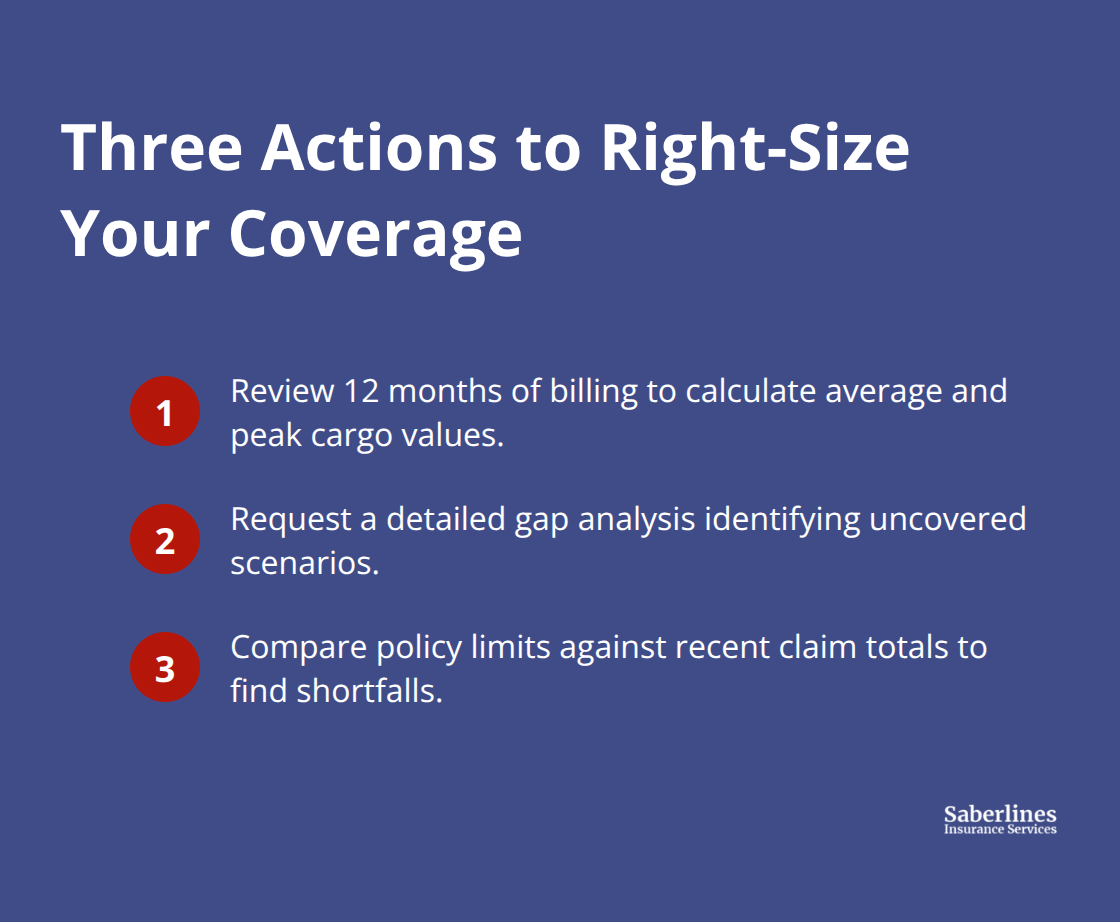
Calculate your actual cargo values by reviewing twelve months of billing data, then request a detailed gap analysis from your current insurance provider asking which scenarios fall outside coverage. Compare your current policy limits against your recent claim history to identify whether you’ve absorbed losses your insurance should have paid. These three actions transform abstract policy language into concrete financial reality and reveal exactly what protection your operation needs.
We at Saberlines Insurance Services work with moving operations throughout California to structure freight liability coverage that matches your actual business rather than forcing you into generic policies. Our agents understand the specific risks your operation faces and can fill the gaps that standard policies leave exposed. Contact Saberlines Insurance Services to discuss how specialized freight liability protection scales with your cargo values and operational risks.
The information provided in this blog is for general informational purposes only and does not constitute legal, financial, or insurance advice. Coverage options, terms, and availability may vary. Please consult with a licensed professional for advice specific to your situation.