
Movers Cargo Insurance Options: Tailored Cargo Protection for Movers
Moving companies face real cargo risks every day. Damage during transit, theft, and weather-related losses can quickly become expensive problems that impact your bottom line.
At Saberlines Insurance Services, we know that standard policies often leave gaps in protection. That’s why movers cargo insurance options need to be tailored to your specific operation and the types of goods you transport.
What Coverage Actually Protects Your Cargo
General Liability Won’t Cover Your Cargo
General liability insurance does not protect customer goods in your care. This is a critical distinction that many movers misunderstand. General liability covers lawsuits and property damage claims against your company, but it explicitly excludes the goods you transport or store. If a customer’s sofa gets damaged during loading, general liability won’t pay for it. You need cargo insurance or bailee’s liability coverage instead.
Motor Truck Cargo and Bailee’s Liability
Motor Truck Cargo insurance covers goods while they sit on your vehicles in transit, while Bailee’s liability covers customer property in your possession during storage. According to the Federal Motor Carrier Safety Administration, interstate movers must offer two liability options to customers: Released Value Protection at 60 cents per pound per article, and Full Value Protection at replacement cost. The distinction matters because it determines how much you owe and what your customers understand they receive in protection.
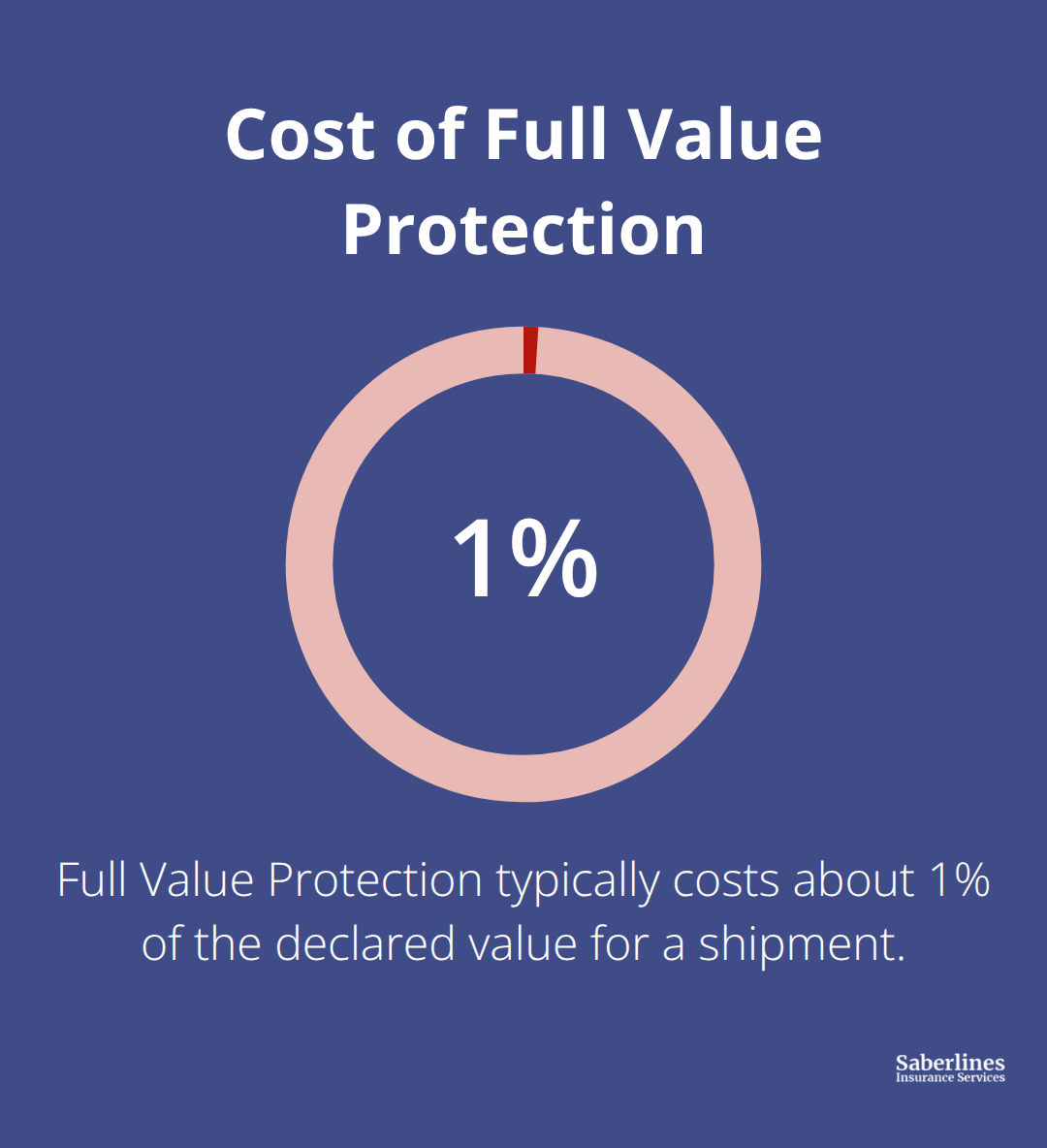
Released Value Protection is cheap or free but severely limits your exposure-a 50-pound television damaged beyond repair yields only $30 in compensation. Full Value Protection makes you responsible for repair, replacement, or cash reimbursement, and typically costs about 1% of declared value. This coverage is usually the default for interstate moves unless customers explicitly waive it, though deductibles of $250 to $500 can lower your premiums.
High-value items require written declaration using a high-value inventory form; items worth more than $100 per pound per article may fall outside standard coverage if you don’t declare them upfront.
Market Tightening and Rising Deductibles
The cargo insurance market has tightened significantly due to catastrophic events like Hurricane Ian in 2022, which drove rate increases and more cautious underwriting. Catastrophe-prone zones face tighter stock coverage terms and higher premiums because underwriters view them as elevated risk. A $2,500 transit deductible is now a common entry-level option as insurers curtail low-value claims. Catastrophe risk deductibles for stock and warehouse coverage commonly range from $100,000 to $250,000 depending on location and market conditions.
Specialized Cargo and Market Growth
For specialized cargo like temperature-sensitive goods, pharmaceuticals, automobiles, or electronics, coverage is possible but terms may be stricter and require detailed exposure information. The global cargo insurance market for moving and storage reached approximately $69.84 billion in 2024 and is projected to reach $101.43 billion by 2032, reflecting how seriously the industry treats cargo protection.
What Your Policy Must Address
Essential coverage addresses transit hazards, loading and unloading risks, temperature-sensitive items, and warehouse legal liability for storage facilities. Common exclusions include inherent vice, pre-existing damage, improper packing, mysterious disappearance, and acts of war or terrorism. Policy limits can be set per item and as an aggregate, which directly affects your total recovery in a major loss. Your fleet size, vehicle types, geographic territory, types of goods handled, and loss history all influence premiums. A cleaner driving record and favorable FMCSA safety ratings typically yield more favorable rates. Underwriters now require thorough submissions with complete route data, shipment profiles, and documented risk controls to assess exposure accurately. The specifics of your operation determine which coverage options make sense for your bottom line.
Where Cargo Damage Actually Happens
Loading and Unloading: Your Highest-Risk Window
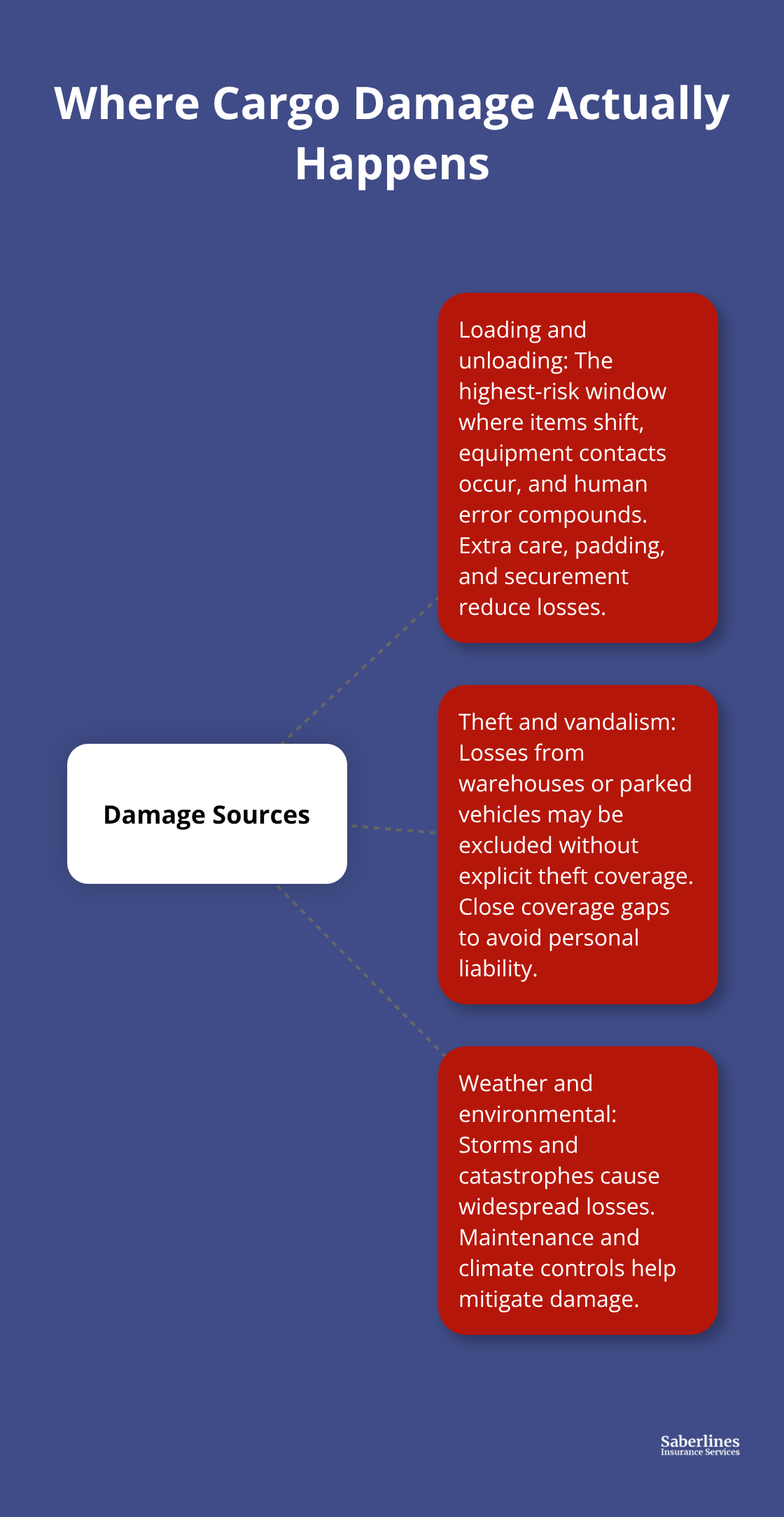
Loading and unloading represent the highest-risk moments in any move, yet many movers treat these phases as routine operations. Damage claims spike during these transitions because goods shift, equipment contacts items, and human error compounds quickly. A standard $5,000 cargo claim often originates not during a 500-mile highway haul but during the 30 minutes your crew spends loading a customer’s belongings into the truck.
Temperature-sensitive shipments face particular risk during these windows because goods sit exposed to outdoor conditions while handlers transfer them. Electronics and appliances suffer damage when handlers fail to secure them properly or when loading equipment strikes them.
Timestamped photographs or video documentation during loading and unloading creates objective evidence that protects you in disputes. If a customer later claims a sofa was damaged during the move, your photos showing it entered the truck intact become invaluable. This documentation also speeds claim settlement because insurers can verify exactly what happened and when.
Theft and Vandalism: Coverage Gaps That Cost You
Theft and vandalism present a different exposure entirely. Goods stolen from your warehouse or vehicle while parked overnight generate losses your general liability policy won’t touch. Your cargo insurance must explicitly cover theft, and many standard policies contain exclusions for mysterious disappearance unless you can prove the exact circumstances. This gap leaves you personally liable for customer losses that your coverage should have prevented.
Weather and Environmental Risks
Weather-related damage demands attention because it’s partly preventable and partly not. Hurricane Ian in 2022 drove massive rate increases across the cargo insurance market specifically because underwriters saw how quickly catastrophic events create widespread losses. You can’t control whether a thunderstorm floods a storage facility, but you can control whether your warehouse roof stays maintained, whether your vehicles have weatherproof tarps, and whether climate-controlled storage is available for temperature-sensitive goods.
Catastrophe-prone zones now face deductibles ranging from $100,000 to $250,000 for stock and warehouse coverage because insurers view these regions as elevated risk. If you operate in Florida, Texas, or California, your cargo insurance premiums reflect this reality directly. Higher deductibles in these zones can reduce your premiums while you maintain protection for larger losses.
Tailoring Coverage to Your Actual Exposures
Your cargo insurance must address all three exposure types explicitly, with specific language covering transit hazards, loading and unloading risks, theft, weather damage, and storage conditions. Common policy exclusions like acts of God or improper packing can leave you exposed if your coverage isn’t tailored to your actual operations. The right policy matches your fleet size, vehicle types, geographic territory, types of goods handled, and loss history-not just regulatory minimums.
Understanding these specific risks positions you to select coverage that actually protects your operation. The next step involves assessing your cargo types and values to determine which policy limits and deductibles make financial sense for your business.
Choosing the Right Policy for Your Operation
Calculate Your Maximum Exposure First
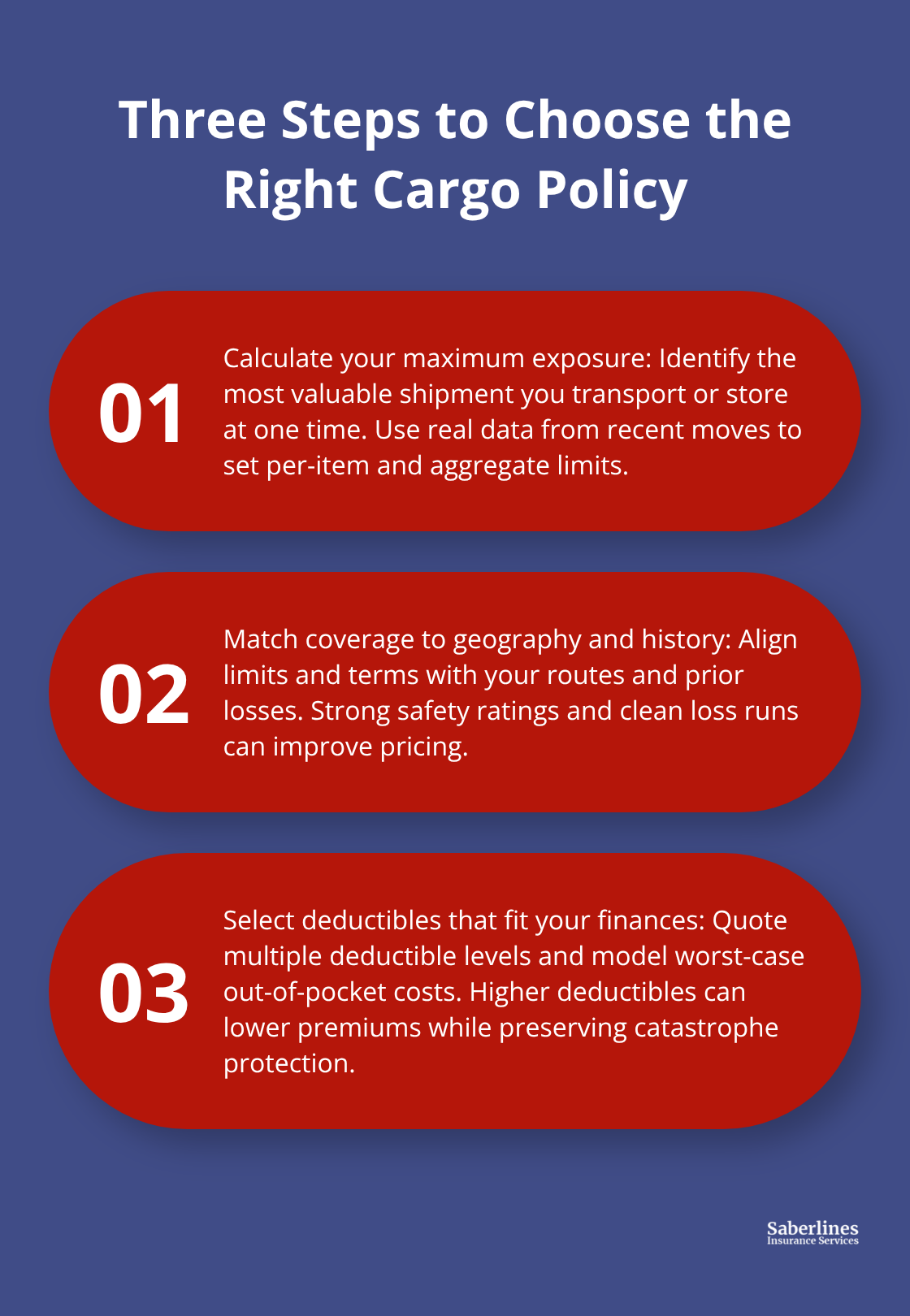
Start with the maximum value you transport or store at any given time, then work backward to determine your coverage limits. This number drives everything else. If you typically move households worth $75,000 to $150,000, your per-item and aggregate limits must reflect these values, not industry minimums. Many movers set limits based on what competitors pay rather than what their actual exposures demand, which leaves them drastically underinsured on high-value moves.
Document your top 10 shipments from the past year and their declared values. That data tells you exactly what coverage limits you need.
Match Coverage to Your Geography and History
Your geographic footprint and loss history work together to determine your risk profile. A mover operating only in California faces different catastrophe risk than one running routes through Florida and Texas. According to FMCSA, your claims history and safety ratings directly influence pricing, so a cleaner driving record and favorable safety ratings yield better rates. Pull your loss runs from the past three years and present them honestly to underwriters. Underwriters now require complete submissions with route data, shipment profiles, and documented risk controls, so hiding prior claims only delays quotes and raises suspicion.
If you’ve had three water damage claims in storage facilities, you need warehouse legal liability with strict climate controls, not a generic cargo policy. If you specialize in moving electronics and appliances, you need coverage that explicitly addresses the loading and unloading phase where most damage occurs, not just transit protection. The cargo insurance market reached $69.84 billion globally in 2024 and is projected to reach $101.43 billion by 2032 according to SNS Insider, which means underwriters have more options but also more selectivity about which risks they accept.
Select Deductibles That Match Your Financial Reality
Deductible selection separates movers who understand their finances from those who guess. A $2,500 transit deductible is now standard entry-level, and catastrophe-prone zones commonly face $100,000 to $250,000 CAT deductibles for stock coverage. Higher deductibles directly reduce premiums, so if you operate in a high-risk geography, raising your deductible can save thousands annually while you retain protection for actual catastrophic losses. Request quotes with multiple deductible options and calculate your out-of-pocket exposure on a worst-case scenario.
Handle Specialized Cargo With Extra Scrutiny
Temperature-sensitive pharmaceuticals, artwork, and other specialized cargo require stricter terms and higher scrutiny from underwriters. Expect longer underwriting and more detailed exposure documentation when you insure these goods. The specifics of your operation determine which coverage options make financial sense for your bottom line.
Work With a Broker Who Understands Transportation
A broker who specializes in moving and transportation understands FMCSA requirements, interstate versus intrastate distinctions, and how to present your operation in language underwriters actually respond to. They also handle same-day certificate of insurance requests when clients demand proof of coverage before moving day. A broker experienced in general liability for movers combines deep industry expertise with fast quotes for small and mid-sized moving operations to match your policy to your actual exposures, not just regulatory checkboxes.
Final Thoughts
Cargo protection for movers represents a strategic investment that directly protects your profitability, not a commodity expense. Movers cargo insurance options available today range from basic Released Value Protection at 60 cents per pound to Full Value Protection with customized deductibles and specialized endorsements for high-value items. Each option serves a different operation, and selecting the wrong coverage leaves you exposed to losses that could threaten your business.
The real value of tailored insurance solutions lies in matching your specific exposures to actual policy language. A mover operating in Florida faces different catastrophe risks than one running routes through the Midwest, yet both need coverage addressing loading and unloading hazards, transit damage, theft, and weather-related losses (generic policies miss these distinctions entirely). When you assess your maximum shipment values, document your loss history honestly, and select deductibles that reflect your financial capacity, you eliminate guesswork from the protection equation.
Your next step is straightforward: calculate your maximum exposure, gather your loss runs from the past three years, and connect with a broker who understands transportation. We at Saberlines Insurance Services specialize in helping owner-operators and small to mid-sized moving fleets secure cargo coverage that matches their actual operations. Visit Saberlines Insurance Services to discuss your specific cargo protection needs and get quotes that reflect your real exposures, not just regulatory minimums.
The information provided in this blog is for general informational purposes only and does not constitute legal, financial, or insurance advice. Coverage options, terms, and availability may vary. Please consult with a licensed professional for advice specific to your situation.