
NEMT Equipment Standards: What You Need To Know For Compliance
NEMT equipment standards aren’t optional-they’re the foundation of safe, compliant patient transport. Missing even one requirement can expose your operation to liability, fines, and worse.
At Saberlines Insurance Services, we’ve seen firsthand how equipment compliance issues derail NEMT providers. This guide breaks down what you actually need to know to stay compliant across your fleet.
NEMT Vehicle Equipment Requirements
Your NEMT vehicles must carry specific equipment to operate legally and safely. The baseline includes wheelchair lifts with 600-pound capacity minimums per 49 CFR §38.23, four-point WC18 tie-downs at each wheelchair position, and an interlock system that prevents vehicle movement when the lift deploys. Beyond accessibility hardware, you need a fully stocked first aid kit following Virginia DMAS contents standards, a Class A/B/C fire extinguisher, a spill kit, a seat belt cutter, and at least three reflective triangles.
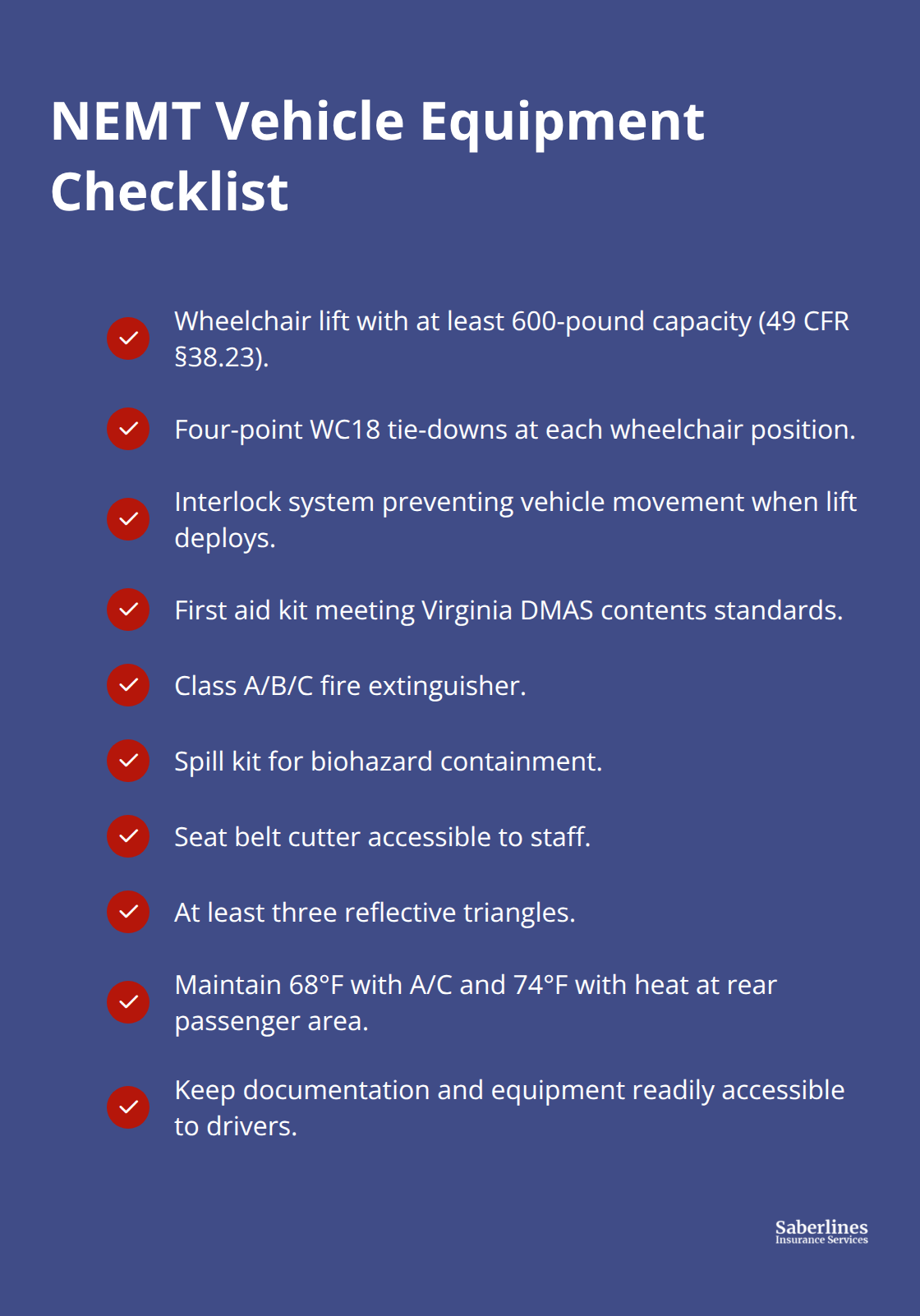
Your vehicles must maintain interior temperatures of 68°F when running air conditioning and 74°F when heating, measured at the rear passenger area where mobility-limited passengers sit longest.
Communication and Real-Time Tracking
GPS or mapping capability paired with two-way communication devices isn’t optional. Brokers require real-time tracking integration, and late discharges or cancellations happen routinely enough that dispatch coordination without these tools creates compliance gaps and missed appointments. Your dispatch system must integrate broker verification requirements; RouteGenie and similar platforms handle real-time tracking and trip confirmation that state Medicaid programs increasingly demand. Seven years of electronic record retention applies to pre-trip inspections, maintenance logs, and incident reports.
Documentation Systems and Vehicle Signage
Documentation systems matter more than many operators realize. You need vehicle information packets, current registration and insurance certificates, and interior signage displaying NO SMOKING and ALL PASSENGERS WILL USE SEAT BELTS in clearly visible locations. Exterior business name and phone number must appear in 3-inch letters on both vehicle sides; HIPAA prohibits Medicaid labeling directly on vehicles, so avoid that mistake. Post-modification documentation should include lift maker, model, serial number, and capacity-Virginia DMAS requires electronic tracking of these details, and brokers will review this data during inspections.
Oxygen Systems and Medical Equipment
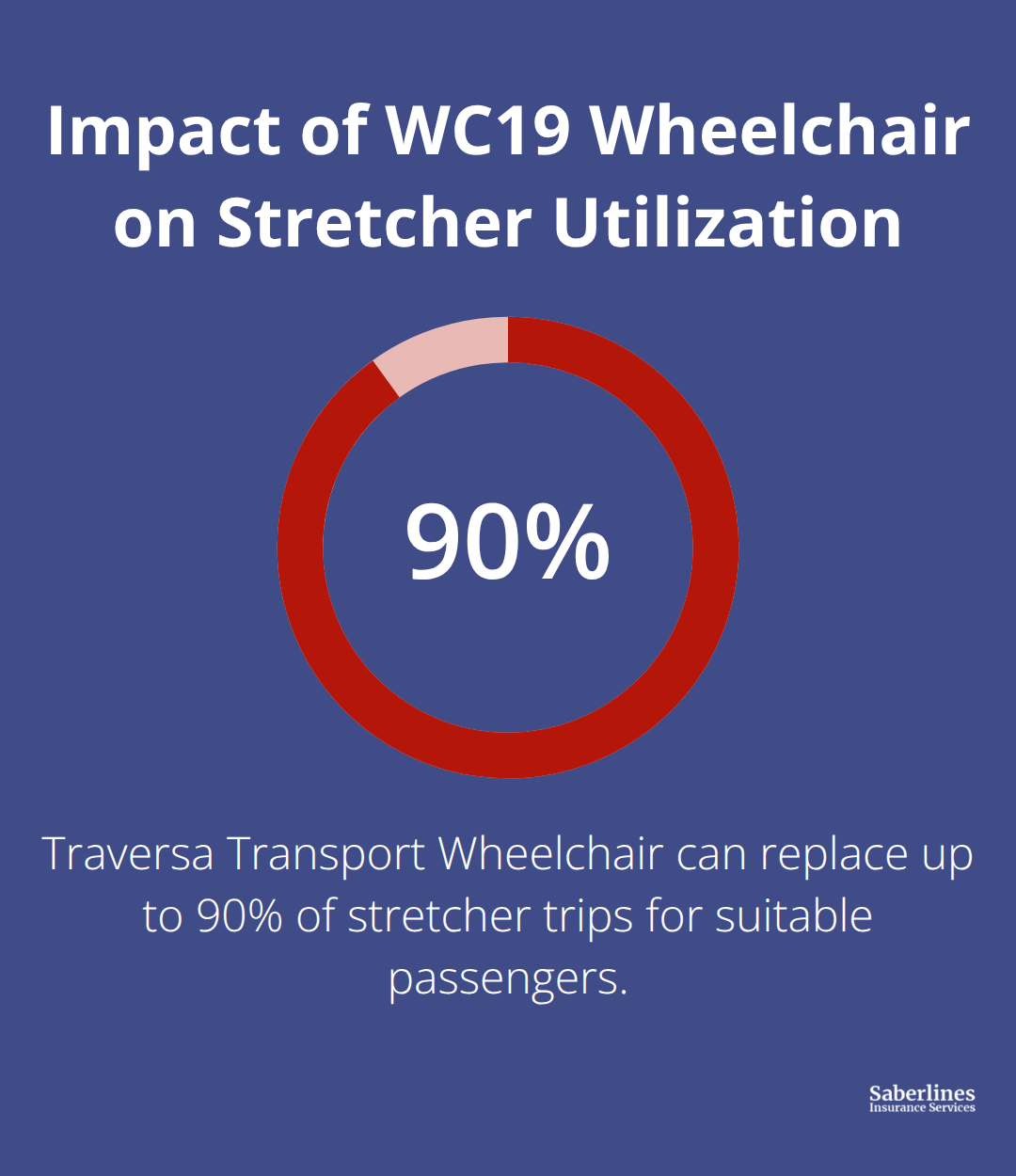
Oxygen systems aren’t universally required across NEMT operations, but they’re mandatory for stretcher services and high-acuity transports. If you operate ambulette vans meeting KKK-A-1822E standards for supine patients, you need oxygen delivery capability. Equipment choice influences staffing significantly: the Traversa Transport Wheelchair, WC19-certified and crash-tested for vehicle seat use with proper securement, can replace up to 90% of stretcher trips for suitable passengers and operates with a single staff member instead of the two required for stretcher transport. That difference directly impacts your labor costs and trip profitability.
Maintenance Schedules and Accessibility Equipment
Maintenance schedules for accessibility equipment follow 3,000–5,000 mile intervals with periodic load tests. A lift failure grounds your vehicle regardless of engine condition, so preventive maintenance on boarding devices isn’t negotiable-recurring lift failures trigger broker rejection and age-out decisions faster than engine problems do. Daily pre-trip checks should document vehicle ID, date, and driver signature on pass/fail forms; repeated failures across your fleet signal systemic issues that brokers notice during unannounced credentialing inspections.
Driver Training and State Inspection Requirements
Driver training records must include PASS program certification covering lift operation and wheelchair securement, with CPR/first aid documentation retained for the full seven-year period. State inspection frequency varies significantly: Virginia requires semi-annual broker inspections with wheelchair-accessible vans and stretcher vans inspected twice yearly, while Texas mandates annual safety inspections and California requires BAR-based annual VSSI plus CHP BIT inspections for vehicles exceeding 10,000 pounds GVWR. Knowing your state’s specific inspection requirements prevents surprise rejections during broker credentialing cycles, and these variations across jurisdictions create the compliance complexity that makes state-specific regulations your next critical focus.
State-Specific Equipment Standards That Actually Matter
NEMT equipment compliance operates differently across states, and this is where most operators face unexpected rejections. California, Texas, New York, Virginia, and Florida each impose different vehicle age caps, inspection frequencies, and equipment specifications that directly conflict with one another. California requires BAR-based annual VSSI plus CHP BIT inspections for vehicles over 10,000 pounds GVWR, while Texas caps vehicle age at 7–10 years with annual safety inspections and permits up to 250,000 miles.
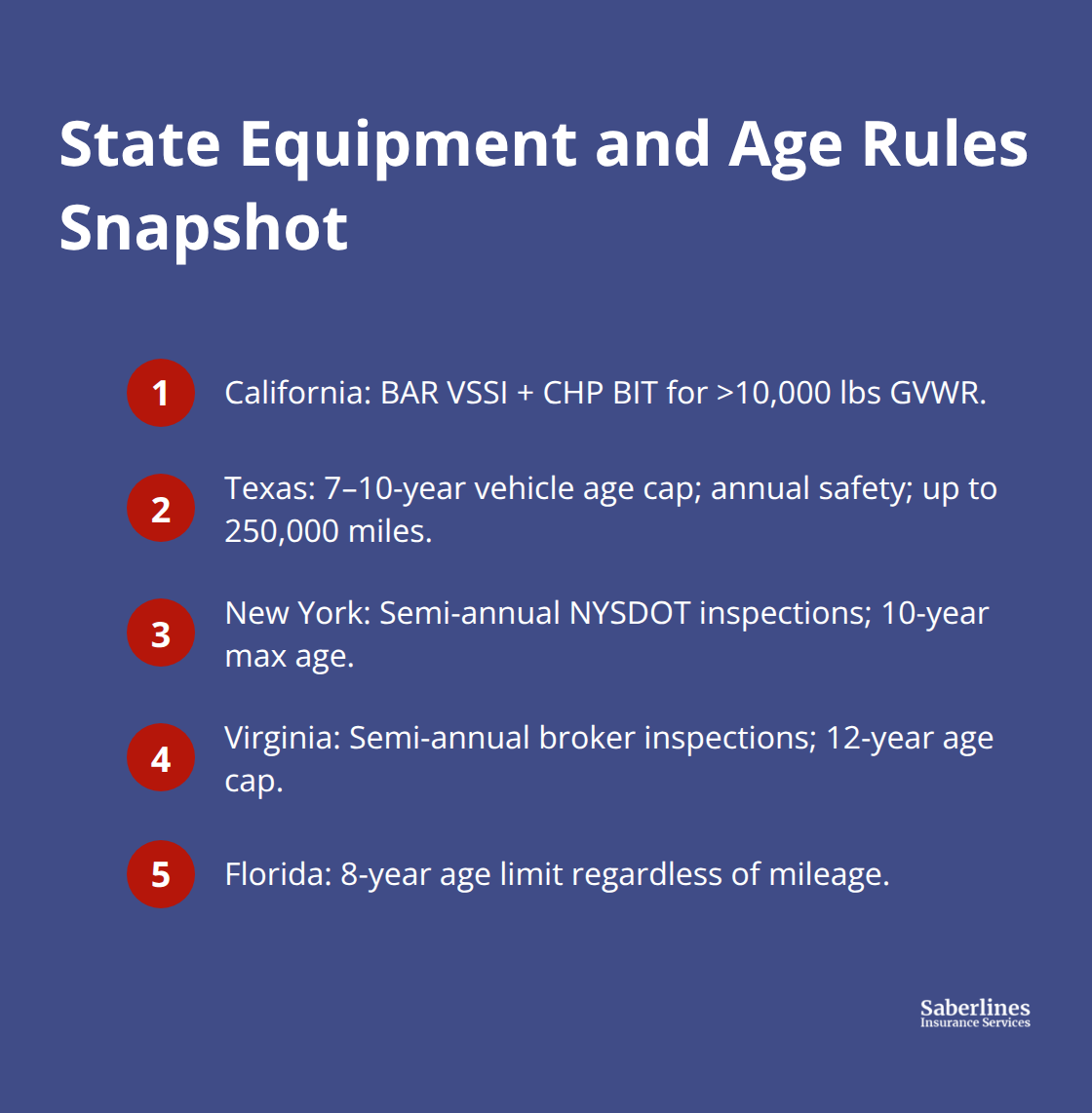
New York mandates semi-annual NYSDOT inspections and a 10-year maximum vehicle age, whereas Virginia requires semi-annual broker inspections with wheelchair-accessible vans and stretcher vans inspected twice yearly under a 12-year age cap. Florida imposes an 8-year age limit regardless of mileage. These variations mean a vehicle that passes compliance in Texas faces outright rejection in California or Florida before it reaches its mileage ceiling. If you operate across multiple states, you cannot purchase used vehicles at the upper end of one state’s age range and relocate them to another state’s market. You also cannot assume that a lift certification valid in Virginia satisfies California’s requirements without verification from your broker or state Medicaid program.
Vehicle Age Caps and Mileage Limits Across States
What works in Ohio (which allows 15-year-old vehicles) creates liability exposure in Florida. Brokers like MTM, ModivCare, and Transdev often enforce internal age and mileage rules tighter than state minimums, and vehicles approaching their state’s age cap face resale difficulties and higher insurance premiums that eliminate any cost savings from extended operation. The safest approach targets vehicle replacement around 7–8 years regardless of state-mandated maximums. This strategy protects your fleet from broker rejection and maintains resale value when market conditions shift.
California’s Complex Regulatory Structure
California deserves specific attention because its regulatory framework exceeds most states in complexity. You need a CPUC TCP permit to operate NEMT services in California, and vehicles must pass annual emissions controls alongside the BAR VSSI inspection. A vehicle passing Virginia’s inspection might fail California’s emissions requirements without modification or might require additional documentation before deployment. This regulatory layering adds both cost and compliance risk to multi-state operations.
New York and Virginia Standards
New York adds another layer by requiring dual plating for vehicles operating in New York City and ambulette certification for stretcher vans, which increases both compliance documentation and vehicle-specific modifications. Virginia DMAS benchmarks the standard for many states and publishes detailed equipment specifications that brokers reference nationally, so understanding Virginia’s first aid kit contents requirements, lift capacity standards, and electronic tracking mandates provides a framework applicable across most jurisdictions.
Staying Current on Regulatory Changes
Staying updated on regulatory changes requires active engagement with your state Medicaid program, your brokers, and industry resources like NEMTAC, which released updated mobility device securement education standards in 2026 and continues developing vehicle inspection standards. Subscribe directly to your state’s Medicaid program bulletins rather than relying on broker communications alone, because brokers prioritize their own operational needs and may not flag changes affecting only certain vehicle types or service lines within your fleet. If you operate in multiple states, assign one team member to track regulatory changes quarterly by contacting each state’s NEMT program office directly and requesting notification of upcoming changes. The compliance burden increases with each state you enter, but discovering age or equipment violations during broker audits costs far more in vehicle downtime and lost revenue. These state-specific complexities make common compliance mistakes-overlooked maintenance schedules, missing certifications, and inadequate staff training-even more costly when they intersect with multi-state regulatory requirements.
Common Equipment Compliance Mistakes
Where Maintenance Records Disappear
Maintenance schedules collapse quietly in most NEMT operations-not because operators ignore them, but because competing daily pressures override documentation discipline. A lift functions perfectly on Monday, a driver forgets to log the pre-trip inspection on Tuesday, and by Wednesday the vehicle passes a broker inspection with no paper trail proving that load test happened three months ago. Seven years of electronic record retention isn’t theoretical compliance theater; it’s the evidence your operation existed and functioned safely when a passenger files an injury claim or a state auditor questions your preventive maintenance program. Virginia DMAS requires electronic tracking of lift specifications and maintenance history, and brokers like MTM and ModivCare pull these records during unannounced credentialing inspections. If your documentation shows gaps exceeding 30 days without a pre-trip inspection entry, brokers flag the vehicle as non-compliant even if the equipment functions perfectly.
Establish a non-negotiable rule: every pre-trip inspection gets logged same-day with vehicle ID, driver name, date, and pass/fail status, stored digitally where dispatch can verify compliance weekly. Accessibility equipment failures ground vehicles faster than engine problems because a broken lift or failed securement system prevents any passenger transport, whereas an engine issue might still allow limited operations. Load-test your wheelchair lifts every 3,000–5,000 miles per manufacturer specifications and document the results with date, technician name, and capacity verification. A recurring lift failure pattern signals that replacement timing has arrived regardless of vehicle age or mileage-many operators discover too late that extending vehicle life by two years costs more in repeated lift repairs and downtime than purchasing a replacement vehicle would have cost.
Certification Documentation Failures
Certification documentation failures create a second compliance blind spot that catches operators during broker audits. Your drivers need PASS program certification covering lift operation and wheelchair securement, CPR/first aid cards, and valid driver licenses with clean records, all retained in personnel files for seven years. Lift installations require NMEDA QAP-certified upfitter work; non-certified modifications void warranties and trigger automatic broker rejection regardless of equipment quality. Post-modification documentation must include lift manufacturer, model, serial number, and capacity-missing any single detail creates compliance gaps that brokers will not overlook.
Staff Training on Equipment Use
Staff training on proper equipment use directly correlates with fewer securement failures and passenger injuries, yet most operators treat training as a one-time onboarding event rather than recurring competency verification. The NEMTAC Mobility Device Securement Education standard approved in 2026 establishes training baselines that states increasingly reference in their Medicaid program requirements, meaning that operators without documented staff training on wheelchair securement face state audit exposure. Assign quarterly refresher training on lift operation, four-point securement procedures, and emergency evacuation protocols for wheelchair users, documented with attendance records and competency assessments. When broker inspections uncover training gaps, the resulting vehicle downtime and credentialing delays cost far more than the training investment would have.
Final Thoughts
NEMT equipment standards exist because passenger safety and operational compliance depend on it. The baseline requirements-600-pound wheelchair lifts, four-point WC18 tie-downs, first aid kits, fire extinguishers, and seven-year documentation retention-represent the difference between a functioning fleet and one facing broker rejection, state audits, and liability exposure that destroys small operators. Your compliance strategy starts with three concrete actions: establish a non-negotiable documentation system where every pre-trip inspection, maintenance record, and driver certification gets logged electronically and reviewed weekly by dispatch; assign one team member to track state-specific regulatory changes quarterly by contacting your state Medicaid program directly rather than waiting for broker notifications; and schedule quarterly refresher training on lift operation and wheelchair securement for all drivers, documented with attendance records that satisfy both NEMTAC standards and state audit requirements.
The cost of compliance-maintenance schedules, driver training, documentation systems-pales against the cost of non-compliance. A single broker credentialing failure grounds your fleet, and a passenger injury claim without proper maintenance records exposes your operation to liability that insurance alone cannot cover. Vehicle age caps and inspection frequency variations across states mean that what works in one jurisdiction creates rejection in another, so multi-state operators face compounding complexity that demands systematic attention.
We at Saberlines Insurance Services understand these pressures because we work with NEMT operators daily, and commercial auto coverage, workers’ compensation, general liability, and BOPs all depend on your equipment compliance and operational documentation. When your fleet meets NEMT equipment standards, your insurance underwriting becomes straightforward, and when compliance gaps emerge, coverage gaps follow. Audit your current fleet against the standards outlined in this guide, identify gaps in documentation and maintenance records, and address them systematically-then reach out to Saberlines Insurance Services for a consultation tailored to your operation.
The information provided in this blog is for general informational purposes only and does not constitute legal, financial, or insurance advice. Coverage options, terms, and availability may vary. Please consult with a licensed professional for advice specific to your situation.