
NEMT fleet safety insurance: Protecting Rides Across Your Fleet
NEMT operators face real dangers on the road. Medical transport vehicles carry vulnerable passengers, which means accidents carry higher stakes than standard commercial driving.
At Saberlines Insurance Services, we know that NEMT fleet safety insurance isn’t just about meeting legal requirements-it’s about protecting your drivers, passengers, and business from serious financial and reputational damage. This guide covers the coverage and strategies you need to run a safer fleet.
What Safety Risks Threaten Your NEMT Fleet
Wheelchair Securement and Passenger Vulnerability
NEMT operations expose your business to distinct hazards that standard commercial fleets rarely face. Your passengers are medically fragile, elderly, or mobility-impaired, which means even minor accidents cause serious injury or death. Wheelchair securement failures represent one of the highest-risk scenarios in medical transport. When a passenger in a wheelchair isn’t properly secured during a sudden stop or collision, the results are catastrophic. Vehicle lifts and ramps malfunction regularly, creating fall hazards during boarding and exit. Drivers unfamiliar with disability assistance techniques injure patients during transfers. These aren’t theoretical concerns-they’re the primary drivers behind insurance claims in NEMT. According to data from Medicaid programs and broker credentialing standards, wheelchair-securement incidents trigger the largest payouts and most aggressive underwriting scrutiny from carriers.
State and Federal Compliance Demands
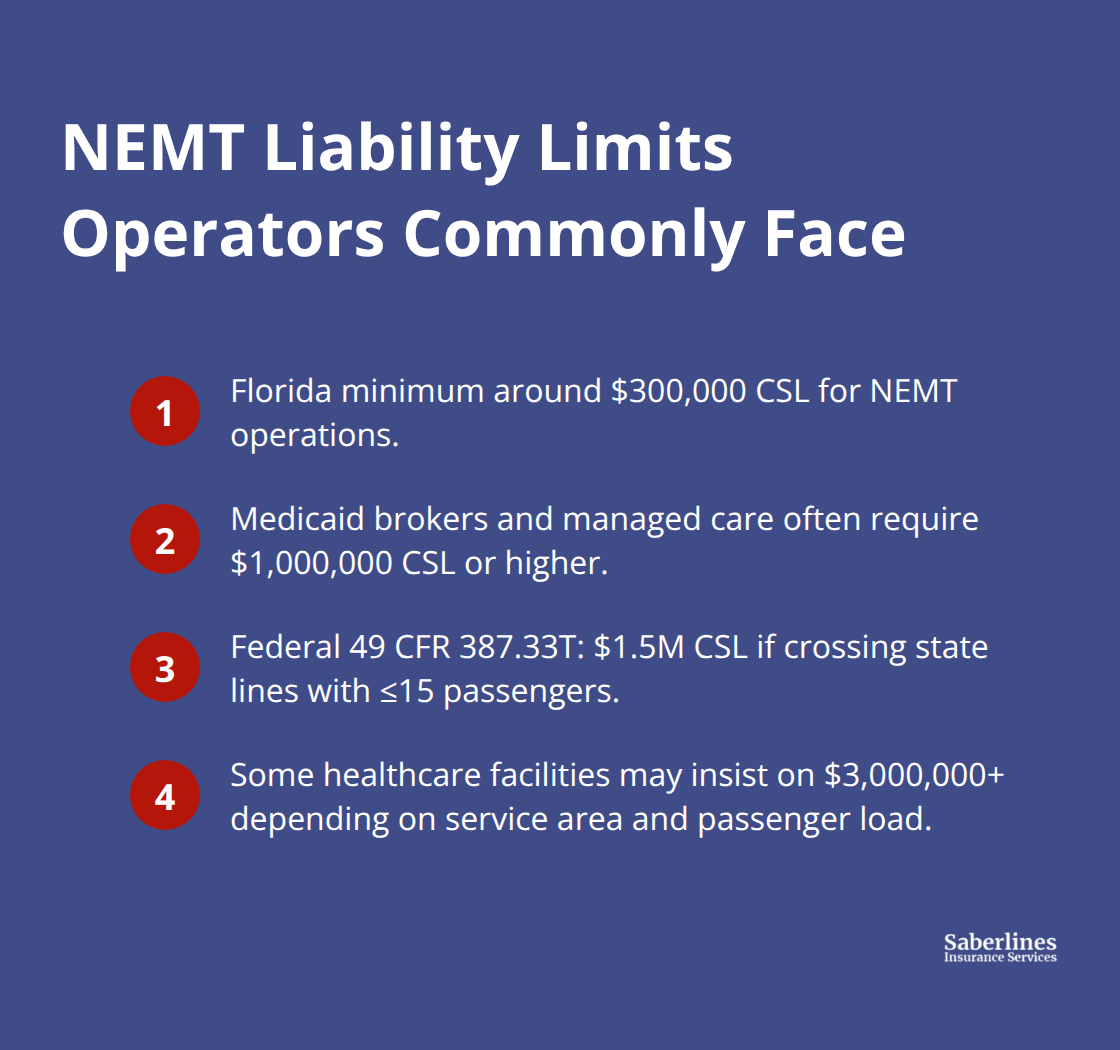
Regulatory compliance adds another layer of complexity. Most NEMT operators must meet state-specific licensing requirements, federal FMCSA rules if crossing state lines, and Medicaid program standards that vary by location. Florida, for example, requires a Certificate of Public Convenience and Necessity for wheelchair and stretcher transport, with approval taking three to six months and mandatory annual renewal. Commercial auto insurance minimums in Florida sit around $300,000, but Medicaid brokers and managed care organizations frequently demand higher limits-often $1,000,000 or more combined single limit depending on your service area. When you operate across multiple states, federal minimums under 49 CFR 387.33T jump to $1.5 million for vehicles seating 15 or fewer passengers. Failing to maintain these limits triggers non-renewal from standard carriers like Progressive and GEICO, both of which have significantly tightened NEMT appetite in recent years.
Reputation and Revenue at Risk
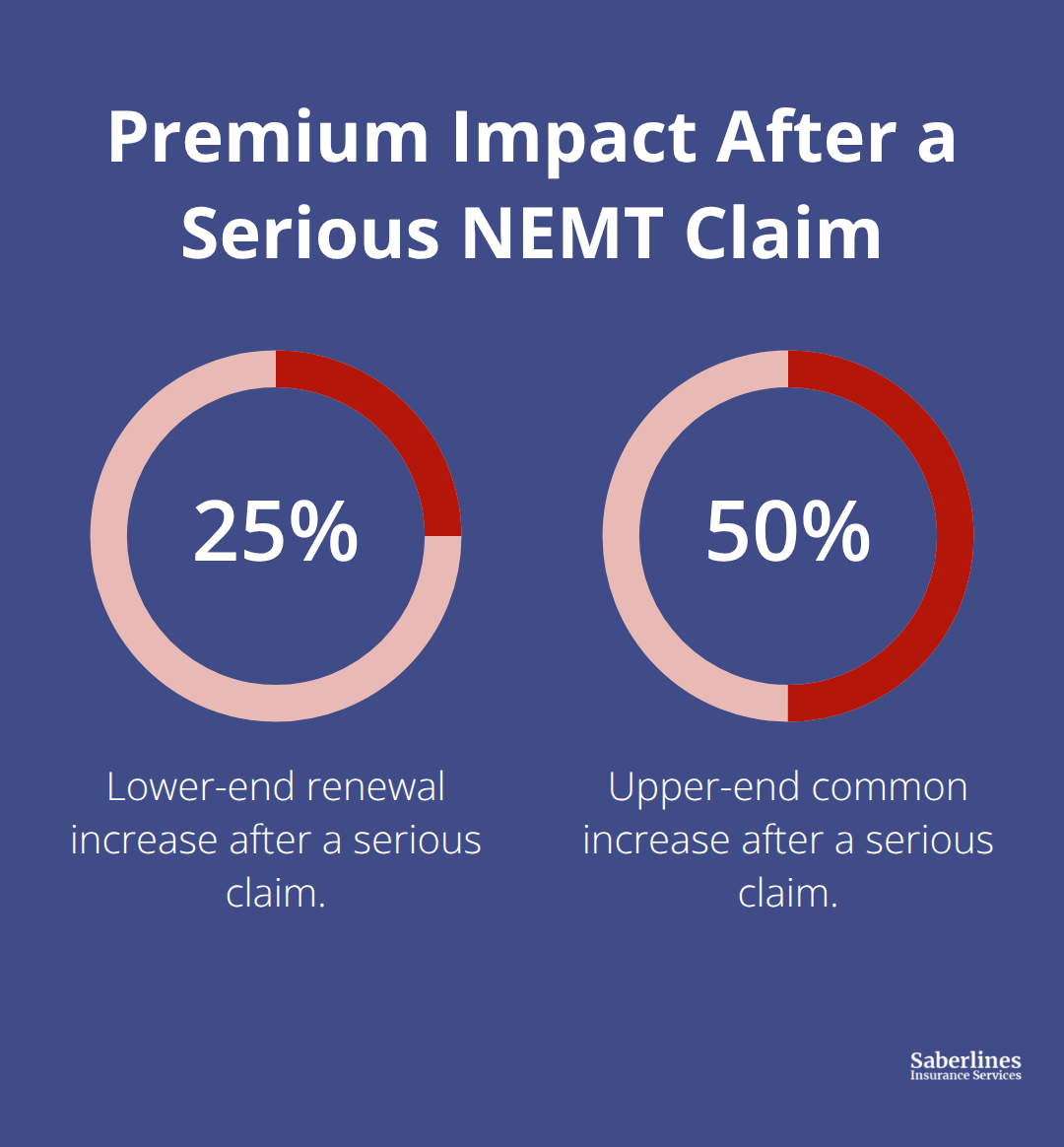
Your business also faces reputational damage that financial statements don’t capture. A serious accident or safety violation spreads quickly through local healthcare facilities and managed care networks. Hospitals and dialysis centers check your safety records before contracting with you. One major incident blacklists your operation from multiple revenue streams simultaneously, making recovery difficult even if insurance covers the claim cost. Safety failures also drive up your renewal premiums substantially-carriers use loss history and safety program documentation to price risk, and a single serious claim increases your next year’s auto and general liability costs by 25% to 50% or more.
Understanding these risks shapes how you structure your fleet operations and insurance coverage. The next section outlines the specific coverages that protect against these exposures and keep your business operational when accidents happen.
What Coverage Your NEMT Fleet Actually Needs
Commercial Auto Insurance: The Foundation
Commercial auto insurance forms the foundation of NEMT fleet protection, but standard policies will not cover your operation. You need a for-hire livery policy designed specifically for medical transport vehicles. State minimums vary significantly-Florida requires around $300,000 combined single limit for NEMT operations, while federal rules under 49 CFR 387.33T mandate $1.5 million combined single limit if you cross state lines with vehicles seating 15 or fewer passengers. However, Medicaid brokers and managed care organizations typically demand far higher limits than state minimums. Most require $1,000,000 combined single limit at minimum, and some healthcare facilities insist on $3,000,000 or higher depending on your service area and passenger load. The gap between state minimums and what your actual contracts demand creates a trap that catches operators unprepared.
Hired and Non-Owned Auto Coverage
Hired and non-owned auto coverage must sit in your policy to protect your business when drivers use personal vehicles or when you rent equipment. This coverage occupies a specific layer behind primary auto liability and addresses a critical gap that standard commercial policies leave open. Many NEMT operators miss this layer entirely and discover the exposure only after a claim involving a borrowed vehicle. Without it, your business absorbs liability even though you don’t own the vehicle involved in the accident.
Workers Compensation and Staffing Models
Workers compensation becomes non-negotiable if you employ drivers as W-2 staff, and the cost structure differs dramatically between direct-hire and independent contractor models. A direct-hire driver in your fleet costs significantly more in workers comp premiums but gives you auditable control over training, vehicle maintenance, and safety protocols-exactly what Medicaid brokers and underwriters demand during credentialing. Independent contractors reduce your payroll burden but shift liability risk onto your business through vicarious liability exposure, which means you still face claims even though the driver is technically self-employed.
General Liability and Specialized Protections
General liability coverage protects against third-party bodily injury and property damage claims that arise from your operations. This covers incidents at your dispatch center, during passenger transfers, or from equipment failures. Sexual abuse and molestation coverage is strongly recommended given your vulnerable passenger population and is often required by state programs. Many NEMT operators treat SAM as optional until a contract demands it, then scramble to add coverage mid-year at higher rates. Securing it upfront during your initial policy design costs significantly less.
Bundling Coverage and Year-One Costs
A business owners policy bundles general liability with property protection for your dispatch office, vehicles, and equipment, streamlining coverage and typically offering better pricing than purchasing policies separately. For a new operator, year-one all-in premiums typically range from $18,000 to $22,000 across all required coverage lines, with vehicle costs running $15,000 to $31,000 depending on fleet size and your loss history. Once you understand what coverage your contracts actually demand, the next step involves building the operational practices that keep claims low and your premiums stable.
Building Safety Systems That Reduce Claims
The coverage you purchase only protects you after an accident happens. What happens before the accident determines whether you face claims at all. Operators who invest in structured safety programs pay lower premiums, retain coverage during renewals, and avoid the catastrophic losses that destroy small NEMT businesses. The difference between a fleet that attracts niche carriers at competitive rates and one that faces non-renewal comes down to documented, measurable safety practices.
Driver Training in Disability Assistance and Wheelchair Securement
Your drivers need formal training in disability assistance and wheelchair securement because this is where claims originate. According to Medicaid program standards and broker credentialing requirements, documented wheelchair-securement training must repeat regularly and tie directly to your insurance underwriting expectations. Gaps in training documentation trigger higher perceived risk and push carriers toward non-renewal.
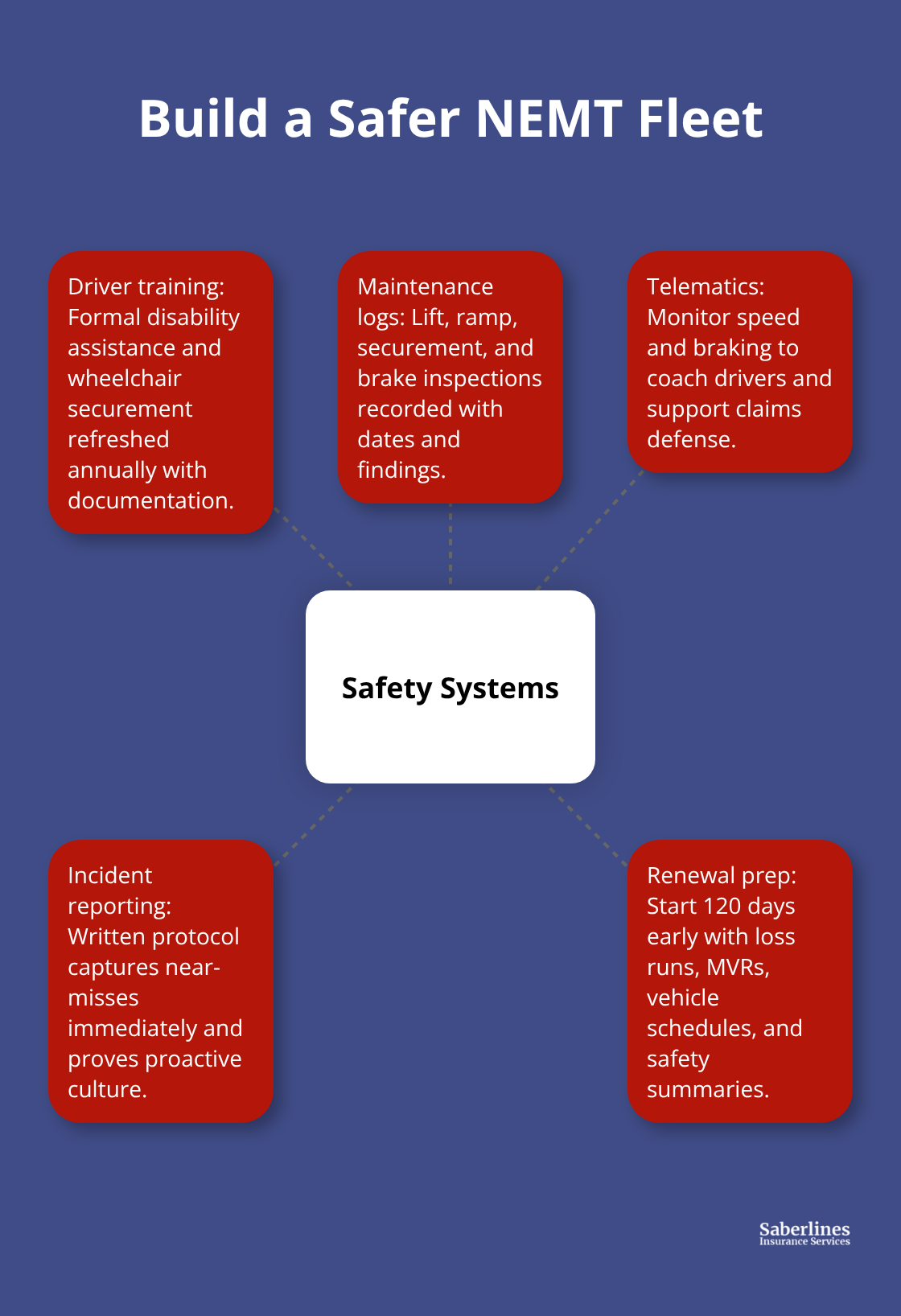
Require every driver to complete disability-accessibility training that covers proper lift operation, platform safety checks, passenger transfer techniques, and emergency procedures specific to wheelchair and stretcher transport. This training should happen before a driver operates any vehicle and repeat annually with documentation filed where auditors can access it. The training creates a paper trail that demonstrates your commitment to safety during credentialing audits.
Vehicle Maintenance Specific to Medical Transport
Vehicle maintenance for NEMT fleets differs fundamentally from standard commercial operations because lift and ramp failures create direct patient injury claims. Establish a logged maintenance schedule that includes lift inspections, ramp function checks, securement equipment verification, and brake system reviews specific to medical transport. Log every inspection with dates and findings so your maintenance records demonstrate compliance to Medicaid brokers and insurance underwriters during credentialing audits.
Many carriers now require telematics hardware installed in your fleet vehicles because objective data on speed, harsh braking, and route performance provides concrete evidence of safe operations. Progressive Snapshot ProView and similar programs yield 5 percent discounts at enrollment and 8 to 20 percent at renewal based on actual driving behavior. This data also supports your defense in claims disputes and gives you coaching data to improve driver performance before incidents occur.
Incident Reporting and Claims Prevention
Your claims history shapes your renewal rates more than any other factor, which means preventing claims should drive every operational decision. Create a written incident reporting protocol that captures near-misses and minor incidents immediately, not weeks later when memories fade and details disappear. Insurers and Medicaid brokers strongly favor operators who report proactively because it demonstrates genuine safety culture rather than reactive damage control.
When you operate independent contractors instead of W-2 employees, require contractors to carry their own auto liability insurance naming your company as an additional insured, provide current background checks, and maintain documented vehicle maintenance standards. This contractual requirement protects your business because it establishes clear responsibility boundaries and gives you documentation to show underwriters that you maintain control over risk despite the contractor model.
Renewal Preparation and Carrier Selection
Start 120 days before your renewal date by gathering three years of loss runs, refreshing driver motor vehicle records, updating your vehicle schedules, and summarizing your safety program accomplishments. This preparation timeline gives your agent time to shop your account across multiple carriers and secure the best available rates. Niche carriers built specifically for NEMT operations have much stronger appetite than the standard market because they understand your risk profile and reward disciplined operational practices. When major carriers like Progressive and GEICO retreat from NEMT in your state, these specialized carriers fill the gap, but only for operators who demonstrate measurable safety commitment through documentation and claims control.
Final Thoughts
NEMT fleet safety insurance protects your operation across three critical dimensions: your drivers, your passengers, and your business revenue. The coverage you purchase matters, but the safety systems you build determine whether you actually need to use that coverage. Operators who document driver training, maintain vehicles to medical transport standards, and report incidents proactively attract competitive rates from niche carriers even when the standard market retreats.
Start with a complete coverage audit that identifies every limit your state regulations, Medicaid contracts, and healthcare facility agreements actually demand. Most operators discover gaps between what they carry and what their contracts require only after a claim or renewal conversation. Build that specification sheet now, before you need it, then implement the three operational practices that carriers reward: documented disability-assistance training that repeats annually, logged vehicle maintenance specific to lifts and securement equipment, and a written incident reporting protocol that captures near-misses immediately.
We at Saberlines Insurance Services specialize in exactly this situation. Visit Saberlines Insurance Services to discuss your current coverage and identify gaps before your next renewal (bring your loss runs, vehicle schedules, and contract requirements so we can build a complete picture of your exposure). The conversation takes minutes, and the protection it creates lasts years.
The information provided in this blog is for general informational purposes only and does not constitute legal, financial, or insurance advice. Coverage options, terms, and availability may vary. Please consult with a licensed professional for advice specific to your situation.