
NEMT Providers Comparison: Finding the Right Partner for Your Fleet
Selecting the right NEMT provider can make or break your fleet operations. The stakes are high-insurance coverage gaps, compliance failures, and driver shortages can derail your service delivery.
At Saberlines Insurance Services, we’ve seen firsthand how a NEMT providers comparison reveals critical differences in reliability, technology, and regulatory adherence. This guide walks you through the evaluation process so you can partner with a provider that actually delivers.
Key Factors to Evaluate When Choosing a NEMT Provider
Insurance coverage gaps will destroy your fleet operations. When you evaluate a provider, demand proof of current commercial auto liability at a minimum of $1 million per occurrence-this is the industry standard across most states, though Arizona often requires around $300,000 and Colorado around $500,000. Beyond auto liability, verify they carry general liability including Sexual Abuse and Molestation (SAM) coverage, workers’ compensation, and physical damage insurance on their fleet. Request a current certificate of insurance before signing anything. Providers who hesitate to provide documentation or offer vague answers about coverage limits are immediate red flags. Typical per-vehicle annual premiums range from $3,500 in rural areas to $7,500 in major metro areas for a $1 million liability limit, so pricing alone does not indicate coverage quality. State licensing matters too-verify the provider holds current state licenses through FMCSA SAFER or your state regulator. If they cannot give you a license number or it does not check out, walk away.
Driver Background Checks and Training Build Your Safety Foundation
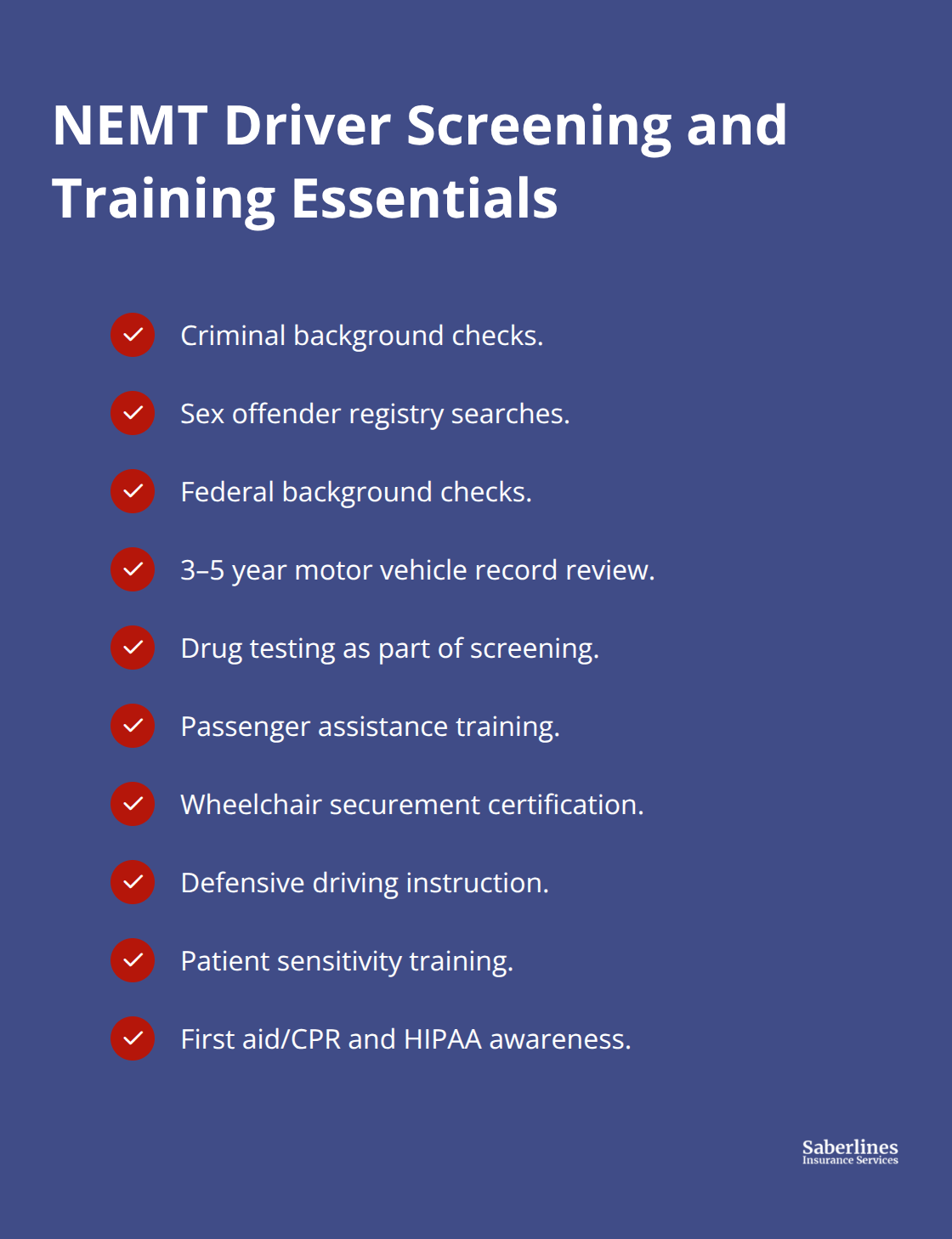
Comprehensive driver screening is non-negotiable. Require criminal checks, sex offender registry searches, federal background checks, and a 3–5 year motor vehicle record history. Drug testing must be part of the process. Beyond screening, specialized training separates competent providers from mediocre ones. Drivers need passenger assistance training, wheelchair securement certification, defensive driving instruction, patient sensitivity training, first aid/CPR certification, and HIPAA awareness. Ask how often providers conduct refresher training-annual minimums should be standard. Ask for documentation of these programs. A provider that relies on generic commercial driver training without NEMT-specific instruction cuts corners on patient safety.
On-Time Performance Proves Your Systems Work
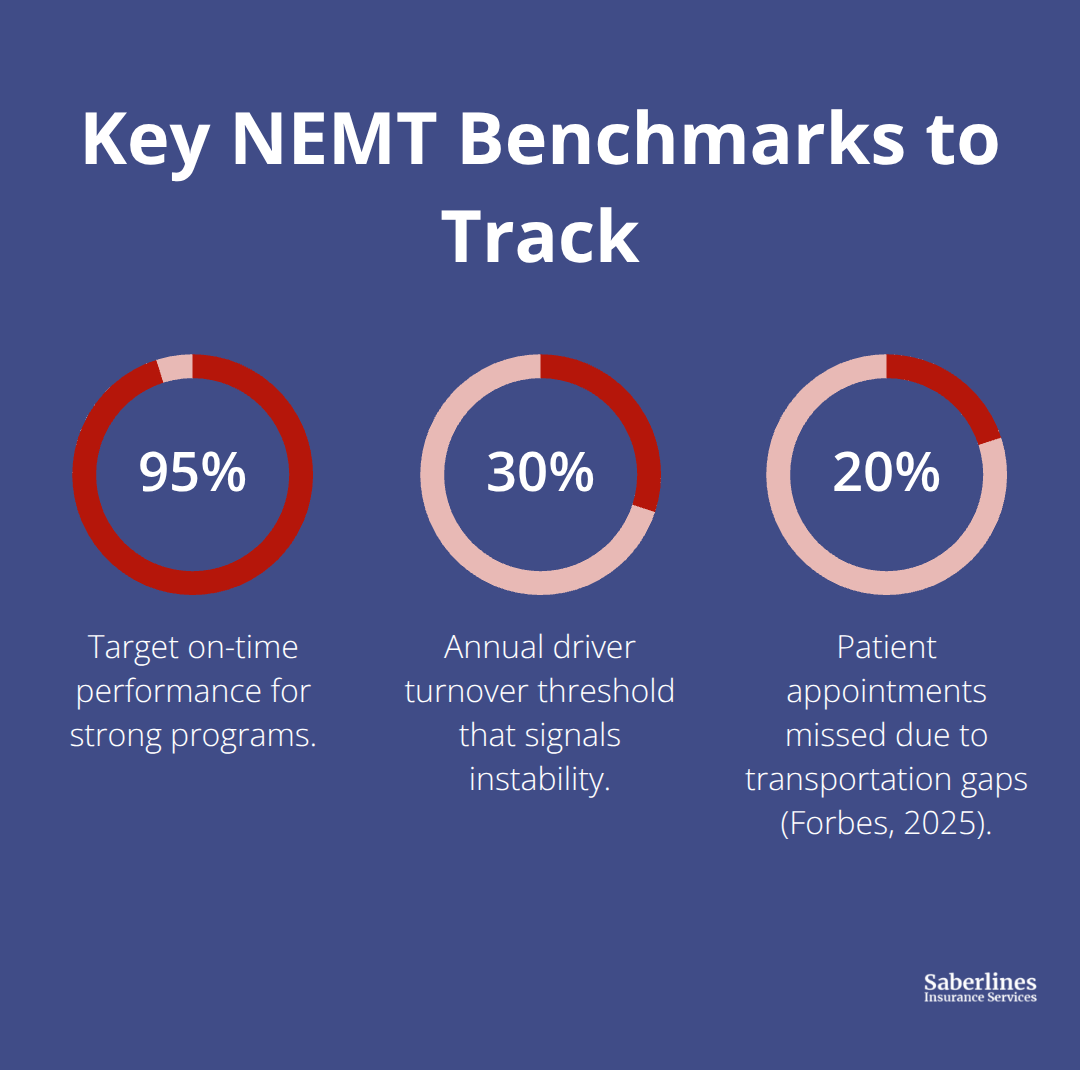
On-time performance tells you whether training and systems actually function. Demand to see documented on-time rates-95% or higher is typical for strong programs. Test the provider with a single ride before committing to a larger contract to verify performance matches their claims. This real-world test reveals whether dispatch coordination, driver accountability, and route planning actually prevent delays.
Technology That Prevents Operational Chaos
Real-time GPS tracking, automated dispatch, and route optimization software separate efficient providers from those managing operations with spreadsheets. Look for platforms that provide live location data, driver-en-route alerts, and accurate ETA updates. The provider should offer you access to real-time tracking through a dashboard or mobile interface so you can monitor your fleet independently. Two-way driver communication systems prevent missed pickups and reduce cancellations. Ask whether they use telematics-this technology captures driving behavior, vehicle diagnostics, and safety metrics, and providers using it typically offer premium discounts because the data proves safer operations.
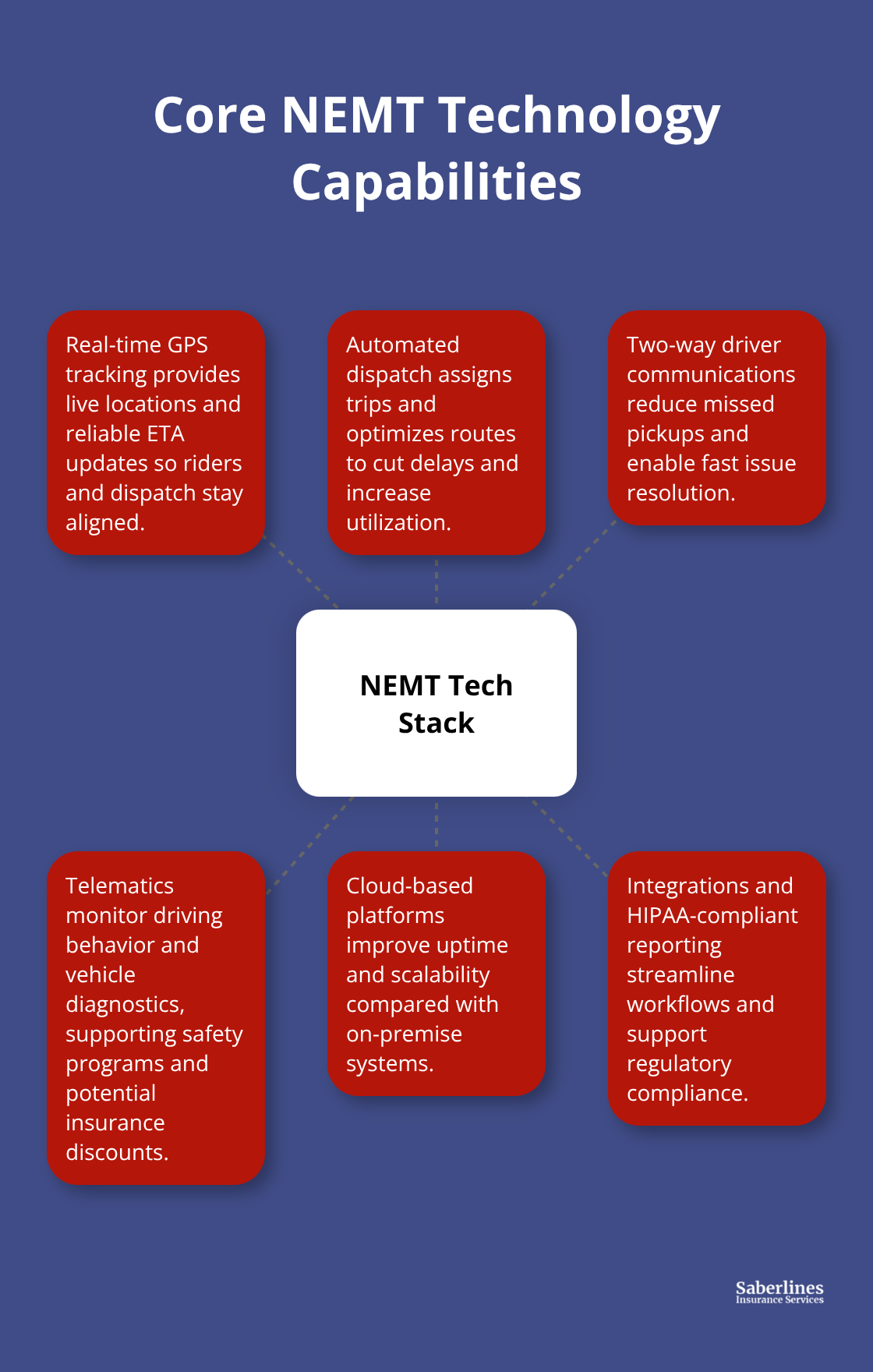
Request details on their dispatch response time; anything slower than immediate acknowledgment suggests outdated systems. Cloud-based platforms beat on-premise systems for reliability and scalability. Ask whether their software integrates with your existing systems and whether they support HIPAA-compliant reporting for regulatory compliance. Modern NEMT software unifies dispatching, scheduling, routing, and billing in one module-providers using fragmented tools create operational friction and billing errors.
With insurance, driver standards, and technology aligned, you now need to assess how well a provider actually performs under real operational pressure.
Common Challenges NEMT Providers Face
Driver Shortages Cripple Operations Right Now
Driver shortages are not a future threat-they’re happening now, and they’re crippling operations across the industry. According to Forbes research from 2025, stricter background checks and eligibility rules have created a critical talent pipeline problem that directly impacts your service reliability. When a provider cannot fill driver positions, they either delay pickups or force existing drivers to work longer shifts, both of which tank on-time performance and increase safety risks.
Most NEMT providers operate with razor-thin margins, so they compete on price rather than retention. They hire whoever passes the background check, offer minimal training beyond legal requirements, and watch drivers leave within months. Ask potential partners directly about driver turnover rates-anything above 30% annually signals chronic operational instability. Providers with strong retention programs invest in competitive wages, ongoing training, and clear advancement paths, but these investments cost money.
This is where your evaluation gets real. A provider quoting $3,500 per vehicle annually in rural areas likely cuts corners on driver compensation and training to hit that price point. You need to ask: How much do drivers earn? What benefits do they receive? How often do they conduct refresher training? If answers are vague or dismissive, that provider will struggle to staff your routes consistently.
Regulatory Complexity Across State Lines Creates Operational Chaos
Regulatory complexity across state lines creates a second operational headache that separates mature providers from those skating by on luck. Arizona requires roughly $300,000 in liability limits while Colorado demands around $500,000-and those are just two states with different thresholds. Add multi-state operations, and insurance requirements become a logistical nightmare without proper systems.
Providers managing multiple state licenses, varying insurance requirements, and different vehicle inspection standards through manual processes inevitably miss deadlines or let certifications lapse. This is where technology matters enormously. Modern NEMT software platforms track compliance dates, generate alerts before expirations, and maintain audit trails for regulators. Providers using outdated systems or spreadsheets will eventually fail an inspection or miss a renewal, which cascades into coverage gaps and operational shutdowns.
Cost Control Versus Service Quality Reveals True Provider Maturity
The third challenge-balancing cost control against service quality-reveals whether a provider actually understands the market or just chases volume. Medicaid reimbursement rates remain under pressure, with state-level tightening expected to continue, so providers face constant pressure to cut costs. Some respond by reducing fleet vehicle age targets, skipping preventive maintenance, or minimizing driver training to the bare legal minimum.
These shortcuts save money short-term but destroy reliability and safety long-term. Strong providers invest in fleet rotation every three to five years, maintain rigorous preventive maintenance schedules, and provide comprehensive driver training-not because they love spending money, but because these investments lower total cost of ownership through fewer breakdowns, better safety records that qualify for insurance discounts, and reduced driver turnover.
When evaluating a provider, ask about their fleet maintenance schedule and average vehicle age. If they cannot answer specifically or admit vehicles average eight-plus years old, they’re managing by crisis rather than strategy. Your service will suffer when vehicles fail during peak demand periods, which is exactly when you need reliability most. Understanding how a provider handles these three challenges tells you whether they’ll actually support your fleet’s growth or become a liability.
How to Assess Provider Reliability and Performance
Demand Documented On-Time Performance Data
Years in business mean nothing if a provider accumulated them through mediocrity. You need concrete performance data, not just longevity claims. Ask for their on-time performance rate across the past 12 months with documented evidence. A provider quoting 95% or higher performance should provide trip data broken down by service area and time period. If they cannot produce this documentation immediately, they either do not track performance systematically or hide weak numbers.
Ask specifically how they measure on-time arrival: some providers count a pickup as on-time if the driver arrives within 15 minutes of the scheduled window, while others use a stricter five-minute threshold. Understand their definition before comparing across providers. Request performance during peak demand periods separately from off-peak performance, since operations under strain reveal true capability. A provider performing at 95% overall but dropping to 85% during rush hours has underlying capacity or dispatch problems that will damage your service delivery when you need reliability most.
Verify Licenses and Industry Certifications
Industry certifications and accreditations signal investment in compliance infrastructure. Ask whether the provider holds current licensing through FMCSA and maintains compliance with state-specific regulations in each state where they operate. Verify these licenses independently through FMCSA SAFER rather than accepting the provider’s word.
Some providers tout vague claims about being industry-certified without holding actual certifications; push back and ask which specific accreditations they hold. State regulators maintain public records of active licenses, so you can confirm status without relying on provider statements. Providers operating across multiple states face complex licensing requirements, and those managing compliance systematically demonstrate operational maturity.
Contact Current Customers for Honest Feedback
Customer references reveal operational reality that marketing materials hide. Request at least three current customers operating similar fleet sizes and service areas to yours. Contact them directly and ask about on-time performance consistency, how the provider handles service failures, whether billing disputes occur frequently, and whether driver quality remained stable over time.
Ask specifically how the provider responded when problems arose rather than assuming perfect service. A provider whose customers describe them as responsive to issues and willing to adjust operations is more valuable than one claiming perfect performance. Online reviews on Google and industry platforms provide additional perspective, but weight them appropriately: one angry customer leaving a bad review does not indict a provider, but consistent complaints about specific issues like late pickups or billing errors suggest systemic problems.
Evaluate Real-World Impact on Patient Outcomes
Forbes research from 2025 noted that about 20% of patient appointments are missed due to transportation gaps, so reliability directly impacts patient outcomes. A provider with documented high performance across multiple customer references and verifiable metrics is worth premium pricing compared to one offering rock-bottom rates with unproven reliability.
Performance metrics matter because they translate directly to patient care. When a provider consistently delivers on-time pickups, patients reach appointments, receive treatment, and avoid health complications that stem from missed care. Weak providers create cascading failures: missed appointments lead to delayed diagnoses, which lead to more expensive interventions later. Your fleet’s reputation depends on the NEMT partner you select, so invest time in verification rather than rushing to the lowest bidder.
Final Thoughts
Your NEMT providers comparison process determines whether your fleet operates reliably or struggles with preventable failures. Create a structured evaluation checklist covering insurance documentation, driver training programs, technology capabilities, and performance metrics, then contact at least three current customers operating similar fleet sizes and ask about consistency, problem resolution, and billing accuracy. Request documented on-time rates and verify them independently rather than accepting provider claims, then test a single ride with your top candidate before committing to a larger contract.
The right provider transforms your fleet operations because reliable pickups mean patients reach appointments, receive treatment, and avoid health complications from missed care. Strong providers invest in driver retention, fleet maintenance, and compliance infrastructure because these investments lower total cost of ownership and reduce operational risk. Weak providers compete on price alone and eventually fail when driver turnover spikes or vehicles break down during peak demand.
At Saberlines Insurance Services, we help NEMT fleets secure the commercial auto and general liability coverage that protects against catastrophic losses. Our team understands the unique risks in passenger transportation and works with you to build insurance programs that match your operational profile. Contact us today to discuss your NEMT insurance needs and get a fast, affordable quote tailored to your fleet.
The information provided in this blog is for general informational purposes only and does not constitute legal, financial, or insurance advice. Coverage options, terms, and availability may vary. Please consult with a licensed professional for advice specific to your situation.