
NEMT Operations Insurance: Protecting Patient Transport and Compliance
Non-emergency medical transportation providers operate in a high-risk environment where a single accident or compliance violation can derail your entire business. At Saberlines Insurance Services, we’ve seen firsthand how inadequate NEMT operations insurance leaves providers exposed to devastating liability claims and regulatory penalties.
The right coverage isn’t optional-it’s the foundation that keeps your operation running safely and legally. This guide walks you through the insurance protections your NEMT business actually needs.
The Real Cost of Operating Without Adequate Coverage
Patient Transport Liability Exposes You to Six-Figure Claims
NEMT providers face immediate and severe liability when accidents happen. A single incident involving a wheelchair-bound passenger or elderly client can trigger six-figure settlement demands. Wisconsin operates roughly 300,000 NEMT trips monthly across diverse vehicle types, from standard vans to wheelchair-accessible buses. Each trip carries risk. A serious injury claim in that volume translates to hundreds of thousands in legal fees, medical costs, and settlements that small providers cannot absorb alone.
Without proper commercial auto insurance covering your fleet, general liability protection, and workers’ compensation for staff injuries during patient care, you become personally liable. Vehicle collisions, patient falls during transport, or equipment failures during boarding create exposure that extends beyond the immediate incident. Courts award damages for medical treatment, lost wages, pain and suffering, and punitive damages in cases of negligence. One accident can wipe out years of profit.
Regulatory Violations Collapse Your Revenue Stream
States enforce their own Medicaid NEMT requirements, and the Federal Motor Carrier Safety Administration sets standards for operations crossing state lines. Kentucky’s regional broker system, Iowa’s MCO-based model, and Wisconsin’s statewide brokerage each impose different compliance expectations. Fail to maintain required coverage limits, and payers terminate your contracts immediately. That’s not a minor inconvenience-it’s revenue collapse.
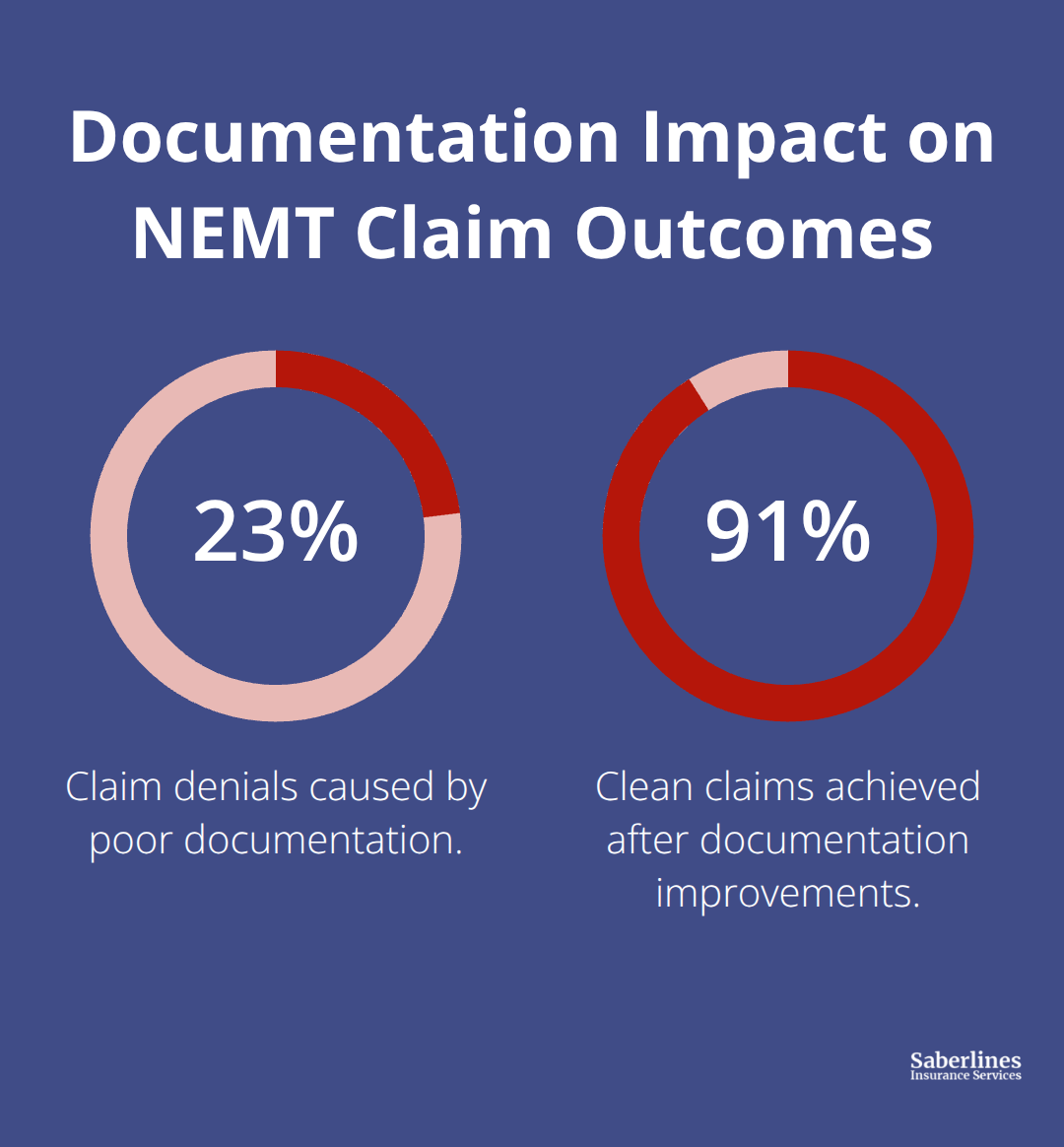
Documentation quality directly impacts both compliance and reimbursement. One real-world example showed that poor documentation caused 23% claim denials and $150,000 in monthly revenue losses, while improvements raised clean claims to 91% and added $200,000 monthly. Without insurance that covers errors and omissions or professional liability, missed appointments or scheduling failures expose you to claims. Payers demand proof of coverage before authorizing trips, and gaps in your policy mean lost business.
Financial Exposure Multiplies Across Multiple Fronts
Operating without adequate coverage forces you to absorb the cost of vehicle repairs after accidents, medical settlements, legal defense, and regulatory fines simultaneously. Most NEMT providers operate on thin margins; a $75,000 accident claim or $50,000 in compliance penalties forces immediate closure or desperate borrowing. The financial pressure extends beyond single incidents-it compounds across your entire operation.
Insurance gaps also affect your ability to contract with healthcare networks and Medicaid brokers. These partners require proof of specific coverage limits before they’ll route patients to your vehicles. Without that documentation, you lose access to the patient volume that sustains your business. The combination of liability exposure, regulatory penalties, and contract termination creates a perfect storm that transforms one bad year into permanent operational failure. Understanding your specific coverage needs and securing the right policies protects both your patients and your bottom line.
Essential Insurance Coverage for NEMT Providers
Commercial Auto Insurance Protects Your Fleet
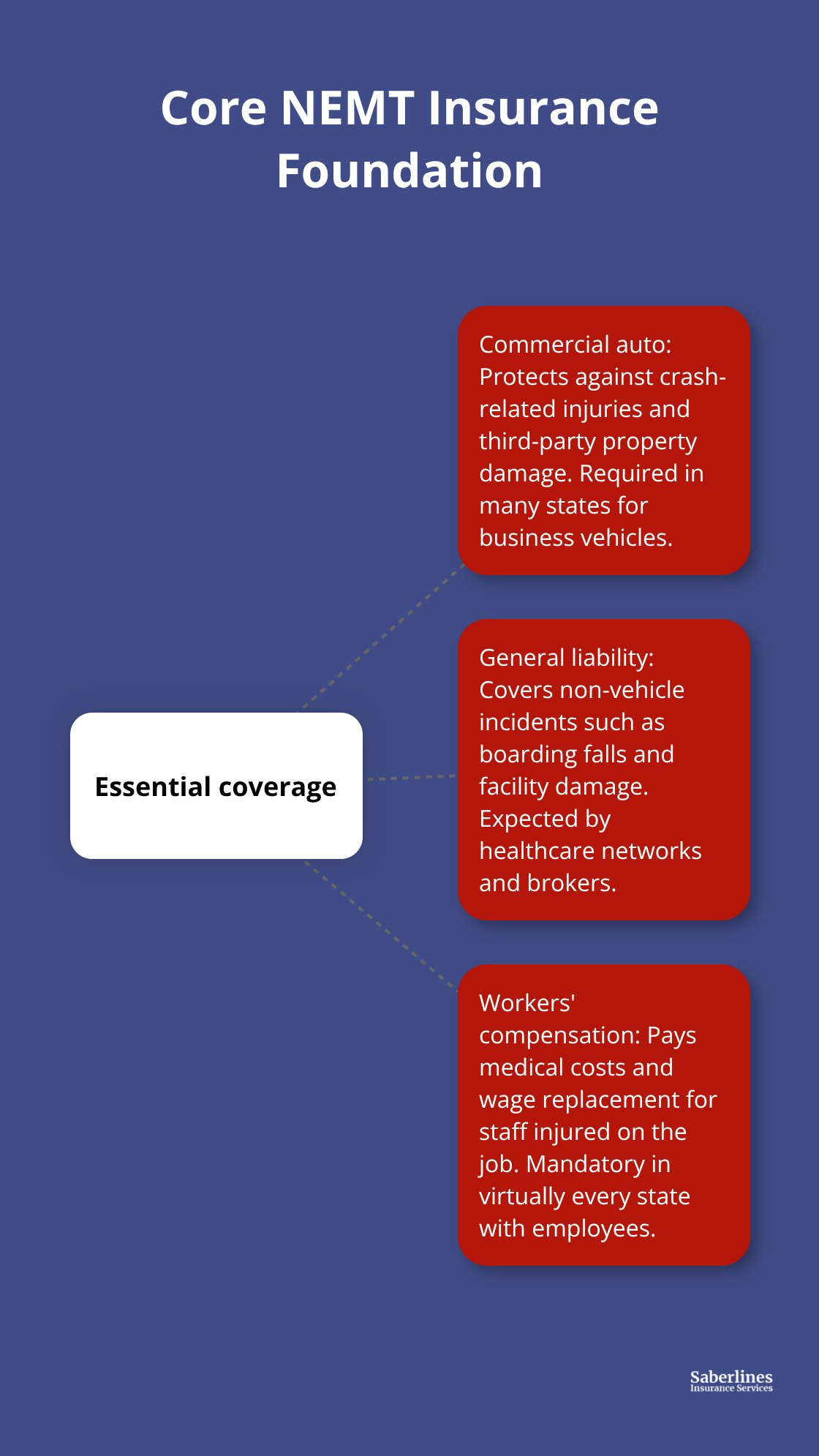
Commercial auto insurance stands as your first mandatory policy when you operate company-owned vans, buses, or wheelchair-accessible vehicles. This coverage protects against financial losses from crashes, medical claims arising from accidents, and third-party property damage. Many states legally require it for business vehicles, so operating without it exposes you to fines and license suspension. Your policy needs to cover the specific vehicle types in your fleet-standard passenger vans, wheelchair lifts, and mini-buses all present different risk profiles.
Standard commercial auto policies sometimes exclude specialized equipment like wheelchair lifts, so you must verify that your coverage includes riders or endorsements for these additions. Coverage limits matter enormously: if your policy carries $100,000 in liability but a serious accident generates a $250,000 settlement demand, you’re personally responsible for the $150,000 gap. Wisconsin’s monthly volume of 300,000 NEMT trips shows the scale at which even small accident rates create significant exposure.
General Liability Covers Non-Vehicle Incidents
General liability insurance covers third-party bodily injuries and property damage separate from vehicle collisions-a passenger falling during boarding, equipment damage to a healthcare facility, or injuries occurring in your dispatch office. This protection proves especially critical because NEMT involves vulnerable populations including elderly and disabled passengers whose injuries trigger higher settlement values. Healthcare networks and Medicaid brokers expect this coverage before they contract with you.
Workers’ Compensation Protects Your Staff and Bottom Line
Workers’ compensation coverage is mandatory in virtually every state if you employ staff, and it covers medical costs and wage replacement when drivers or attendants suffer work-related injuries. For sole proprietors without regular health insurance, workers’ compensation also protects your personal finances from medical bills stemming from on-the-job incidents. The combination of these three policies-commercial auto, general liability, and workers’ compensation-creates the foundation that healthcare networks and Medicaid brokers require before contracting with you.
How Your Operational Choices Shape Coverage and Costs
Your specific operational decisions directly affect coverage costs and requirements. If you use personal, rented, or leased vehicles instead of company-owned fleet vehicles, hired and non-owned auto coverage can be cheaper than full commercial auto insurance, but standard personal auto policies explicitly exclude business use. Operating across state lines triggers Federal Motor Carrier Safety Administration regulations and cross-state insurance requirements that vary significantly, so you must verify compliance with each state where you operate.
When Medicaid networks or healthcare partners impose additional insurance requirements-which they frequently do-you need to verify those demands before finalizing your policy structure. The cost of your coverage depends on multiple factors including service type, vehicle capacity, business revenue, employee count, driving records, coverage limits, deductibles, and claims history. One real-world example demonstrated how documentation quality affects your bottom line: poor record-keeping caused 23% claim denials and $150,000 in monthly losses, while improved documentation raised clean claims to 91% and added $200,000 monthly. This means your insurance investment directly impacts reimbursement success and positions you to evaluate which provider can best match your fleet composition and payer requirements.
Selecting an NEMT Insurance Provider That Matches Your Operation
Understand Your Specific Coverage Needs First
Choosing an NEMT insurance provider requires more than comparing premium quotes. Your provider must understand the specific vehicle types you operate, the states where you transport patients, and the payer networks that contract with you. A general commercial auto insurer won’t recognize that wheelchair lift equipment needs specialized endorsements or that your liability exposure shifts dramatically based on whether you serve Medicaid, Medicare Advantage plans, or private healthcare networks. Wisconsin’s 300,000 monthly NEMT trips occur across different vehicle types and service models, each demanding different coverage structures. Your provider needs to know whether you operate standard vans, wheelchair-accessible buses, or mixed fleets, and whether your contracts require proof of specific coverage limits before payers authorize trips.
Request Detailed Quotes and Ask Direct Questions
Request detailed quotes that itemize coverage for each vehicle type and clearly show what equipment like wheelchair lifts and patient-monitoring devices are actually covered. Ask prospective providers directly: have they insured NEMT operators in your state? Do they understand your payer’s specific insurance requirements? Can they provide references from other transportation providers operating in your service area? Providers with deep NEMT experience know that a $100,000 liability limit may satisfy state minimums but won’t protect you if a serious injury claim reaches $250,000. They structure policies with adequate limits from the start rather than leaving you underinsured.
Look Beyond the Lowest Premium
Cost matters, but the cheapest policy often creates false savings that evaporate when claims arrive. A provider offering premiums 30 percent below market rates may lack claims specialists experienced in transportation disputes or may impose deductibles so high that minor accidents drain your cash reserves. Saberlines Insurance Services specializes in non-emergency medical transport and understands how operational details affect both risk and cost.
Evaluate Three Concrete Provider Capabilities
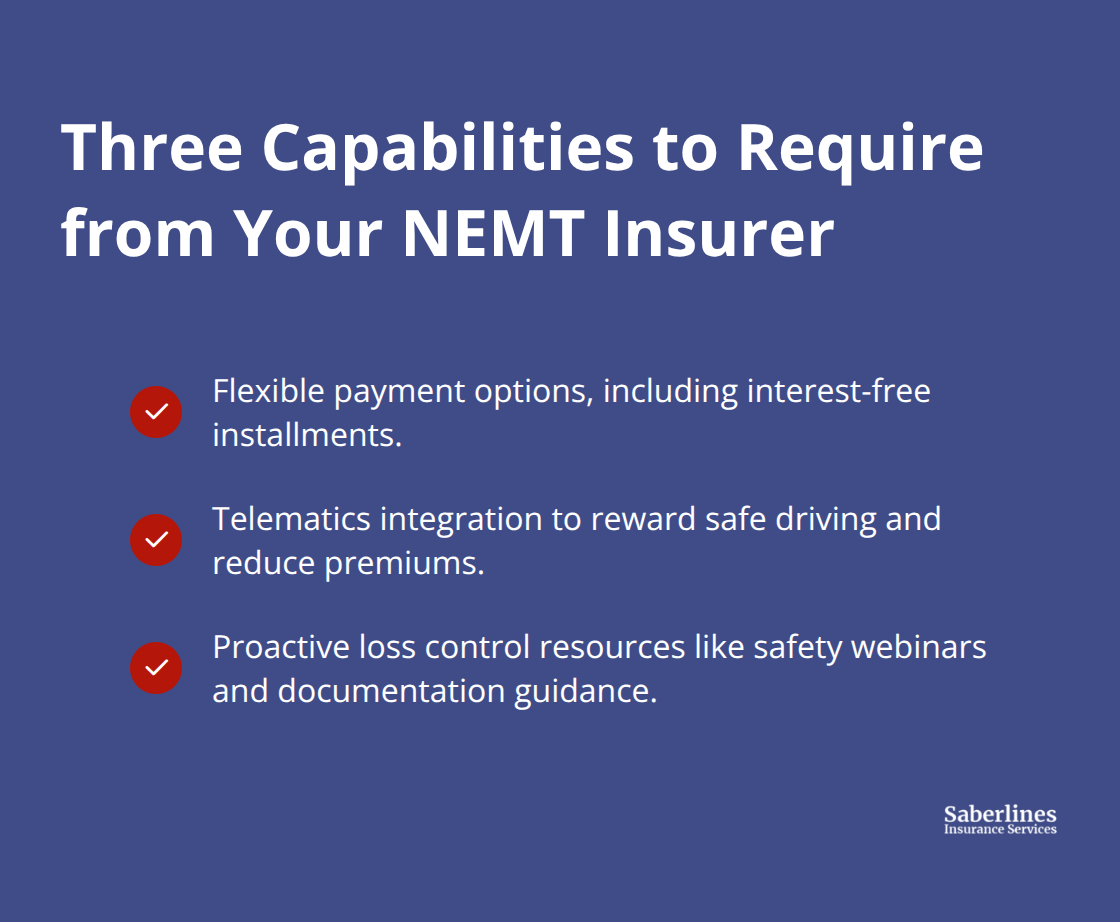
Evaluate providers based on three concrete factors: do they offer flexible payment options like interest-free installment plans to ease budget pressure, can they integrate telematics data from your fleet to lower premiums through demonstrated safety improvements, and do they provide proactive loss control resources including safety webinars and documentation guidance that directly improve your claims outcomes? A provider offering telematics integration can reduce your premiums while simultaneously improving driver safety and route efficiency, creating value beyond the policy itself.
Request a Detailed Cost Breakdown
Request a detailed breakdown of what factors drive your specific quote, then ask how each factor could be improved to lower costs without reducing essential coverage. Providers that engage in this conversation demonstrate they understand NEMT operations rather than simply applying generic insurance formulas to your application.
Final Thoughts
NEMT operations insurance protects far more than your vehicles and staff-it protects your ability to operate at all. The coverage gaps we’ve outlined throughout this guide represent real financial and legal exposure that compounds across every trip your fleet completes. Wisconsin’s 300,000 monthly NEMT trips demonstrate the operational scale where even minor gaps in coverage create significant risk, and a single serious injury claim, documentation failure, or regulatory violation can terminate your Medicaid contracts and force closure within months.
The path forward requires three concrete actions. First, audit your current policies against your specific operational needs including vehicle types, service areas, payer requirements, and contract obligations. Second, request detailed quotes from providers who actually understand NEMT rather than applying generic commercial insurance formulas to your application, and third, prioritize adequate coverage limits and specialized endorsements over lowest-cost premiums because underinsurance creates false savings that evaporate when claims arrive.
We at Saberlines Insurance Services specialize in non-emergency medical transport and understand how operational details affect both risk and cost. Our team combines fast quotes with deep industry expertise to keep your operation compliant and protected without unnecessary expense, and when you’re ready to evaluate your coverage or request quotes, contact us to discuss your specific operational needs and get a detailed breakdown of what comprehensive NEMT operations insurance actually costs for your fleet.
The information provided in this blog is for general informational purposes only and does not constitute legal, financial, or insurance advice. Coverage options, terms, and availability may vary. Please consult with a licensed professional for advice specific to your situation.