
Personal Use Commercial Insurance: When Business Vehicles Double as Personal Cars
Your commercial vehicle isn’t just for business anymore. Many owner-operators and fleet drivers use their work vehicles for personal errands, weekend trips, or commutes home-but most standard commercial policies don’t cover these situations.
At Saberlines Insurance Services, we see this coverage gap create real problems for business owners. Personal use commercial insurance fills that gap, protecting you when your vehicle crosses the line between work and personal life.
What Personal Use Really Means for Your Commercial Vehicle
The Gray Areas That Create Coverage Problems
Personal use on a commercial vehicle extends far beyond weekend joy rides or grocery runs. It includes commuting to the office, stopping for lunch during work trips, dropping family members at school, or taking the vehicle home after your shift ends. The line between business and personal blurs quickly in real operations. A delivery driver who stops at a bank while making route deliveries, an owner-operator who picks up supplies for the business but also uses the truck for a personal errand on the same trip, or a fleet manager who drives a company vehicle to a client meeting and then to a family dinner-these situations create massive coverage headaches. Standard commercial policies treat personal use as a violation of the policy terms, not an exception. When you use a commercial vehicle for personal reasons without explicit coverage, you operate in a coverage void. The insurance company can deny your entire claim if an accident happens during that personal use, regardless of fault. This isn’t theoretical-it happens regularly.
When Claims Get Denied
A contractor drives a company pickup to a job site but stops at home for lunch. An accident occurs on the personal portion of the trip. The insurer denies the claim entirely. Now you face personal liability for damages, medical bills, and legal costs. The financial exposure becomes staggering. Your commercial policy explicitly excludes personal use. Your personal auto policy explicitly excludes business use. If you operate both, you’re caught between two policies that refuse to pay.
Why Insurers Draw This Line
Commercial policies carry higher liability limits and broader protections specifically because vehicles serve business purposes. When personal use enters the picture, the risk profile changes dramatically. The insurer priced your policy based on predictable business routes and professional drivers. Personal use introduces unpredictability-different driving habits, different times of day, different destinations. Insurers respond by excluding it entirely rather than calculating the added risk. This exclusion protects their underwriting model but leaves you exposed.
The Structural Coverage Gap
The coverage gap exists because personal auto insurance and commercial auto insurance solve different problems. Personal policies cap liability at $100,000 to $300,000 typically, adequate for individual drivers but insufficient for business vehicles that carry higher risk. Commercial policies offer $500,000 to $1,000,000 or more in liability limits. Neither policy was designed to cover mixed-use scenarios. This gap isn’t a loophole or an oversight-it’s structural. The insurance industry built these products for single-use vehicles, not the reality of modern business operations where vehicles serve dual purposes.
Understanding this gap is the first step toward fixing it. The solution lies in endorsements and riders that explicitly add personal use protection to your commercial policy-and that’s where the real options emerge.
Where Personal Use Coverage Actually Matters
Owner-Operators and the Commute Problem
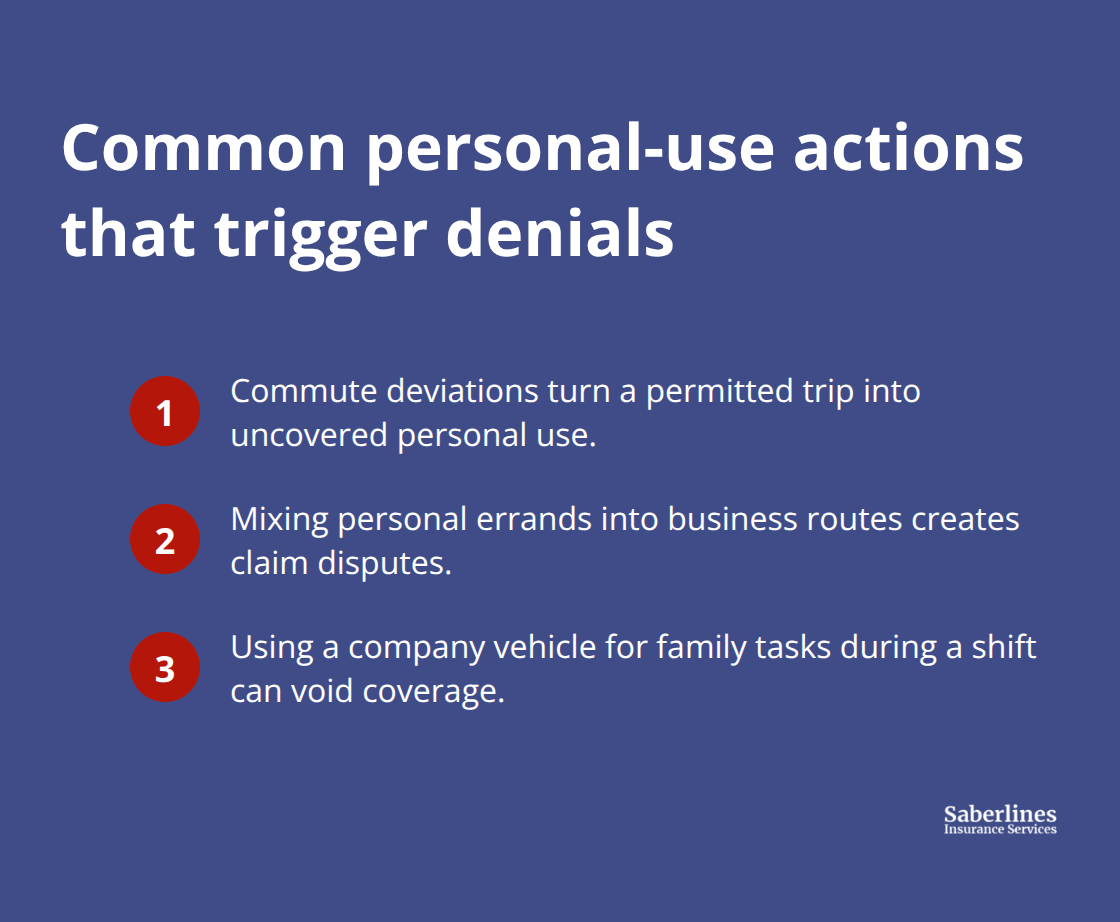
Owner-operators face a brutal reality: most commercial policies allow them to drive home after shifts, but the moment they use that truck for a personal errand-picking up supplies for the household, running to the bank, or grabbing lunch for the family-the coverage evaporates. A truck driver in California who takes a company vehicle home and stops at a grocery store on the way faces a denied claim if an accident happens during that grocery run. The insurer sees it as personal use outside the policy’s scope, and your business liability becomes personal liability.
Fleet Drivers and the Deviation Trap
Fleet drivers encounter the same trap differently. When drivers take vehicles home after their shift, many policies technically permit this commute, but the second they deviate-dropping kids at school, picking up a family member, or making a personal appointment-they step outside coverage. Progressive insures over 2.3 million commercial vehicles nationwide, yet even their policies require explicit disclosure of personal use patterns before coverage applies. Without that disclosure, a fender-bender during a school run can trigger a denial that costs thousands in uninsured liability.
Mixed-Use Operations in Delivery and Transportation
Mixed-use operations in delivery and transportation services create the murkiest scenarios. A delivery driver for a restaurant supply company might make legitimate business stops but also use the vehicle to run personal errands on the same route. The insurance company struggles to separate business miles from personal miles, so they often deny claims entirely rather than parse the trip’s purpose. A contractor who hauls equipment to job sites but occasionally uses the same truck for personal projects faces identical exposure.
The Three-Step Solution to Close the Gap
These situations demand explicit personal use endorsements added to your commercial policy before an accident happens, not after. The solution requires three concrete steps: first, disclose exactly how your vehicles move between business and personal use when you quote coverage; second, request endorsements that cover incidental personal use or broader personal-use protection depending on your operation’s reality; third, verify that your coverage limits stay adequate when personal use enters the picture, since personal trips often occur during unpredictable times when liability exposure peaks.
A commercial policy with proper personal-use endorsements costs more than standard coverage, but the alternative-operating without protection in the coverage gap-costs infinitely more when an accident happens. The next step involves understanding which specific endorsements and riders actually work for your operation, and how to request them from your insurance provider.
Getting Personal Use Coverage Added to Your Commercial Policy
Disclose Your Actual Personal Use Patterns
Disclosing personal use to your insurance provider sounds straightforward until you attempt it. Most owner-operators and fleet managers assume they can simply call their agent and request coverage for personal driving, but the real process demands specificity that catches many operators off-guard. You need to describe exactly which vehicles will see personal use, how often that personal use occurs, who will drive during personal trips, and what types of personal errands qualify. Vague answers like “sometimes” or “occasional use” won’t work-insurers need concrete details. A contractor who drives a company pickup home three nights per week and uses it for personal errands on weekends requires different coverage than an owner-operator who drives home once monthly. The disclosure process typically happens during the quote phase, so you must address it from the first conversation with your agent. Write down your actual personal use patterns before contacting your provider. Document the routes, frequency, and purpose of personal trips. This documentation becomes your baseline for requesting appropriate endorsements.
Understand Which Endorsements Fit Your Operation
Endorsements and riders represent the actual mechanism that bridges the coverage gap, and understanding which ones apply to your operation separates adequate protection from dangerous exposure. Hired auto coverage protects your business when you rent or lease a vehicle temporarily, but it covers liability only-not physical damage to the rented vehicle. Non-owned auto coverage applies when employees use their personal vehicles for business purposes, protecting your company from lawsuits but again excluding damage to that employee’s car.
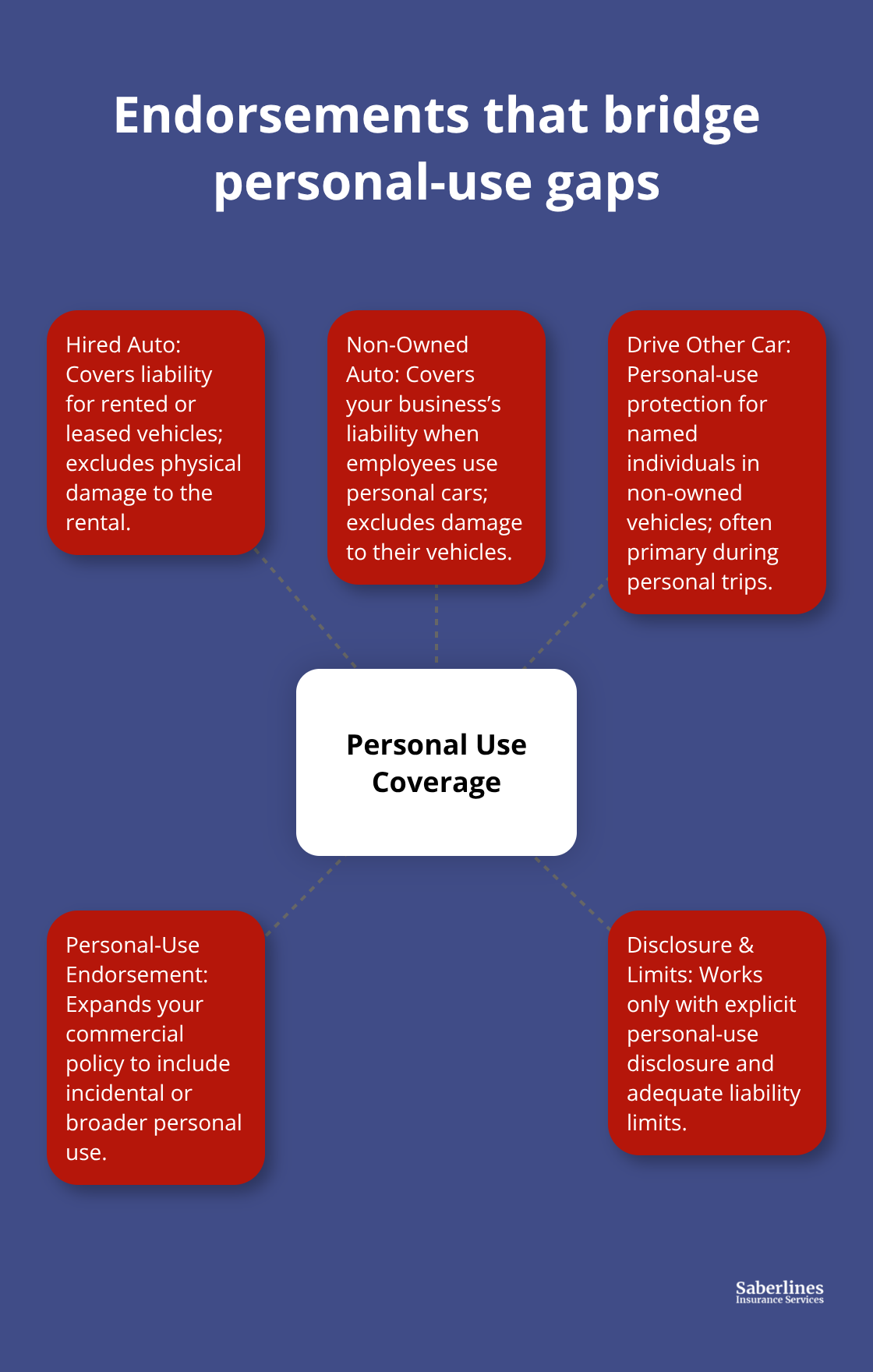
Drive Other Car coverage provides personal-use protection for named executives or individuals driving non-owned vehicles, functioning as primary coverage for personal use. For dual-use operations, you typically need non-owned auto coverage combined with explicit personal-use endorsements on your commercial policy itself. These endorsements expand your policy’s scope to include incidental personal use or broader personal-use categories depending on your operation’s reality.
Navigate State-Specific Regulations
Personal-use endorsements vary by jurisdiction, and some states permit broader coverage while others impose stricter limitations. Verify that your endorsements align with your state’s regulations before assuming coverage applies. California, for example, has specific rules about what qualifies as incidental personal use versus prohibited personal use on commercial policies. Your agent must confirm that any endorsement you add complies with your state’s insurance code.
Calculate the True Cost of Personal-Use Endorsements
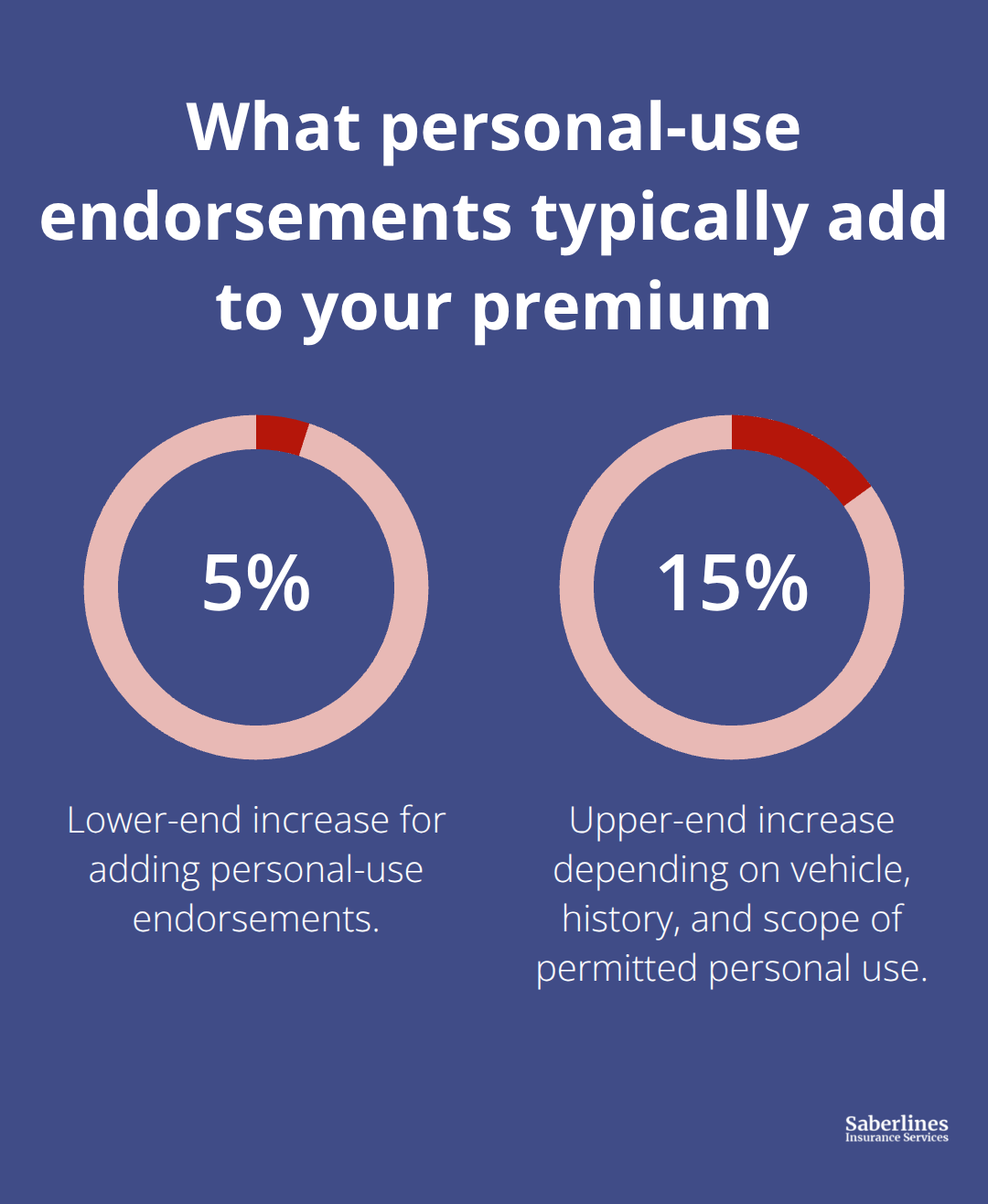
The cost of adding personal-use endorsements typically ranges from 5 to 15 percent above standard commercial rates, depending on your vehicle type, driving history, and the scope of personal use permitted. This premium increase feels substantial until you calculate the cost of a single denied claim involving personal use-medical bills, property damage liability, and legal defense costs frequently exceed $50,000 for moderate accidents.
A contractor involved in a fender-bender during a personal errand faces personal liability exposure that can reach six figures when the commercial policy denies the claim. The endorsement premium becomes trivial compared to that exposure. We help owner-operators and fleets match your actual operations with coverage that reflects your real-world vehicle usage patterns rather than forcing you into standard policies designed for single-use operations.
Final Thoughts
Accurate personal use commercial insurance coverage protects your operation from the financial devastation that claim denials create. The gap between standard commercial policies and personal auto insurance exposes owner-operators and fleet managers to tens of thousands in uninsured liability when accidents happen during personal use. A single denied claim can cost more than years of endorsement premiums combined.
Three actions close this gap immediately. Document your actual vehicle usage patterns before contacting your insurance provider, specifying which vehicles see personal use and how often. Request endorsements that match your operation’s reality-non-owned auto coverage, hired auto coverage, and personal-use riders exist to close the gaps that standard policies leave open. Verify that your coverage limits stay adequate when personal use enters the picture, since personal trips often occur during unpredictable times when liability exposure peaks.
We at Saberlines Insurance Services help owner-operators and fleets secure personal use commercial insurance that reflects your real-world vehicle usage. Contact us to review your current policy and add the endorsements your operation needs.
The information provided in this blog is for general informational purposes only and does not constitute legal, financial, or insurance advice. Coverage options, terms, and availability may vary. Please consult with a licensed professional for advice specific to your situation.