
California Trucking Insurance Rates: What Fleets Should Expect
California trucking insurance rates have climbed significantly over the past two years, driven by rising accident costs and stricter regulations. Fleet operators across the state are paying more than ever for coverage.
At Saberlines Insurance Services, we’ve helped hundreds of trucking companies understand what’s behind these increases and how to manage them. This guide breaks down the real factors affecting your premiums and shows you concrete steps to reduce what you’re paying.
What Pushes Your Insurance Rates Up
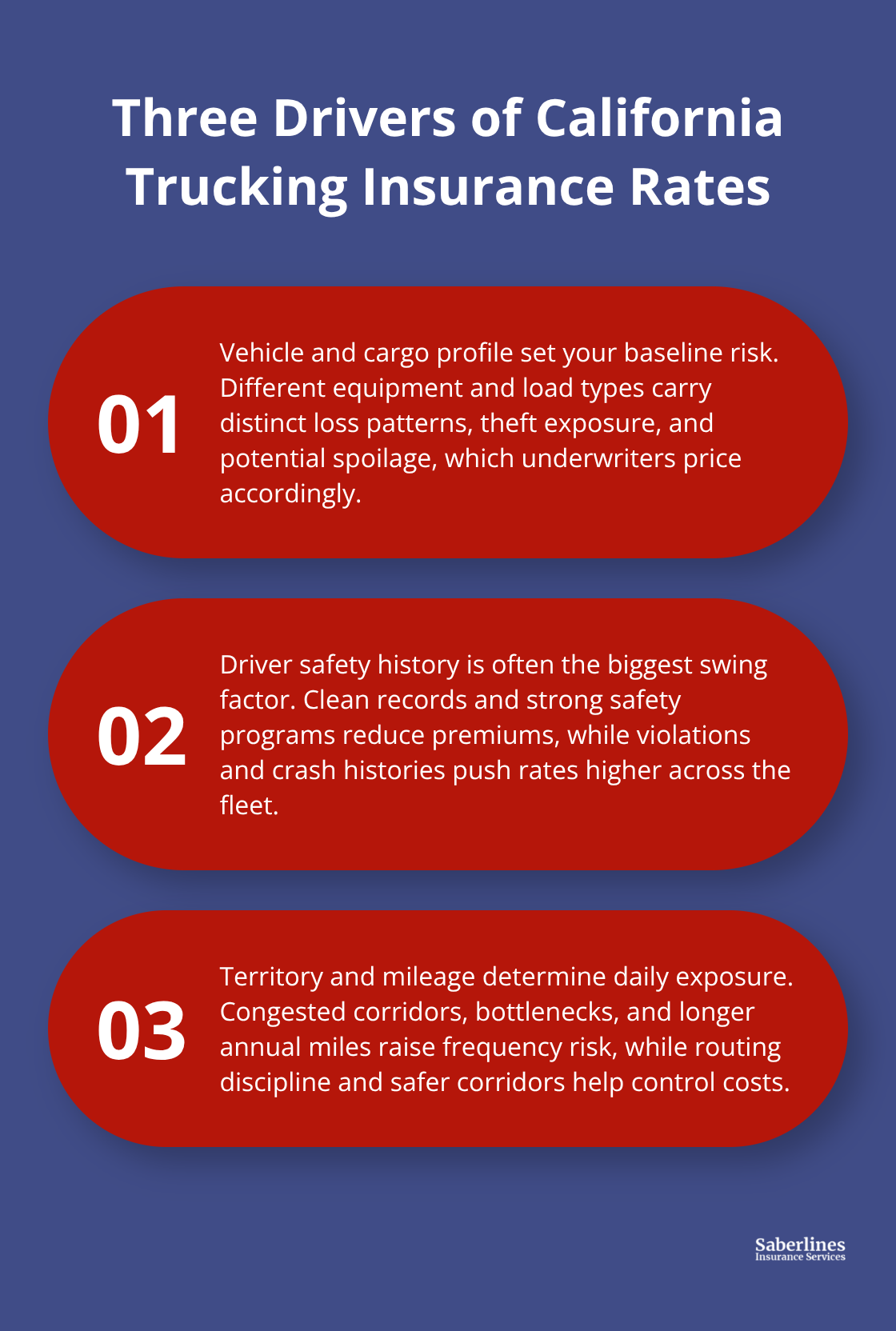
Your insurance premium reflects how insurers view your risk profile, and in California, three core factors dominate that calculation. Vehicle type directly impacts your rate because a refrigerated reefer hauling produce faces different loss patterns than a flatbed carrying steel or a tanker transporting hazardous materials. Cargo classification matters because high-value or temperature-sensitive loads attract higher theft risk and spoilage claims. ATRI’s research on cargo theft shows that California fleets experience measurable theft losses that ripple through premium pricing, especially on routes passing through known theft hotspots identified in ATRI’s Top 100 Truck Bottlenecks. Your tractor’s age, braking system capability, and whether it includes collision avoidance technology all factor into the underwriting decision. Newer equipment with advanced driver assistance systems typically qualifies for better rates, though insurers also account for higher repair costs when ADAS components sustain damage.
Driver Safety History Weighs Heavily
Your driver’s record is often the single largest variable in your premium calculation. A clean five-year history with zero accidents costs substantially less than a driver with two at-fault collisions. Insurers pull CSA scores and FMCSA records, so violations for speeding, improper lane changes, or hours-of-service infractions directly increase your costs. ATRI’s research on driver hours-of-service compliance shows that fatigue-related crashes remain a significant claim driver, which means strict compliance with federal driving hour limits protects both safety and your bottom line. Driver age matters too; operators under 25 or over 70 typically face higher premiums due to actuarial loss data. One operator with a poor record can push your fleet rate upward across all vehicles. Structured safety programs with measurable metrics-tracking near-misses, requiring monthly training, and using telematics to monitor harsh braking or speeding-directly influence what insurers offer you at renewal.
Territory and Mileage Shape Your Exposure
Where you operate and how far you travel annually determine your exposure to California’s specific risk landscape. Fleets running primarily in urban corridors face higher accident frequency due to congestion, pedestrian interaction, and complex traffic patterns. ATRI’s research on the cost of congestion to the trucking industry documents that traffic delays raise operating costs and increase your crash risk in congested markets like California. Running through the Central Valley or along I-5 exposes you to weather events, wildlife strikes, and fatigue-related incidents that differ from coastal or mountain routes. Annual mileage directly correlates to premium; a fleet running 50,000 miles per year pays less than one running 500,000 miles, all else equal. However, mileage alone does not tell the full story. A fleet that concentrates its runs on well-maintained highways with good truck parking infrastructure faces lower risk than one using secondary roads with limited rest facilities. ATRI’s truck parking research shows that quality rest stops and secure parking reduce roadside incidents and compliance violations, which insurers recognize when pricing coverage. Routes that regularly pass through ATRI’s identified bottleneck zones typically generate higher claims frequency, and your rates will reflect that exposure. Fleets that proactively route around high-risk corridors and invest in driver wellness programs-supported by ATRI’s research linking driver health to safer driving-demonstrate risk management discipline that insurers reward with competitive pricing. Understanding these three pillars positions you to take action on the factors within your control, which leads directly to the concrete steps that reduce what you actually pay.
Current Rate Trends and Market Conditions
Regulatory Changes Reshape Your Premium Calculation
California’s regulatory environment has shifted dramatically, and your premiums reflect those changes directly. New safety mandates, stricter emissions compliance requirements, and enhanced worker classification rules force insurers to recalibrate their risk models. The California Department of Transportation and state labor agencies tightened enforcement on vehicle maintenance standards and driver qualification files, which means insurers now price in higher compliance costs and audit exposure.
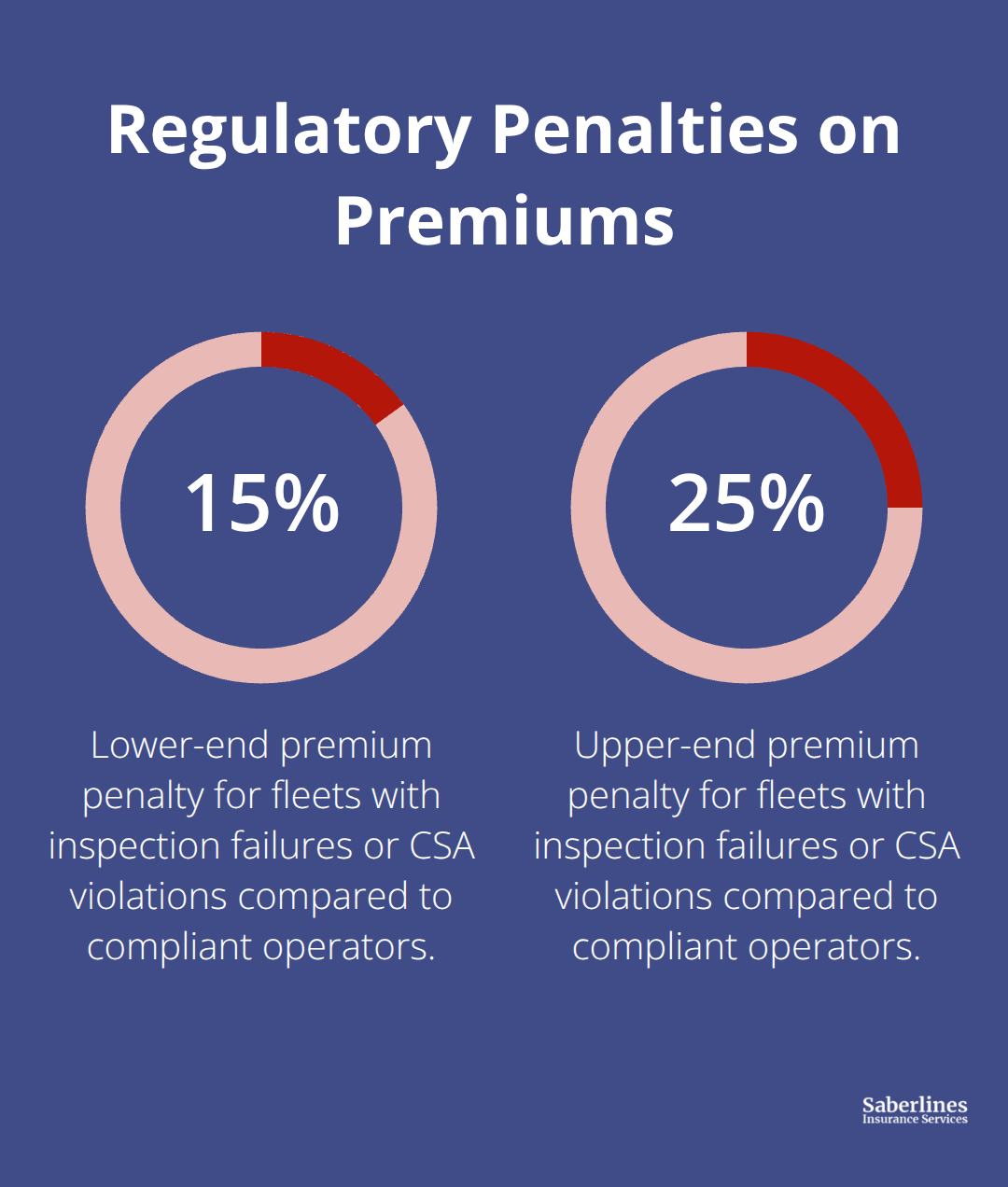
Fleets that fail routine inspections or carry CSA violations face immediate premium penalties-sometimes 15 to 25 percent higher than compliant operators. These regulatory pressures are not temporary; they’re embedded in how underwriters now assess your risk. A clean compliance record has become the baseline expectation, not a discount opportunity.
Fleets operating without a documented safety program or failing to maintain current vehicle certifications should expect substantial rate increases at renewal.
Your Claims History Determines Your Rate Pool
Your accident and claims history directly determines whether you qualify for preferred rates or land in a high-risk pool. Insurers track not just at-fault collisions but also frequency of any claim, including minor incidents that might seem insignificant. Two cargo claims within three years, even if small, signal to underwriters that your operation carries elevated loss potential.
ATRI’s research on cargo theft shows that California experiences measurable theft losses on specific routes. If your claims history includes theft incidents, insurers will price you accordingly or exclude certain corridors from coverage. The severity of past accidents matters more than you might think; a single high-dollar bodily injury claim can keep your rates elevated for five years or longer, even if it was not your fault.
Claims frequency-the number of incidents regardless of size-affects your rate more than claim severity alone. A fleet with three minor accidents in two years faces steeper increases than one with a single major loss. This pattern holds across California’s insurance market because frequency signals operational risk that severity alone cannot capture.
Seasonal Patterns and Utilization Cycles
Seasonal patterns shape what you pay, though not in the way most operators expect. Winter months typically see higher accident frequency due to weather, but California’s insurance market doesn’t follow traditional seasonal pricing models as strictly as other states. Instead, your rates tend to spike during peak freight seasons when utilization increases and your fleet operates longer hours under tighter deadlines.
Summer and early fall often bring higher premium volatility because accident data from the preceding months influences renewal calculations. Fleets that operate year-round with consistent mileage face more stable rates than those with dramatic seasonal swings in activity. If your operation scales up significantly during harvest season or holiday shipping periods, that increased exposure gets priced into your renewal quote months later when insurers analyze your actual loss patterns.
This timing lag between your operational changes and rate adjustments creates an opportunity. Fleets that maintain steady utilization and document their safety improvements throughout the year position themselves to negotiate better terms at renewal. Understanding how insurers track these patterns helps you anticipate what your next quote will reflect and what actions you can take now to influence that outcome.
How to Lower Your Insurance Costs
Install Safety Technology and Train Your Drivers
Structured safety programs with documented metrics change how underwriters assess your operation. ATRI’s research on safety technology adoption shows that fleets installing collision mitigation systems, lane departure warnings, and telematics see measurable reductions in accident frequency and severity. Insurers recognize this investment and typically offer 10 to 15 percent discounts for fleets that install these systems and couple them with mandatory driver training on how to use them.
The training component matters as much as the equipment. A fleet that purchases telematics but never reviews the data with drivers wastes the investment. Set a monthly cadence where you pull harsh braking events, speeding incidents, and near-miss data from your telematics platform and discuss them in driver meetings. Track these metrics over three to six months and present the improvement trend to your insurer at renewal. Insurers see this discipline and move you into preferred underwriting pools where rates drop noticeably.
Invest in Driver Wellness Programs
Driver wellness programs, backed by ATRI research linking driver health to safer driving outcomes, provide another lever for rate reduction. Fleets that offer fatigue management training, sleep quality resources, and preventive health screenings demonstrate operational maturity that underwriters value. These programs cost far less than a single claim and position your fleet as low-risk.
Address Violations and Demonstrate Corrective Action
Your driving record history matters, but what matters more is how you respond when violations occur. A single speeding ticket or hours-of-service violation does not doom your rates, but a pattern does. If your fleet accumulated multiple CSA violations in the past 18 months, your immediate priority is demonstrating corrective action.
Document new training, route adjustments, or equipment upgrades that address the root causes of those violations, then submit that documentation to your insurer before renewal. Insurers reward fleets that show they identified problems and fixed them. When you present this evidence at renewal, you shift the conversation from past failures to current performance.
Shop Multiple Quotes from Trucking Specialists
Never assume your current insurer offers the best rate. Agencies that specialize in trucking transportation can access markets and underwriting criteria that standard commercial brokers cannot reach. Request quotes from at least three agencies that focus on trucking, not general commercial insurance.
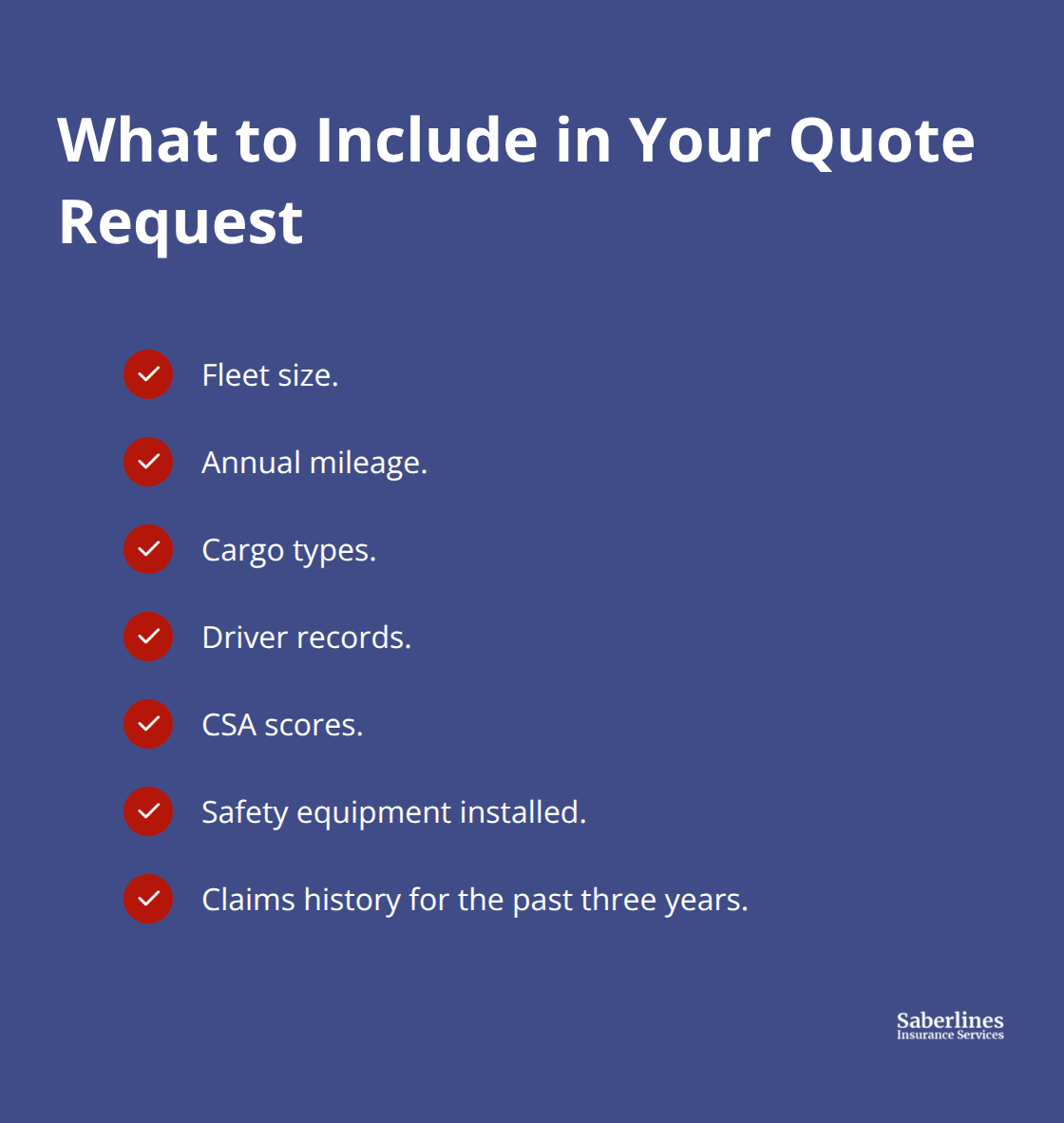
Provide each with identical operational data: your fleet size, annual mileage, cargo types, driver records, CSA scores, safety equipment installed, and claims history for the past three years. The variation in quotes often exceeds 20 percent because different underwriters weight risk factors differently. One insurer may heavily penalize seasonal operations while another ignores it. Another may offer substantial credits for specific safety technology while a competitor does not.
Comparing quotes side by side reveals which underwriter sees your operation as lower-risk, and that alignment typically delivers the best long-term pricing. Request a detailed explanation of any rate increase from your current insurer and ask what specific metrics would improve your renewal quote. Many fleets accept renewal increases without question, but insurers expect negotiation on documented improvements.
Final Thoughts
California trucking insurance rates reflect three core realities: your vehicle and cargo type, your driver safety record, and where you operate across the state. Improvements in one area compound benefits in another, so a fleet that upgrades to collision avoidance technology, implements structured driver training, and routes around high-risk bottlenecks reduces accident frequency while signaling operational discipline that underwriters reward with lower premiums. The market conditions driving rates upward show no signs of reversing, but your ability to control your position within that market remains strong.
Fleets that document safety improvements, maintain clean compliance records, and demonstrate corrective action when violations occur move into preferred underwriting pools where pricing stabilizes or drops. Your next step is straightforward: gather your operational data and request quotes from agencies that specialize in trucking insurance. Provide identical information to multiple carriers so you can compare how different underwriters assess your specific risk profile, since the variation in quotes often exceeds 20 percent because underwriters weight factors differently.
One carrier may heavily credit your telematics investment while another prioritizes your driver wellness program, so finding the underwriter whose risk assessment aligns with your actual operation delivers the best long-term pricing. Saberlines Insurance Services specializes in trucking and transportation insurance, which means we understand how your operation actually works and how to position it with underwriters who value what you’ve built. Contact us to discuss your current coverage and what your next renewal might look like.
The information provided in this blog is for general informational purposes only and does not constitute legal, financial, or insurance advice. Coverage options, terms, and availability may vary. Please consult with a licensed professional for advice specific to your situation.