
Commercial Auto Insurance Fleets: Streamlining Coverage for Your Entire Brigade
Managing commercial auto insurance for fleets is complicated. You’re juggling multiple vehicles, different coverage needs, and state regulations that shift depending on where you operate.
At Saberlines Insurance Services, we’ve seen firsthand how the wrong policy structure costs businesses thousands in gaps and overlapping coverage. A single fleet policy eliminates that chaos and protects your operation from the ground up.
Why Your Fleet Needs Dedicated Coverage
The Real Cost of Fleet Accidents
Fleet accident costs drain transportation businesses faster than most operators anticipate. The average commercial auto accident costs between $20,000 and $25,000 when accounting for vehicle damage, medical expenses, and liability claims, according to industry loss data. A single serious accident involving one of your vehicles can trigger claims that exceed $100,000, especially if bodily injury is involved. When you operate multiple vehicles, that exposure multiplies rapidly.
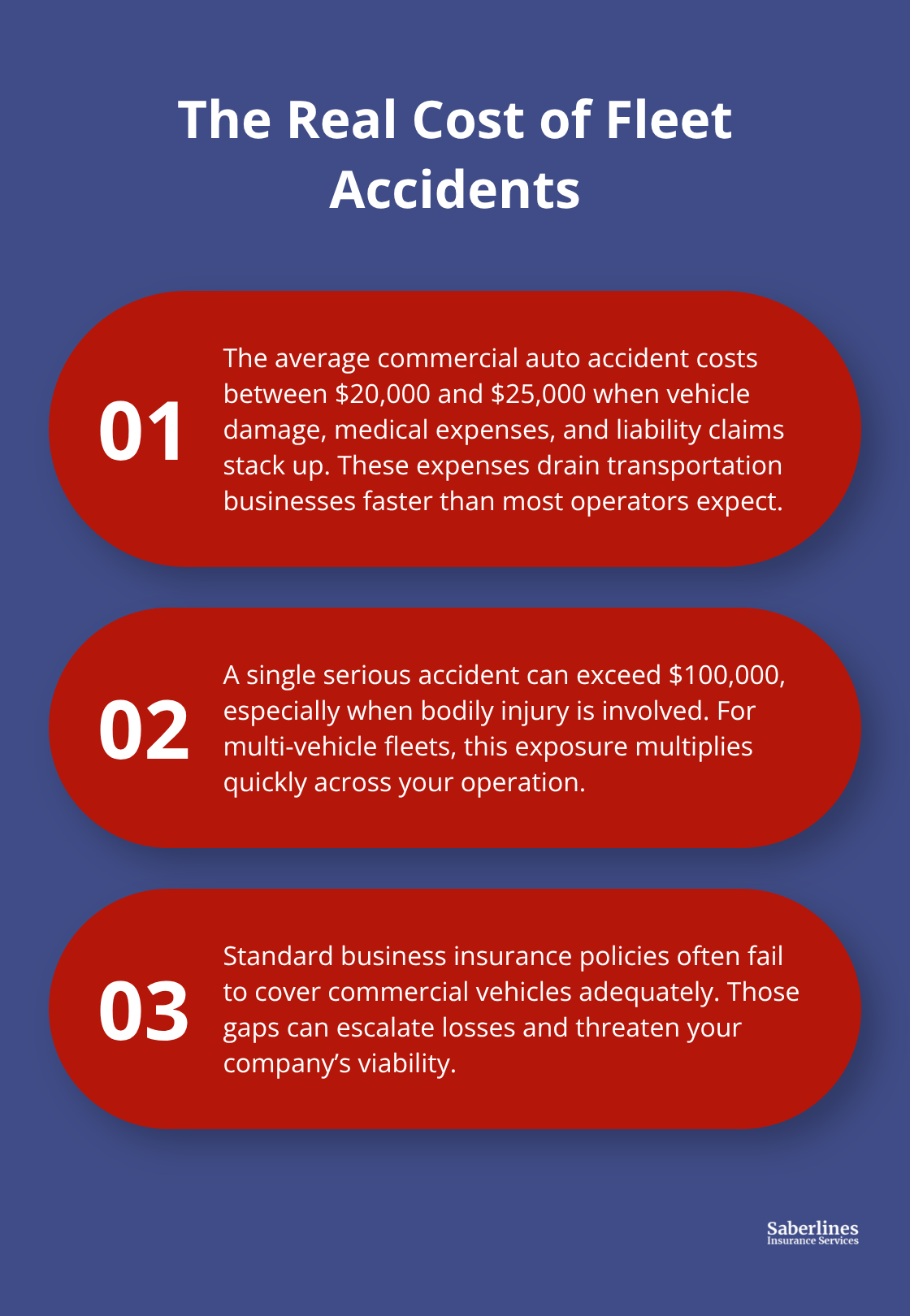
Standard business insurance policies fail to cover commercial vehicles adequately, leaving your operation exposed to catastrophic losses that could threaten your viability.
State Compliance Creates Hidden Complexity
State compliance requirements add another layer of complexity that many fleet operators underestimate. Every state sets minimum liability coverage limits, and these vary significantly. California requires minimum coverage of 15/30/5 for commercial vehicles, while other states demand higher amounts. Some states impose stricter rules based on vehicle weight, passenger capacity, or cargo type. Operating vehicles across multiple states means tracking different requirements simultaneously, which creates compliance gaps when policies fail to align with each jurisdiction’s specific mandates.
How a Single Policy Solves the Problem
A unified fleet policy consolidates these requirements under one structure, eliminating the administrative burden of managing separate policies for different vehicles or states. This approach reduces the risk of inadvertent lapses in coverage that could result in fines ranging from $500 to $5,000 per violation, depending on your state. A dedicated fleet policy also gives you clear visibility into what’s actually protected across your entire operation, preventing the overlapping coverage and dangerous gaps that plague businesses with piecemeal insurance arrangements.
The complexity of fleet coverage extends beyond compliance and accident costs-it touches how you actually structure your protection across different vehicle types and operational scenarios.
What Coverage Actually Protects Your Fleet
Liability Coverage Forms Your Foundation
Liability coverage forms the foundation of any fleet policy, and the limits you select directly determine your financial exposure when accidents happen. Most states require minimum liability limits of 15/30/5, meaning $15,000 per person and $30,000 per accident for bodily injury, plus $5,000 for property damage. These minimums are dangerously low for fleet operations. The Insurance Information Institute reports that a single bodily injury claim can easily exceed $100,000, particularly when multiple people are injured or permanent disability results. We recommend fleet operators carry at least 100/300/100 limits, which provides realistic protection against the catastrophic costs that underfunded policies cannot cover.
Physical Damage Coverage and Deductible Strategy
Physical damage coverage protects your vehicles from collision, theft, vandalism, and weather events. The deductible you choose directly impacts your monthly premium, but selecting the wrong deductible creates hidden costs. A $500 deductible might save you $200 annually compared to a $1,000 deductible, but a single accident forces you to pay that lower amount out of pocket. For fleets operating in high-accident environments or with aging vehicles, a $1,000 or $2,500 deductible often makes financial sense because you avoid frequent claims that trigger premium increases.
Comprehensive Coverage for Non-Collision Threats
Comprehensive coverage handles non-collision damage like theft, weather, and vandalism, and this protection matters significantly if your vehicles sit overnight in unsecured lots. This coverage protects your assets from losses that collision policies exclude entirely, making it essential for fleets with overnight parking in vulnerable locations.
Uninsured Motorist and Medical Payments Protection
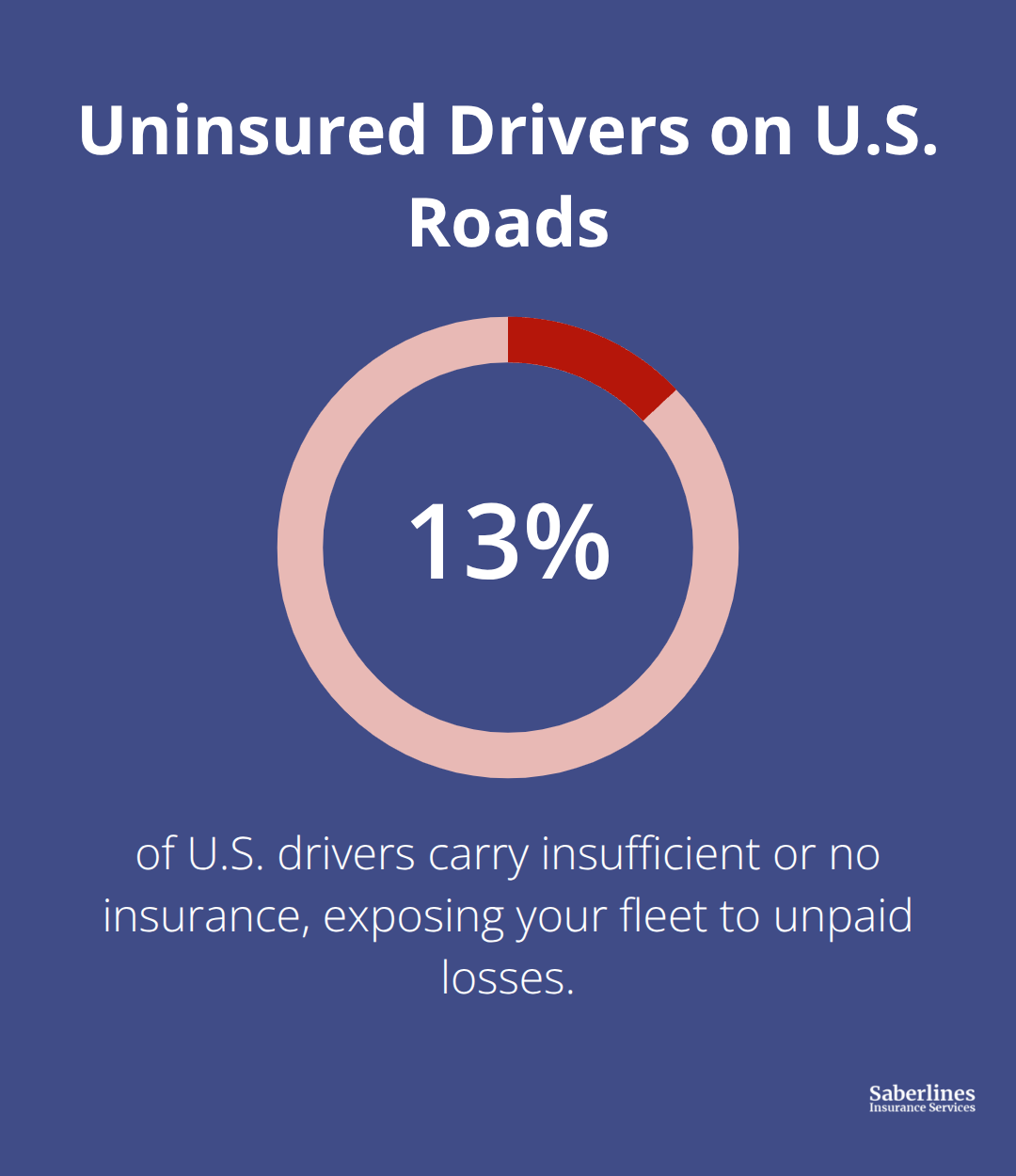
Uninsured motorist coverage protects your drivers when they’re hit by drivers carrying insufficient or no insurance, which affects roughly 13% of drivers according to the Insurance Research Council. This coverage pays medical expenses and lost wages for your drivers when an uninsured or underinsured motorist causes an accident.
Medical payments coverage functions separately from uninsured motorist protection and covers immediate medical costs regardless of fault, which means your drivers get treatment quickly without waiting for liability determinations. For fleets transporting passengers or employees, medical payments coverage becomes essential because you need to address injuries immediately and demonstrate that you prioritized driver safety.
The specific endorsements and exclusions attached to your policy determine whether these protections actually cover your unique operational scenarios.
Selecting the Right Fleet Policy for Your Operation
Start with your actual fleet data to transform policy selection from guesswork into a defensible business decision. Document your fleet size precisely, including how many vehicles you operate and their specific classifications. Vehicle type matters enormously because a fleet of five box trucks generates different risk profiles than five passenger vans or a mix of both. Annual mileage drives premium calculations significantly, so gather accurate numbers from your maintenance records or fleet management software rather than estimating. If your vehicles operate primarily within California versus across state lines, coverage requirements shift dramatically.
Extract Your Fleet Details Before Requesting Quotes
Transportation operators must provide insurers with identical information across all quote requests so comparisons remain valid. Many fleet operators accept the first quote without understanding what drives the premium difference. A $2,000 annual difference between carriers might stem from coverage limits, deductibles, or how the insurer evaluates your claims history. Ask each insurer directly why their premium differs from competitors, and you’ll uncover whether they’re excluding certain vehicle types, applying surcharges for aging equipment, or simply pricing more aggressively for transportation risks. Some carriers specialize in trucking operations while others treat transportation as a secondary market, which creates vast premium variations even for identical coverage.
Understand How Carriers Price Your Specific Risk
Different insurers assess transportation risk through different lenses, and this variation explains why premium quotes fluctuate so dramatically. One carrier might focus heavily on your drivers’ accident history while another emphasizes vehicle age and maintenance records. Request quotes from at least three carriers to establish a realistic market range for your operation. When you compare quotes, verify that each insurer covers the same vehicle types and operational scenarios (the specifics matter tremendously).
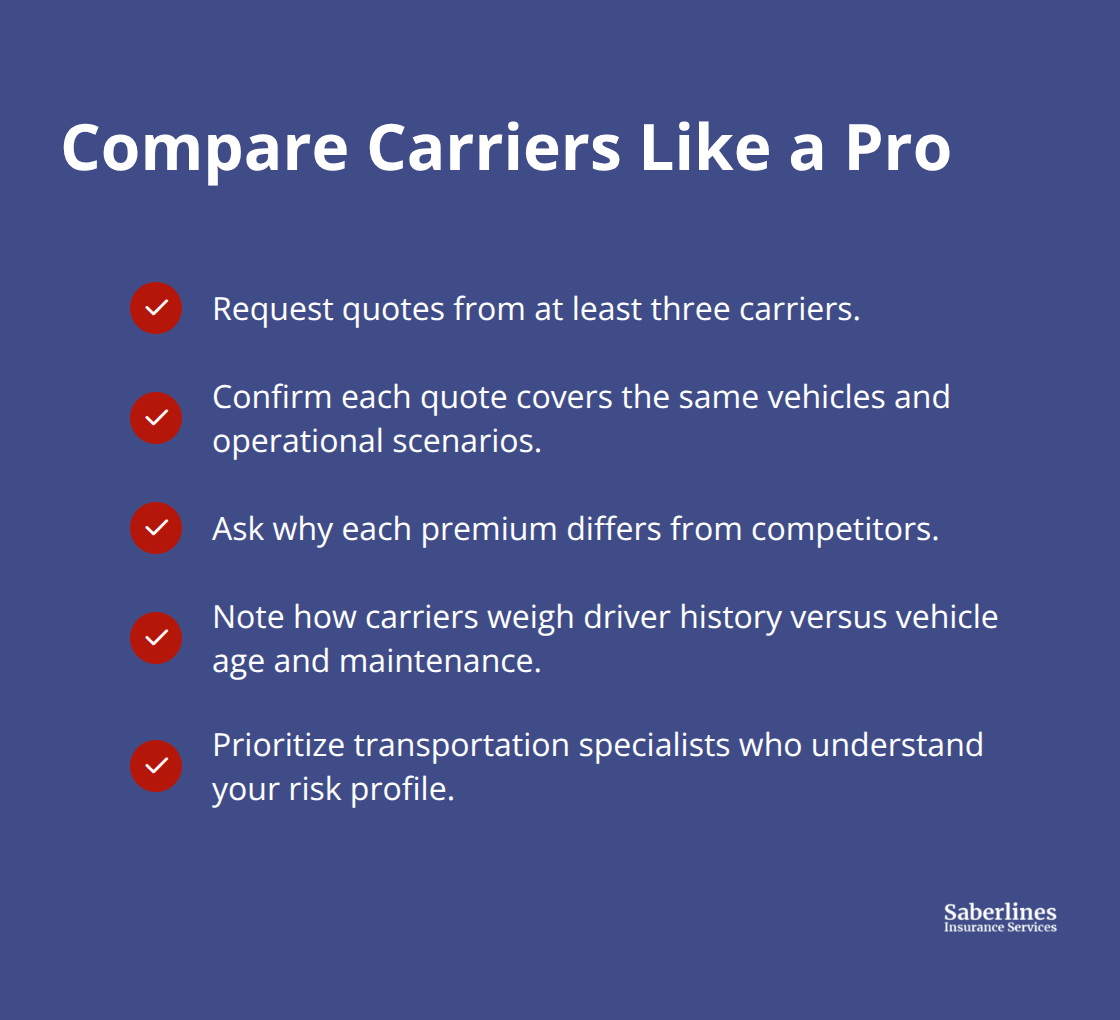
Transportation specialists like Saberlines Insurance Services understand how different carriers evaluate trucking and passenger transportation risks, which helps you identify whether a low quote reflects genuine competitive pricing or simply inadequate coverage for your actual needs.
Review Endorsements Against Your Actual Operations
The policy document contains hidden language that either protects your operation or leaves you exposed. Hired and non-owned vehicle coverage becomes essential if your drivers occasionally use personal vehicles for business purposes, yet many standard policies exclude this scenario entirely. Garagekeepers liability protects you if your facility damages customer vehicles or employee cars while they’re in your care, which matters if you maintain vehicles on-site. Pollution liability exclusions can devastate fleets carrying hazardous materials or operating near environmentally sensitive areas. Trailer interchange coverage protects you when operating trailers you don’t own, a critical gap for many mixed-fleet operations.
Identify Coverage Gaps Before They Cost You
The exclusions section tells you exactly what the policy refuses to cover, and discovering gaps after an accident costs far more than clarifying them during the quote process. Review your specific endorsements against your actual operational scenarios rather than accepting whatever the insurer includes by default. Ask your insurer to explain any exclusions that relate to your business activities, and request that they add coverage through endorsements if standard policies leave you exposed. This approach (comparing your operations against policy language) prevents expensive surprises when claims arise.
Final Thoughts
Commercial auto insurance for fleets protects your operation by consolidating coverage limits, deductibles, and endorsements into one coherent structure that matches your actual business model. You’ve learned how the wrong policy creates gaps that cost thousands when accidents happen, how compliance requirements shift by state, and how endorsements either protect or expose your operation. A unified fleet policy eliminates the administrative chaos of managing multiple policies across different vehicles and jurisdictions.
Carriers price transportation risk differently based on their expertise and market focus, which means premium variations often reflect coverage quality rather than just competitive pricing. Specialists understand which endorsements matter for your specific operations, how different states calculate compliance requirements, and which carriers deliver on their promises when claims arise. At Saberlines Insurance Services, we help owner-operators and fleets navigate these decisions by matching coverage to your actual operational scenarios rather than forcing your operation into generic coverage boxes.
Your fleet’s protection requires reviewing your fleet data, comparing quotes from multiple carriers, and scrutinizing the exclusions that could leave you exposed. Saberlines Insurance Services specializes in commercial auto insurance for trucking and passenger transportation operations, helping fleets secure the protection they actually need without overpaying for unnecessary coverage. The right fleet policy builds a sustainable operation that survives the inevitable accidents and claims that come with transportation business.
The information provided in this blog is for general informational purposes only and does not constitute legal, financial, or insurance advice. Coverage options, terms, and availability may vary. Please consult with a licensed professional for advice specific to your situation.