
Commercial Auto Policy Options: Tailoring Coverage for Your Fleet
Fleet managers face a constant challenge: finding the right commercial auto policy options without overpaying or leaving gaps in protection. Your coverage needs depend on vehicle types, driver experience, and how your fleet operates.
We at Saberlines Insurance Services help businesses match their policies to actual risk. This guide walks you through coverage types, assessment strategies, and ways to reduce costs while staying properly protected.
What Commercial Auto Coverage Actually Protects Your Fleet
Liability Coverage: The Legal Foundation
Liability coverage forms the foundation of any commercial auto policy, and it’s not optional-it’s required by law. This coverage pays for bodily injury and property damage you cause to other people or their vehicles. Most states require minimum limits, but those minimums are dangerously low. The National Highway Traffic Safety Administration reports that the average cost of a serious crash involving commercial vehicles exceeds $100,000. A single accident wipes out years of profit if your liability limits sit at state minimums. We recommend carrying limits of at least $1 million per occurrence for most fleets, though high-value cargo operations or vehicles carrying passengers should push higher.
Collision and Comprehensive: Protecting Your Assets
Collision and comprehensive coverage protects your own vehicles-collision covers crashes regardless of fault, while comprehensive handles theft, weather, vandalism, and animal strikes. These aren’t legally required, but they’re financially smart if your fleet includes newer vehicles or financed equipment. Older trucks worth less than $5,000 might not justify comprehensive premiums, but mid-range vehicles absolutely should carry it.
Uninsured and Underinsured Motorist Protection
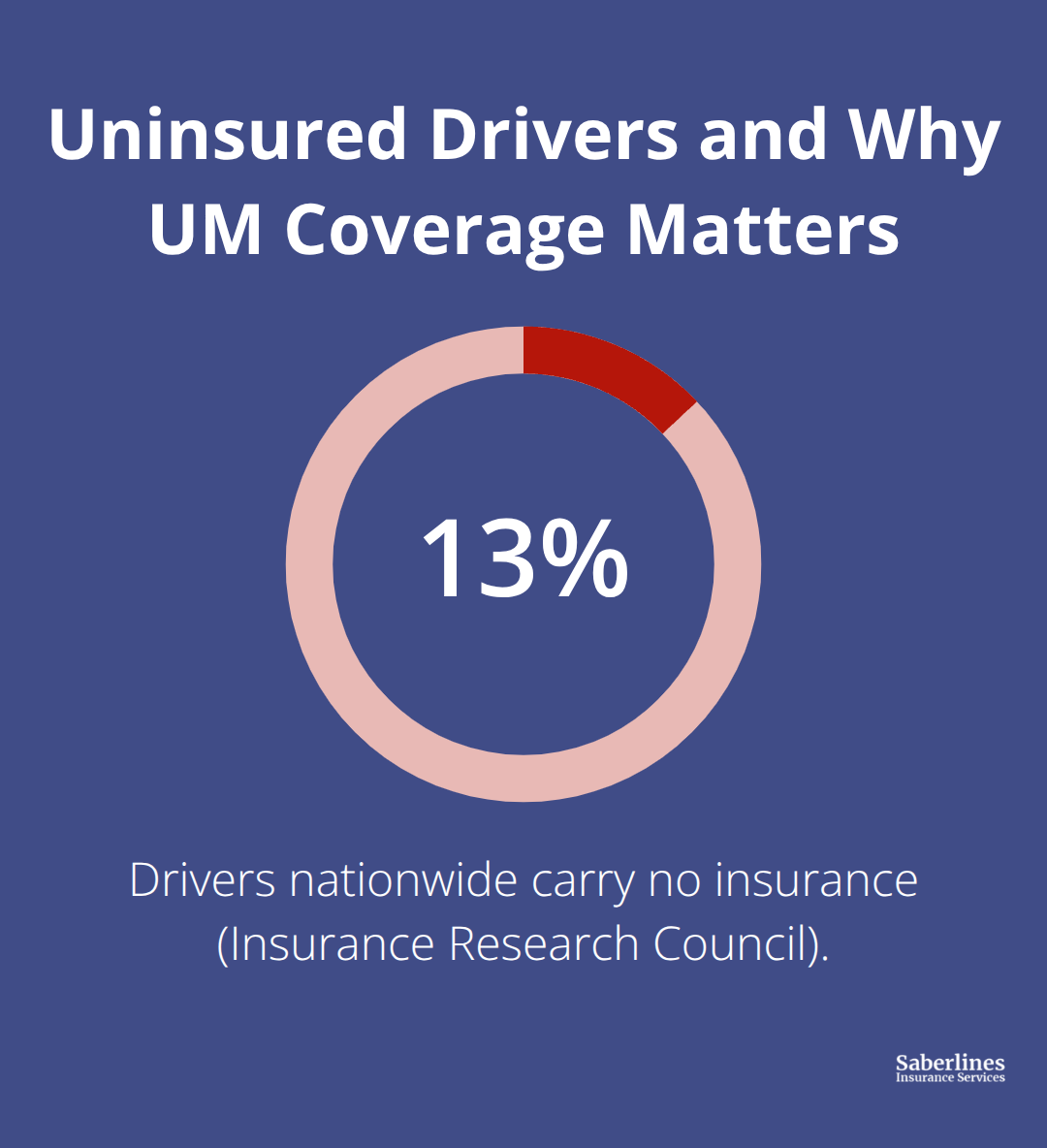
Uninsured and underinsured motorist protection fills a critical gap: roughly 13 percent of drivers nationally carry no insurance, according to the Insurance Research Council. If an uninsured driver hits your vehicle, this coverage protects your business and drivers from absorbing those costs. Underinsured motorist protection kicks in when the other driver’s liability limits fall short of your actual damages.
Why Fleet Operations Demand Layered Coverage
Fleet operations face layered risks that single-vehicle policies don’t address. A delivery driver hits a pedestrian and creates both liability exposure and potential workers’ compensation claims if your employee suffers injury. A cargo vehicle loses its load on the highway and generates liability for damage to other vehicles plus potential environmental cleanup costs. Your coverage strategy should match your actual exposure, not just check boxes on an application form.
Matching Coverage to Your Specific Operations
If your fleet operates in urban areas with high accident rates, liability limits matter more than if you primarily run highway routes. If you carry high-value freight or specialized equipment, comprehensive coverage becomes essential-cargo theft and weather damage represent ongoing financial threats. The cost difference between adequate coverage and minimal coverage is often smaller than fleet managers assume. Adding higher liability limits or comprehensive protection typically increases premiums by 15 to 25 percent annually, while a single uninsured claim costs tens of thousands. Your next step involves assessing your fleet’s specific characteristics-vehicle types, driver experience, and operational patterns-to determine which coverage options actually fit your business.
How to Right-Size Coverage for Your Fleet
Vehicle Type Shapes Your Coverage Strategy
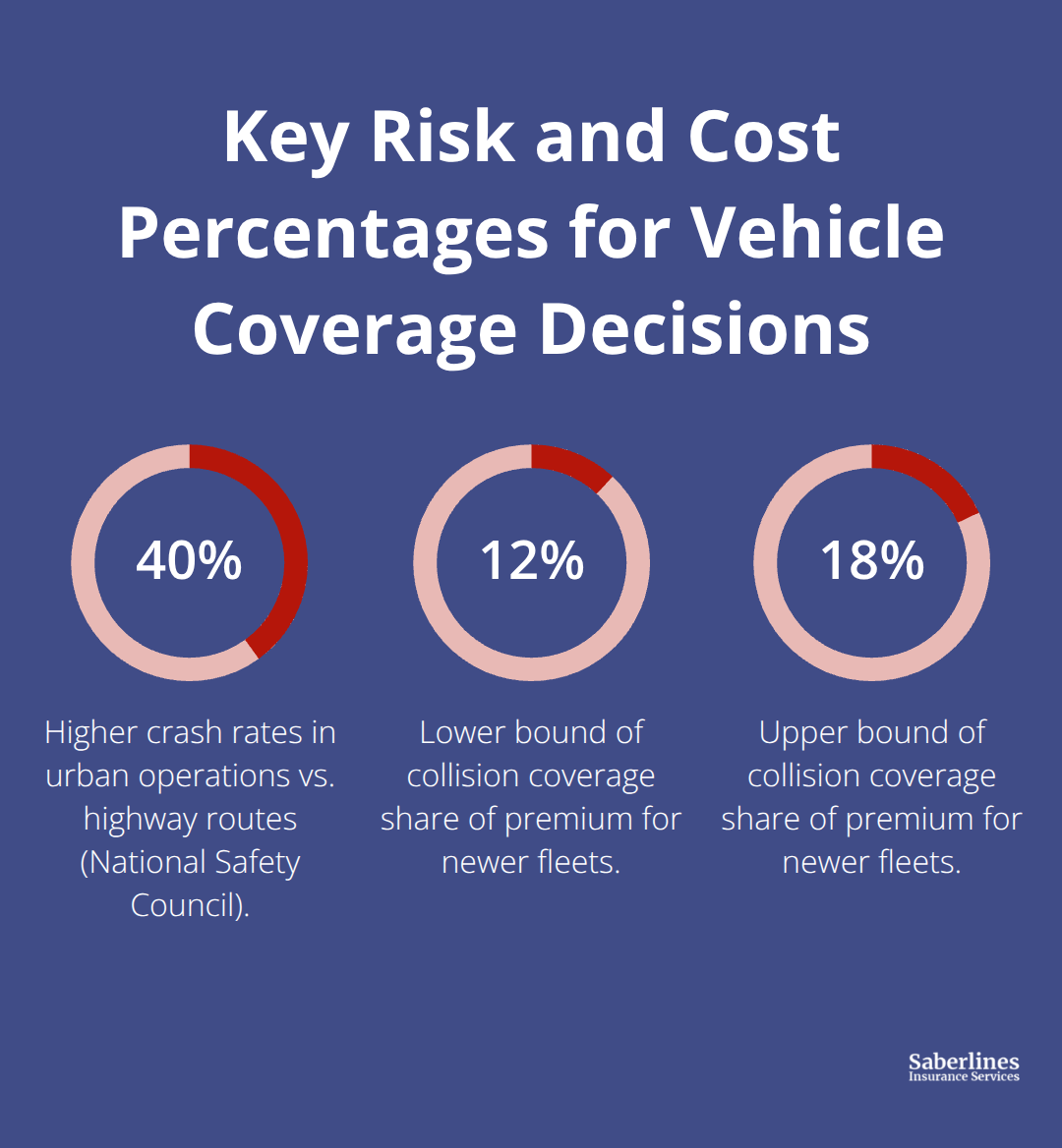
Vehicle type directly determines your coverage needs, and most fleet managers get this wrong by treating all vehicles identically. A box truck making local deliveries faces different risks than a tractor-trailer running interstate routes. Box trucks spend more time in urban environments with higher accident frequencies-the National Safety Council reports commercial vehicles in urban areas experience crash rates roughly 40 percent higher than highway operations. This means your liability limits should reflect that exposure. A delivery fleet should carry minimum liability of $1 million per occurrence, potentially $2 million if operating in major metropolitan areas. Contrast this with a long-haul operation where fewer but more severe crashes occur-these operations need higher limits but might justify lower comprehensive coverage since vehicles spend less time parked in high-theft areas.
Your vehicle mix also determines whether collision coverage makes financial sense. If your fleet averages three years old with vehicles valued between $25,000 and $50,000, collision coverage costs roughly 12 to 18 percent of your premium but protects against significant replacement costs. Vehicles older than eight years typically don’t justify collision premiums unless they’re specialized equipment.
The Insurance Institute for Highway Safety data shows that repair costs for commercial vehicles involved in accidents average $8,500 to $15,000 depending on vehicle class, making the math straightforward-collision coverage pays for itself in a single accident for newer fleets.
Driver Experience and Safety Records Impact Your Rates
Driver experience and safety history separate fleets that pay standard rates from those facing premium increases or coverage restrictions. A fleet with drivers averaging five years of commercial driving experience and zero at-fault accidents in the past three years qualifies for better rates and broader coverage options than a fleet with newer drivers or accident history. The Federal Motor Carrier Safety Administration tracks crash data by driver and carrier, and insurers use this information aggressively-one driver with two at-fault accidents in 24 months can increase your entire fleet’s premiums by 15 to 25 percent. This makes driver selection and retention financially critical, not just a safety concern.
Safety Programs Reduce Premiums and Claims
Implementing a formal safety program with monthly driver training, vehicle inspections, and documented incident reviews demonstrates risk management to insurers and often qualifies your fleet for 10 to 15 percent premium discounts. Dash cameras installed in vehicles provide concrete evidence when disputes arise over fault, protecting your drivers and reducing claims costs. Your coverage limits should also account for driver turnover-if you regularly hire inexperienced drivers, carrying higher liability limits protects against the increased risk those drivers represent. Conversely, a stable fleet with veteran drivers might justify lower limits than industry standards recommend, though this strategy carries real risk if a serious accident occurs.
Matching Coverage Limits to Your Risk Profile
The relationship between driver stability and coverage needs creates a clear pattern: fleets with high turnover require more protective coverage, while established teams with proven safety records can operate more efficiently. Your next step involves calculating the actual financial exposure your fleet faces based on vehicle values, driver experience, and operational patterns-this assessment determines which coverage options actually fit your business and which ones represent unnecessary expense.
How to Actually Save Money on Fleet Coverage
Bundle Policies to Cut Your Total Premium
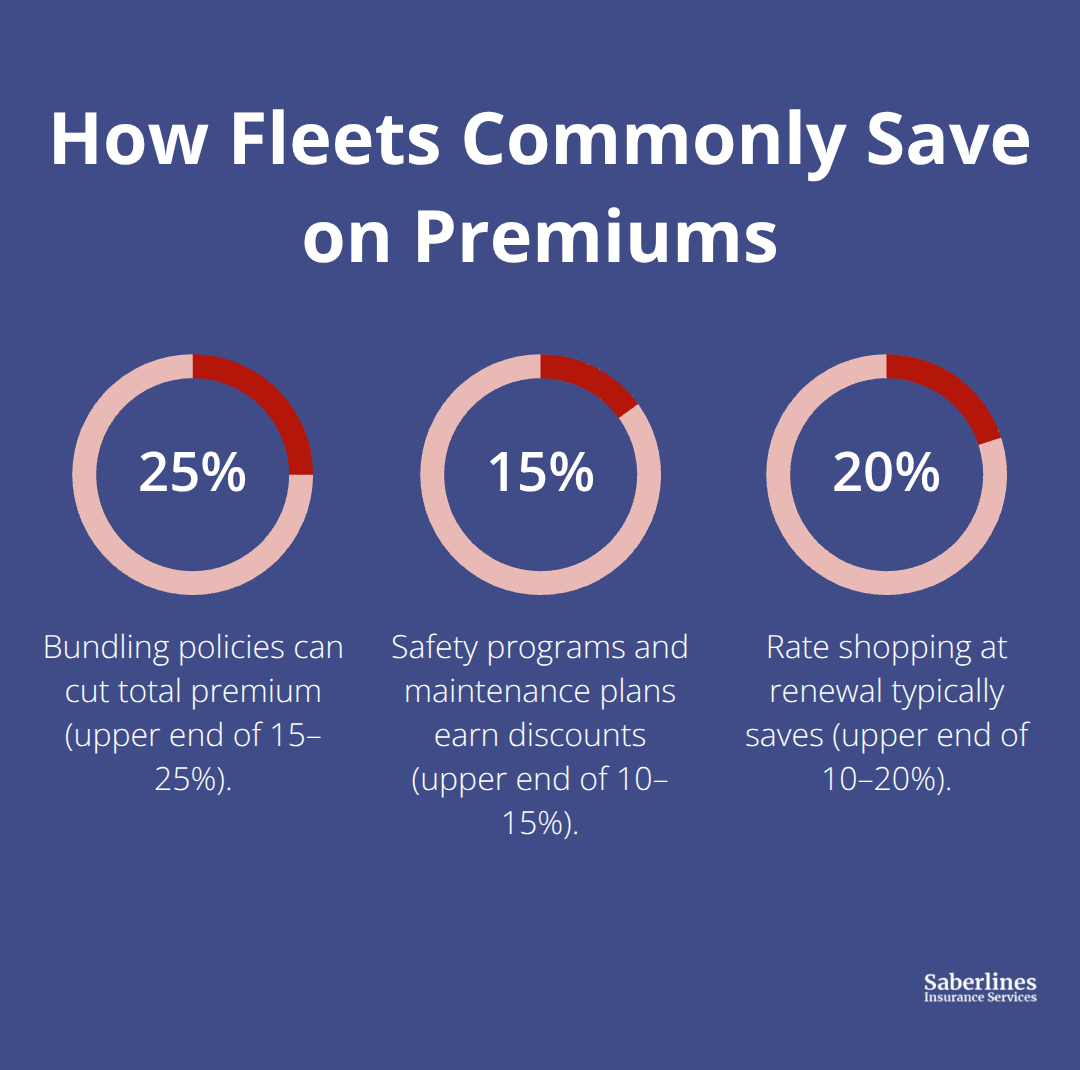
Bundling your commercial auto policy with general liability, workers’ compensation, and physical damage coverage cuts your total premium by 15 to 25 percent compared to purchasing policies separately. A fleet manager paying $8,000 annually for auto coverage alone often drops to $6,200 when bundling general liability and workers’ comp into one package. The savings come from reduced administrative costs for the insurer and simplified claims handling, but you only access these discounts if you ask for them explicitly. Most fleet managers accept the first quote without exploring bundle options, leaving thousands on the table. Request quotes for bundled coverage specifically, then compare that bundled rate against your current individual policies. The difference often justifies switching carriers entirely.
Implement Safety Programs and Maintenance Plans
Safety programs and vehicle maintenance plans deliver measurable premium reductions that most fleet managers underestimate. Fleets with formal driver training programs, regular vehicle inspections documented monthly, and dash camera systems typically qualify for 10 to 15 percent premium reductions according to data from the National Safety Council. A fleet spending $50,000 annually on coverage saves $5,000 to $7,500 through these programs alone. The investment in driver training costs roughly $200 to $400 per driver annually, but prevents the single accident that triggers a 20 to 30 percent rate increase across your entire fleet for three years.
Maintenance plans matter equally-vehicles with documented regular inspections and repairs show 12 to 18 percent fewer claims than poorly maintained fleets. Your insurer needs to see written documentation of these programs, not just hear about them verbally. Create inspection checklists, maintain service records digitally, and share this documentation with your broker annually to substantiate your discount eligibility.
Review and Adjust Coverage Annually
Annual policy reviews separate fleets paying appropriate rates from those overpaying for outdated coverage. Most fleet managers renew policies without examining whether their coverage limits still match their current operations. A fleet that downsized from 12 vehicles to 8 vehicles often keeps the same coverage levels, paying for protection they no longer need. Conversely, a fleet that expanded operations might carry inadequate limits without realizing it.
Schedule a coverage review each October or November, six weeks before renewal, giving you time to adjust limits and shop competing quotes. Compare your current premium against at least two other carriers during this window-rate shopping alone typically saves 10 to 20 percent on renewal. Document any changes to your fleet composition, driver roster, or operational patterns since your last policy period, because these changes directly impact your premium calculation and available discounts.
Final Thoughts
Your fleet’s protection depends on matching commercial auto policy options to your actual business operations, not industry defaults. Liability coverage forms your legal foundation, but collision, comprehensive, and uninsured motorist protection fill critical gaps that single-vehicle policies ignore. The coverage levels that work for a local delivery fleet differ significantly from those protecting a long-haul operation, which is why generic policies waste money or leave you exposed.
Right-sizing your coverage means you evaluate vehicle types, driver experience, and operational patterns honestly. A fleet with newer vehicles and stable drivers needs different protection than one with high turnover and older equipment. The financial math is straightforward: spending an extra 15 to 25 percent on adequate coverage costs far less than absorbing a single major claim or facing liability exposure that exceeds your limits.
Cost reduction comes from three concrete actions. You bundle your commercial auto policy with general liability and workers’ compensation to cut premiums by 15 to 25 percent, implement documented safety programs and maintenance plans to qualify for 10 to 15 percent additional discounts, and review your coverage annually before renewal while shopping competing quotes. Contact Saberlines Insurance Services to receive a tailored quote that reflects your fleet’s specific needs.
The information provided in this blog is for general informational purposes only and does not constitute legal, financial, or insurance advice. Coverage options, terms, and availability may vary. Please consult with a licensed professional for advice specific to your situation.