
Commercial Vehicle Hobby Policy: Insurance for Personal Projects
You’ve invested time and money into your personal project vehicle, and it deserves protection that standard commercial auto insurance doesn’t provide. A commercial vehicle hobby policy is specifically designed for restoration enthusiasts, collectors, and hobbyists who need coverage tailored to their unique needs.
At Saberlines Insurance Services, we understand that hobby vehicles require a different approach to insurance. This guide walks you through coverage options, cost factors, and how to find affordable protection for your passion project.
What Hobby Vehicle Coverage Actually Covers
How Hobby Policies Protect Your Project
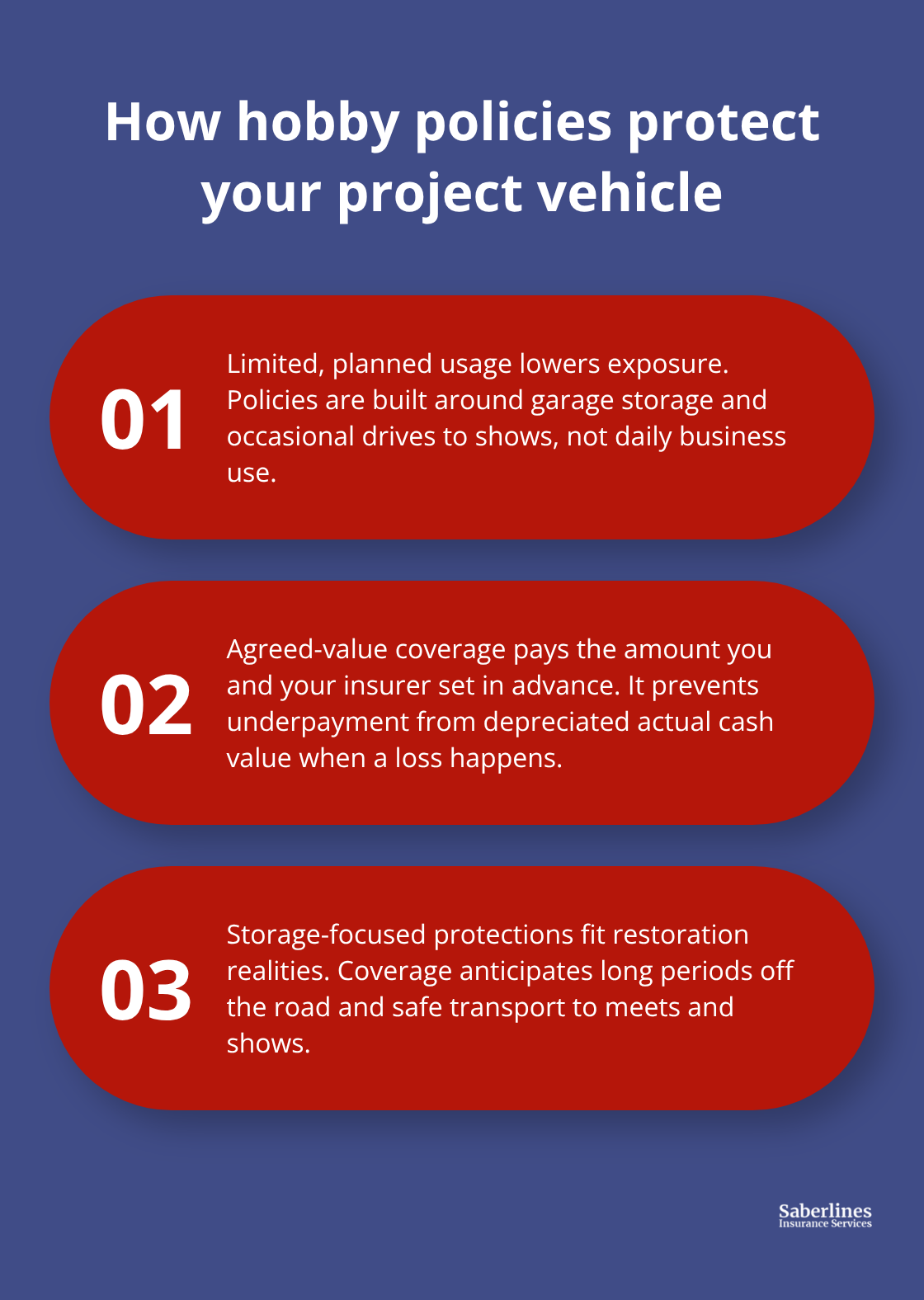
A commercial vehicle hobby policy protects vehicles you restore, collect, or maintain for personal enjoyment rather than commercial operation. Unlike standard commercial auto insurance that assumes regular business use and daily road exposure, hobby policies recognize that your vehicle sits in a garage most of the time, gets driven sparingly to shows or meets, and requires different risk assessment. The Insurance Information Institute reports that hobby vehicles are driven an average of 2,500 miles annually compared to 13,500 miles for standard vehicles, which fundamentally changes how insurers calculate premiums and coverage needs. This lower mileage and controlled usage means you shouldn’t pay rates designed for vehicles generating business income or operating constantly on public roads.
Agreed-Value Coverage Sets Hobby Policies Apart
Hobby policies typically offer agreed-value coverage, meaning you and your insurer agree on the vehicle’s worth upfront rather than relying on depreciated market value at claim time. This matters significantly because a restored 1972 Chevelle has no standard market value-its worth depends entirely on restoration quality, parts used, and condition. Standard commercial policies won’t give you this flexibility; they’ll assess actual cash value and leave you undercompensated if your vehicle suffers damage. A restoration project in progress absolutely requires this protection because the vehicle has no legitimate street value until completion, yet standard policies won’t cover it properly during that vulnerable phase.
Who Actually Needs Hobby Coverage
The distinction between hobby coverage and standard commercial auto insurance comes down to usage patterns and risk profile. Standard commercial policies assume your vehicle generates revenue, operates regularly, and faces typical business-related exposures. Hobby policies assume limited, planned usage with storage protection as a core benefit. If you’re a restoration enthusiast storing a classic truck, a collector with multiple vintage vehicles, or someone maintaining a project car that only hits the road for car meets, you need hobby coverage.
Shop owners who maintain personal project vehicles alongside business operations often discover their business policy explicitly excludes personal hobby vehicles, leaving them completely unprotected. This coverage gap affects restoration professionals, weekend mechanics, and serious collectors alike. Understanding what your current coverage actually protects-and what it leaves exposed-determines whether your investment stays safe or faces significant financial risk when something goes wrong.
Coverage Options and What They Protect
Physical Damage Coverage for Restoration Projects
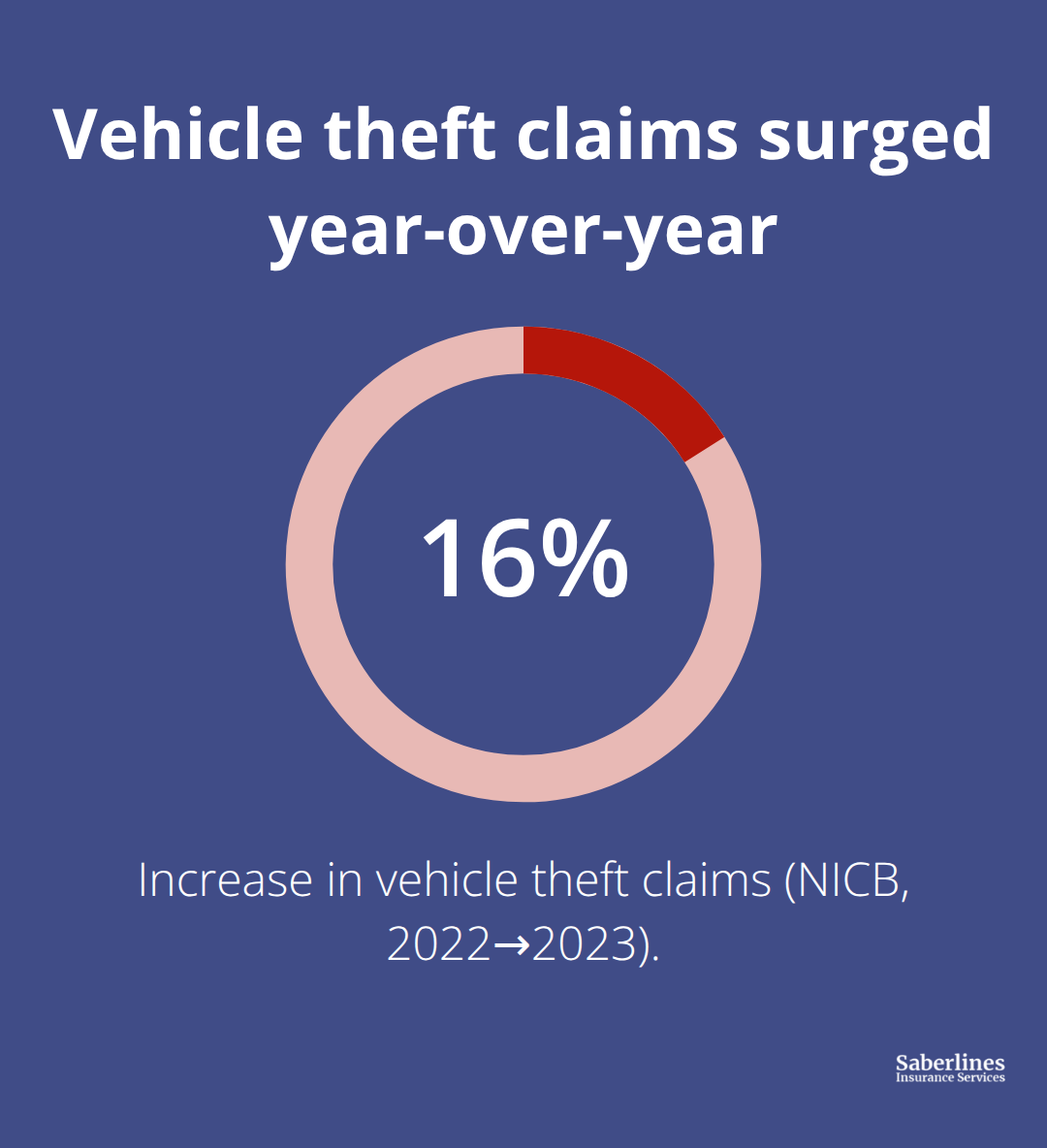
Physical damage coverage for hobby vehicles works differently than standard commercial policies because restoration projects face unique risks. When your vehicle sits in storage, theft, vandalism, fire, and weather damage threaten your investment-exposures that standard commercial auto policies either exclude or undercharge for. Agreed-value physical damage coverage protects against these stationary threats and covers damage during transport to shows or meets. The National Insurance Crime Bureau reports that vehicle theft claims increased 16% from 2022 to 2023, making comprehensive and collision coverage essential for hobby vehicles stored in garages or shops.
Comprehensive coverage specifically protects against theft, vandalism, and weather events, while collision covers damage from accidents during those rare drives to car meets. Many hobbyists overlook that restoration work in progress needs protection too-if a vehicle catches fire while you weld or paint, standard policies won’t cover it, but hobby policies typically do because they recognize the active restoration environment.
Liability Protection During Personal Use
Liability coverage during personal use protects you when your hobby vehicle leaves the garage, and this matters even though you drive sparingly. If you transport your restored classic to a car show and accidentally damage someone else’s property or injure another person, your personal auto policy likely excludes that vehicle, leaving you personally liable for medical bills and property damage. Hobby policies provide liability protection during these planned outings, typically with limits of 100/300/100 (100,000 bodily injury per person, 300,000 per accident, 100,000 property damage).
Storage and Transportation Coverage
Storage and transportation coverage handles the vulnerable periods when your vehicle isn’t in your garage-whether it sits temporarily at a restoration shop, travels on a trailer, or waits at a show venue. This coverage addresses the gap between your home insurance (which doesn’t cover vehicles) and standard commercial policies (which assume regular use). The cost of this comprehensive protection varies based on vehicle value, storage location, annual mileage estimates, and your driving history, but hobbyists typically pay 40-60% less than standard commercial rates because insurers recognize the reduced exposure from limited, planned usage.
Understanding what physical damage and liability coverage actually protects sets the foundation for evaluating your premium costs. The factors that affect hobby policy rates-and the discounts available to reduce them-determine whether you pay fairly for the protection your project deserves.
What Drives Hobby Policy Costs
Vehicle Value and Restoration Status
Hobby vehicle insurance rates depend on factors that differ sharply from standard commercial auto pricing, and understanding these specifics helps you avoid overpaying. Vehicle value tops the list because agreed-value coverage bases premiums on the restoration’s current state, not some arbitrary market price. A half-restored 1965 Mustang worth $15,000 costs less to insure than a completed show-quality restoration valued at $45,000. The insurer assesses your vehicle’s actual condition and worth upfront, then locks that value into your policy, eliminating surprises at claim time.
Annual Mileage and Storage Conditions
Annual mileage estimates matter enormously since hobby policies assume 2,500 miles or less yearly, and insurers charge substantially more if you estimate 5,000 miles. Storage location affects rates too-vehicles kept in a secured garage with alarm systems cost less than those stored in open carports or shared facilities. A locked, climate-controlled garage signals responsible ownership and reduces theft and weather damage risk, which directly lowers your premium. Conversely, outdoor storage or shared workshop space increases your rate because these locations expose your vehicle to more hazards.
Driver History and Deductible Selection
Your driving history and age influence premiums as well, though less dramatically than with commercial policies since the reduced exposure partially offsets risk from older drivers or previous violations. Deductible selection directly impacts what you pay monthly, with higher deductibles ($1,000 or $2,500) reducing premiums by 15-25% compared to $250 deductibles. This trade-off works well for hobbyists who can absorb larger out-of-pocket costs since you drive so infrequently that claims remain statistically unlikely.
Discounts That Reduce Your Premium
Discounts for hobbyists exist but require you to actively request them rather than assuming insurers mention everything. Multi-vehicle discounts apply when you insure multiple hobby vehicles through the same carrier, sometimes reducing each policy by 10-15%. Completion discounts reward you for finishing restoration work since finished vehicles pose lower risk than active projects.
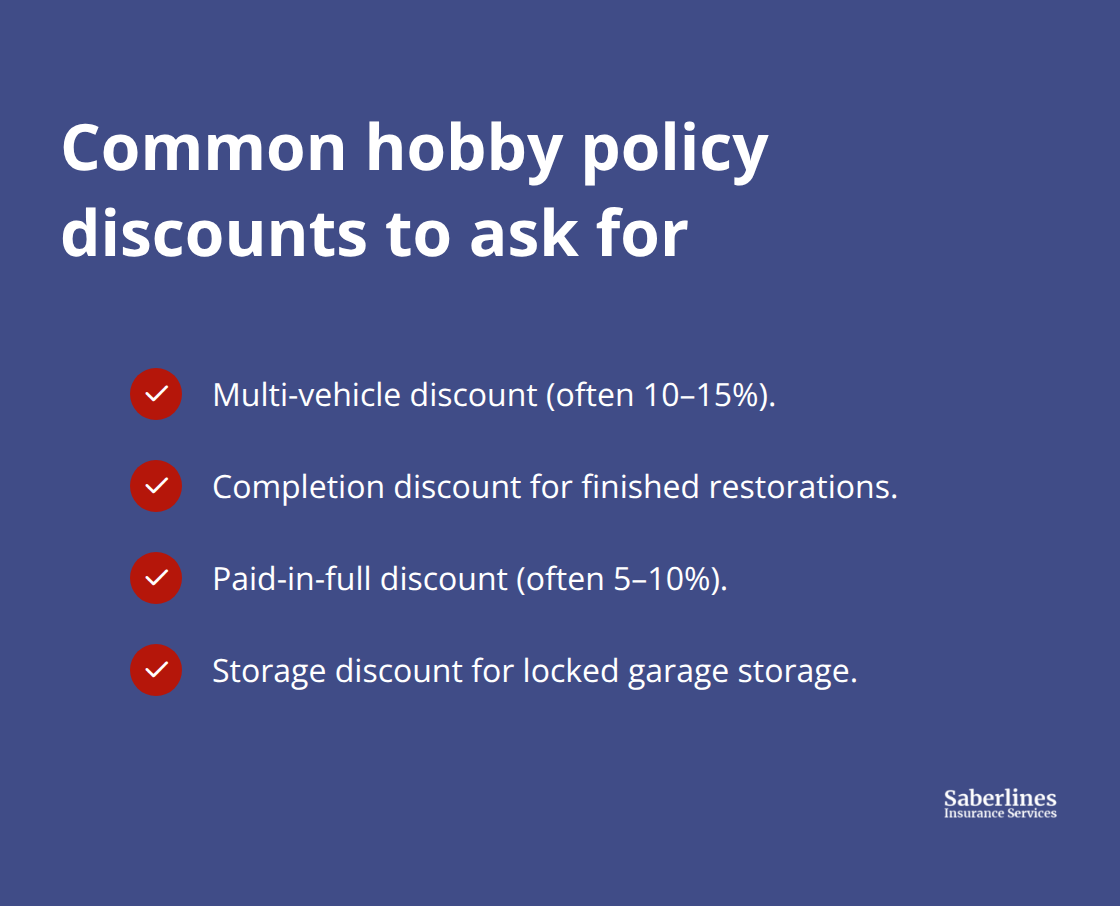
Paid-in-full discounts save 5-10% when you pay annual premiums upfront instead of monthly installments. Storage discounts apply if your vehicle sits in a locked garage rather than outdoor storage.
Strategies for Lowering Your Costs
The fastest way to lower premiums involves increasing your deductible to $1,000 and paying annually, which typically saves 20-30% compared to monthly payments with low deductibles. Shopping rates across multiple carriers remains essential because hobby vehicle pricing varies wildly-one insurer might charge $400 annually while another charges $650 for identical coverage on the same vehicle. Three to five actual quotes from different carriers take an afternoon but routinely save hobbyists hundreds of dollars annually on premiums they’ll pay for years.
Final Thoughts
Commercial vehicle hobby policy coverage protects your restoration investment in ways standard commercial auto insurance simply cannot. Agreed-value coverage, storage protection, and liability during planned outings address the specific exposures your project faces, while rates typically run 40-60% lower than standard commercial policies because insurers recognize your limited mileage and controlled usage patterns. Shopping multiple carriers and selecting higher deductibles can reduce your premiums by another 20-30%, making affordable protection entirely achievable.
Finding the right coverage starts with gathering three to five actual quotes rather than relying on online estimates. Contact carriers that specialize in hobby vehicle insurance and provide specific details about your vehicle’s current restoration status, annual mileage estimates, and storage location (being honest about these factors prevents claim denials later). Request all available discounts including multi-vehicle, completion, paid-in-full, and storage discounts that apply to your situation.
We at Saberlines Insurance Services recognize that hobby vehicle owners often operate alongside business activities and face coverage gaps that standard policies leave exposed. Visit Saberlines Insurance Services to discuss your specific insurance needs and explore how we can support your transportation business while protecting your passion projects.
The information provided in this blog is for general informational purposes only and does not constitute legal, financial, or insurance advice. Coverage options, terms, and availability may vary. Please consult with a licensed professional for advice specific to your situation.