
Fleet Truck Insurance Options: Scalable Solutions for Growing Operations
Growing your fleet means your insurance needs change fast. At Saberlines Insurance Services, we know that fleet truck insurance options need to scale with your business.
This guide covers the coverage types that protect your vehicles, strategies to cut costs, and how to adjust your policies as you expand.
Types of Fleet Truck Insurance Coverage
Commercial Auto Insurance Forms Your Foundation
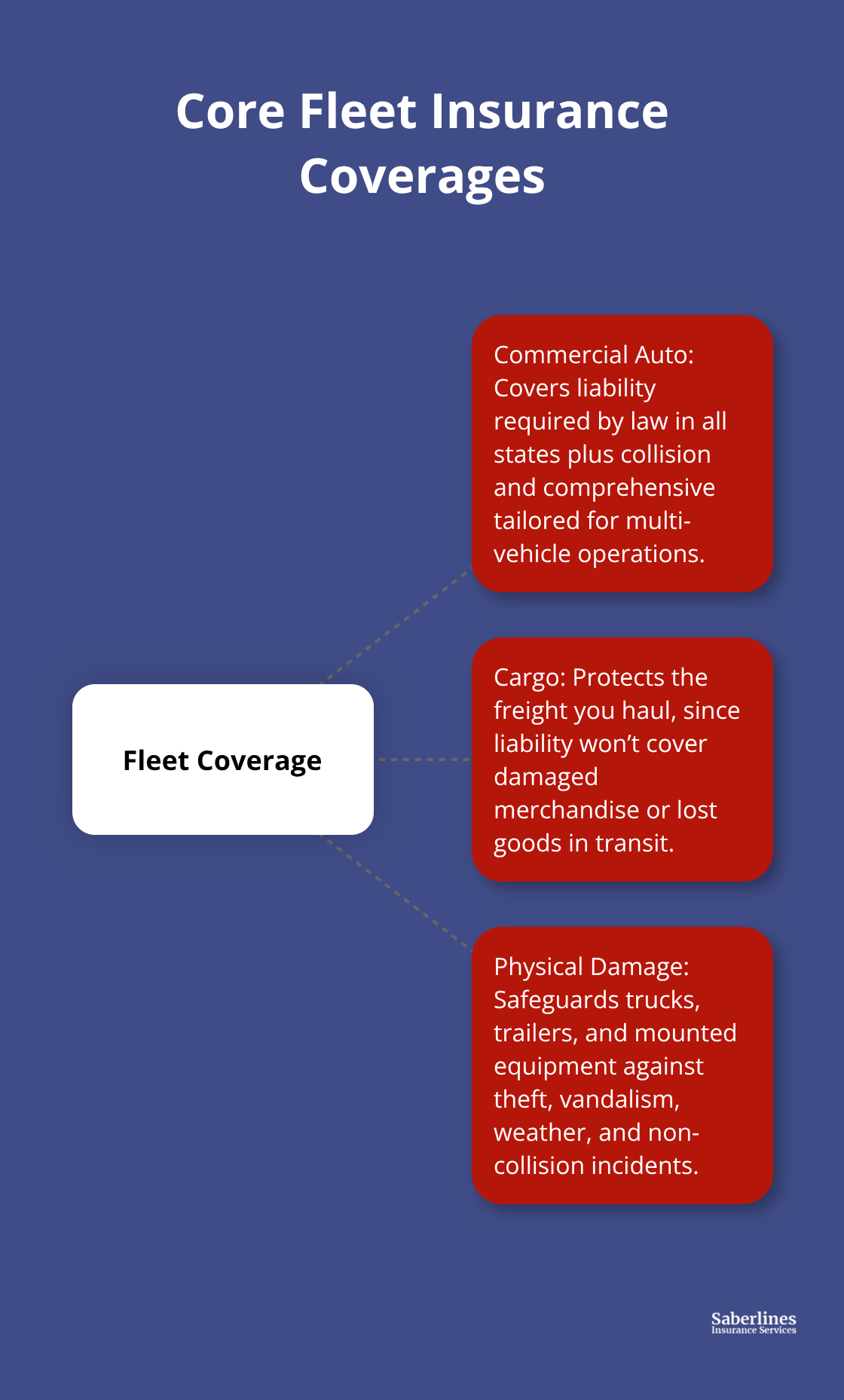
Commercial auto insurance forms the foundation of fleet protection, but standard policies won’t cut it for operations running multiple vehicles. Commercial auto policies specifically designed for fleets handle the complexity of managing several trucks, drivers, and locations simultaneously. Most commercial auto policies for fleets include liability coverage (required by law in all states), collision, and comprehensive protection.
The Insurance Information Institute reports that commercial auto claims cost businesses an average of $12,000 per incident, making adequate liability limits non-negotiable. Your policy should reflect the actual value of your vehicles and the exposure your business faces. If you operate in multiple states, verify that your policy covers all locations where your trucks operate, since coverage requirements vary by jurisdiction.
Deductibles typically range from $500 to $2,500, and higher deductibles directly lower your premiums but increase out-of-pocket costs when accidents happen.
Cargo Insurance Protects Your Freight
Cargo insurance protects the freight your trucks carry, which is separate from protecting the vehicles themselves. This coverage matters significantly because cargo claims represent roughly 8 to 15 percent of total fleet losses according to trucking industry data. If your operation hauls high-value goods, cargo coverage becomes essential since your liability policy won’t cover damaged merchandise.
Physical Damage Coverage Safeguards Equipment
Physical damage coverage protects your trucks’ equipment and bodies from theft, vandalism, weather, and accidents unrelated to collisions. This includes everything from the trailer to specialized equipment mounted on your vehicles. Fleet operators who skip physical damage coverage often regret it when a single incident like fire or theft costs $50,000 or more.
The combination of these three coverage types-commercial auto, cargo, and physical damage-creates a comprehensive protection strategy that prevents one incident from derailing your entire operation. Understanding what each type covers positions you to make smart decisions about which coverage limits actually fit your business. The next section examines the specific cost factors that drive your premiums and practical strategies to reduce them.
Cost Factors and How to Reduce Fleet Insurance Premiums
Driver Safety Records Cut Premiums Dramatically
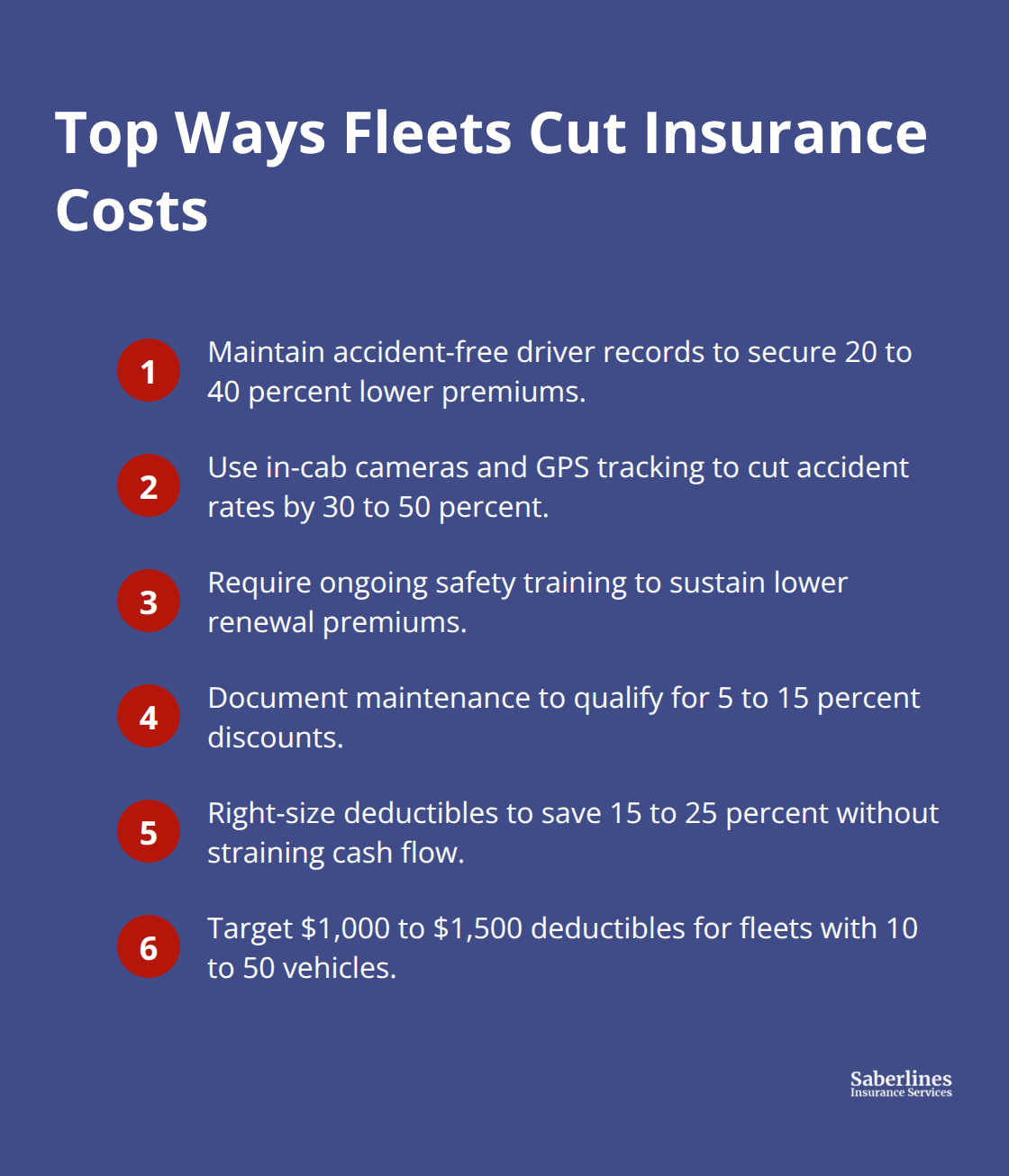
Your driver’s safety record stands as the single biggest lever for reducing premiums, and it’s the one factor you actually control. The National Safety Council reports that commercial drivers with accident-free records pay 20 to 40 percent less in premiums than those with claims history. Insurance companies follow data-a driver involved in even one at-fault accident within the past three years signals elevated risk and triggers premium increases lasting five years.
Implementing mandatory safety training programs and telematics systems monitors driver behavior in real time and produces measurable results. Fleets using in-cab cameras and GPS tracking reduce accident rates by 30 to 50 percent according to the American Transportation Research Institute, which directly translates to lower renewal premiums. The investment in safety training pays for itself within one to two years through premium reductions alone.
Vehicle Maintenance and Fleet Age Impact Your Bottom Line
Vehicle maintenance and fleet age directly impact your costs because insurers know that well-maintained trucks have fewer claims. A truck older than ten years costs substantially more to insure than one five years old, even if both run mechanically sound, because older vehicles have higher repair costs and longer downtime after accidents.
Regular maintenance documentation (oil changes, brake inspections, tire rotations) demonstrates responsibility to your insurer and qualifies you for maintenance discounts ranging from 5 to 15 percent. Keeping detailed service records protects your premium rates and extends vehicle lifespan simultaneously.
Deductibles and Coverage Limits Require Strategic Thinking
Coverage limits and deductible strategy require honest assessment of your financial position. If you absorb a $2,500 deductible without straining cash flow, you’ll save 15 to 25 percent compared to a $500 deductible. However, setting a deductible too high creates risk; one accident wipes out months of premium savings.
Most fleets operating 10 to 50 vehicles find that $1,000 to $1,500 deductibles strike the right balance between manageable out-of-pocket costs and meaningful premium reductions. Review your coverage limits annually because underinsuring exposes you to catastrophic losses while overinsuring wastes money on protection you don’t need. As your fleet expands, these decisions become more complex-which is why adjusting your policies strategically matters when you add vehicles.
Scaling Insurance as Your Fleet Grows
Consolidate Coverage When You Add Vehicles
Adding vehicles to your fleet requires more than duplicating existing policies. Each new truck changes your operational profile, and your insurance needs to reflect that reality. When you add five vehicles to a ten-truck fleet, you shift into a different risk category that affects pricing and available options.
Most fleets make the mistake of keeping old policies in place while adding new coverage separately, creating gaps and overlap that waste money. Instead, consolidate your entire fleet under a single commercial auto policy designed for your actual fleet size. This approach delivers volume discounts ranging from 10 to 20 percent compared to managing multiple individual policies, according to industry practice among mid-sized carriers.
Insurance companies offer better rates when they manage all your vehicles at once because administrative costs drop and they assess your entire operation as a single risk rather than separate entities. Before adding vehicles, calculate your total fleet value and projected annual mileage accurately. Underestimating mileage triggers audits at renewal and creates premium surprises; overestimating wastes money on coverage you don’t use.
Document every vehicle’s VIN, purchase date, and intended use because insurers price commercial trucks based on specific vehicle configurations and operational patterns.
Handle Multi-State Operations Strategically
Managing policies across multiple locations requires a different approach entirely. If you operate in California and Nevada, you need separate policies because each state has different minimum coverage requirements and rating rules. California requires minimum liability limits of 15/30/5, while Nevada requires 15/30/10, meaning your Nevada vehicles need higher bodily injury coverage per accident.
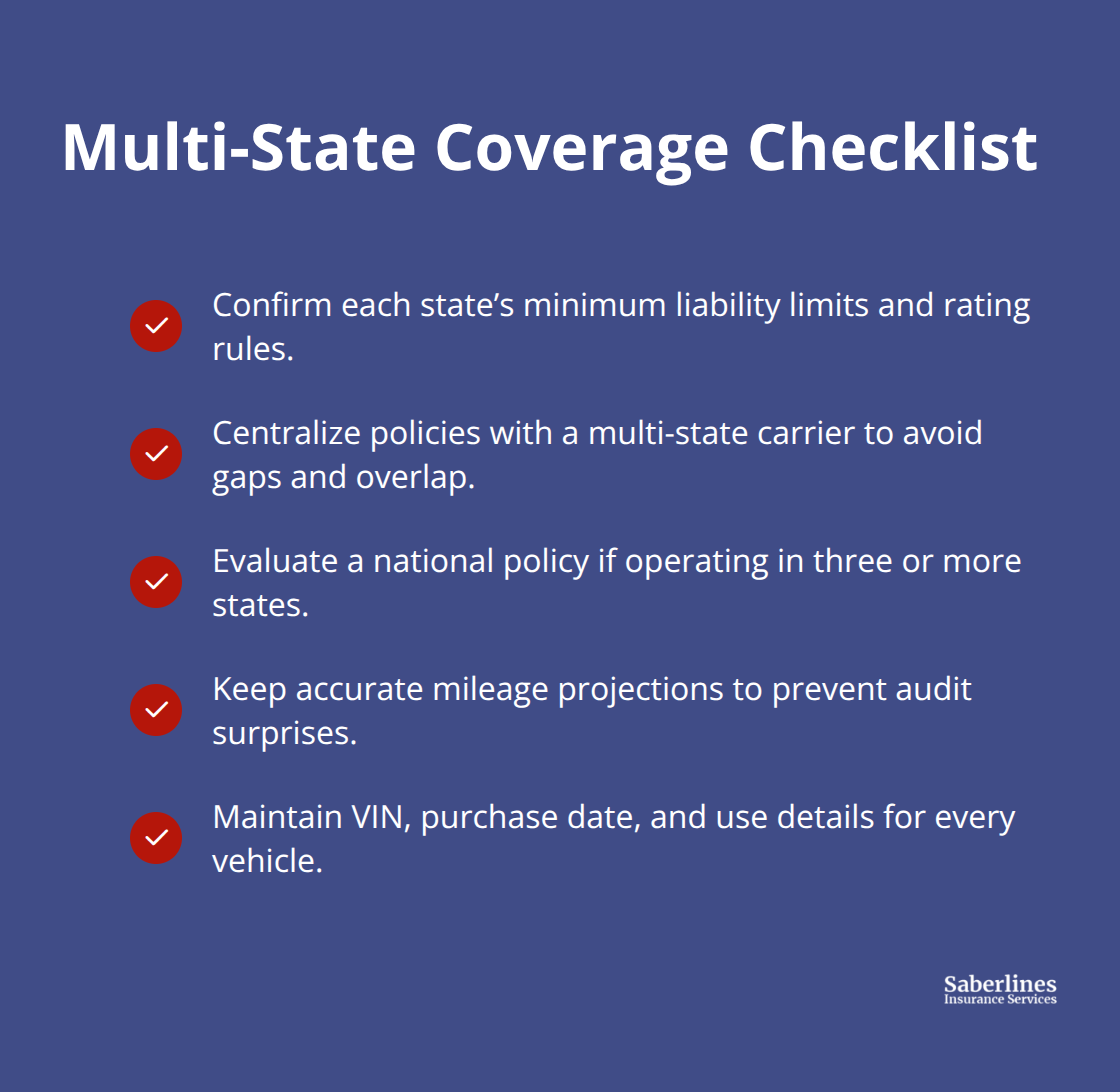
Rather than juggling separate policies, work with an agency that can write multi-state policies with state-specific compliance built in, eliminating confusion about which coverage applies where. Some fleets operating in three or more states find that a national commercial auto policy actually costs less than managing state-by-state coverage because the insurer handles jurisdictional requirements internally.
Review Coverage Annually Without Fail
Update your coverage annually without fail, ideally 60 days before renewal. Review your fleet composition, driver roster, annual miles, and loss history to identify whether your current limits still match your operation. If you added cargo hauls with higher values, increase cargo limits accordingly. If you dropped certain routes, reduce coverage for those areas.
One fleet in the construction materials hauling sector discovered during their annual review that they were paying for cargo coverage on 30 percent of their vehicles that never carried freight, resulting in $8,000 in unnecessary annual premiums. That review paid for itself immediately once they adjusted those policies.
Schedule this review with your insurance agent and bring actual operational data-not estimates-to your meeting. This ensures your coverage reflects what you actually do, not what you think you do.
Final Thoughts
Fleet truck insurance options work best when you align three coverage types with your actual operation. Commercial auto insurance handles liability and vehicle protection, cargo insurance covers your freight, and physical damage coverage safeguards equipment from theft and weather damage. This combination prevents a single incident from destroying your financial stability.
Your premiums drop when you focus on controllable factors that insurers reward. Driver safety records matter most-fleets with accident-free drivers pay 20 to 40 percent less than those with claims history. Telematics systems and in-cab cameras reduce accident rates by 30 to 50 percent, which directly lowers your renewal costs, while vehicle maintenance documentation qualifies you for discounts ranging from 5 to 15 percent.
Scaling your coverage as you grow requires consolidation rather than accumulation. Adding vehicles to your fleet means consolidating everything under a single commercial auto policy designed for your actual fleet size, which delivers volume discounts of 10 to 20 percent compared to managing multiple policies separately. Multi-state operations need state-specific compliance built into your policies since coverage requirements vary by jurisdiction, and annual reviews 60 days before renewal ensure your limits match your current operation. Contact us at Saberlines Insurance Services to review your fleet truck insurance options and ensure your operation stays compliant and protected as you grow.
The information provided in this blog is for general informational purposes only and does not constitute legal, financial, or insurance advice. Coverage options, terms, and availability may vary. Please consult with a licensed professional for advice specific to your situation.