
General Liability for Shuttles: Insuring Passenger Transport Safely
Shuttle operators face real liability exposure every single day. From passenger injuries during boarding to accidents involving third-party vehicles, the risks are substantial and costly.
General liability for shuttles isn’t optional-it’s the foundation of responsible fleet management. We at Saberlines Insurance Services help shuttle businesses understand exactly what coverage they need and why it matters.
What Your General Liability Policy Actually Covers
How General Liability Protects Your Shuttle Business
General liability for shuttles protects your business when passengers or third parties suffer injuries or property damage connected to your operations. This isn’t abstract coverage-it pays real money when someone gets hurt on your vehicle or your shuttle causes damage to someone else’s property. The policy covers medical expenses, legal defense fees, and settlement or judgment costs, which can easily reach six figures in serious cases. According to the National Safety Council, transportation-related injuries cost businesses an average of $42,000 per incident when medical care, lost productivity, and liability claims combine. Your general liability policy stands between your business and financial devastation when accidents happen.
Bodily Injury and Third-Party Claims
Bodily injury claims represent the largest exposure for shuttle operators. If a passenger falls while boarding or suffers whiplash in a collision, your policy covers their medical treatment and any compensation they pursue through legal action. Third-party claims matter equally-if your shuttle hits a pedestrian or damages another vehicle, your general liability coverage handles those costs instead of your business assets. Most shuttle operators significantly underestimate their exposure in this area, which is why reviewing your coverage limits annually with someone who understands transportation operations matters far more than most business owners realize.
Property Damage and Medical Payments Coverage
Property damage liability specifically protects you when your shuttle or its cargo damages someone’s building, vehicle, or equipment. Medical payments coverage, sometimes called med pay, pays injury expenses regardless of fault, which often resolves minor claims quickly without litigation. Legal defense costs are included within your policy limits or sometimes paid separately, depending on your specific endorsements, and these expenses accumulate fast when attorneys charge $250 to $400 per hour. The difference between adequate coverage limits and inadequate limits often determines whether your shuttle business survives a major incident or faces bankruptcy.
Understanding what your policy actually covers sets the stage for selecting the right limits and endorsements for your specific operation.
Common Liability Risks in Passenger Transport
Accidents During Loading and Unloading
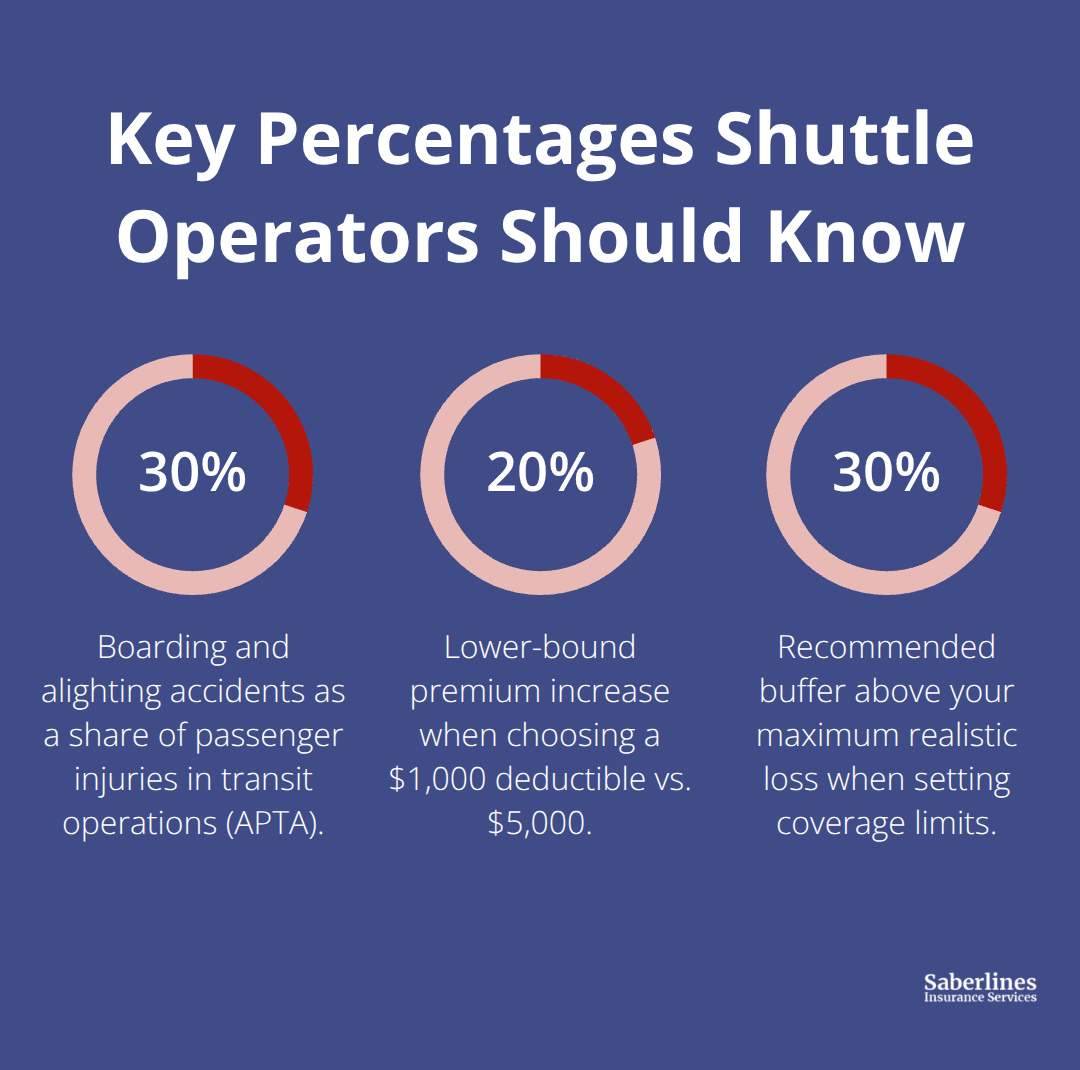
Loading and unloading create the highest-risk moments in shuttle operations, yet most operators treat these transitions as routine. A passenger stepping down from a shuttle onto uneven pavement, a wheelchair that isn’t properly secured during acceleration, or a driver rushing passengers off the vehicle during rain-these incidents generate legitimate injury claims that your general liability policy must cover. The American Public Transportation Association reports that boarding and alighting accidents account for approximately 30% of passenger injuries in transit operations.
Your drivers need documented procedures for every loading scenario, including passenger assistance protocols, weather-related slowdowns, and equipment checks before passengers exit. A single boarding injury claim costs $15,000 to $50,000 in medical expenses and legal fees combined. Many shuttle operators implement video monitoring at entry and exit points to establish clear liability when disputes arise.
Slip and Fall Incidents Inside Vehicles
Slip and fall incidents inside vehicles represent a different challenge because they occur during operation when your shuttle moves. A passenger loses balance during sudden braking, slips on a wet floor after rainy weather, or falls when the vehicle turns sharply-these claims are defensible only if you maintain detailed maintenance records and can prove your driver operated the vehicle safely. The CDC estimates that falls cost American workers and businesses over $50 billion annually, and passenger transportation contributes substantially to this figure.
Interior flooring conditions matter tremendously; worn rubber matting, spilled beverages, or debris create obvious hazard conditions that plaintiffs’ attorneys use aggressively in litigation. Document your interior cleaning schedule, maintain records of any spills or damage, and ensure your drivers complete pre-trip inspections that specifically address passenger safety hazards.
Third-Party Property Damage Claims
Third-party property damage claims emerge when your shuttle strikes parked vehicles, building structures, or utility equipment during normal operations or parking maneuvers. These claims seem straightforward until you face disputes over who caused the damage, whether your driver was negligent, and whether repair estimates are accurate. Your general liability policy covers these costs, but your coverage limits must reflect the reality that a collision with a commercial building or multiple vehicles can easily exceed $100,000 in damages.
Maintaining comprehensive fleet documentation, driver training records, and accident reports becomes essential evidence when third parties pursue claims against your business. Understanding these specific risk areas helps you select appropriate coverage limits that actually protect your operation.
How to Choose the Right General Liability Coverage
Calculate Your Maximum Exposure
Your fleet size directly determines the coverage limits you need, and most shuttle operators select arbitrary numbers instead of analyzing their actual exposure. A small shuttle operation running five vehicles on local airport runs faces different risks than a larger fleet operating regional routes across multiple states. Start by calculating your maximum potential loss in a single incident: if your shuttle carries 35 passengers and one accident injures half of them with average medical costs of $25,000 per person, you’re looking at $437,500 in immediate expenses before legal fees. The Insurance Information Institute reports that bodily injury claims in passenger transportation average between $50,000 and $200,000 per incident depending on injury severity and jurisdiction. Your coverage limits should exceed your maximum realistic loss scenario by at least 30 percent, which means a smaller local operation might need $1 million in general liability coverage while a regional fleet requires $2 million or higher.
Account for Your Operating Territory
Operating territory matters equally because liability judgments vary dramatically by state and county. California and New York courts award significantly higher settlements than rural Midwestern jurisdictions, so your coverage limits must reflect where your shuttles actually operate. If you run routes through multiple states, you need limits that satisfy the highest-risk jurisdiction in your service area, not the lowest.
Select Deductibles That Match Your Cash Position
Deductibles create a direct trade-off with your premium costs, and most shuttle operators choose deductibles that are too low out of fear. A $1,000 deductible might feel safe, but it increases your annual premium by 20 to 30 percent compared to a $5,000 deductible. Unless you lack cash reserves to cover a $5,000 loss, the higher deductible saves thousands annually while protecting you from catastrophic claims. Your deductible should reflect your business’s financial capacity to absorb small losses without affecting operations, not your anxiety about potential accidents.
Identify Critical Endorsements and Exclusions
Standard general liability policies exclude intentional acts, contractual liability, and certain professional services, but shuttle operations require specific endorsements that most standard policies don’t include automatically. Hired and non-owned auto liability coverage protects you if your drivers occasionally use personal vehicles for business purposes, and this endorsement costs roughly $200 to $400 annually but protects you from massive exposure. Many shuttle operators contract with third-party dispatch services or partner with hotels and transportation networks that require you to add them as additional insureds on your policy, which costs nothing but requires explicit request. Passenger assault coverage, sometimes called assault and battery endorsement, protects your drivers and business from claims arising from passenger altercations, which occur more frequently in shuttle operations than most operators acknowledge.
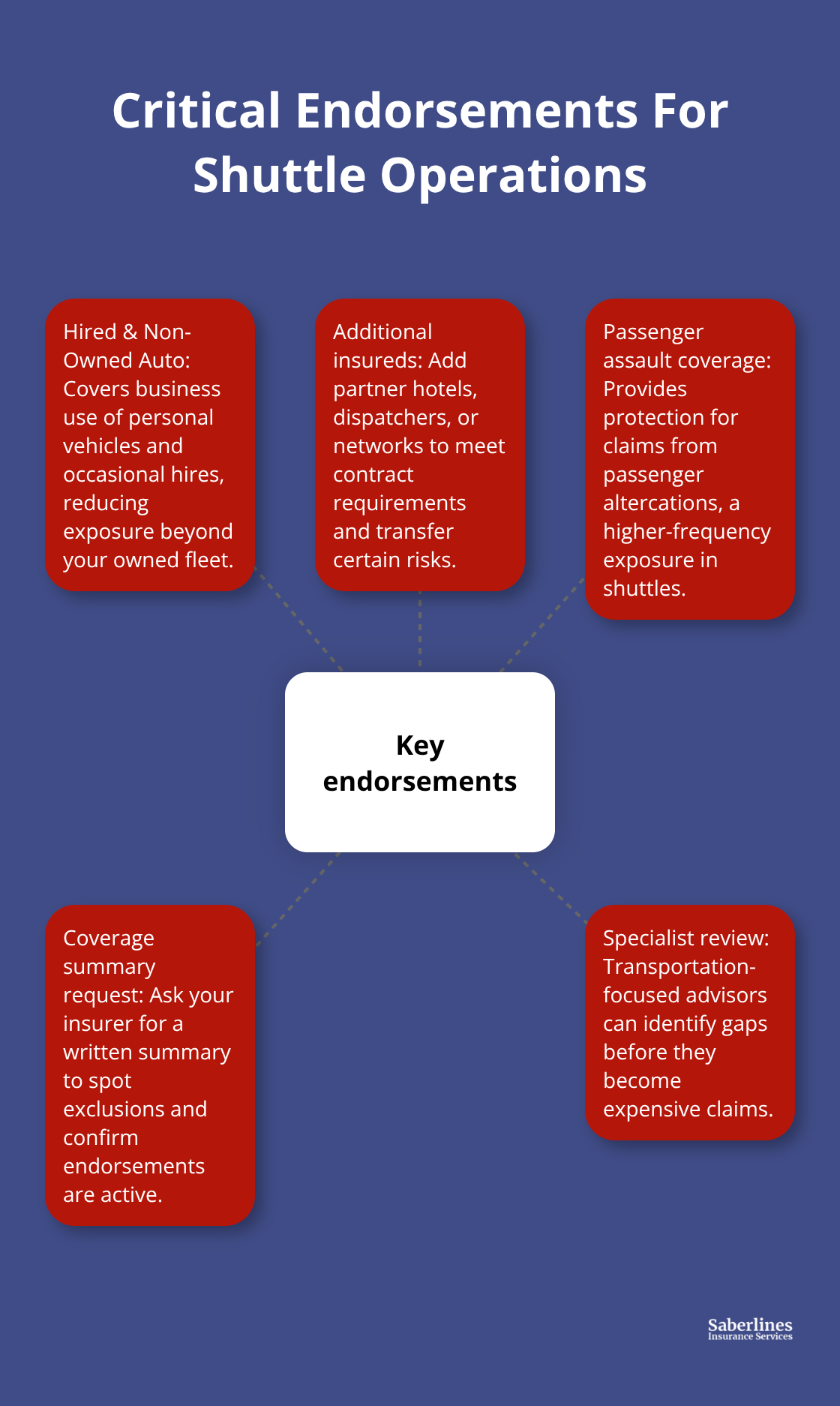
The cost ranges from $100 to $300 annually depending on your fleet size and claims history. Request a detailed coverage summary from your insurance provider and ask specifically about gaps in passenger protection. Transportation specialists can identify endorsements your operation needs before gaps become expensive problems.
Final Thoughts
General liability for shuttles protects your business from the financial devastation that follows passenger injuries and third-party property damage claims. The coverage limits you select, the deductibles you choose, and the endorsements you add directly determine whether your shuttle operation survives a serious incident or faces bankruptcy. Most shuttle operators learn too late that their coverage was inadequate, their deductibles were misaligned with their cash reserves, or critical endorsements like hired and non-owned auto liability and passenger assault coverage were missing entirely.
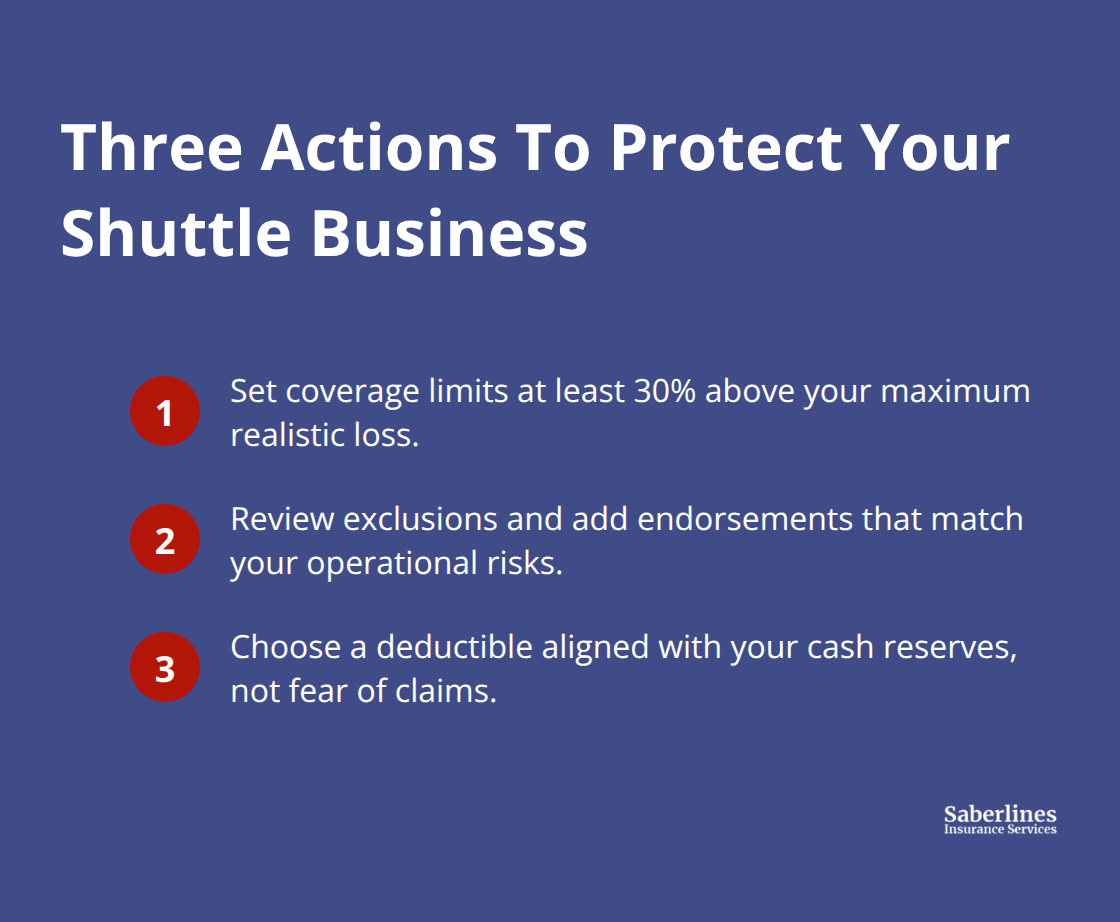
Protecting your passenger transport business requires three concrete actions. Calculate your maximum realistic loss in a single incident by multiplying your passenger capacity by average injury costs in your operating territory, then add 30 percent to that number for your coverage limit. Review your policy exclusions and request specific endorsements that address your operation’s actual risks, particularly if you contract with third parties or occasionally use personal vehicles for business purposes. Select a deductible that matches your business’s financial capacity to absorb losses without affecting operations, not your anxiety about accidents.
We at Saberlines Insurance Services specialize in passenger transportation insurance and understand the specific liability exposures that shuttle operators face daily. Our team helps shuttle operators select appropriate coverage limits, identify critical endorsements, and structure deductibles that actually make financial sense for their operation. Contact Saberlines Insurance Services to discuss your general liability coverage with specialists who understand passenger transportation rather than generic commercial insurance agents.
The information provided in this blog is for general informational purposes only and does not constitute legal, financial, or insurance advice. Coverage options, terms, and availability may vary. Please consult with a licensed professional for advice specific to your situation.