
NEMT Liability Coverage: Reducing Risk In Non-Emergency Transport
Non-emergency medical transport operators work in a high-risk environment where accidents, injuries, and regulatory violations can happen quickly. One accident involving a passenger can lead to significant liability claims that threaten your business.
At Saberlines Insurance Services, we’ve seen how the right NEMT liability coverage makes the difference between a manageable incident and a financial crisis. This guide walks you through the specific risks you face, the coverage types that protect you, and practical steps to reduce your exposure.
Why NEMT Operators Face Unique Liability Risks
NEMT operators work under a legal standard called duty of care, which makes you responsible for passenger safety and wellbeing during transport. This obligation extends far beyond safe driving. You must maintain vehicles properly, train drivers to handle medical emergencies, and transport passengers with mobility issues without causing injury. A single fall during boarding, an improperly secured wheelchair, or a vehicle collision can trigger injury claims that expose you to significant liability. The Centers for Medicare and Medicaid Services requires NEMT providers to maintain detailed records of passenger interactions and vehicle conditions-documentation that becomes critical evidence in liability disputes.
Accident Scenarios That Generate Claims
NEMT accidents fall into three categories that trigger liability claims. Vehicle collisions cause obvious damage, but NEMT-specific accidents prove equally dangerous. Passengers fall during boarding or while seated, injuries result from unsecured wheelchairs during sudden stops, and existing medical conditions worsen during transport. The National Highway Traffic Safety Administration found that older adults (who represent a significant portion of NEMT passengers) face higher injury risks in vehicle accidents due to physical fragility. Improper patient handling techniques also generate claims when passengers experience back injuries, fractures, or other trauma. Documentation failures compound these problems because operators without clear records of passenger condition at pickup cannot defend against claims that pre-existing injuries worsened during transport.
Regulatory Compliance Creates Direct Liability Exposure
State and federal regulations governing NEMT operations create compliance obligations that directly impact your liability risk. CMS requires background checks, driver qualifications, and vehicle safety standards, though enforcement varies significantly by state. Operating without proper credentials, transporting patients beyond your licensed service area, or failing to maintain required insurance creates regulatory violations that result in fines and contract loss. Courts view regulatory violations as evidence of negligence, which weakens your legal defense in injury claims. Billing fraud and improper documentation practices attract regulatory scrutiny that can lead to investigations affecting your entire operation, not just a single incident claim.
Understanding these specific risks positions you to select the right coverage types that address NEMT-specific exposures rather than relying on standard commercial auto policies.
Essential Coverage Types for NEMT Businesses
Commercial Auto Liability: The Foundation That Falls Short
Commercial auto liability forms the foundation of NEMT coverage, but standard limits prove insufficient for patient transport operations. Most NEMT operators purchase minimum state-required limits, typically $100,000 per person and $300,000 per accident in many states. This creates dangerous exposure because a single serious injury claim from an elderly passenger can exceed these limits within weeks of hospitalization. Medical costs for NEMT passengers average higher than general population claims due to pre-existing conditions and age-related complications.
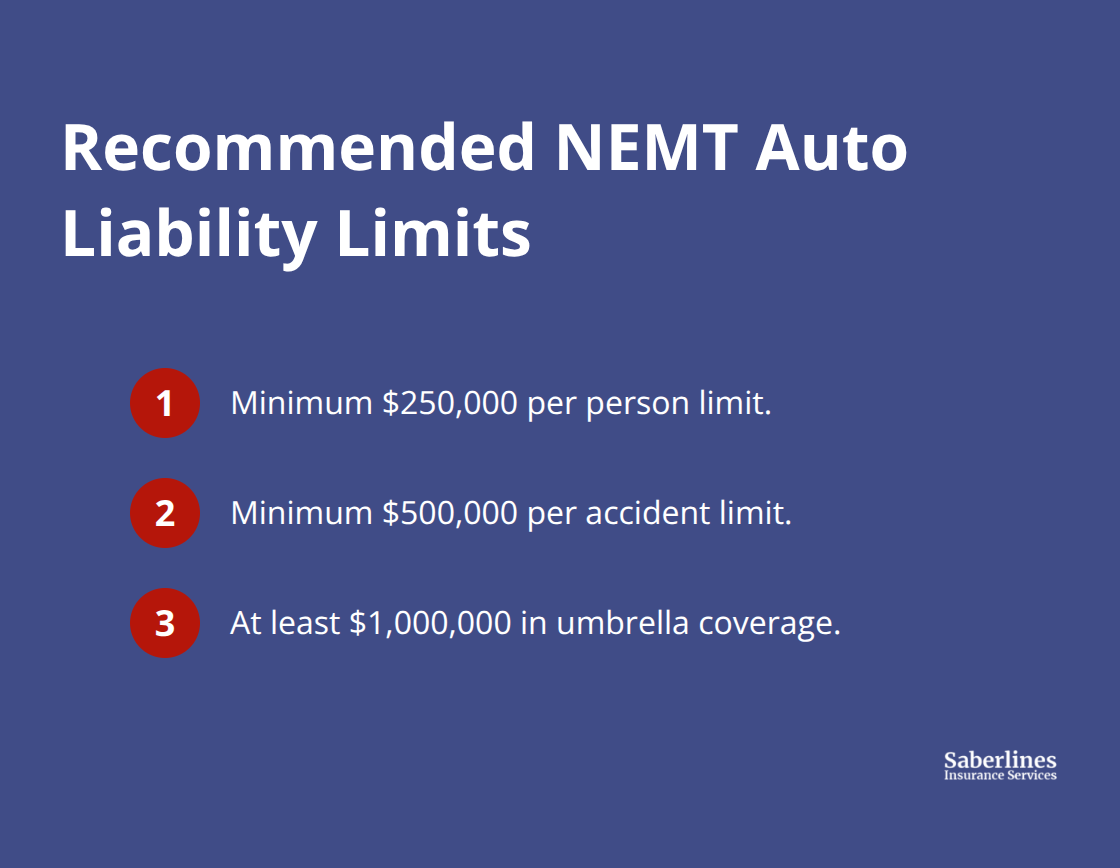
Higher limits protect your business from catastrophic claims. NEMT operators should carry minimum limits of $250,000 per person and $500,000 per accident, with umbrella coverage of at least $1,000,000 to bridge gaps that standard policies leave open. Many operators resist higher limits due to premium costs, but a single catastrophic claim with inadequate coverage bankrupts businesses faster than premium increases ever will.
General Liability: Protecting Against Non-Vehicle Incidents
General liability coverage addresses the accidents that happen outside your vehicles, which NEMT operators frequently overlook. A passenger slips on wet flooring at your dispatch office, a staff member causes injury during patient transfer training, or a visitor sustains injury at your facility-these incidents fall outside commercial auto policies. General liability fills this gap and protects your operation from premises-related claims that vehicle coverage cannot address.
Workers Compensation: A Legal Requirement With Real Claims
Workers compensation protects your employees when they suffer job-related injuries, a critical coverage since NEMT staff face significant physical demands. Lifting patients, securing wheelchairs, and assisting mobility-impaired passengers generate back injuries, strains, and repetitive stress claims that workers compensation must cover. State law mandates workers compensation in virtually all states for any business with employees.
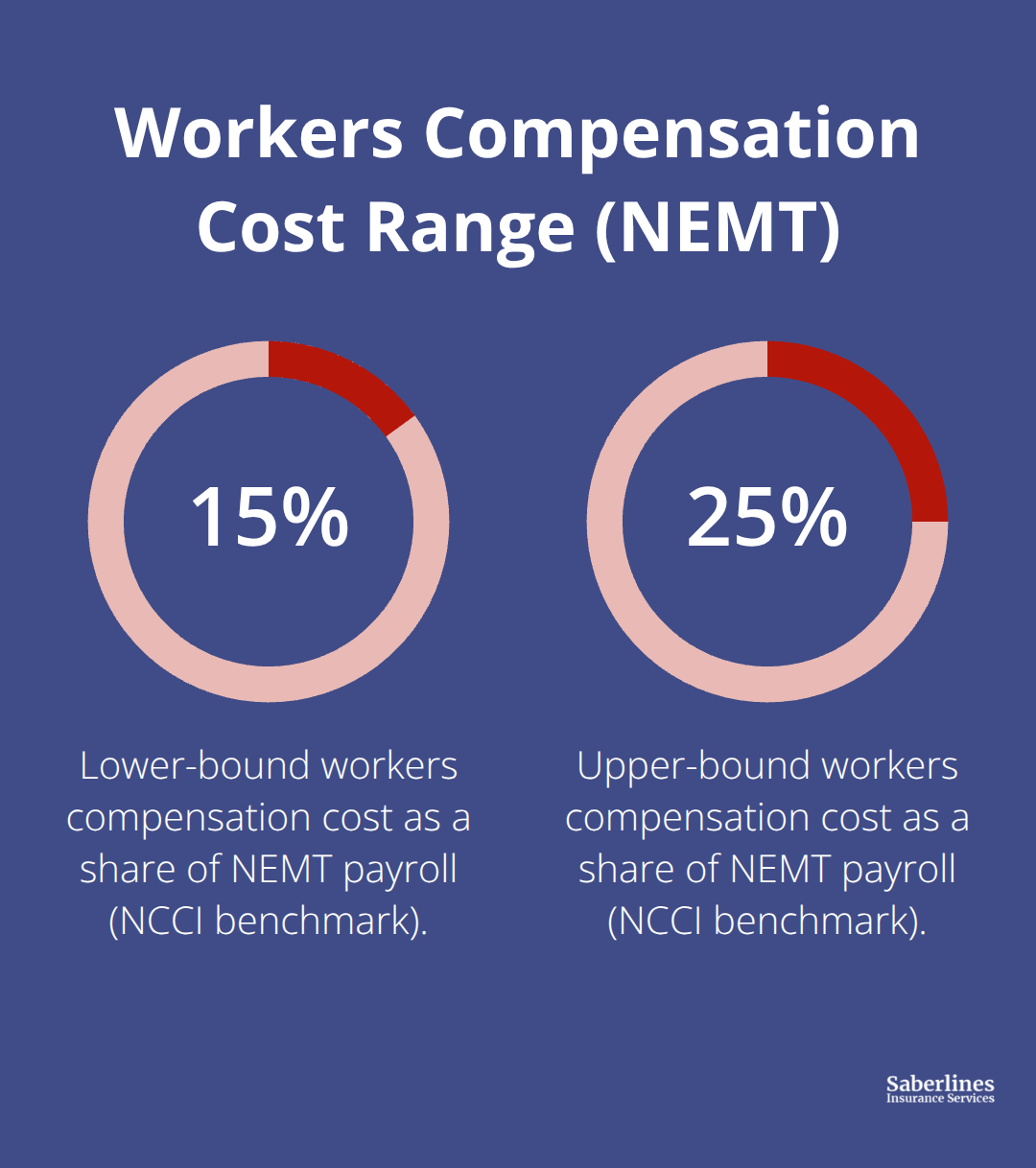
Some NEMT operators attempt to classify staff as independent contractors to avoid premiums. This strategy creates massive liability exposure because regulators view misclassification as fraud, triggering penalties that exceed years of premium costs. Adequate workers compensation coverage costs between 15 and 25 percent of payroll for NEMT operations according to National Council on Compensation Insurance benchmarks-a manageable expense compared to uninsured claim liability.
The right coverage combination protects your operation, but coverage alone cannot eliminate risk. Practical operational changes reduce claims before they happen.
Practical Steps to Lower Your Liability Exposure
NEMT operators control more liability exposure than they realize. While insurance protects you after accidents happen, operational excellence prevents accidents from happening in the first place. The difference between a safe operation and a liability disaster comes down to three areas where you can take immediate action: driver competency, vehicle condition, and documentation systems.
Driver Training That Stops Claims Before They Start
Driver quality determines your liability risk more than any other factor. Poor training creates preventable accidents, patient injuries, and regulatory violations that courts use against you in claims. NEMT drivers need specific training beyond standard commercial driver licenses because they transport medically fragile passengers who require specialized handling.
The American Ambulance Association recommends NEMT operators implement quarterly safety training focused on patient handling, defensive driving, and emergency procedures rather than annual checkbox training that satisfies regulations but changes nothing. Drivers who receive hands-on training in proper wheelchair securement techniques and patient transfer methods file significantly fewer injury claims than operations relying on basic orientation.
Document every training session with attendance records, topics covered, and instructor qualifications because regulators and courts examine training documentation when liability claims arise. Drivers with documented training records also represent lower risk to your insurance carrier, which directly impacts your premiums.
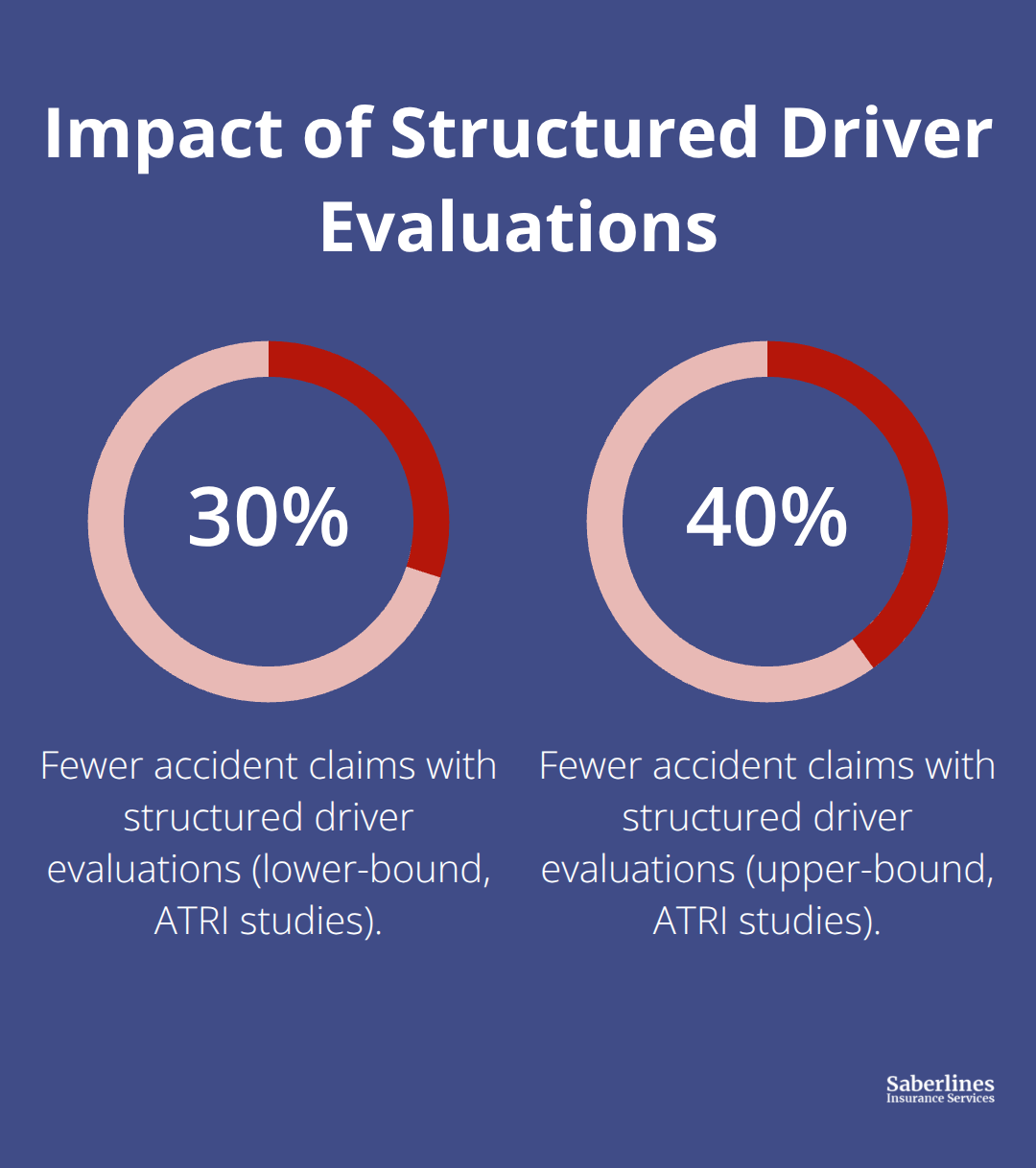
Implement a driver evaluation program that monitors actual performance monthly through ride-alongs, passenger feedback, and vehicle inspection results rather than trusting self-reported compliance. NEMT operations with structured evaluation systems experience 30 to 40 percent fewer accident claims according to fleet safety studies from the American Transportation Research Institute. Remove drivers who consistently violate safety protocols immediately because one reckless driver can generate multiple claims that exceed your annual insurance costs.
Vehicle Maintenance Systems That Prevent Mechanical Failures
Preventive maintenance eliminates the mechanical failures that cause accidents and create liability exposure. NEMT vehicles fail catastrophically because operators defer maintenance to reduce costs, creating situations where brake failure, tire blowouts, or steering problems cause passenger injuries.
Establish a formal maintenance schedule that inspects critical safety systems monthly rather than waiting for problems to appear. Wheelchair lift mechanisms require monthly functional testing because lift failures cause passenger falls that generate expensive injury claims. Document all maintenance work, parts replacements, and inspection results in a centralized system because maintenance records prove you maintained vehicles to safety standards when liability disputes occur.
Tire condition represents a measurable maintenance item that directly impacts accident risk: tires with tread depth below 4/32 of an inch increase hydroplaning risk significantly, so establish 6/32-inch minimum tread replacement standards rather than waiting for legal minimums. Brake inspections should occur every six months with documented pad thickness measurements and stopping distance testing because brake failure claims prove operator negligence when maintenance records show deferred service.
Vehicle age matters for NEMT operations because older vehicles experience higher failure rates: vehicles over ten years old generate accident claims at roughly double the rate of vehicles under five years old according to National Highway Traffic Safety Administration data. Implement a vehicle replacement strategy that retires high-mileage vehicles systematically rather than running equipment into the ground.
Documentation That Defends Against False Claims
Complete documentation systems protect your operation when passengers file claims years after transport occurred. NEMT operators must document passenger condition at pickup, any incidents during transport, and passenger condition at delivery because this documentation becomes your primary defense against claims that pre-existing conditions worsened during your care.
Implement digital documentation systems that capture date, time, vehicle identification, driver name, passenger observations, and any unusual incidents rather than relying on handwritten notes that courts view skeptically. Photograph wheelchair condition, vehicle interior condition, and any passenger injuries observed at pickup because visual documentation proves what actually occurred.
Train drivers to complete documentation immediately after each trip while details remain fresh rather than completing paperwork hours later when memory becomes unreliable. Maintain these records for minimum seven years because statute of limitations periods for injury claims extend that long in most states, and documentation older than seven years loses credibility.
Regulatory audits examine your documentation practices systematically, so incomplete records trigger compliance violations that compound liability exposure beyond individual claims. Operations with complete documentation systems resolve claims faster and pay significantly lower settlement amounts than operators with incomplete records because documentation either proves or disproves passenger injury causation.
Final Thoughts
NEMT liability coverage protects your operation from financial devastation when serious injury claims occur. Commercial auto liability with adequate limits, general liability for non-vehicle incidents, and workers compensation for employee protection form the foundation that keeps your business solvent after accidents happen. The practical steps you implement today-driver training programs that focus on patient handling, preventive maintenance schedules that catch mechanical failures, and documentation systems that create accurate transport records-directly reduce the claims you’ll face tomorrow.
We at Saberlines Insurance Services understand the specific risks NEMT operators face because we’ve worked with transportation businesses since 1999. Our team knows which carriers understand NEMT operations and which ones treat you like a standard fleet, and that knowledge saves you money while improving your actual protection. We specialize in securing coverage for non-emergency medical transport operations that actually fits your risk profile rather than forcing you into standard policies designed for general commercial vehicles.
Review your current coverage limits against the scenarios we’ve discussed, assess your driver training and maintenance documentation practices, and connect with an insurance partner who understands NEMT operations specifically. Visit Saberlines Insurance Services to discuss your coverage needs with specialists who work exclusively with transportation businesses.
The information provided in this blog is for general informational purposes only and does not constitute legal, financial, or insurance advice. Coverage options, terms, and availability may vary. Please consult with a licensed professional for advice specific to your situation.