
Personal Use Commercial Vehicle: Insurance That Keeps Your Crew Moving
Your transportation business runs on wheels, but standard auto insurance doesn’t cover the reality of how you operate. A personal use commercial vehicle sits in a gray zone where regular policies leave gaps and exclusions that can cost you thousands.
At Saberlines Insurance Services, we’ve seen too many owner-operators discover these gaps the hard way. The right coverage protects your business, your crew, and your bottom line.
What Qualifies as Personal Use Commercial Vehicle Coverage
The Gray Zone Between Personal and Commercial Use
The line between personal and commercial use isn’t always clear, and insurance companies exploit that ambiguity. Personal use commercial vehicle coverage exists specifically for owner-operators and small fleet operators who use their vehicles for both personal errands and business transportation. The critical difference comes down to how often you use the vehicle for income-generating activities. If you drive your truck to pick up supplies for your business, haul cargo, transport passengers, or make deliveries more than occasionally, standard personal auto insurance won’t cover those activities. Most personal policies explicitly exclude any business use beyond commuting to a fixed workplace.
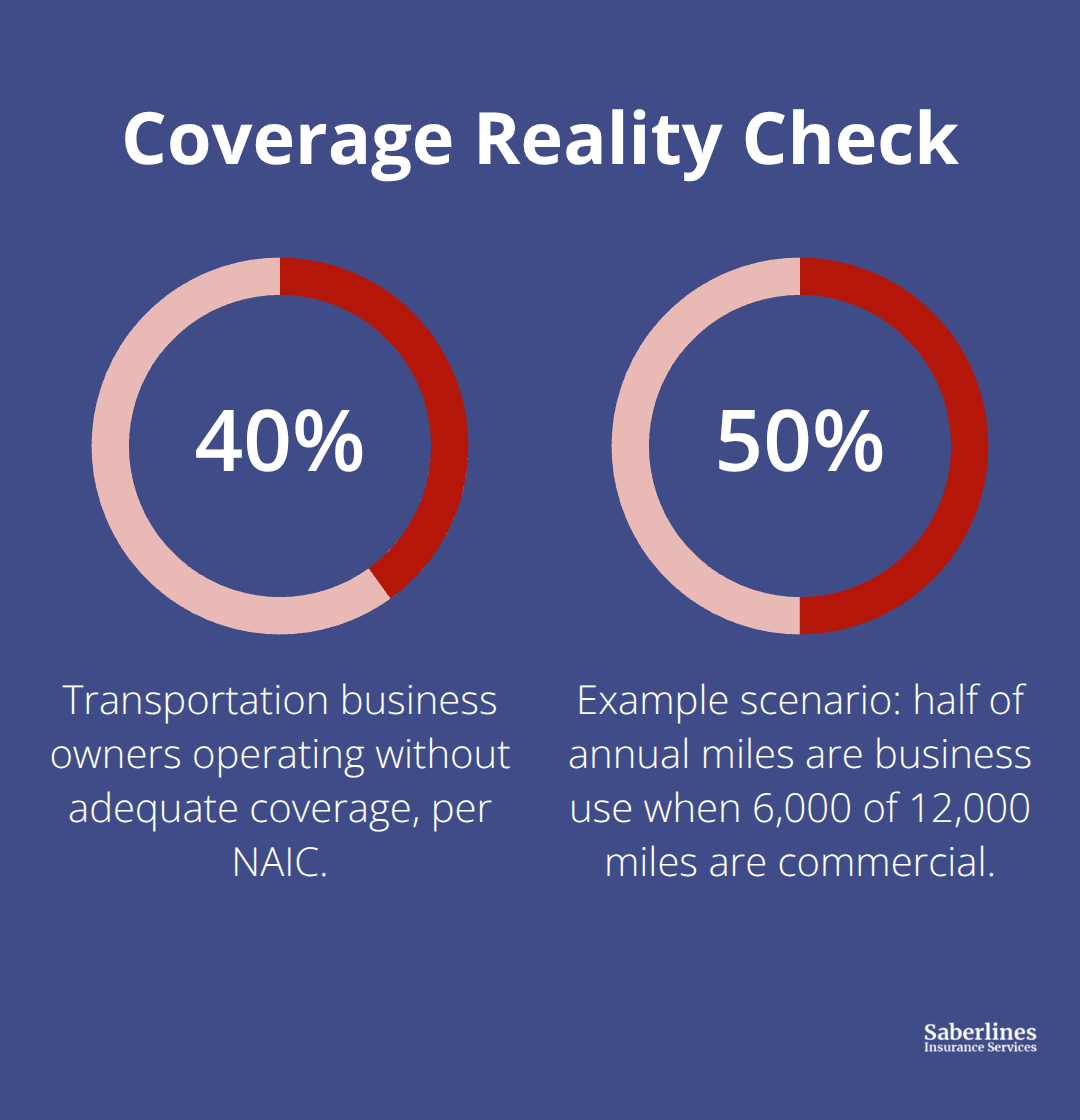
The National Association of Insurance Commissioners reports that roughly 40% of transportation business owners operate without adequate coverage because they misunderstand what their personal policy actually protects. This gap matters enormously because if you have an accident while conducting business in a vehicle covered only by personal insurance, your claim gets denied and you pay damages out of pocket.
Who Actually Needs This Coverage
Your actual operation determines whether you need this coverage, not just your job title. Owner-operators who transport clients, deliver goods, or conduct business-related tasks fall into this category. Part-time delivery drivers, rideshare operators who occasionally use their vehicles for business purposes, and contractors who transport equipment regularly all need proper coverage.
The situations vary widely: a small contractor transports tools and materials to job sites, a non-emergency medical transport driver uses their personal vehicle between shifts, or a business owner makes frequent client visits. Each scenario creates liability exposure that personal auto insurance explicitly excludes. The insurance industry distinguishes between occasional business use and regular commercial activity, with most carriers drawing the line at regular or systematic business use.
Where Personal Coverage Fails
If your vehicle generates income or transports business-related cargo or passengers on a regular basis, you operate in a gray zone where personal coverage fails and commercial coverage designed for full-time fleets costs too much. Standard personal policies leave you exposed because they were never designed for the realities of mixed-use operations.
Personal use commercial vehicle policies bridge this gap by providing coverage for vehicles that blur the line between personal and business use. This type of policy recognizes that your transportation needs don’t fit neatly into either category-and that’s exactly where the right coverage makes the difference between staying protected and facing financial disaster when an accident happens.
Why Standard Auto Insurance Leaves Transportation Businesses Vulnerable
Commercial Use Exclusions That Deny Claims
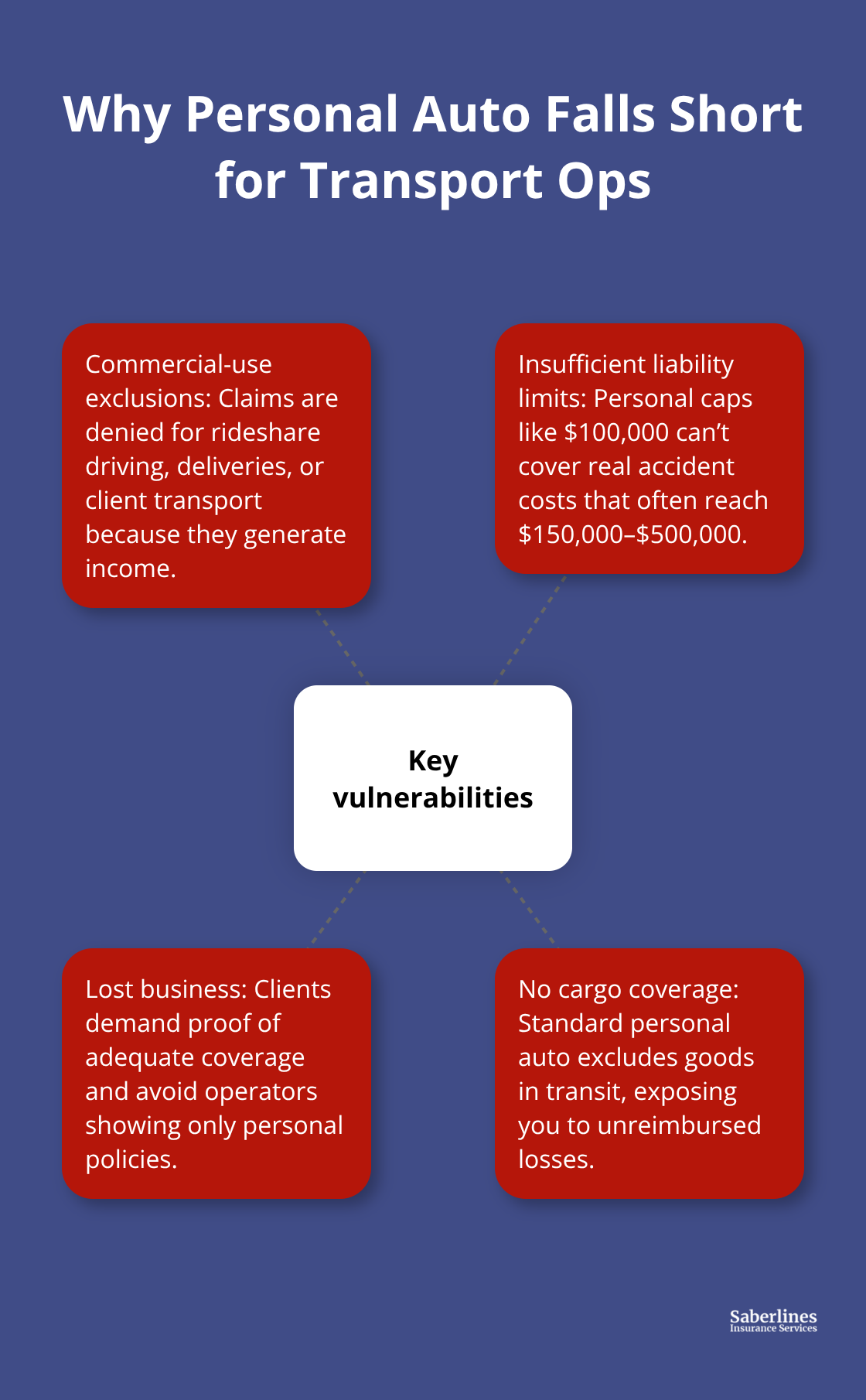
Standard personal auto insurance policies contain explicit exclusions for commercial activities, and these aren’t minor limitations. Insurance companies define commercial use broadly to include any activity that generates income or involves transporting goods or passengers for compensation. The Insurance Information Institute reports that personal policies exclude coverage for rideshare driving, delivery services, and business-related transportation. If you transport clients, haul materials, or make deliveries and have an accident, your insurer will deny your claim outright. The denial letter arrives after the accident, when you face total financial responsibility for damages. Your personal policy explicitly states no coverage for business use, leaving you to pay medical bills, property damage, and legal fees from your business account.
Liability Limits That Fall Short of Real Costs
Standard policies impose liability limits that don’t match the actual risks transportation businesses face. Most personal auto policies cap liability at $100,000 per accident, which sounds adequate until you calculate real-world exposure. A single incident involving injury to a passenger or damage to cargo easily exceeds $250,000 in medical bills, lost wages, and property damage. The American Transportation Research Institute documents that transportation-related accidents average $150,000 to $500,000 in total costs when you include legal fees and settlement amounts. Owner-operators operating under personal insurance face personal asset seizure to cover amounts beyond their policy limits. Additionally, personal policies typically exclude cargo coverage entirely, leaving you personally liable if goods get damaged during transport.
Coverage Gaps That Cost You Business
Business clients increasingly require proof of adequate coverage before hiring transportation services. Showing a personal auto policy guarantees they’ll take their business elsewhere. The coverage gaps aren’t accidental oversights in policy language-they’re intentional exclusions because personal insurers never priced their policies to cover commercial risk. These gaps create a situation where you operate without protection, and your clients know it. The right coverage type addresses these specific vulnerabilities and positions your operation as professional and insured.
How to Choose the Right Personal Use Commercial Vehicle Policy
Document Your Actual Usage Patterns
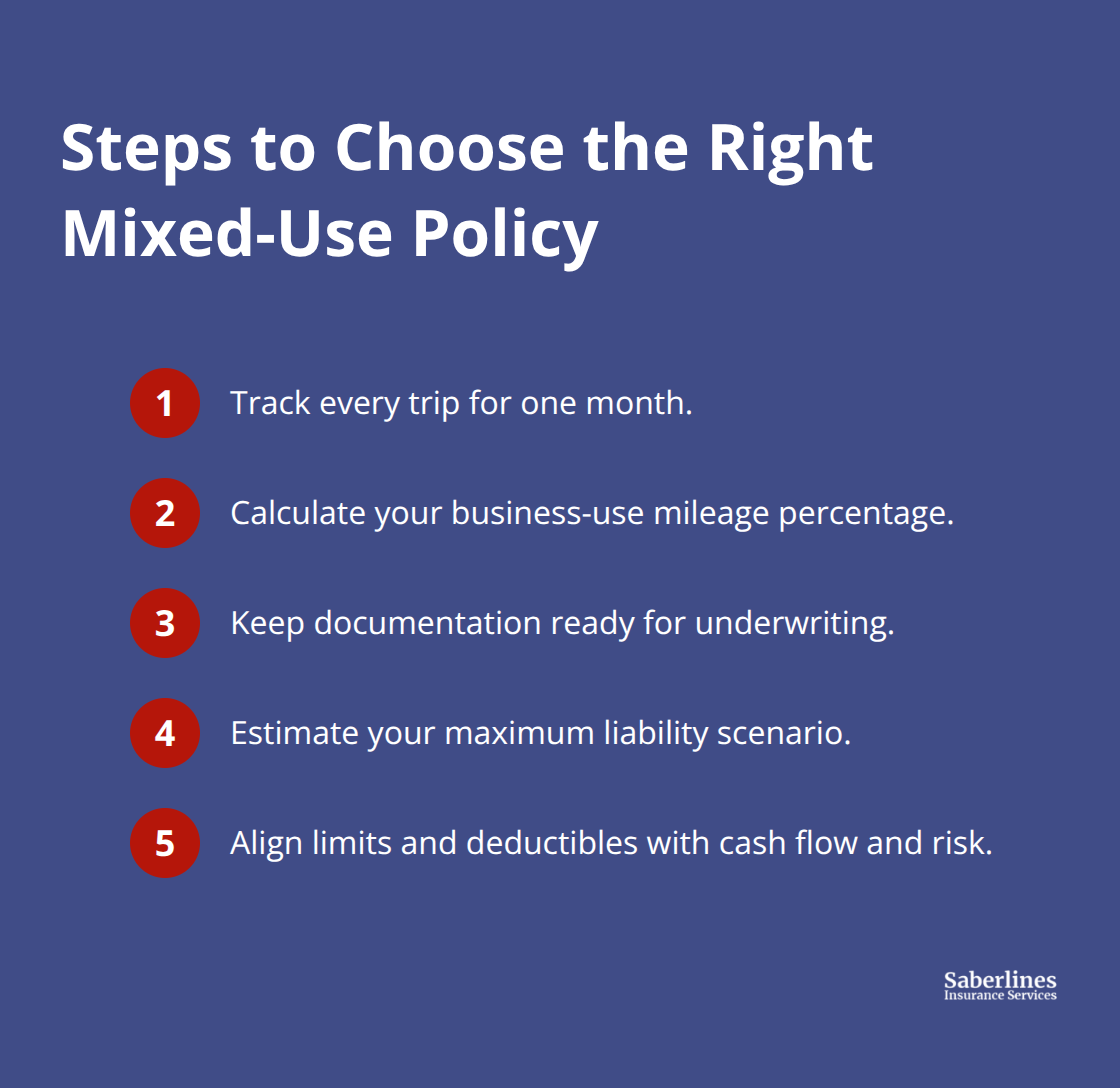
Start with your mileage and trip logs because insurance companies base premiums directly on documented usage patterns. Track your vehicle for one full month and record every trip: personal errands, business deliveries, client transport, supply runs, everything. Calculate the percentage of miles driven for business versus personal use. Most owner-operators underestimate their commercial mileage by 20 to 40 percent according to industry audits, which means they purchase inadequate coverage. If you drive 12,000 miles annually and 6,000 are business-related, you operate at 50 percent commercial use, which dramatically changes your coverage needs and pricing.
Insurance carriers request this documentation during underwriting, and dishonest estimates get caught during claims investigations. The distinction matters financially: misclassifying your usage costs thousands in denied claims or expensive re-quotes mid-year.
Calculate Your Maximum Liability Exposure
Evaluate liability exposure by calculating your maximum potential loss scenario. If you transport three clients and cause an accident injuring all three passengers plus damaging a third vehicle, your liability exposure exceeds $500,000 easily when you factor in medical costs, lost wages, and property damage. Standard policies capping at $100,000 leave you personally responsible for the remaining $400,000.
Transportation business owners should carry minimum liability limits of $250,000 per person and $500,000 per accident, with many preferring $1,000,000 aggregate coverage to protect personal assets. This approach protects your personal finances from catastrophic claims.
Select Coverage Limits and Deductibles That Match Your Business
Cargo coverage becomes essential if you transport goods: a single incident destroying $50,000 in merchandise requires dedicated cargo protection because personal policies exclude it entirely. Deductibles impact your cash flow significantly-a $1,000 deductible versus $500 can mean the difference between absorbing a loss or depleting business reserves.
Premium costs increase with higher liability limits and lower deductibles, but underinsuring creates catastrophic risk that far exceeds the premium savings. Saberlines Insurance Services helps transportation operators calculate actual exposure and select deductibles that match their financial capacity.
Final Thoughts
Your personal use commercial vehicle needs coverage that standard auto insurance simply won’t provide. Standard policies leave you exposed to denied claims, personal asset liability, and lost client relationships-risks that cost far more than adequate protection. Start by documenting exactly how you use your vehicle: pull your mileage logs, calculate your business-use percentage, and identify what cargo or passengers you regularly transport. This documentation forms your foundation for selecting appropriate coverage limits and deductibles.
Calculate your actual liability exposure next, because a single incident involving clients or cargo can generate $250,000 to $500,000 in damages. Personal policies capping at $100,000 leave you personally responsible for the difference, and cargo coverage deserves special attention since standard policies exclude it entirely. Most owner-operators discover they need higher liability limits than they initially thought once they work through realistic accident scenarios and their maximum exposure.
We at Saberlines Insurance Services specialize in commercial auto, cargo, and workers’ compensation policies designed specifically for transportation businesses that don’t fit neatly into standard categories. Visit Saberlines Insurance Services to discuss your specific situation and receive a quote that reflects your real usage patterns and liability exposure.
The information provided in this blog is for general informational purposes only and does not constitute legal, financial, or insurance advice. Coverage options, terms, and availability may vary. Please consult with a licensed professional for advice specific to your situation.