
Personal Use Commercial Vehicle Policy: Insuring Your Dual-Use Vehicle
Your vehicle does double duty-it carries you to personal errands and handles business deliveries or client meetings. Standard auto insurance won’t cut it for this kind of mixed use.
A personal use commercial vehicle policy fills that gap by protecting both sides of how you drive. At Saberlines Insurance Services, we see too many vehicle owners caught without proper coverage because they didn’t understand their actual insurance needs.
What Exactly Is a Personal Use Commercial Vehicle Policy
The Hybrid Coverage Model
A personal use commercial vehicle policy is a hybrid insurance product designed for vehicles that split time between personal driving and business operations. Unlike standard personal auto policies that exclude or heavily restrict business use, this coverage type acknowledges the reality of how many vehicle owners actually drive. Owner-operators and small business owners need this exact middle ground. The policy combines personal auto coverage with commercial protections, creating a comprehensive shield against liability and damage claims that arise from both your weekend errands and your weekday deliveries.
Why Standard Personal Policies Fall Short
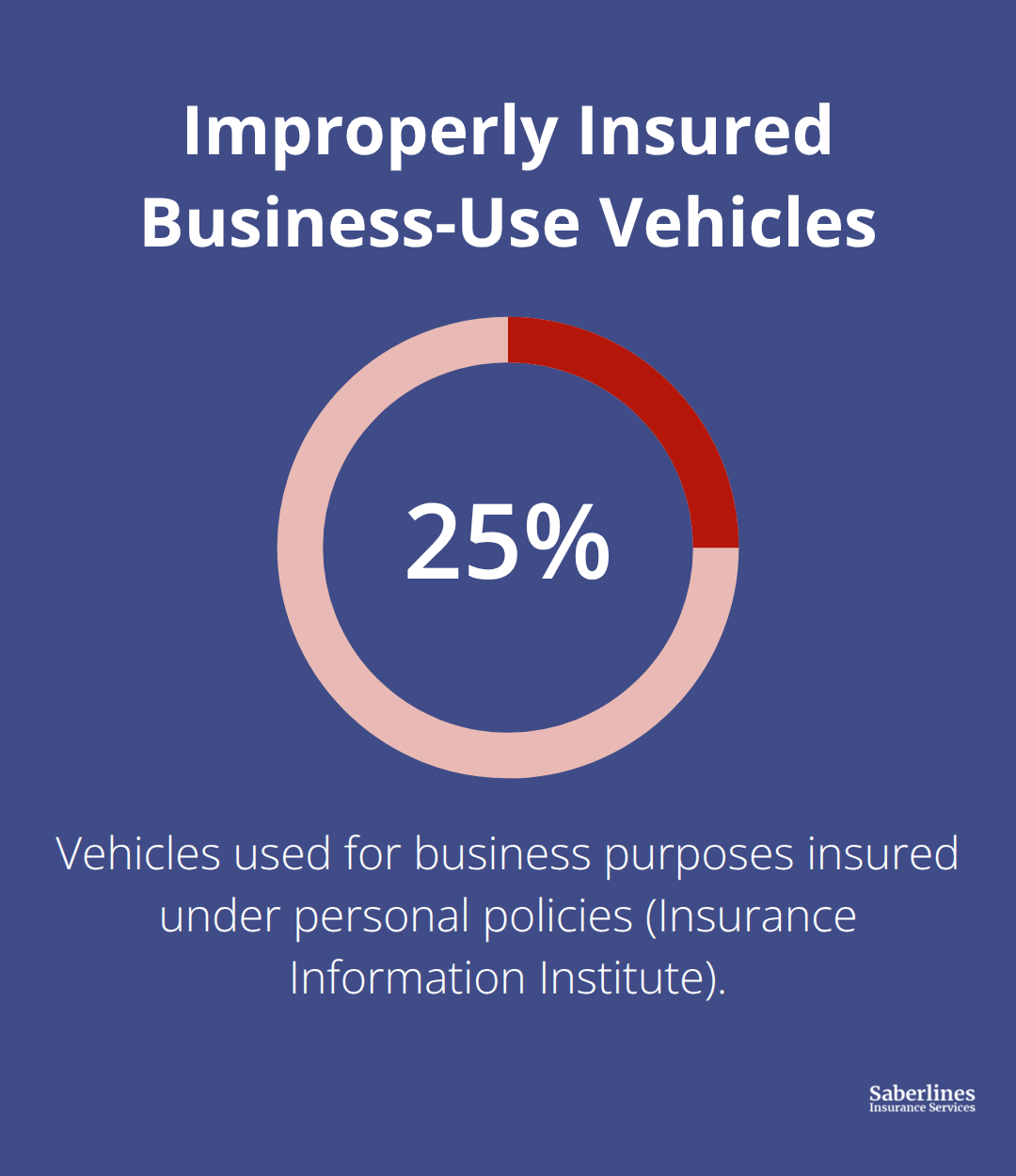
Standard personal auto insurance explicitly prohibits regular business use. Most insurers define business use as anything beyond commuting to a fixed workplace-so client meetings, service calls, or product deliveries violate your policy terms. If you file a claim while conducting business, insurers can deny coverage entirely, leaving you financially exposed. According to the Insurance Information Institute, roughly 25% of vehicles used for business purposes are insured under personal policies, meaning millions of drivers operate without proper coverage.
What This Policy Actually Covers
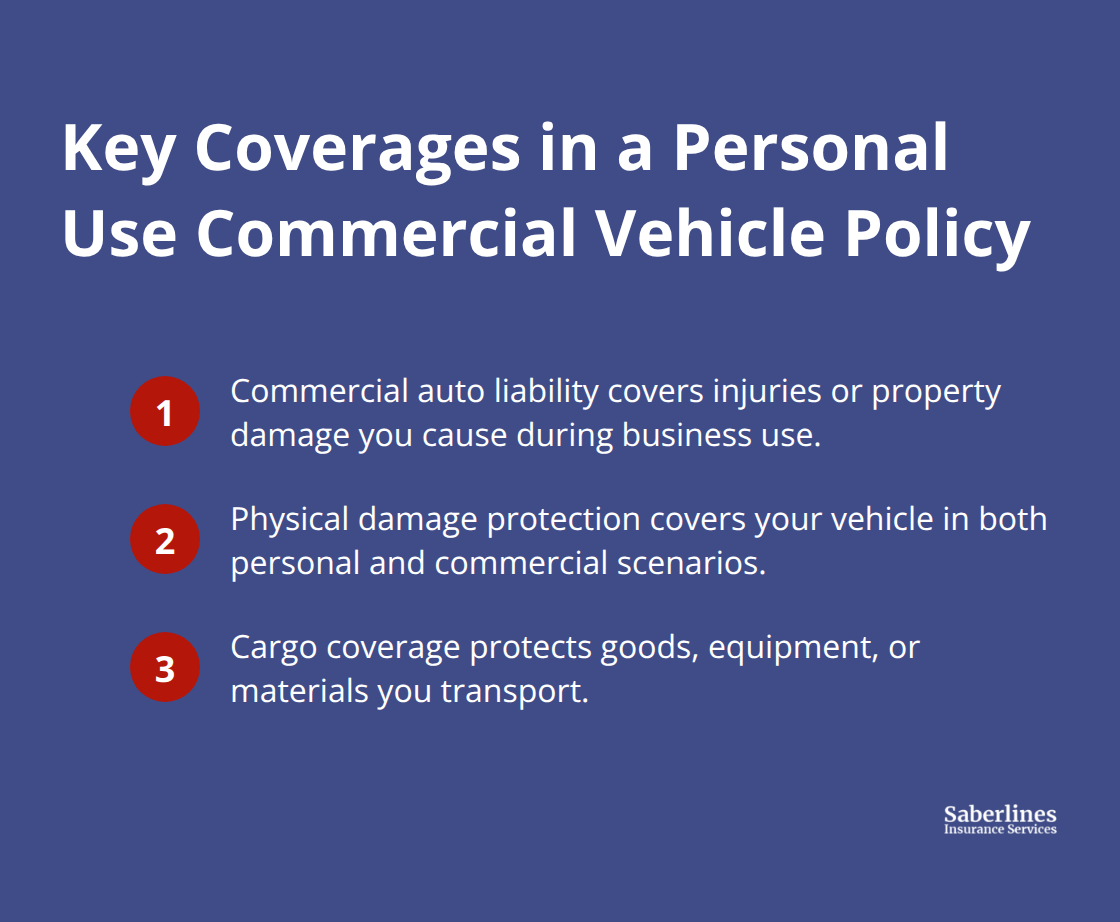
Personal use commercial vehicle policies solve this gap by allowing you to use your vehicle for both personal errands and business activities within defined limits. The coverage typically includes commercial auto liability (protecting others if you cause injury or property damage during business use), physical damage protection (covering your vehicle under both personal and commercial circumstances), and often cargo coverage if you transport goods. What makes these policies different from full commercial auto policies is that they cost less because they assume lower business mileage and less intensive commercial use than a vehicle used exclusively for business.
You’re not paying commercial rates for a vehicle that still spends significant time as your personal transportation.
Moving Forward With the Right Coverage
Understanding the distinction between personal, commercial, and hybrid policies matters because the wrong choice leaves you exposed. The next section examines the specific coverage options available and what each one protects.
Coverage Options for Dual-Use Vehicles
Commercial Auto Liability: Protecting Against Major Claims
Commercial auto liability coverage protects you when your vehicle causes injury or property damage to someone else during business activities. Standard personal policies typically cap liability at $15,000 to $25,000, which falls dangerously short if you transport clients or goods. Most states require minimum liability of $25,000 per person and $50,000 per accident, but the Insurance Information Institute reports that these minimums leave you vulnerable to lawsuits exceeding coverage limits. A serious injury to a client in your vehicle can generate medical costs reaching $100,000 or more. You should select liability limits of at least $100,000 per person and $300,000 per accident for dual-use vehicles, particularly if you transport multiple passengers or high-value cargo. This higher limit costs relatively little more than minimum coverage but shields your personal assets from catastrophic claims.
Physical Damage Coverage: Closing the Gap
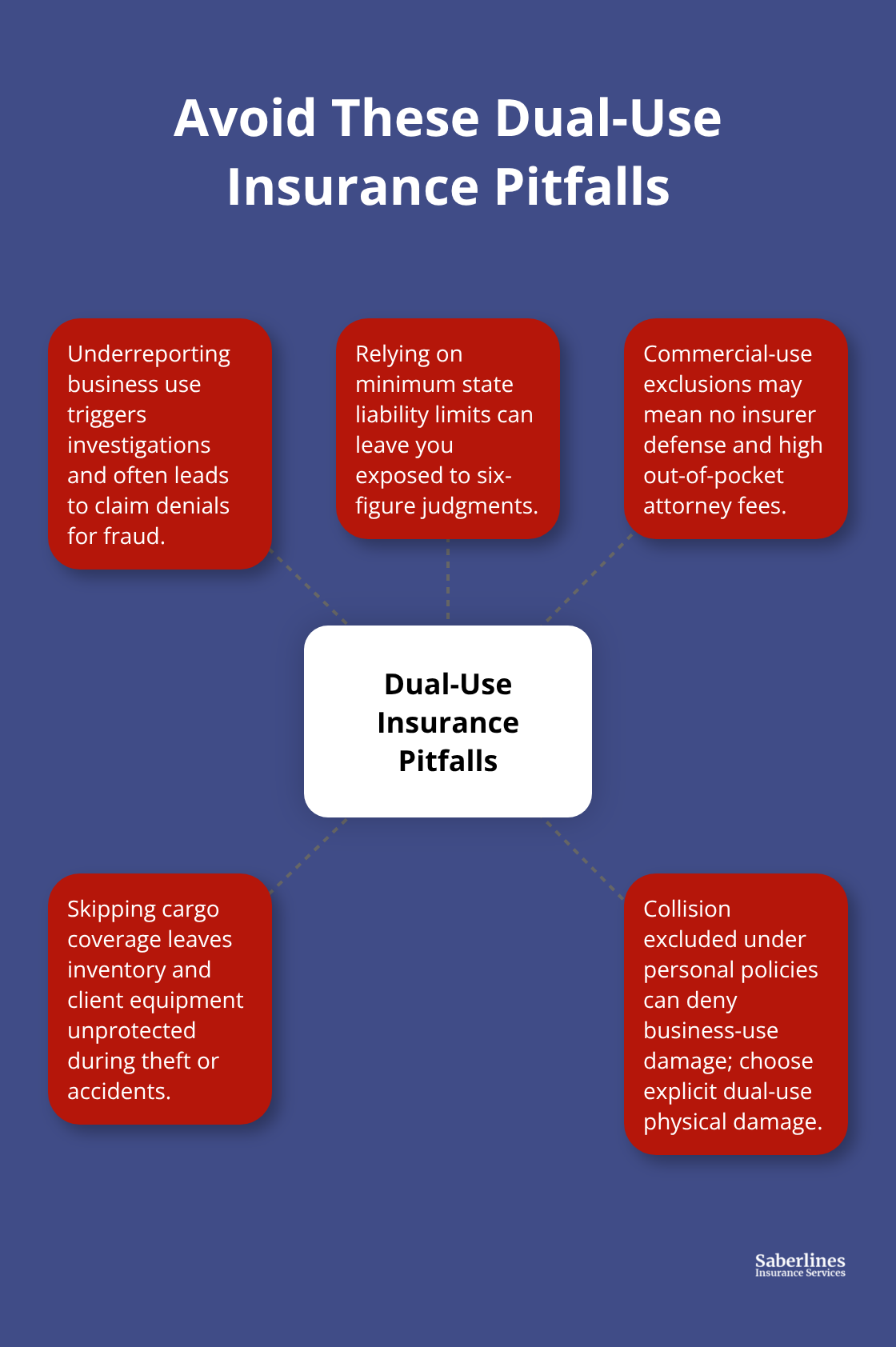
Physical damage and comprehensive protection work differently for dual-use vehicles than they do under personal policies. Comprehensive coverage handles theft, vandalism, weather damage, and animal collisions regardless of whether you use the vehicle personally or commercially, but collision coverage (which pays for accident damage) often excludes business use under personal policies. Many insurers either deny collision claims made during commercial activities or charge significantly higher deductibles for business-related damage. You should select a policy that explicitly covers physical damage during both personal and commercial use without restrictions or higher deductibles.
Cargo Coverage: Protecting Your Inventory
Cargo coverage becomes essential if you transport goods, equipment, or materials as part of your business. Standard personal policies do not cover cargo at all, leaving your inventory or client equipment unprotected if theft or damage occurs. Cargo endorsements typically cost $15 to $50 monthly depending on what you transport and your cargo value, but they prevent total financial loss if your vehicle faces burglary or accident while carrying business inventory. The specific endorsements you add will shape how well your policy actually protects your operations when claims arise.
Common Mistakes When Insuring Dual-Use Vehicles
The Fraud Trap: Underreporting Business Use
The temptation to underreport business use is real, and we see it constantly at Saberlines Insurance Services. Vehicle owners think that shaving a few hundred business miles per month off their disclosure form will save them money on premiums, but this calculation fails spectacularly when a claim arrives. If you use your vehicle for deliveries, client visits, or service calls and you tell your insurer you only drive it for personal use, you have committed insurance fraud. The insurer will investigate your claim, discover the discrepancy through phone records, GPS data, or witness statements, and deny coverage entirely. You will owe the full claim amount out of pocket, which typically exceeds what you saved on premiums by a factor of ten or more.
The National Insurance Crime Bureau reports that insurance fraud adds roughly $15 to $30 annually to every American’s premium, and misrepresented business use accounts for a significant portion of personal auto claim denials. Courts have upheld insurer denials even when the misrepresentation was unintentional, so careless disclosure carries the same legal consequences as deliberate deception.
The Cost of Inadequate Liability Limits
The real financial damage comes when you face a serious liability claim. If you injure someone during a business activity and your policy excludes commercial use, your insurer will not just deny the claim-they may refuse to defend you in court, leaving you to hire your own attorney at $200 to $400 per hour. A moderate injury claim can generate legal bills exceeding $50,000 before a settlement is reached.
Many dual-use vehicle owners choose the minimum liability required by their state because they assume accidents will not happen. Minimum coverage in most states sits at $25,000 per person and $50,000 per accident, but a single serious injury routinely generates medical bills, lost wages, and pain-and-suffering awards totaling $150,000 to $500,000. If your liability limit is $25,000 and a judgment against you reaches $200,000, you are personally responsible for the $175,000 gap.
Why Higher Coverage Limits Matter
Try selecting liability limits of at least $100,000 per person and $300,000 per accident for dual-use vehicles, particularly if you transport multiple passengers or high-value cargo. The premium difference between minimum and these higher limits usually amounts to $20 to $40 monthly-an investment that prevents financial devastation. This modest cost protects your personal assets from catastrophic claims that would otherwise wipe out your savings and future income.
Final Thoughts
Dual-use vehicles demand insurance that matches how you actually drive. A personal use commercial vehicle policy bridges the gap between personal auto coverage and full commercial protection, giving you the flexibility your business needs without overpaying for unnecessary coverage. The mistakes we see most often at Saberlines Insurance Services stem from one source: incomplete or inaccurate disclosure that transforms a manageable insurance cost into financial catastrophe when claims arrive.
Minimum liability limits leave you exposed to judgments that far exceed your coverage, yet the premium difference between inadequate and protective limits amounts to just $20 to $40 monthly. That modest investment protects your personal assets from claims that could otherwise eliminate your savings and future income. Cargo coverage, physical damage protection without business-use restrictions, and commercial auto liability all work together to create the comprehensive shield your dual-use vehicle actually needs.
Contact an insurance agency that understands transportation and dual-use vehicles. We at Saberlines Insurance Services have specialized in commercial auto coverage for owner-operators and small fleets, and we know exactly how to structure a personal use commercial vehicle policy that protects both your business operations and your personal driving. Get a quote from us and make sure your coverage matches your actual risk.
The information provided in this blog is for general informational purposes only and does not constitute legal, financial, or insurance advice. Coverage options, terms, and availability may vary. Please consult with a licensed professional for advice specific to your situation.