
Truck Liability Coverage: Safeguard Your Haul and Wallet
One accident can wipe out your business finances. Without proper truck liability coverage, you’re personally responsible for damages, medical bills, and legal fees that could reach hundreds of thousands of dollars.
At Saberlines Insurance Services, we’ve seen trucking companies face devastating losses because they didn’t understand their coverage options. The right liability protection isn’t optional-it’s the difference between staying in business and closing your doors.
What Truck Liability Coverage Actually Protects
Truck liability coverage covers bodily injury and property damage you cause to others while operating a commercial vehicle. The FMCSA mandates a minimum of $750,000 in primary liability coverage for most truck operations, though shippers and brokers frequently demand $1,000,000 limits before they’ll contract with you. This isn’t a suggestion-it’s the price of admission to the industry. Without it, you cannot legally operate, and regulators will shut down your authority faster than you can file a claim.
Why the Coverage Limit Matters More Than You Think
A $750,000 limit sounds substantial until a multi-vehicle accident happens. If you cause a crash involving a semi-truck, two passenger vehicles, and injuries to five people, your total liability exposure could easily reach $1.5 million or $2 million. That’s when operators realize their minimum coverage only covers half the actual damages. Shippers and brokers know this risk, which is why most require $1,000,000 in primary liability before they’ll load freight onto your truck.
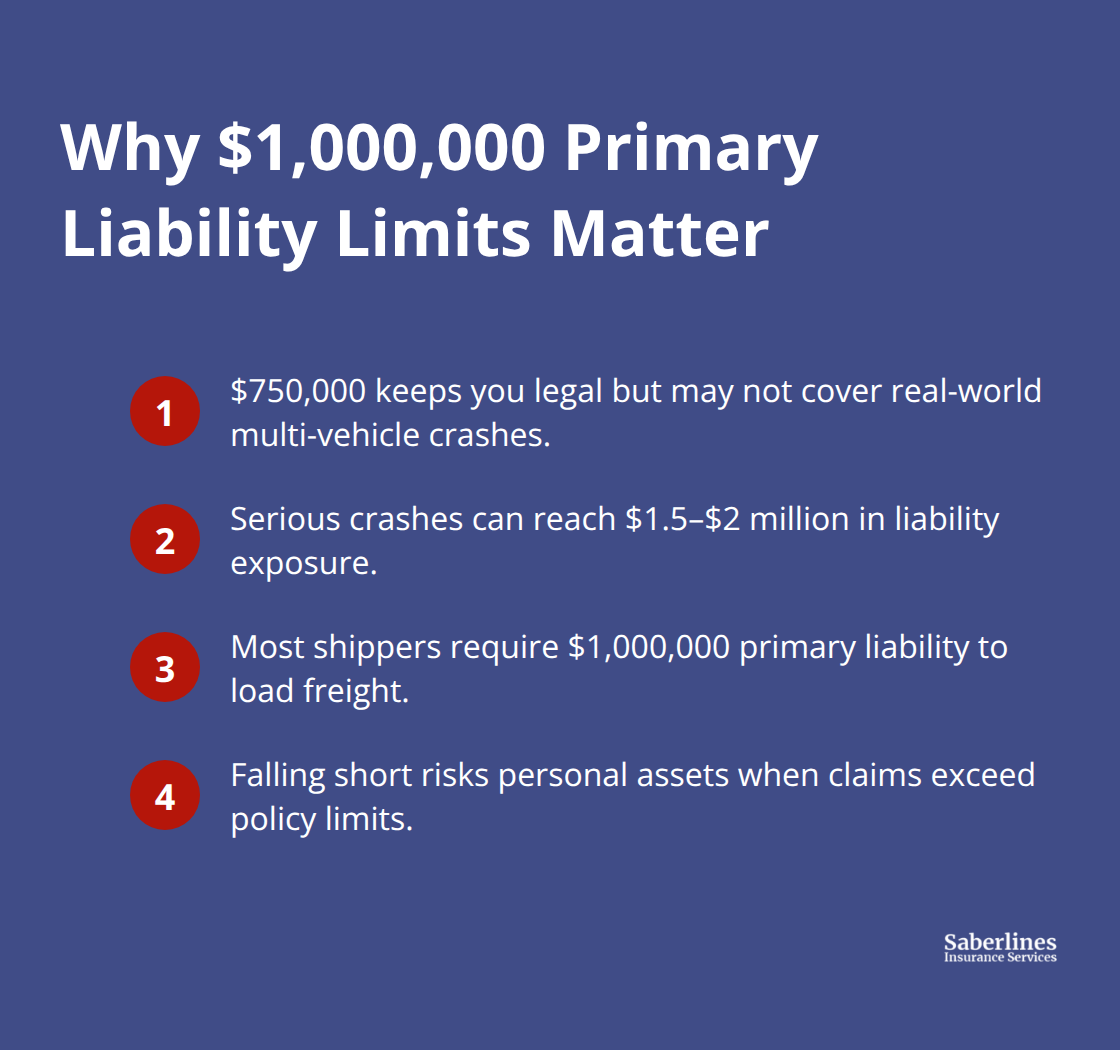
The difference between meeting the bare minimum and carrying adequate coverage isn’t academic-it’s the difference between protecting your business assets and losing everything in a single incident. Operators with $750,000 coverage have faced personal bankruptcy when claims exceeded their limits, even though a $1,000,000 policy would have cost only marginally more per month.
The Third-Party Reality You Can’t Ignore
Third-party claims don’t wait for your convenience. When you’re at fault, the injured party or property owner’s insurance company will pursue your coverage aggressively. Medical expenses for a serious injury case routinely exceed $500,000. Property damage to commercial vehicles, cargo, and infrastructure adds up fast. Your liability coverage pays these costs directly to the claimant, which protects your personal assets from garnishment or seizure. Without adequate coverage, creditors can pursue your truck, your savings, your home, and your future earnings. The FMCSA requires this coverage specifically because the financial devastation of an uninsured or underinsured trucking accident extends far beyond the driver-it affects everyone involved and the broader transportation network.
What Happens When Claims Exceed Your Limits
Most operators don’t realize that liability coverage has a ceiling. Once you hit your limit, you personally pay everything above it. A single serious injury claim can cost $750,000 to $1,000,000 or more in medical treatment, lost wages, and pain-and-suffering damages. If your coverage maxes out at $750,000 and the actual damages total $1,200,000, you owe the remaining $450,000 from your own pocket. This liability follows you indefinitely-creditors can garnish your wages, seize your equipment, and pursue legal action for years. The gap between minimum coverage and real-world accident costs represents your personal financial exposure, which is why shippers and brokers demand higher limits before they’ll work with you.
Moving Forward With Adequate Protection
Understanding your liability limits is only the first step. The next chapter examines the specific types of liability coverage available and how they work together to protect your operation from different kinds of claims.
Which Liability Coverage Types Actually Apply to Your Operation
Primary Liability vs. General Liability: Two Distinct Protections
Primary liability and general liability protect against entirely different exposures, yet most operators confuse them. Primary liability covers bodily injury and property damage you cause while actively hauling freight or passengers-this is the coverage the FMCSA mandates as your baseline protection. General liability covers injuries or property damage that occur during business activities unrelated to driving, such as someone slipping in your office, a customer injured while loading cargo, or damage caused by your equipment at a warehouse.
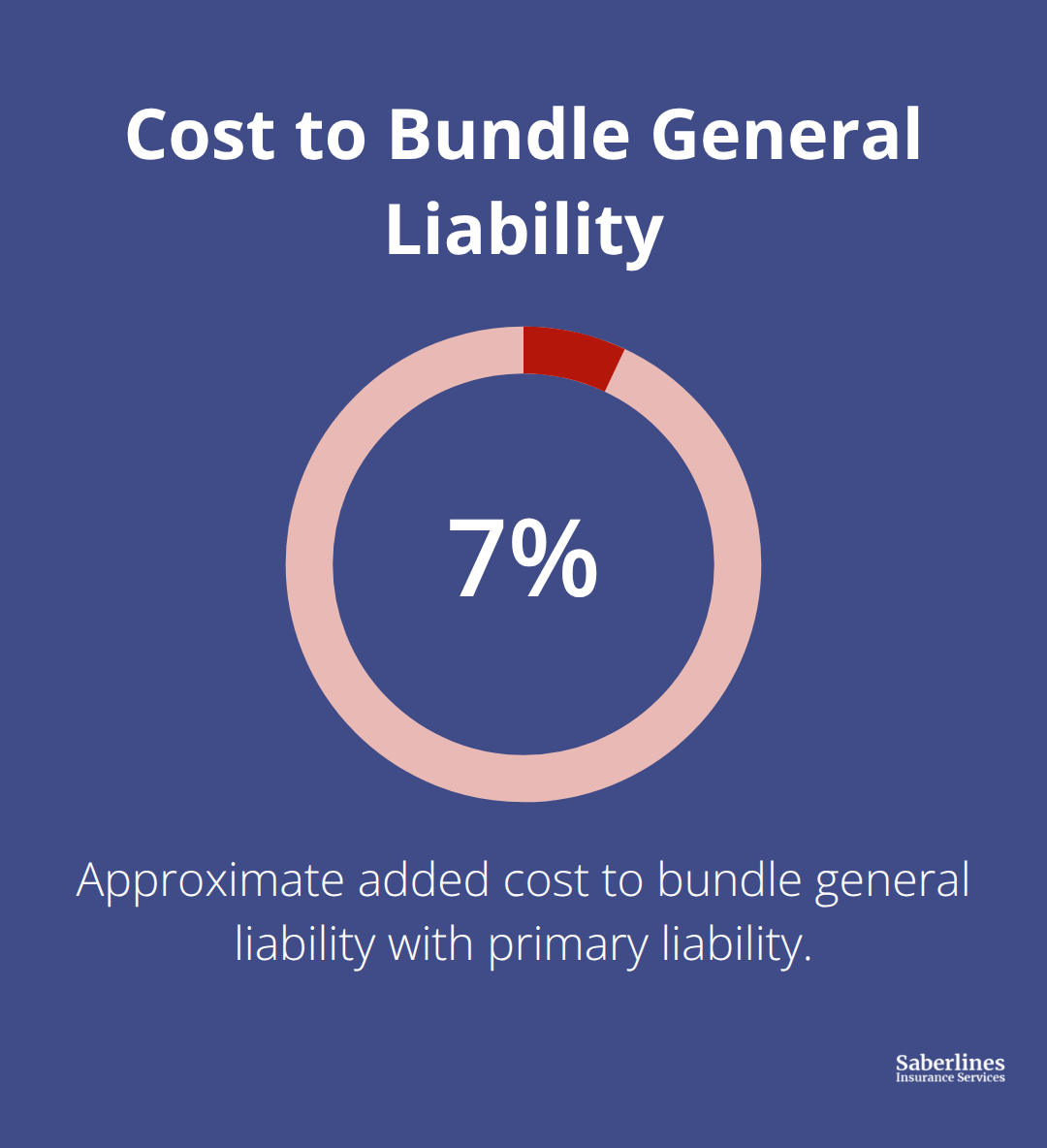
Many operators carry only primary liability and discover too late that general liability would have covered a claim falling outside their trucking operations. The gap between these two coverage types leaves you exposed to significant liability in non-driving situations. Bundling primary liability with general liability typically costs only about 7 percent more than primary liability alone, while the protection gap disappears entirely. Without both coverages working together, you’re betting your business on the assumption that every claim happens behind the wheel-an unrealistic wager.
Cargo Liability: Protecting Freight in Transit
Motor truck cargo insurance covers damage or loss to goods you’re transporting, protecting you if freight sustains damage in transit due to accident, theft, or weather events. Shippers and brokers frequently require cargo coverage as a contract condition, and premiums typically reflect the cargo type and value being hauled. This coverage separates from your primary liability because it addresses the goods themselves rather than third-party bodily injury or property damage claims.
Cargo insurance includes debris removal, earned freight protection, and refrigeration breakdown coverage (depending on your policy). If you haul high-value or hazardous materials, cargo coverage becomes non-negotiable-shippers won’t load freight without it. Skipping this coverage when your contracts demand it exposes you to personal liability for lost or damaged shipments, which can reach hundreds of thousands of dollars on a single load.
Contingent Liability and Trailer Interchange: Operating Others’ Equipment
Contingent liability, sometimes called trailer interchange coverage, protects you when you’re responsible for damage to trailers or equipment you don’t own but operate under a shipper’s agreement. This coverage activates when you interchange trailers or operate under lease arrangements where shippers require you to assume liability for their equipment. The FMCSA doesn’t mandate contingent liability, but most major freight brokers require it before they’ll dispatch loads to you.
Many operators pay for coverage they don’t need while leaving critical gaps in other areas. Matching your coverage stack to your actual contracts and operating model prevents both overpaying and underinsuring. If your broker agreements require trailer interchange protection, carrying it costs far less than defending a claim for damage to equipment worth $50,000 or more. The next chapter examines how real claims actually unfold and which coverage types step in when accidents happen.
Common Claims and How Liability Coverage Protects You
Property Damage Claims Cost More Than You Expect
A rear-end collision with a passenger sedan costs $15,000 to $25,000 in vehicle repairs alone. Add a semi-truck or commercial vehicle to the equation and damages escalate to $50,000 or $100,000 for frame damage, cargo loss, and equipment replacement. Your primary liability coverage pays the injured party’s repair costs directly, protecting your business assets from the claim. Without adequate coverage, you write the check from your operating account and watch your cash flow evaporate.
Bodily Injury Claims Move Faster and Cost Far More
A serious injury involving hospitalization, surgery, and ongoing physical therapy routinely exceeds $500,000 in medical expenses. The injured party’s attorney pursues your liability limits aggressively, and settlement negotiations rarely stay below $300,000 for moderate injuries with permanent effects. Your coverage limit becomes your ceiling-once exhausted, every dollar above it comes from your personal finances. An operator with $750,000 in primary liability faced a claim totaling $1,100,000 after a serious multi-vehicle accident; the remaining $350,000 required a personal settlement that consumed years of profits. This scenario repeats constantly across the trucking industry because operators underestimate real-world claim costs. Shippers and brokers demand $1,000,000 limits specifically because they’ve seen claims exceed $750,000 repeatedly.
How Coverage Limits Determine Your Financial Exposure
The math is straightforward: a $1,000,000 primary liability policy costs roughly $50 to $100 more per month than $750,000 coverage, depending on your driving history, cargo type, and operating radius. That $600 to $1,200 annual difference protects your business from six-figure personal liability when claims exceed your limits. Operating with minimum coverage while hauling high-value freight or crossing multiple states represents a calculated gamble with your business survival.
Multiple Coverage Types Protect Against Distinct Claim Scenarios
Claims don’t stop at primary liability-general liability and cargo coverage protect against distinct exposures your primary policy ignores. An operator loading cargo at a warehouse who causes property damage to the facility faces a general liability claim outside primary coverage. Damage to a shipper’s trailer during interchange falls under contingent liability, not primary protection. Each coverage type addresses specific claim scenarios, and gaps between them create personal liability exposure.
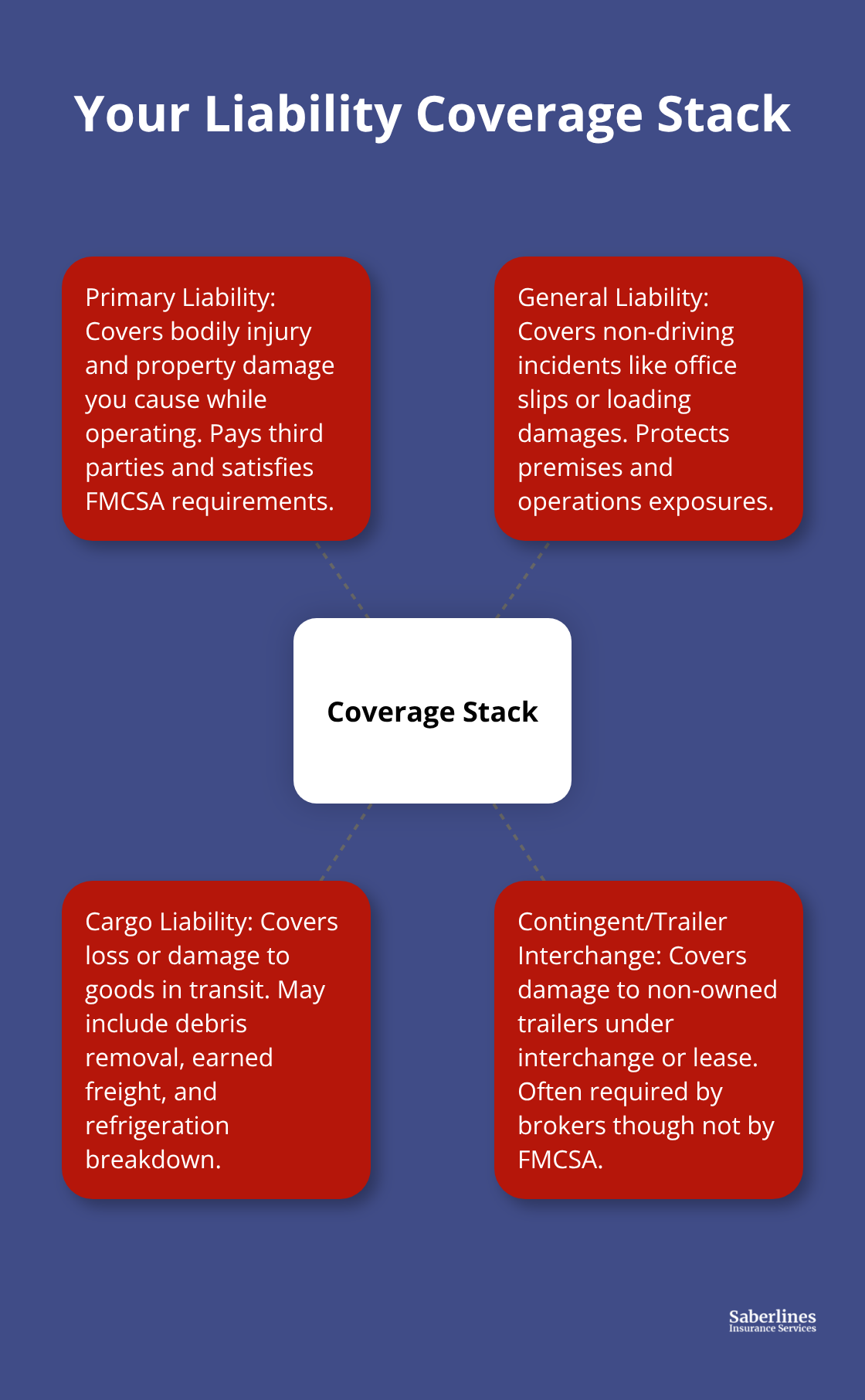
The operators who stay solvent understand their actual risk profile and match their coverage stack accordingly (not by regulatory minimum but by contract requirements and real-world accident costs in their specific operation).
Final Thoughts
Truck liability coverage separates operators who survive accidents from those who don’t. The minimum $750,000 requirement keeps you legal, but real-world claims routinely exceed this threshold, and shippers and brokers demand $1,000,000 limits because they’ve witnessed the financial devastation that underfunded operators face. The gap between minimum coverage and actual claim costs represents your personal financial exposure, and closing that gap costs only marginally more per month than staying underinsured.
Your current coverage likely has gaps you haven’t identified. Most operators carry primary liability but skip general liability, leaving themselves exposed to non-driving claims, while others bundle cargo coverage without understanding what it actually protects. Audit your contracts, your operating model, and your real-world accident exposure to identify whether your coverage matches your actual risk-review your broker agreements to spot all required coverages, compare your current limits against the types of claims your operation faces, and calculate the financial impact if a claim exceeds your limits (that number should terrify you enough to act).
At Saberlines Insurance Services, we help owner-operators and fleets match their coverage to their actual risk profile rather than settling for regulatory minimums. An insurance specialist who understands trucking identifies gaps, explains your real exposure, and builds a coverage stack that protects your business and your personal assets. Contact Saberlines Insurance Services to discuss your truck liability coverage needs with specialists who know trucking.
The information provided in this blog is for general informational purposes only and does not constitute legal, financial, or insurance advice. Coverage options, terms, and availability may vary. Please consult with a licensed professional for advice specific to your situation.