
Work Comp for Fleets: Rates, Coverage, and Compliance
Fleet operators face a complex mix of insurance requirements, regulatory deadlines, and coverage decisions that directly impact their bottom line. Work comp for fleets isn’t one-size-fits-all-rates, coverage limits, and compliance obligations vary significantly by state and business size.
At Saberlines Insurance Services, we’ve helped countless fleet managers navigate these challenges. This guide breaks down how rates are calculated, what coverage actually protects your workers, and which compliance steps you can’t skip.
What Determines Your Fleet’s Work Comp Rate
Your work comp premium isn’t arbitrary. Insurance carriers calculate rates based on three concrete factors that directly reflect your fleet’s risk profile.
Experience Modification Rate and Claims History
Your Experience Modification Rate, or EMR, compares your claims history to other operators in your industry. If your fleet has fewer claims than average, your EMR drops below 1.0, meaning you pay less. If claims exceed the industry average, your EMR climbs above 1.0 and your premium increases.
The National Council on Compensation Insurance reports that EMRs typically range from 0.75 to 1.50 for fleet operations, though some high-risk operations exceed 1.50. Your claims from the past three years carry the most weight in this calculation, so a single serious injury impacts your rate for years. This is why investing in driver safety and incident prevention directly affects your bottom line.
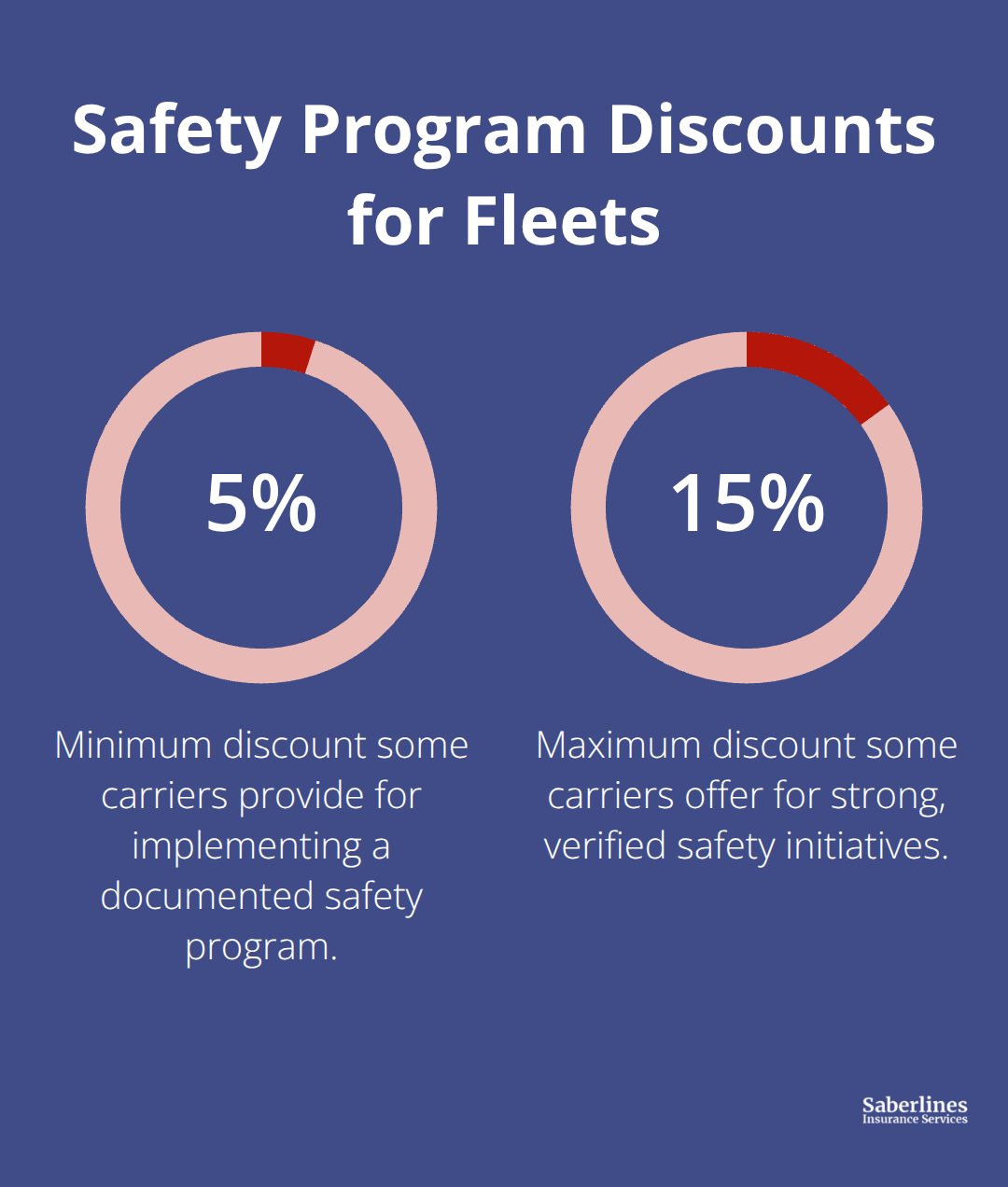
Some carriers offer premium discounts of 5-15 percent for fleets that implement safety programs, according to the American Trucking Associations. A strong safety record translates to real savings.
Industry Classification and Risk Assessment
Your specific fleet classification determines your base rate before any modifications apply. A local delivery operation pays a different rate than long-haul trucking because hazard exposure differs significantly.
OSHA data shows that transportation and warehousing had 4.2 nonfatal workplace injuries per 100 full-time workers in 2023, but this varies widely by operation type. Passenger transport fleets face different risk profiles than cargo operations, and specialized services like medical transport carry their own classifications.
When carriers quote your work comp, they ask detailed questions about your operation type, routes, cargo handling procedures, and driver qualifications. Misclassifying your operation to secure a lower rate is a serious mistake that can result in policy cancellation and uninsured liability exposure.
Payroll Size and Employee Count
Your payroll size and total employee count directly determine your premium dollar amount once your rate is established. A fleet with 10 employees paying a rate of $2 per $100 of payroll will have a significantly different premium than a 50-person operation at the same rate. These three factors work together to shape what you actually pay each year, which is why understanding each one matters before you shop for coverage.
What Your Workers’ Compensation Coverage Actually Pays For
Medical Expense Coverage and Treatment Costs
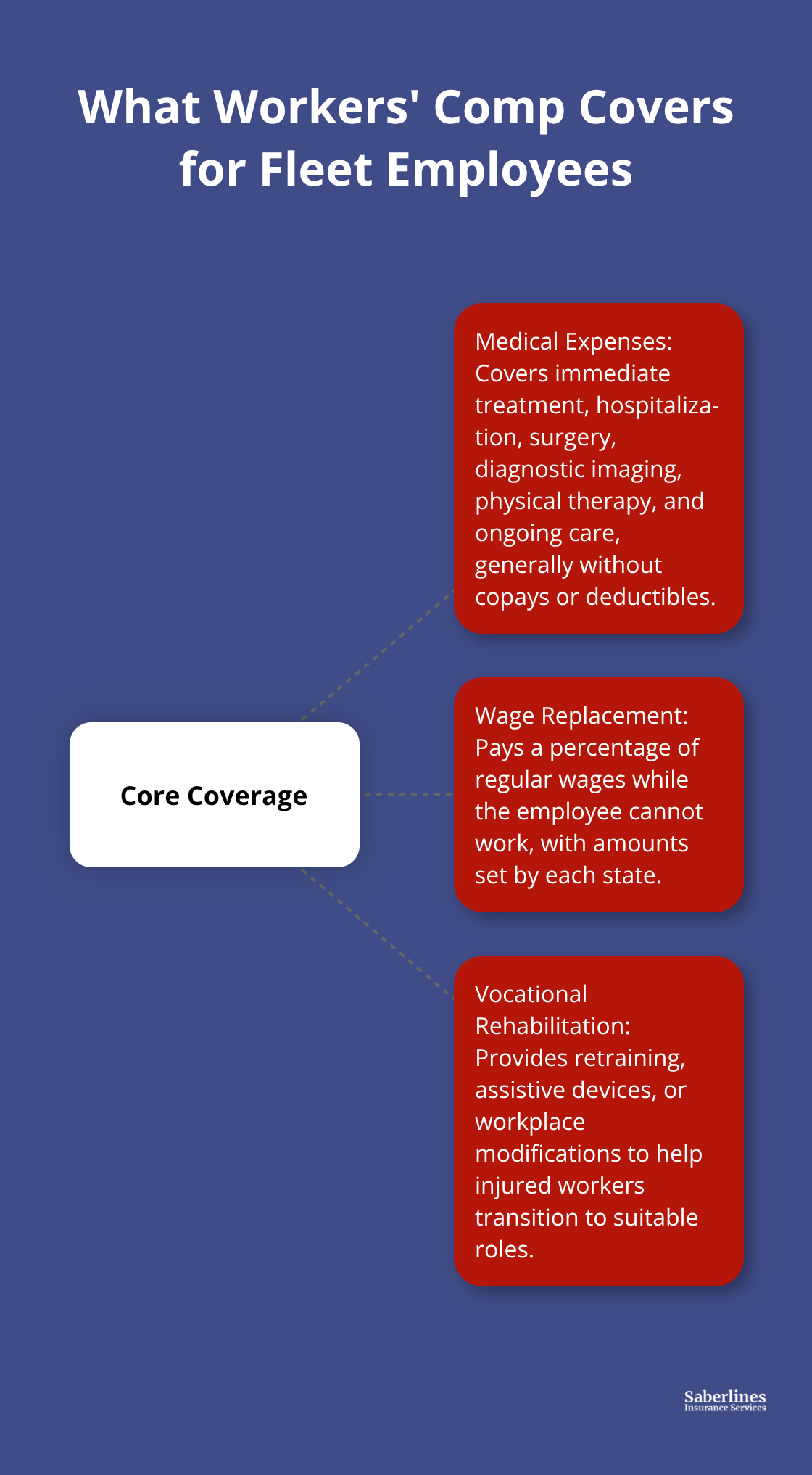
Work comp for fleets covers three distinct categories of expenses when an employee gets injured on the job. Medical expense coverage pays for immediate treatment, hospitalization, surgery, diagnostic imaging, physical therapy, and ongoing medical care related to the work injury. Unlike health insurance, work comp covers all medically necessary treatment without copays or deductibles, and most states impose no time limit on medical benefits.
The National Council on Compensation Insurance reports that medical costs account for approximately 30 percent of total work comp claims costs for transportation workers. Serious injuries involving emergency transport and specialized care run significantly higher. Fleet operators should know that if a driver needs surgery or extended rehabilitation, work comp pays the entire bill regardless of cost, which is why proper classification and adequate coverage limits matter tremendously.
Wage Replacement Benefits for Injured Workers
Wage replacement benefits compensate injured workers for lost income while they recover and cannot work. If a driver suffers a back injury and cannot drive for six weeks, work comp replaces a percentage of their regular wages-typically 60 to 70 percent depending on your state. The Council of Insurance Agents and Brokers data indicates that wage replacement claims in transportation average 45 to 60 days of lost time for moderate injuries, though serious injuries can result in months or permanent disability payments.
Your state determines the maximum weekly benefit amount, which ranges from roughly $400 to $1,200 per week as of 2024. This variation means that two identical injuries in different states produce different wage replacement outcomes, so understanding your state’s specific limits helps you budget for potential claims.
Disability and Vocational Rehabilitation Services
Disability and vocational rehabilitation services activate when an injured worker cannot return to their previous job and needs training for different work. Some states mandate that carriers provide job retraining, assistive devices, or workplace modifications to help workers transition to suitable employment. This coverage protects your fleet by reducing the likelihood of permanent disability claims and helping injured employees become productive again.
However, rehabilitation services also extend your liability exposure if they aren’t adequate. The scope and quality of vocational services vary by state and carrier, which directly affects both your workers’ recovery outcomes and your long-term claims costs. Understanding what your state requires and what your policy actually provides prevents gaps in worker support and unexpected financial exposure.
Compliance Requirements Your Fleet Cannot Ignore
Work comp compliance demands constant attention. Your fleet faces recurring filing deadlines, coverage verification requirements, and documentation standards that vary dramatically by state and can result in significant penalties if missed. Most states require initial work comp coverage verification before you operate, but renewal deadlines, injury reporting timelines, and payroll audits follow different schedules depending on where your fleet operates.
State-Specific Reporting and Filing Obligations
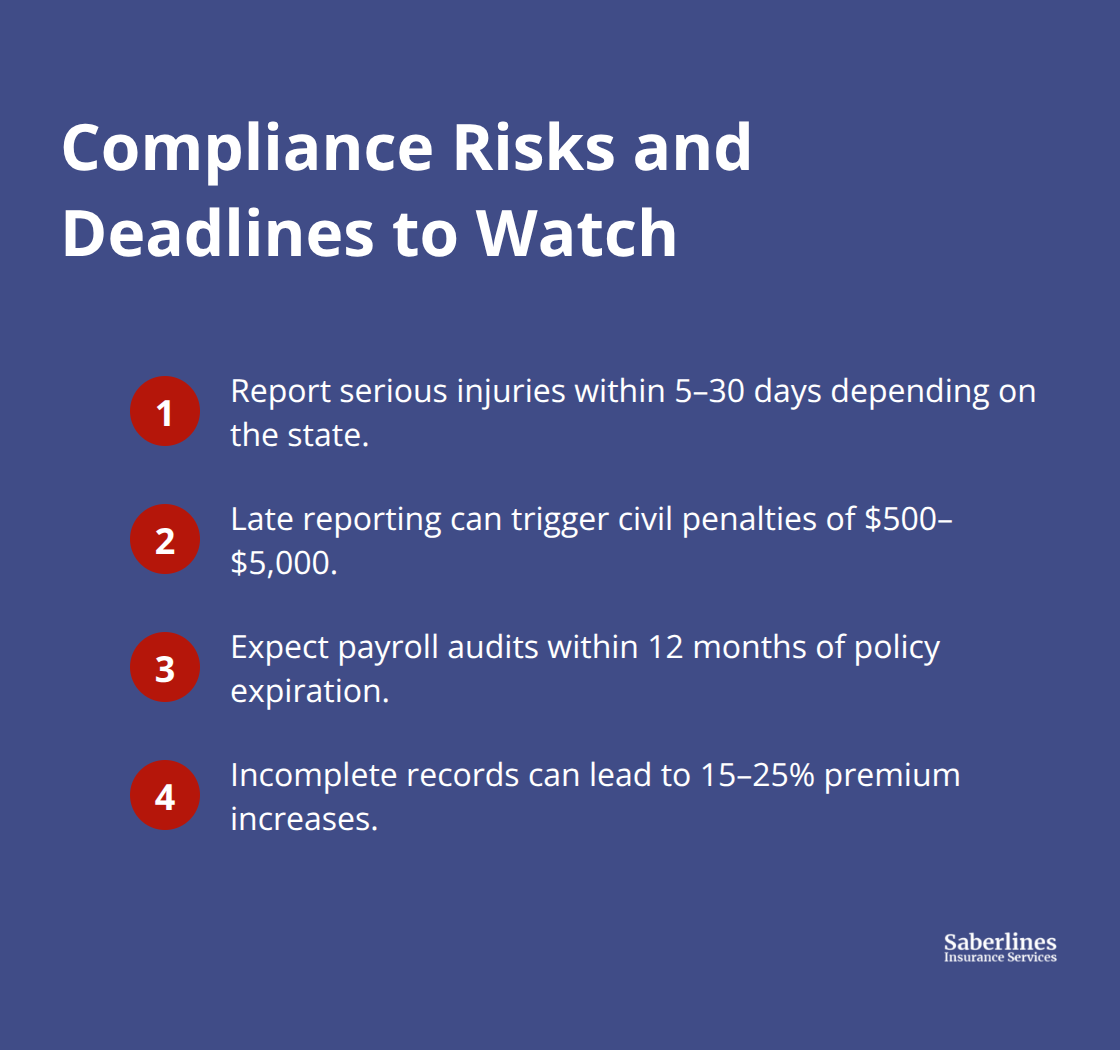
California requires employers to report serious injuries within five days of occurrence, while other states allow up to thirty days. This variation means your compliance calendar shifts based on your operating locations. Missing these reporting windows carries real consequences: state labor department enforcement data shows civil penalties of $500 to $5,000 per violation, plus potential policy cancellation that leaves your fleet uninsured and legally exposed.
Your injury reporting obligations extend beyond the initial notification. Most states require follow-up documentation within specific timeframes, and some demand periodic updates on worker status and medical progress. Failure to file these reports on schedule triggers automatic penalties regardless of whether the underlying claim was legitimate.
Mandatory Coverage Limits by State
Your coverage limits must meet or exceed your state’s mandatory minimums, which differ significantly across jurisdictions. California mandates $15,000 for medical expenses per injury and $10,000 for permanent disability, but states like Texas allow employers to be self-insured or opt out entirely under specific conditions, creating vastly different compliance frameworks.
Some states impose higher limits for specific industries, so a fleet operating in multiple states needs coverage that satisfies the highest requirement across all operating jurisdictions rather than trying to meet minimums state-by-state. Operating with inadequate coverage exposes your company to uninsured liability and potential legal action from injured workers who cannot recover full damages through your policy.
Documentation and Record-Keeping Standards
Carriers conduct payroll audits within twelve months of policy expiration in most states, comparing your reported payroll to actual wages to recalculate your final premium. Incomplete or inaccurate payroll records result in premium adjustments that often exceed the original quote, sometimes by 15 to 25 percent according to insurance audit data.
Maintain detailed records of employee classifications, hours worked, job duties, and wage information for at least five years. Keep incident reports, injury documentation, and medical records organized and accessible (your state’s labor department can request these records during an investigation). Incomplete documentation weakens your position in disputes or claims denials and creates unnecessary exposure during audits.
Final Thoughts
Work comp for fleets demands your attention across three interconnected areas: rate calculation, coverage protection, and compliance deadlines. Your Experience Modification Rate reflects your claims history and directly impacts what you pay each year, while your industry classification and payroll size determine your base premium. Understanding these factors helps you budget accurately and identify where safety investments deliver real financial returns.
Your coverage protects your workers through medical expense benefits that cover all treatment costs, wage replacement that sustains injured employees during recovery, and vocational rehabilitation services that help workers transition back to productive employment. Missing injury reporting deadlines triggers penalties ranging from $500 to $5,000 per violation, and operating with inadequate coverage limits exposes your fleet to uninsured liability. Incomplete payroll documentation during audits often results in premium adjustments of 15 to 25 percent above your original quote.
Fleet operators managing multiple states face compounding complexity because coverage limits vary by jurisdiction, reporting timelines differ, and classification requirements shift based on your specific operation type. We at Saberlines Insurance Services specialize in securing work comp for fleets and understand these challenges from our experience since 1999. Contact Saberlines Insurance Services to discuss your fleet’s workers’ compensation needs and get a quote that reflects your actual risk profile and compliance requirements.
The information provided in this blog is for general informational purposes only and does not constitute legal, financial, or insurance advice. Coverage options, terms, and availability may vary. Please consult with a licensed professional for advice specific to your situation.