
NEMT Risk Management: Reducing Incidents in Patient Transport
Patient transport incidents cost NEMT operators thousands in liability claims, medical expenses, and operational downtime each year. At Saberlines Insurance Services, we’ve seen firsthand how preventive risk management transforms operations and protects both patients and your bottom line.
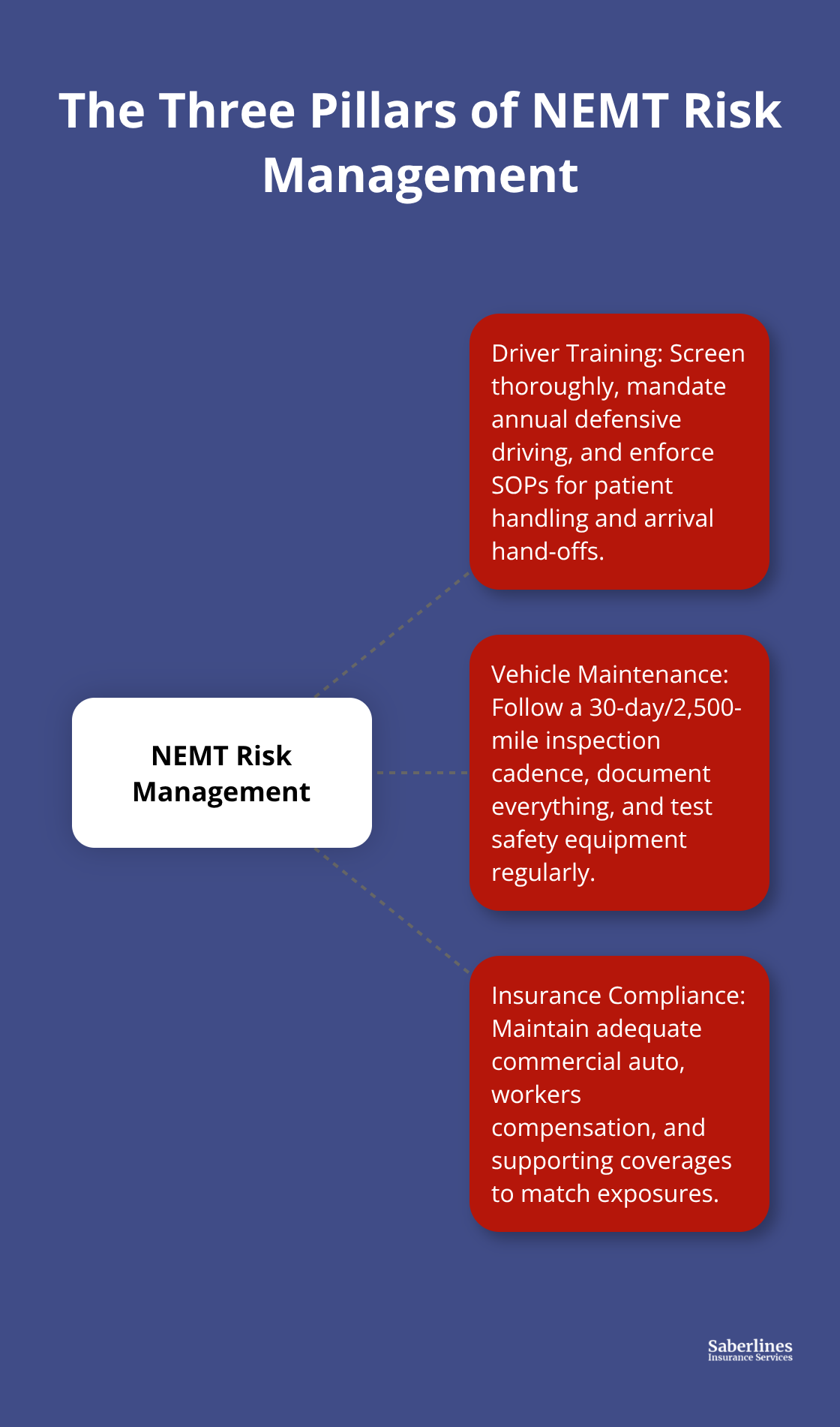
This guide covers the three pillars of effective NEMT risk management: driver training, vehicle maintenance, and insurance compliance. Implementing these strategies reduces incidents, lowers insurance premiums, and builds trust with your clients.
Driver Training and Safety Protocols
Driver quality determines whether your NEMT operation runs smoothly or spirals into liability claims. Hiring decisions made today prevent incidents months from now. Start with comprehensive background checks that go beyond basic criminal history. Pull driving records from the Department of Motor Vehicles, verify licensure status, and check for violations specific to commercial driving. A clean driving record matters, but so does employment history-gaps in work, frequent job changes, or terminations for safety violations signal risk. Reference checks with previous employers reveal patterns: drivers with complaints about aggressive behavior, equipment damage, or patient interactions are liabilities waiting to happen.
Mandatory Safety Training Programs
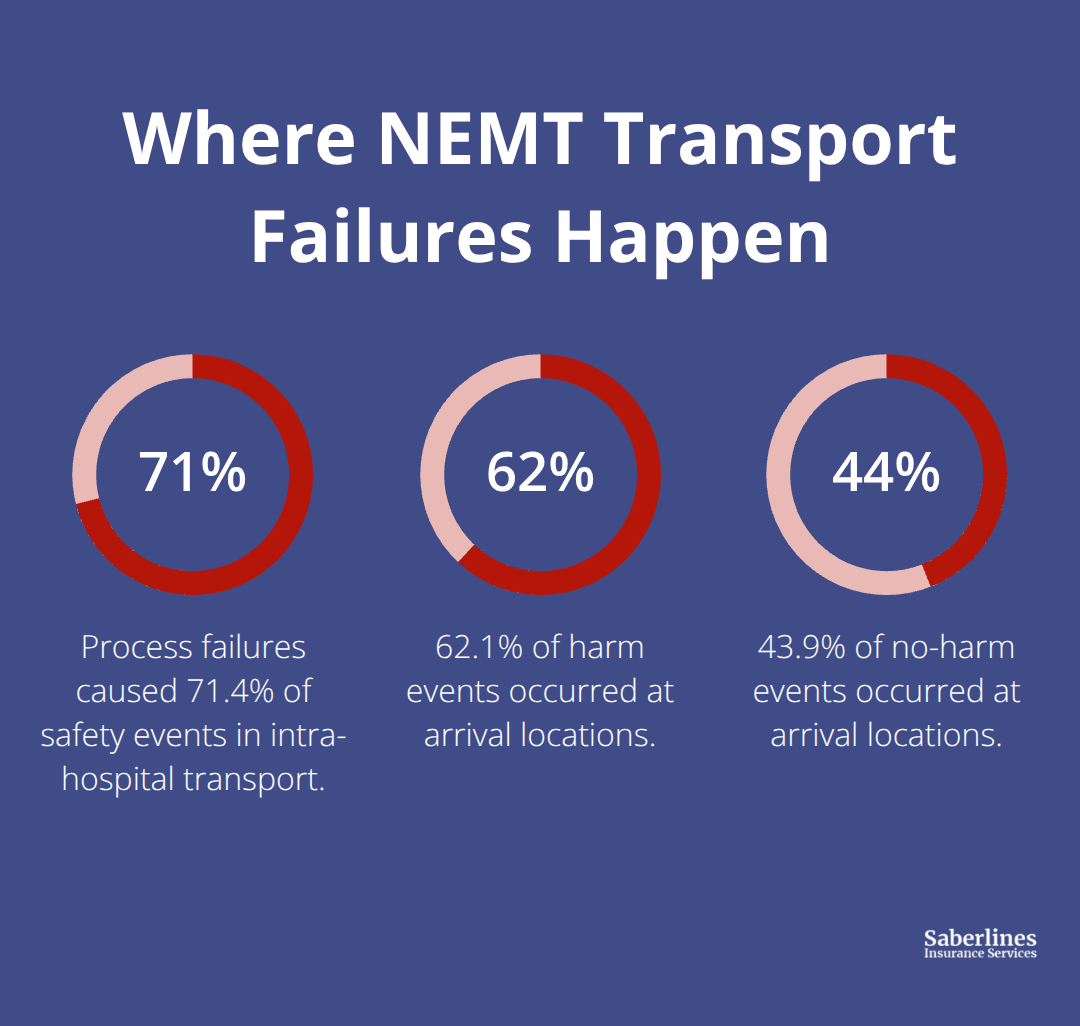
Once you hire a driver, establish mandatory safety training that covers defensive driving, patient assistance techniques, and emergency response. A study in BMJ Open examining over 2 million intra-hospital transport sessions found that process failures caused 71.4% of safety events, with the most common failures occurring during team preparation and arrival hand-offs. This means your drivers need structured protocols, not just general guidance. Require defensive driving certification annually, and rotate training focus-one year emphasize urban route hazards like frequent stops and unpredictable lane changes, the next year focus on securing mobility aids and equipment to prevent in-transit injuries. Document all training completion with dates and signatures. This protects you during audits and demonstrates good faith compliance to regulators and insurance carriers.
Written Procedures That Drivers Follow
Written procedures eliminate guesswork when drivers face real situations. Create a patient handling SOP that covers vehicle preparation, passenger assistance, equipment securing, and departure verification. For wheelchair passengers, the procedure specifies: safely park the vehicle, engage the emergency brake, assist entry, and securely restrain the passenger inside. Train drivers to perform a pre-trip checklist that includes verifying patient identity, confirming destination and appointment time, checking for special medical equipment needs, and reviewing route conditions. Incomplete checklists cause incidents-the BMJ Open study showed omissions in preparation accounted for nearly half of human-failure events. Make checklists mandatory and non-negotiable. Drivers who skip steps face retraining or termination. Publish these procedures in a driver handbook, review them during onboarding, and reference them in incident investigations. When something goes wrong, your SOP becomes evidence that you trained properly, which matters to regulators and your insurance carrier.
Arrival Hand-Offs and Team Coordination
The BMJ Open research identified arrival hand-offs as a critical failure point-62.1% of harm events occurred at arrival locations compared with 43.9% of no-harm events. Strengthen this vulnerable moment with structured communication protocols.
Assign a team member to confirm patient status, verify equipment placement, and communicate any changes to receiving staff. Require drivers to stay with patients until medical personnel take responsibility. This simple step prevents miscommunication and ensures continuity of care. Train your entire transport team (drivers, dispatchers, and coordinators) to use the same language and procedures so that handoffs happen consistently across all trips.
Vehicle Maintenance Prevents Incidents Before They Happen
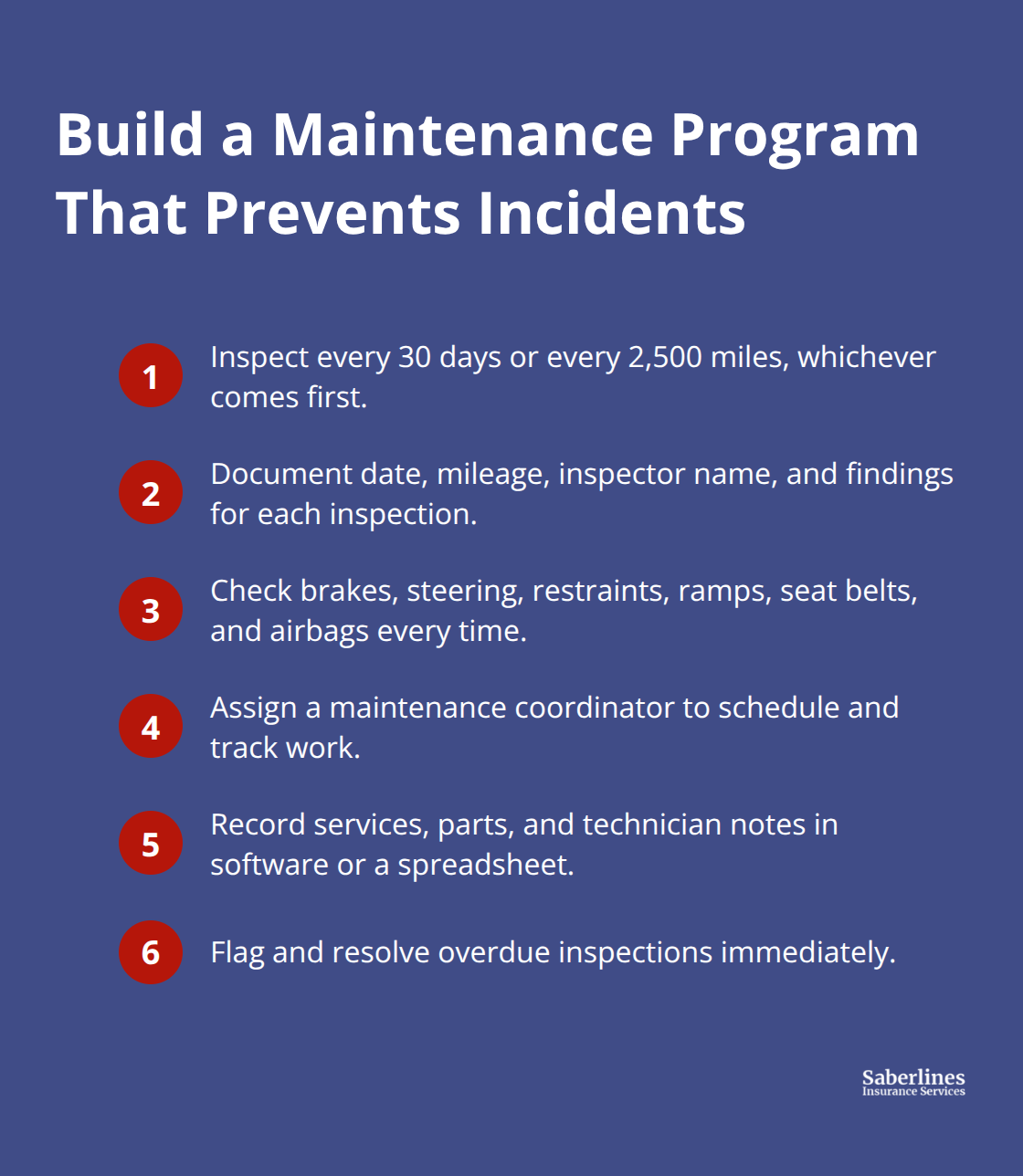
Preventive maintenance separates NEMT operators who stay profitable from those drowning in repair costs and downtime. A vehicle breakdown mid-trip does not just delay a patient-it creates liability exposure, frustrates clients, and forces expensive emergency repairs. Operators who neglect basic maintenance lose coverage or face premium increases. Build a maintenance schedule that inspects vehicles every 30 days or every 2,500 miles, whichever comes first. Document every inspection with date, mileage, inspector name, and findings.
Establish Inspection and Documentation Protocols
Check brake systems, steering components, seat belts, airbags, wheelchair ramps, and securing equipment during each inspection. These items fail silently until they cause an incident. Assign one staff member as the maintenance coordinator responsible for scheduling, tracking completed work, and flagging overdue inspections. Use a spreadsheet or maintenance software to record all services, parts replaced, and technician notes. This documentation proves to regulators and insurers that you maintain vehicles to standard.
Monitor Driver Behavior and Vehicle Performance
Install GPS tracking and telematics systems in every vehicle to monitor real-time location, speed, acceleration patterns, and harsh braking. This technology identifies risky driver behavior before crashes happen. If a driver accelerates aggressively or brakes hard repeatedly, telematics alerts you to provide coaching. Equip vehicles with backup cameras and collision-avoidance systems to reduce blind-spot accidents common in urban routes. Weather integration in your routing system alerts drivers to conditions ahead, enabling them to adjust speed or take alternate routes.
Test Safety Equipment Regularly
Oxygen supply systems, defibrillators, and securing restraints must function reliably. Test them monthly and replace batteries or worn components immediately. When you combine preventive maintenance, telematics monitoring, and equipment testing, you reduce mechanical failures that cause delays and incidents. This proactive approach lowers your insurance claims and improves on-time performance. Demonstrating that safety is non-negotiable builds confidence with payers and patients alike.
Your maintenance program forms the foundation for reliable operations, but it only works when your insurance coverage matches your actual risk exposure. The next section covers how to secure appropriate commercial auto and workers compensation coverage that protects your operation from the incidents prevention cannot always stop.
Insurance Coverage and Compliance Requirements
Commercial auto insurance is not optional for NEMT operators-it’s the legal foundation that keeps you operating. Most states require minimum liability coverage of $100,000 per person and $300,000 per accident, but these minimums are dangerously low for patient transport. A single serious injury claim can exceed $500,000 in medical costs and pain-and-suffering damages. We recommend carrying $1,000,000 in combined single-limit coverage because NEMT involves vulnerable patients whose injuries command higher settlements.
Workers compensation insurance covers your drivers and staff if they suffer injuries on the job-a driver’s back injury from assisting a wheelchair passenger, for example. State law requires this coverage once you hire your first employee, and the cost varies by state and payroll. Medical payments coverage adds an extra layer by covering minor injuries to passengers regardless of fault, which prevents small incidents from escalating into lawsuits. Physical damage coverage protects your vehicles against collision, theft, and weather, which matters because a single vehicle replacement costs $40,000 to $60,000 for an equipped NEMT van.
Navigate State-Specific Compliance Requirements
Compliance requirements vary significantly by state, which means a one-size-fits-all approach fails. Some states mandate specific driver qualifications, hours-of-service limits, or vehicle safety standards that differ from neighboring states. FierceHealthcare research shows that late arrivals and no-shows drive most patient complaints, but non-compliance violations drive regulatory penalties and license suspension. Automate your compliance tracking using NEMT-specific software like Tobi, which monitors driver licenses, certifications, vehicle inspections, and regulatory reporting deadlines automatically. This prevents human error from missing a renewal or audit deadline.
Maintain Meticulous Records for Audits
Maintain meticulous records of patient consent forms, vehicle maintenance logs, driver certifications, and insurance policies in a centralized system accessible during state audits. When regulators inspect your operation, they want proof that you meet requirements-incomplete or disorganized records signal poor management and trigger closer scrutiny. Document every incident, no matter how minor, including date, time, location, parties involved, injuries, vehicle damage, and witness statements. This incident log becomes critical evidence if a claim is filed months later.
Report Deficiencies Proactively to Regulators
If you identify a deficiency-say, a driver’s CPR certification expired-report it to state officials proactively and document your corrective action. Regulators respect operators who self-report and fix problems faster than those who hide violations. This transparency demonstrates that you take compliance seriously and reduces the likelihood of penalties or license suspension. Saberlines Insurance Services helps NEMT operators navigate state-specific requirements and secure coverage that matches your actual exposures, keeping you compliant while maintaining reasonable premiums.
Final Thoughts
NEMT risk management rests on three interconnected pillars: qualified drivers who follow standardized procedures, vehicles maintained to prevent mechanical failures, and insurance coverage that matches your actual exposures. When you implement comprehensive driver screening, establish mandatory safety training, and enforce written protocols for patient handling and arrival hand-offs, you eliminate the process failures that cause 71% of transport incidents. Preventive vehicle maintenance catches problems before they strand patients mid-trip, while GPS tracking and telematics monitoring identify risky driver behavior early enough to coach or retrain.
The financial case for proactive risk management is straightforward. Operators who invest in these three areas report fewer liability claims, lower insurance premiums, reduced vehicle downtime, and higher on-time performance. Regulators and payers notice this consistency and reward it with contract renewals and favorable terms, while your drivers stay safer and your patients arrive on time.
Start by auditing your current practices against the standards outlined here and identify gaps in driver training, maintenance documentation, or compliance tracking. Assign responsibility for each area to a specific staff member and implement one improvement at a time rather than attempting everything simultaneously. Contact Saberlines Insurance Services to review your current coverage and identify gaps that leave your operation exposed to unnecessary risk.
The information provided in this blog is for general informational purposes only and does not constitute legal, financial, or insurance advice. Coverage options, terms, and availability may vary. Please consult with a licensed professional for advice specific to your situation.