
Contractor Risk Management Insurance: Building Resilience on Every Job
Construction work exposes your business to serious financial and legal risks every single day. One accident on site can cost tens of thousands in liability claims, medical bills, and legal fees.
At Saberlines Insurance Services, we know that contractor risk management insurance is only part of the solution. The contractors who stay profitable combine smart coverage with strong safety practices and careful vendor selection.
What Risks Actually Cost Contractors
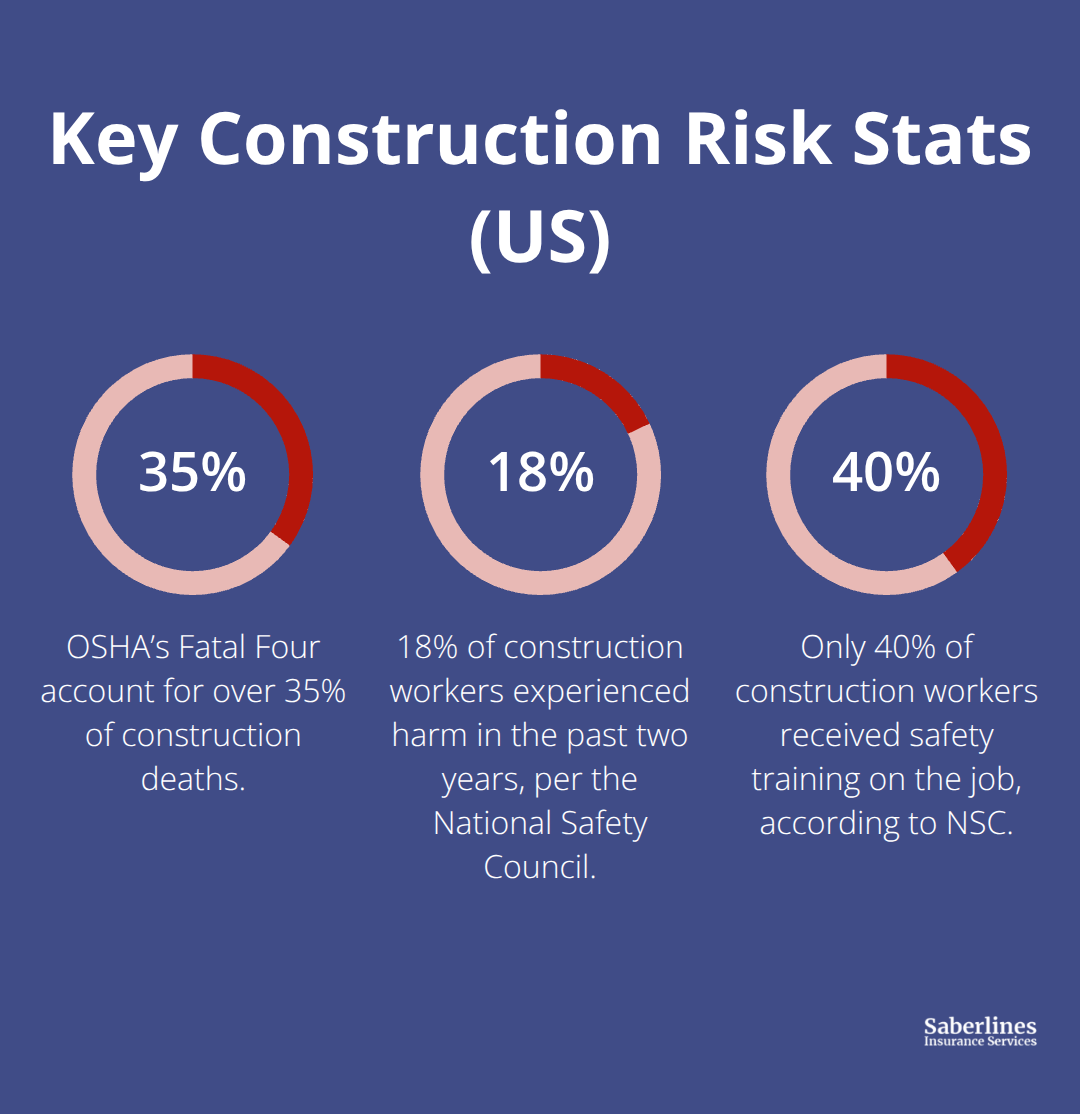
The Fatal Four-falls, electrocution, being struck by objects, and being caught between objects-account for over 35% of construction deaths according to OSHA data. But deaths represent only the visible tip of financial exposure. A single serious injury claim can run $50,000 to $500,000 when medical costs, lost productivity, and legal defense combine. Non-fatal incidents create hidden costs too: workers miss weeks or months of work, projects slip behind schedule, and your insurance premiums climb after a claim. The National Safety Council reports that 18% of construction workers experienced harm in the past two years, yet only 40% received safety training on the job. This training gap matters because it directly predicts injury rates and claim frequency.
Beyond worker injuries, third-party liability claims from property damage or injuries to bystanders add another layer of financial exposure. A contractor accidentally damages a neighboring building or a visitor sustains injury on site can trigger lawsuits that exceed $100,000 easily. Regulatory violations carry fines and work stoppages that halt revenue immediately. States enforce different safety codes, licensing requirements, and permit rules; violating them costs money in fines and delays while you correct violations.
Site Conditions Drive Real Costs
Weather delays, soil contamination, unexpected underground utilities, and structural surprises force budget overruns and schedule slips. According to industry research, over 70% of construction projects experience delays. These delays mean extended equipment rental, idle labor, and extended financing costs that eat directly into margins. Commodity price volatility also hits hard-material costs fluctuate unpredictably, and locking in pricing early requires cash and forecasting accuracy. The Sizewell C nuclear project in the UK saw costs nearly double from £20 billion to £38 billion due to inflation and material scarcity. Smaller projects face the same pressure proportionally.
Subcontractor performance failures create another exposure: if a subcontractor walks off the job, goes bankrupt, or delivers poor work, you absorb costs to fix or finish the work and remain liable to the property owner.
Compliance Creates Constant Pressure
Building codes, zoning laws, safety regulations, and labor standards vary by location and project type. A missed permit requirement can halt work for weeks and trigger fines. Misclassifying workers or failing to maintain proper documentation exposes you to wage-and-hour claims and penalties. Environmental regulations around hazardous materials, storm water management, and waste disposal apply to most projects; violations carry substantial fines and potential criminal liability.
Insurance requirements written into contracts also function as regulatory hurdles. If your policy lapses or coverage falls short, you breach the contract and face liability for all losses. The combination of these pressures-site surprises, cost volatility, and compliance complexity-means that contractors who invest in both strong insurance coverage and proactive risk controls outperform those who rely on insurance alone. Your next step is to understand which coverage types actually protect your business against these real exposures.
The Three Insurance Policies That Actually Protect Your Margins
General Liability: Covering Third-Party Claims
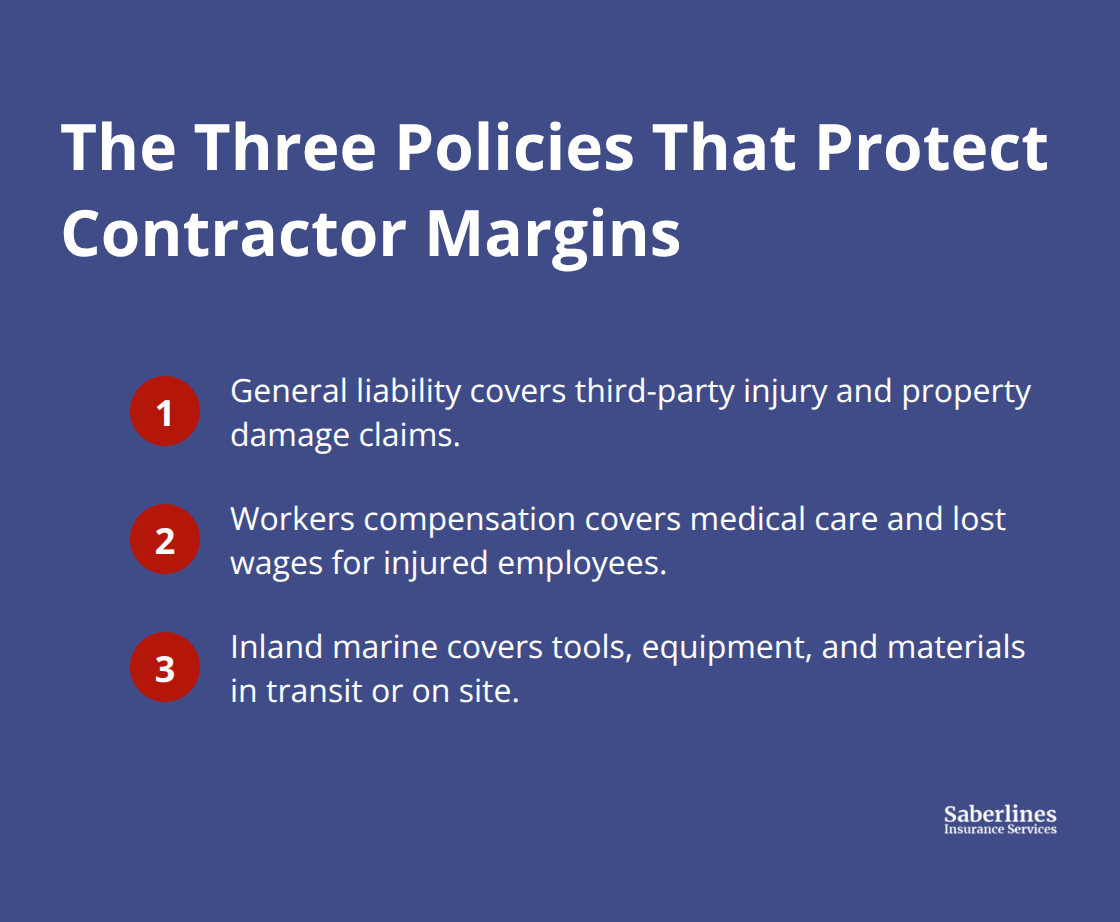
General liability insurance covers third-party claims when someone else gets hurt or their property sustains damage because of your work. A visitor trips on loose debris at your site, or your crew accidentally damages a neighboring structure-GL coverage steps in and pays for medical bills, property repairs, and legal defense. Most contracts require GL coverage, and many states mandate it for contractor licensing. A solid GL policy covers bodily injury, property damage, and advertising injury claims.
Policy limits matter enormously. Standard coverage starts at $1 million per occurrence and $2 million aggregate, but larger projects often require $2 million per occurrence. Underinsuring here is dangerous because a serious injury claim can exceed $100,000 easily, and you’ll pay anything above your limit out of pocket. The lesson is simple: buy limits that match your project scope and contract requirements, not the cheapest option available.
Workers Compensation: Protecting Your Team
Workers compensation insurance protects your employees for work-related injuries and illnesses, and it’s required by law in virtually every state once you hire employees above a state-specific threshold. Most states set that threshold between one and three employees. When a worker gets hurt on your site, workers comp covers medical treatment, rehabilitation, and lost wages-which keeps the injured worker stable and keeps your business from facing direct lawsuits for the injury.
The cost depends on your payroll, job classification, and claims history. Contractors with strong safety records pay lower premiums because insurers reward reduced injury frequency. If you operate in high-risk work like demolition or roofing, your premiums will be higher than for general carpentry. Workers comp is not optional-it’s a legal requirement-and failing to carry it exposes you to fines, criminal liability, and personal lawsuits that pierce your business protection.
Inland Marine: Protecting Your Equipment and Materials
Tools and equipment deserve dedicated coverage because general liability and workers comp don’t protect your own property. Inland marine insurance covers tools, equipment, and materials while they’re on site, in transit, or stored off-site. If your crew’s power tools, scaffolding, or materials get stolen, damaged, or lost, inland marine pays for replacement or repair. For contractors with significant equipment investments, this coverage pays for itself after one theft or major loss.
The National Safety Council data showing 18% of workers experienced harm combined with the 70% project delay rate means your crews face constant exposure to site hazards. Strong insurance coverage aligns with strong safety practices to protect both your workers and your bottom line. These three policies form the foundation of contractor protection, but they work best when paired with active risk management on the job site itself.
How to Build Safety Culture Before an Accident Happens
Insurance pays after something goes wrong, but contractors who protect their margins stop problems before they start. Safety training and rigorous vendor selection reduce injury frequency, which lowers your insurance premiums and keeps your crews productive. OSHA data shows the Fatal Four account for over 35% of construction deaths, yet the National Safety Council found that only 40% of workers received safety training on the job. This gap directly predicts higher injury rates and claim costs.
Mandatory Training Stops Injuries Before They Happen
You need mandatory, documented safety training for every crew member before they step on site. Training must cover hazard recognition, equipment operation, fall protection, and emergency procedures. Contractors who invest in quarterly refresher training see measurably lower incident rates because workers internalize safety as non-negotiable. Document every training session with attendance records and test scores; when an injury occurs, this documentation proves you took reasonable precautions and can reduce your liability exposure in court. Training costs roughly $500 to $2,000 per employee annually depending on complexity, but a single serious injury claim runs $50,000 to $500,000, making training a financial no-brainer.
Daily Site Inspections Catch Hazards Early
Walk every site daily before work starts, photograph conditions, and document hazards immediately. Correct problems right away rather than waiting for formal safety meetings. Poor site management creates the conditions where accidents happen. This daily discipline takes time but prevents the far larger costs of injuries, delays, and rework that erode your profitability.
Vet Subcontractors With Real Diligence
When selecting subcontractors, verify their workers compensation insurance, general liability limits, safety records, and licensing status before they arrive on site. Request proof of insurance and check their loss history; a subcontractor with multiple claims in the past three years signals higher risk and potential cost overruns. The construction industry sees over 70% of projects experience delays, and subcontractor performance failures drive many of those delays. If a subcontractor walks off the job or delivers poor work, you absorb the cost to fix it and remain liable to the property owner.
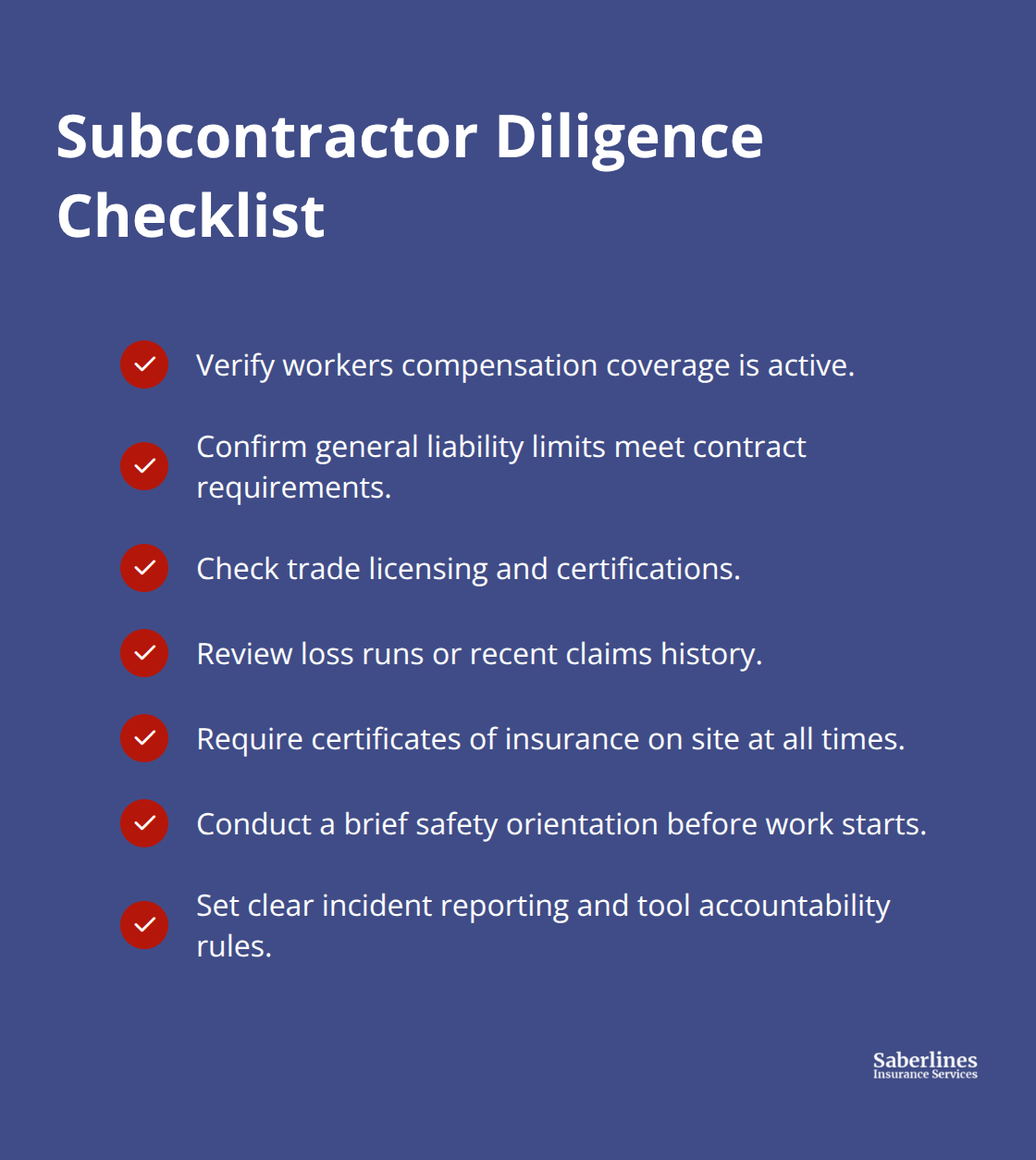
Require subcontractors to maintain minimum insurance limits matching your contract terms and carry proof on site at all times. Conduct a brief safety orientation with every subcontractor, even experienced ones, because different crews operate under different standards. Establish clear expectations about incident reporting, tool accountability, and material storage so everyone operates under the same rules.
Final Thoughts
Contractor risk management insurance forms the backbone of a resilient business, but it works best when paired with active safety practices and careful vendor selection. The three core policies-general liability, workers compensation, and inland marine coverage-protect your margins against the financial shocks that derail profitability. Yet insurance alone cannot prevent the 70% of projects that experience delays or stop the Fatal Four from claiming lives on your sites.
The contractors who outperform their peers combine smart coverage with mandatory safety training, daily site inspections, and rigorous subcontractor vetting. Workers who receive proper training and work under clear safety standards generate fewer claims, which lowers your insurance premiums and keeps your crews productive. Subcontractors with verified insurance and strong safety records reduce the risk of performance failures that force you to absorb costs and remain liable to property owners.
Audit your current insurance coverage against your contract requirements and project scope, then invest in training and vendor management systems that prevent incidents before they happen. Start with a trusted insurance partner who understands contractor exposures and can tailor contractor risk management insurance to your specific operations. We at Saberlines Insurance Services specialize in helping contractors secure the coverage they need while building the operational practices that protect their business and deliver more predictable outcomes on every job.
The information provided in this blog is for general informational purposes only and does not constitute legal, financial, or insurance advice. Coverage options, terms, and availability may vary. Please consult with a licensed professional for advice specific to your situation.