
Commercial Trucking Coverage Options: Finding the Right Policy
Trucking companies face a complex insurance landscape. One wrong decision about commercial trucking coverage options can leave your operation exposed to significant financial risk.
At Saberlines Insurance Services, we’ve seen firsthand how many fleet operators miss critical coverage gaps that cost them thousands when claims arise. This guide walks you through the coverage types you actually need and how to avoid the pitfalls that catch most trucking businesses off guard.
What Coverage Types Actually Protect Your Trucks
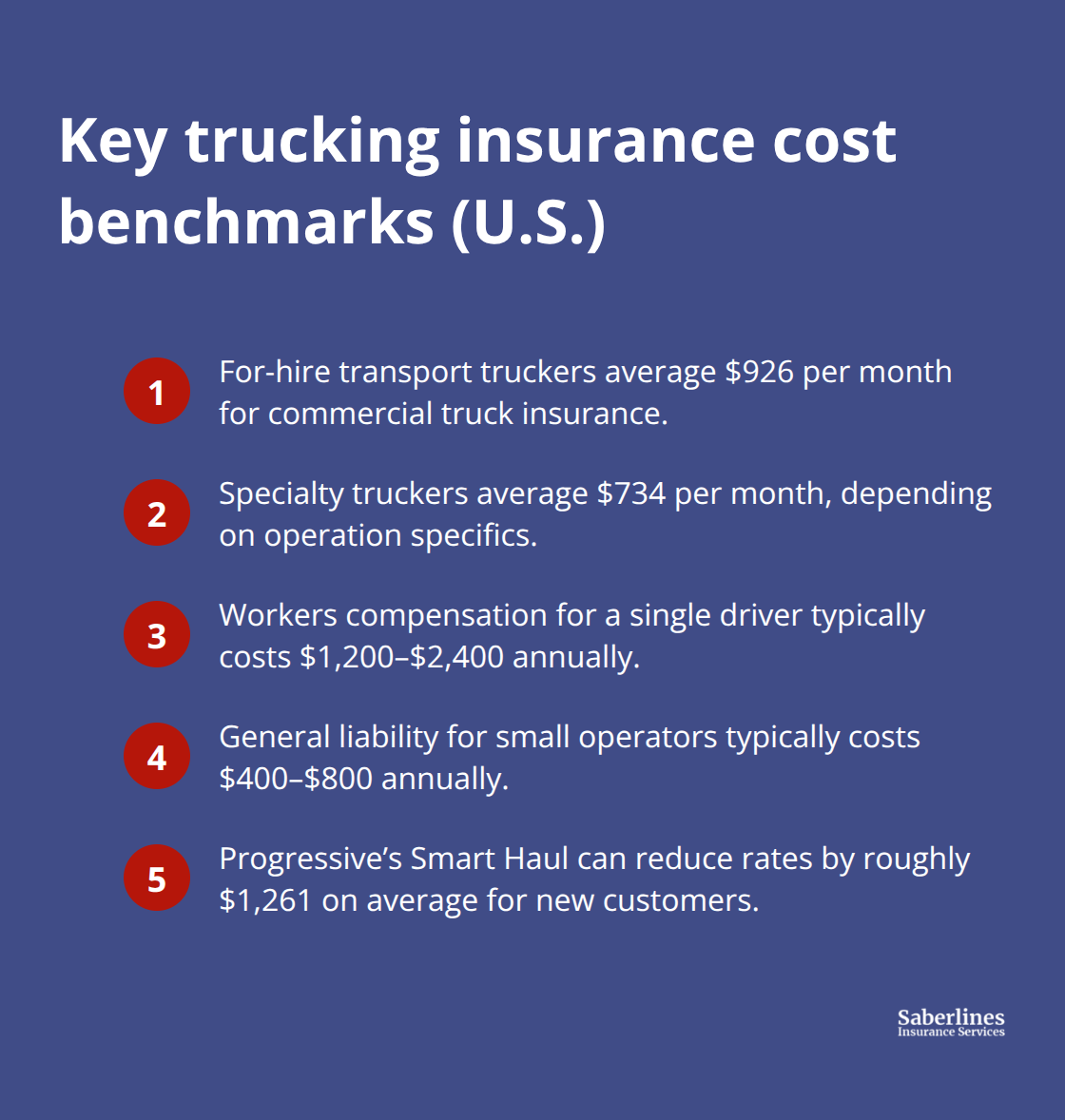
Commercial auto insurance for trucks forms your foundation, and the Federal Motor Carrier Safety Administration requires it for interstate operations. This covers bodily injury and property damage you cause to others, which is non-negotiable. The FMCSA sets federal minimums, but your actual liability limits should exceed those standards significantly. According to national data, for-hire transport truckers pay an average of $926 monthly for commercial truck insurance, reflecting the real cost of proper protection. Your coverage limit matters more than the base premium. A combined single limit of $750,000 to $1,000,000 protects you better than the federal minimum, especially if you haul high-value cargo or operate across multiple states where legal costs spike fast.
Most shippers and brokers won’t contract with you without proof of adequate liability limits, so this isn’t just about compliance-it’s about staying competitive.
Cargo Insurance Prevents Shipper Disputes
Cargo insurance protects the goods you’re hauling from loss, theft, or damage during transit. This coverage stands separate from your liability insurance and becomes critical if you work with brokers or direct shippers. Many freight brokers require proof of cargo coverage before they book loads with you, and rates vary dramatically based on what you haul. Hazardous materials shipments demand higher coverage limits due to increased environmental and safety risks; the FMCSA requires carriers handling hazmat to carry additional financial responsibility beyond standard liability. If you work with a specialized agency, they can help you navigate these hazmat requirements and secure the right limits for your operation.
Physical Damage Coverage Protects Your Assets
Physical damage coverage splits into collision and comprehensive protection for your truck itself. Collision covers damage from accidents, while comprehensive handles theft, weather, fire, or vandalism. Newer trucks with advanced safety features sometimes qualify for premium discounts, so if you upgrade your fleet, that’s a real financial consideration. Repair costs for semi trucks run into the tens of thousands, and a major collision sidelines your truck for weeks. Skipping physical damage coverage means you absorb those costs entirely, which many smaller operations cannot recover from.
Deductible Choices Impact Your Bottom Line
Your deductible choice directly impacts your monthly premium-raising it from $500 to $2,500 can lower your rate significantly, but you’ll pay more out-of-pocket after damage occurs. The math works only if you have cash reserves to cover that deductible without disrupting operations. Owner-operators hauling specialized loads like refrigerated goods or oversize freight need to verify their physical damage policies cover the specific equipment and configurations they use. A reefer breakdown, for example, can spoil an entire load in hours, making equipment-specific coverage essential beyond basic physical damage limits.
Coverage Gaps Emerge When You Stop Thinking Broadly
Most trucking businesses focus on the obvious coverages and miss the gaps that create real exposure. Your liability and cargo coverage protect you against third-party claims, but what happens when your truck sits idle between loads or you operate without a trailer? What about your employees if you have them, or your business itself if a client sues you for something unrelated to an accident?
These questions point to coverage types that many operators overlook entirely, and they’re exactly what separates a solid insurance strategy from one that leaves you vulnerable.
Common Gaps in Trucking Insurance Policies
Owner-operators and small fleet operators typically purchase the coverage their broker demands or what the state legally requires, then stop thinking about insurance until something goes wrong. The problem is that standard commercial auto and cargo policies leave significant exposure unaddressed.
Bobtail Coverage Protects Unloaded Operations
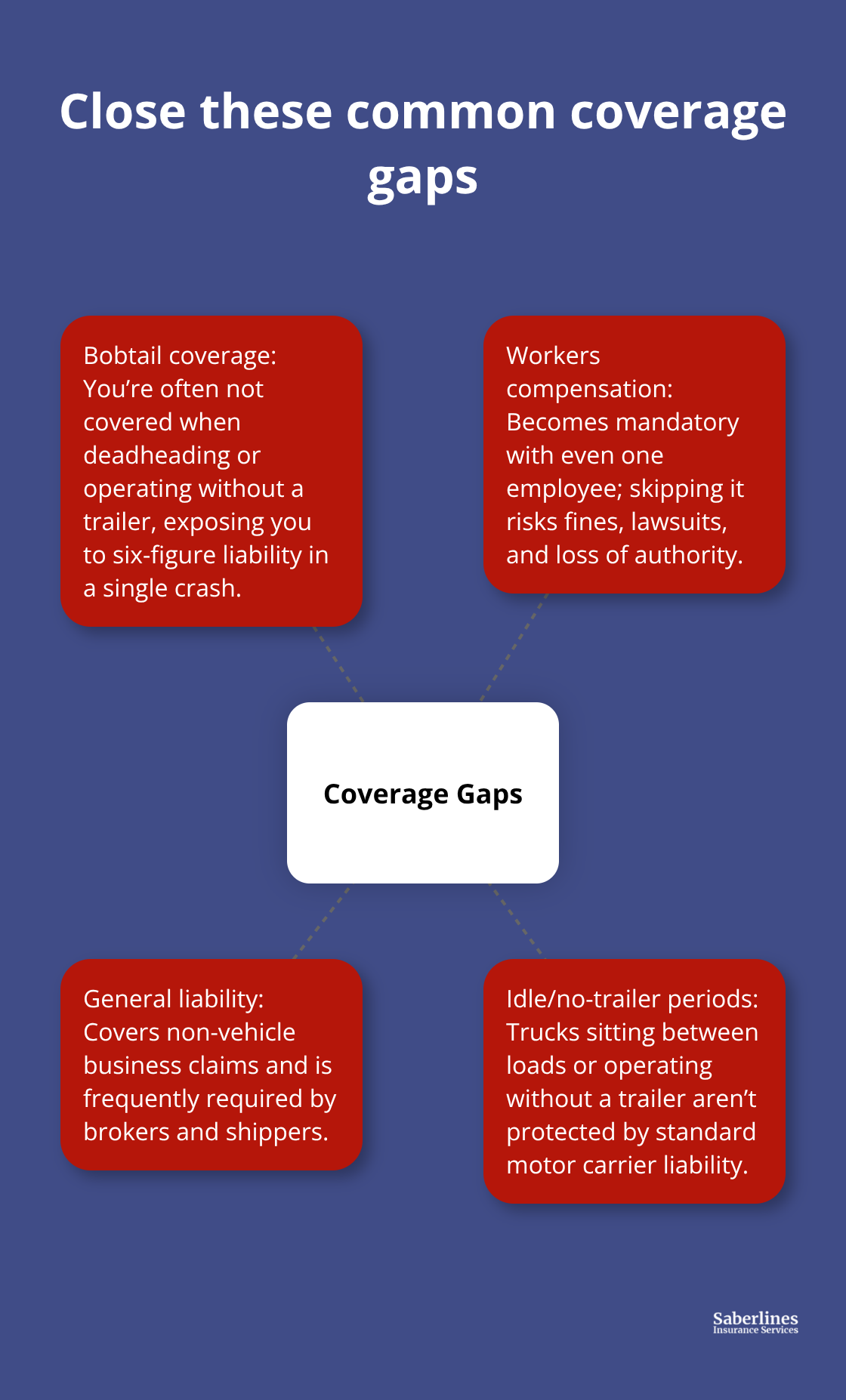
Bobtail coverage stands out as the most commonly overlooked protection for owner-operators. When you return to base without a trailer or deadhead between loads, your standard motor carrier liability policy does not cover you because you are not hauling cargo for a customer. The FMCSA regulates interstate trucking, but bobtail situations exist in a gray zone where many operators assume they are covered when they are actually not.
If you cause an accident during deadhead, your primary policy may deny the claim because you were not operating within the scope of for-hire service. A single accident without bobtail coverage can expose you to six figures in liability. We at Saberlines Insurance Services recommend adding bobtail coverage as a standard endorsement, not an afterthought, especially if you spend more than a few hours weekly operating without a trailer.
Workers Compensation Becomes Mandatory With Employees
If you have even one employee beyond yourself, workers compensation becomes mandatory in nearly every state. Many owner-operators run solo and skip this coverage entirely, which works fine until you hire a dispatcher, maintenance person, or second driver. One workplace injury without workers comp coverage triggers fines from your state labor board, civil liability if the employee sues, and loss of operating authority if you face an audit.
General liability insurance addresses third-party claims against your business but does not cover your own employees, making workers comp a completely separate requirement. The cost varies by state and job classification, but a single driver on your payroll typically costs between $1,200 and $2,400 annually. That amount is manageable if you know it is coming, catastrophic if you ignore it and face a claim. Your operating authority also depends on maintaining workers comp if required by your state, so this is not optional once you add staff.
General Liability Closes the Business Risk Gap
Your commercial auto policy covers accidents you cause while driving, and your cargo policy covers load damage, but neither covers liability claims unrelated to vehicle operation. If a shipper claims you damaged their dock while loading, or a customer sues for breach of contract, commercial auto and cargo will not respond. General liability insurance protects your business against third-party bodily injury and property damage claims that fall outside vehicle incidents.
Many brokers and direct shippers require proof of general liability coverage in addition to auto and cargo, so this is not just protective-it is contractually necessary. The cost is relatively low, typically $400 to $800 annually for small operators, making the protection-to-cost ratio excellent. Skipping general liability is false economy when losing a major shipper relationship over missing coverage costs far more than the annual premium.
The coverage gaps you identify now determine whether your operation survives a claim or collapses under the financial weight. Understanding what you are missing sets the stage for evaluating coverage limits that actually match your operation’s risk profile and cargo value.
Matching Coverage to Your Operation’s Real Risk Profile
Map Your Operation to Define Coverage Needs
Choosing the right trucking insurance policy requires matching your specific operation to coverage limits and types that reflect actual risk, not just what’s cheapest or what a broker demands. Your fleet size, operating territory, and cargo type create different exposure levels, and your policy must scale accordingly. A single owner-operator hauling local freight faces different risks than a five-truck fleet running cross-country hazmat loads, yet many operators purchase identical coverage limits because they don’t know how to calculate what they actually need.
Start by mapping your operation: document your annual mileage, the states or regions you operate in, your average cargo value per load, and the types of goods you haul most frequently. This baseline determines whether you need state-minimum liability limits or substantially higher coverage. If you operate interstate, federal minimums apply, but they’re genuinely insufficient for most operations. The FMCSA requires specific financial responsibility amounts based on cargo type, ranging from $300,000 for non-hazmat general freight to $5,000,000 for hazmat shipments.
Set Liability Limits Above Federal Minimums
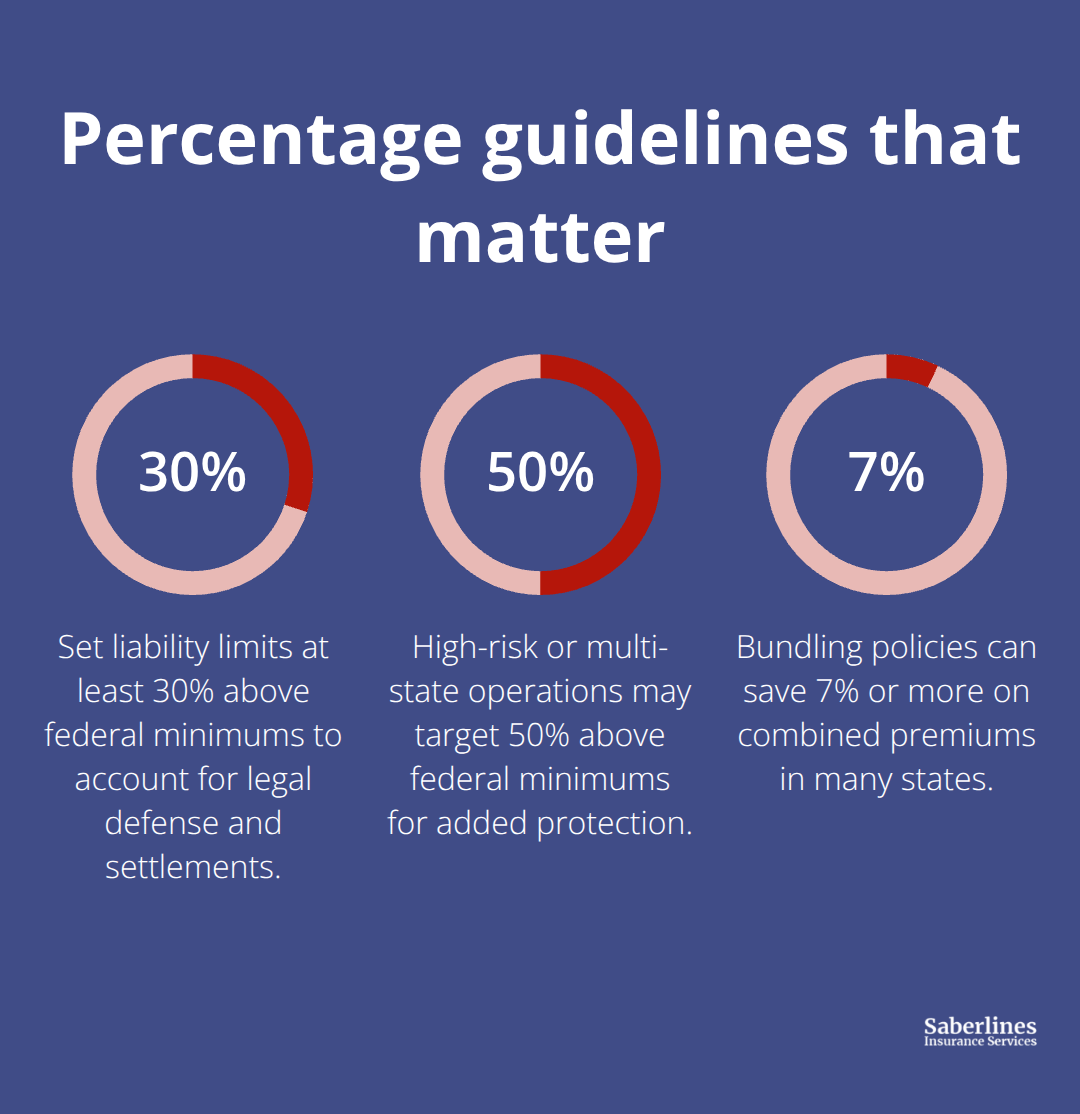
Your actual liability limit should exceed federal minimums by 30 to 50 percent because legal defense costs and settlement amounts in serious accidents routinely exceed federal minimums. If you haul refrigerated goods regularly, verify that your physical damage policy includes reefer-specific coverage and breakdown protection, since equipment failure spoils cargo within hours and creates shipper liability claims that standard policies don’t always cover. For cargo insurance, calculate your typical load value and set coverage limits 15 to 20 percent higher to account for shipper markup and accessorial charges you’re responsible for during transit.
Compare Quotes From Multiple Specialized Carriers
Once you’ve defined your coverage needs, the only legitimate way to find the right price is collecting quotes from multiple insurers who specialize in trucking. National data from 2025 shows monthly commercial truck insurance costs ranging from $734 for specialty truckers to $926 for for-hire operators, but your actual rate depends entirely on your operation’s specifics and claims history. Request quotes from at least three carriers that handle interstate trucking and understand your cargo type, then compare not just premium but coverage details, deductible options, and any endorsements included.
Progressive markets itself as America’s number one truck insurer based on written premium data, and they offer the Smart Haul program that can reduce rates by roughly $1,261 on average for new customers through ELD data integration (though this requires DOT filing with ICC and isn’t available in all states). GEICO targets owner-operators and small fleets up to nine vehicles and handles federal and state filings typically within 48 hours after you obtain authority.
Evaluate Bundling Discounts and Claims Support
When comparing quotes, evaluate whether the carrier offers bundled discounts if you add other business coverage like general liability or workers compensation, since bundling can save 7 percent or more on combined policies in most states. Don’t automatically accept the lowest quote; instead, verify the insurer can handle your specific needs, such as hazmat filings if applicable, and assess their claims process and customer support availability since you’ll need responsive service when something goes wrong on the road.
Saberlines Insurance Services specializes in matching owner-operators and small fleets to coverage that actually protects their operation without overpaying for unnecessary limits. We market to both preferred carriers and hard-to-place risks so you’re not stuck with whatever quote you can find.
Final Thoughts
Your liability limits must exceed federal minimums because legal defense costs and settlements in serious accidents routinely surpass what the FMCSA requires. Cargo coverage protects your shipper relationships and prevents disputes over load damage. Physical damage insurance keeps your trucks operational after accidents or theft, while bobtail coverage closes the gap when you operate without a trailer. Workers compensation becomes mandatory the moment you hire your first employee, and general liability addresses business claims unrelated to vehicle operation-these aren’t optional add-ons.
The coverage gaps you identified in this guide represent real exposure in your business right now. If you haven’t verified bobtail protection, you’re operating without coverage during deadhead. If you’ve hired staff without workers comp, you’re violating state law, and if you’re missing general liability, you’re one dock-damage claim away from losing a major shipper. These gaps don’t disappear because you ignore them; they compound over time and create financial liability that grows with every load you haul.
Your operation changes constantly-you add trucks, expand into new states, start hauling different cargo, or hire employees. Each change shifts your risk profile and may require adjustments to your commercial trucking coverage options. We at Saberlines Insurance Services help owner-operators and small fleets match coverage to their actual operation without overpaying for unnecessary limits, and we’ve worked with preferred carriers and hard-to-place risks since 1999 to keep transportation businesses compliant and protected. Contact us for a quote and let’s build a coverage strategy that matches your specific operation.
The information provided in this blog is for general informational purposes only and does not constitute legal, financial, or insurance advice. Coverage options, terms, and availability may vary. Please consult with a licensed professional for advice specific to your situation.