
Basic Commercial Trucking Policy: What It Covers and What It Omits
A basic commercial trucking policy is supposed to protect your business, but most trucking companies discover gaps in their coverage only after a claim gets denied.
At Saberlines Insurance Services, we’ve seen firsthand how standard policies leave owners vulnerable to unexpected costs. The difference between adequate protection and financial disaster often comes down to understanding what your policy actually covers and what it leaves out.
What Your Basic Trucking Policy Actually Covers
Liability coverage forms the foundation of any commercial trucking policy, and it’s non-negotiable. Federal law requires motor carriers to maintain liability insurance that covers bodily injury and property damage when your truck causes an accident. The FMCSA sets minimum liability limits that vary by cargo type, but these minimums are often dangerously low. Standard interstate trucking requires at least $750,000 in liability coverage, while hazmat carriers must carry $5 million. Many trucking companies operate at these minimums and face catastrophic exposure when a single accident exceeds those limits. We recommend carrying limits well above the federal minimum, especially if you haul high-value freight or operate in densely populated areas where a serious accident could trigger seven-figure claims.
Physical damage protection covers the truck itself
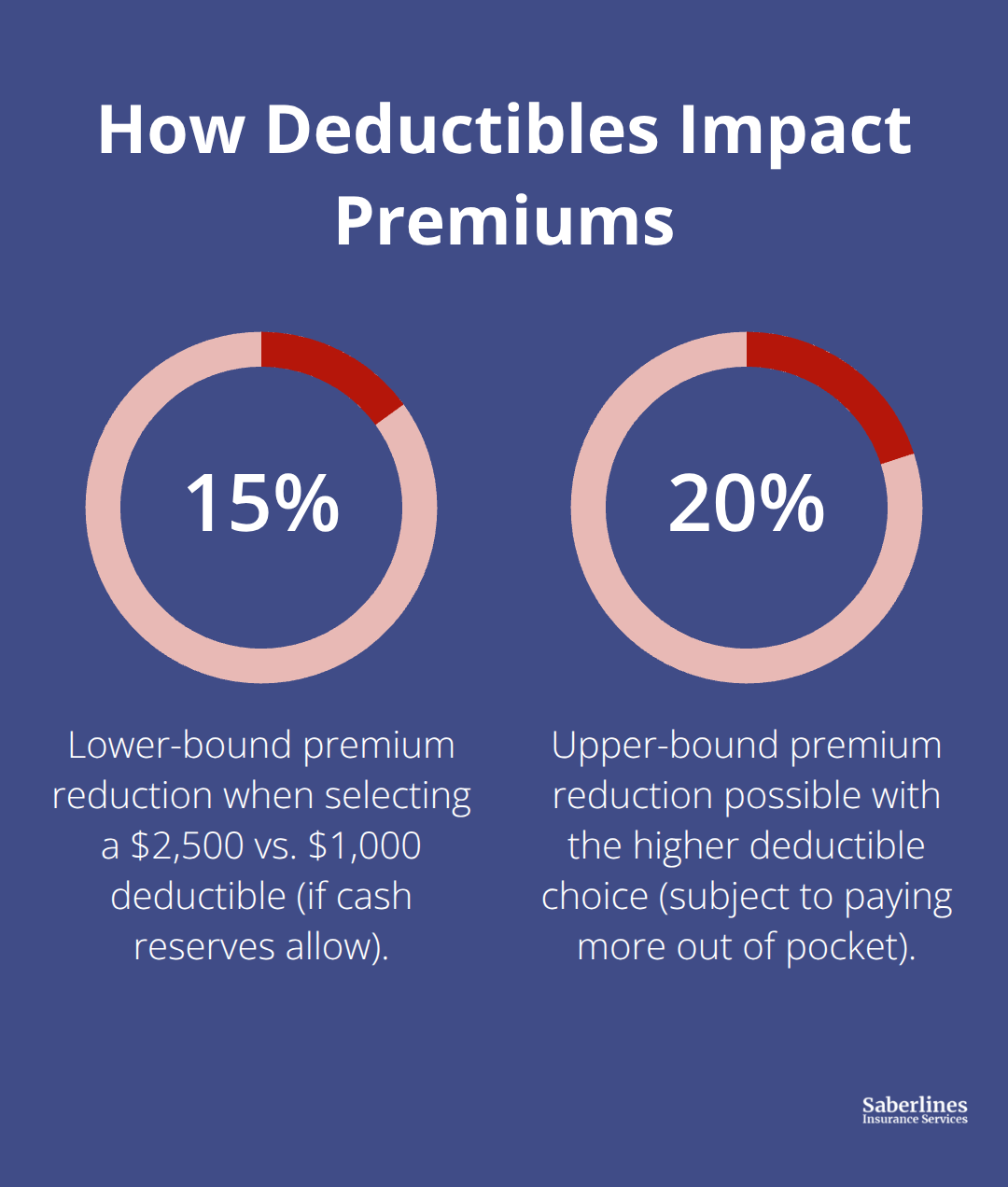
Physical damage insurance splits into two components: collision and comprehensive. Collision covers damage from accidents with other vehicles or objects, while comprehensive covers theft, weather, fire, and vandalism. Physical damage does not cover wear and tear, mechanical breakdown, or tire blowouts from age-if your engine fails, that’s a maintenance cost, not an insurance claim. The FMCSA doesn’t require physical damage coverage, but lenders and brokers almost always demand it as a condition of doing business. Your deductible matters significantly. Choosing a $2,500 deductible instead of $1,000 can reduce your annual premium by 15 to 20 percent, but only if your cash reserves can absorb that larger out-of-pocket cost when damage occurs.
Cargo insurance protects goods in transit
Cargo coverage pays when freight is damaged, lost, or stolen during transport. This coverage builds trust with shippers and brokers who won’t contract with uninsured carriers. Cargo policies exclude specific commodities unless you schedule them explicitly-tobacco, alcohol, electronics, and hazardous materials are commonly excluded. If you haul refrigerated goods, standard cargo coverage won’t protect against spoilage from equipment failure. You need reefer breakdown coverage as a separate endorsement. Many operators don’t disclose their full freight mix to their broker, then face denial when a claim lands outside their policy’s scope. Federal minimum cargo coverage for most interstate operations is $10,000, but that barely covers a single truckload of valuable freight. Most professional carriers carry $25,000 to $100,000 depending on their typical load values.
What happens when you operate without a trailer
Bobtail situations create a coverage blind spot that catches many operators off guard. When you operate your truck without a trailer (during backhauls, repositioning, or personal use), your motor carrier liability policy may not apply. Your personal auto insurance definitely won’t cover commercial activity. This gap leaves you exposed to liability claims with no protection underneath. Non-trucking liability coverage fills this specific gap by providing limited liability protection when the truck operates for personal or non-revenue activities. If you lease your truck to a carrier, this endorsement becomes essential because you remain liable even when the carrier controls the vehicle.
The cargo exclusions that derail claims
Standard cargo policies contain exclusions that operators often overlook until a claim arrives. If your freight mix changes-you add electronics, alcohol, or hazardous materials-your existing policy may not cover those new commodities. You must notify your broker when your lanes or cargo types shift so coverage can be updated. Reefer breakdown coverage specifically protects temperature-controlled cargo against spoilage from equipment failure or power loss, but standard cargo insurance won’t pay for this loss. These specialized endorsements cost extra but prevent total loss situations that could bankrupt your operation.
Understanding what your policy covers sets the stage for identifying what it doesn’t. The gaps between basic coverage and actual protection needs determine whether a claim pays out or leaves you financially exposed.
What Your Policy Won’t Cover When It Matters Most
Standard commercial trucking policies contain hard boundaries that operators routinely misunderstand until a claim denial arrives. The exclusions aren’t hidden in fine print-they’re built into the policy structure itself, and they exist because insurers classify certain exposures as either too specialized or too risky for basic coverage.
Operating radius restrictions create coverage voids
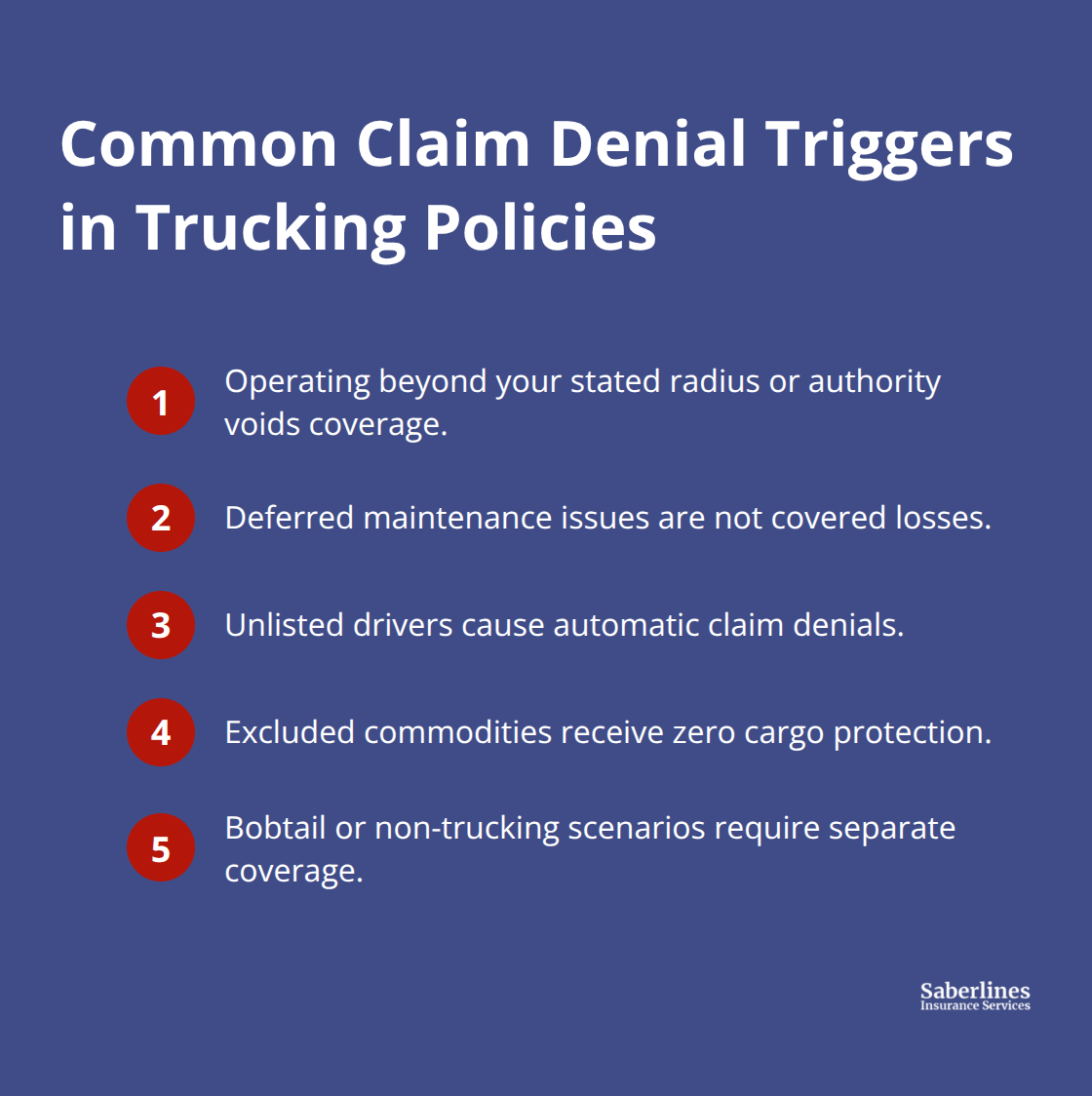
Your policy is rated based on your stated operating radius and authority. If you haul freight 200 miles beyond that radius or operate under authority you haven’t disclosed to your carrier, coverage for that trip voids entirely. A driver heading to an unexpected destination without updating the policy first exposes your business to a claim denial that leaves you paying damages out of pocket.
Expanding your lanes requires a policy update before the truck rolls on those new routes.
Maintenance failures fall outside coverage
Physical damage covers sudden accidental loss, but tire blowouts from age, engine failures, and general deterioration fall outside coverage because they result from deferred maintenance, not sudden loss. A $15,000 engine replacement isn’t an insurance claim-it’s a business expense you should have anticipated through preventive maintenance schedules. Strong preventive maintenance programs protect trucks and improve your loss history with insurers.
Unlisted drivers trigger automatic denials
If someone operates one of your trucks without appearing on the policy, that person’s accident claim gets denied regardless of fault. You must add every driver before they get behind the wheel. Driver list accuracy determines whether claims pay or whether you absorb the full cost. Keeping your driver list current prevents claim denials that could otherwise devastate your operation.
Commodity exclusions block specific freight types
Hazmat cargo, electronics, alcohol, and tobacco present commodity-specific exclusions that catch operators hauling mixed freight. Your policy excludes these commodities unless you schedule them explicitly. If your freight mix changes and you don’t notify your broker, your existing cargo coverage provides zero protection for those new commodities. Reefer breakdown coverage-protection against spoilage from equipment failure-costs extra but becomes non-negotiable if you haul temperature-sensitive goods regularly.
Bobtail and non-trucking gaps leave you exposed
Non-trucking liability coverage fills the bobtail gap by protecting you when the truck operates for personal or non-revenue activities without a trailer attached. Leased operators especially need this endorsement because they remain liable even when the carrier controls the vehicle. These gaps aren’t oversights in policy design-they’re intentional exclusions that separate basic coverage from comprehensive protection, and addressing them requires deliberate action on your part.
The exclusions outlined above represent the most common denial triggers, but your specific operation may face additional exposures that demand specialized coverage beyond what a basic policy provides.
Beyond Basic Coverage
Workers compensation protects your team and your business
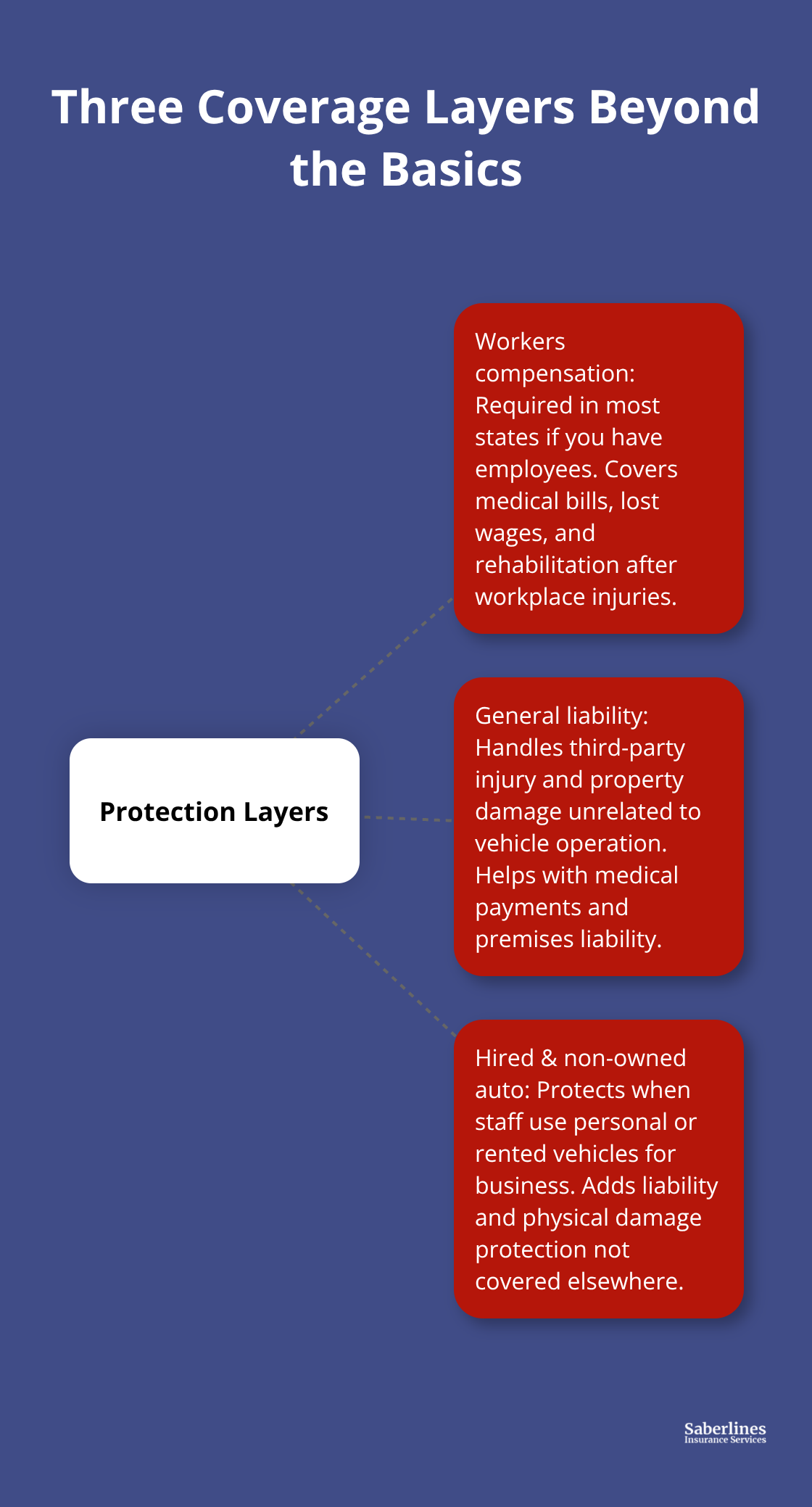
Workers compensation isn’t optional if you employ drivers or warehouse staff-most states require it, and federal OSHA regulations apply to transportation businesses with employees. Your state’s minimum threshold typically activates at one or more employees, so even a single hire triggers the requirement. Workers compensation covers medical expenses, lost wages, disability benefits, and rehabilitation costs when an employee sustains an injury on the job. A serious back injury from loading cargo or a broken leg from a slip-and-fall at your terminal becomes your financial responsibility without this coverage. Costs vary by state and job classification, but you should expect to pay roughly 10 to 18 percent of payroll for drivers and warehouse staff. Some states like California charge higher rates due to stricter benefit structures, while others remain more affordable. If you operate in multiple states, you need coverage in each state where you have employees. The cost of non-compliance is severe-operating without required workers compensation can result in fines exceeding $10,000 per violation, plus personal liability exposure if an injured employee sues.
General liability covers non-vehicle business exposures
General liability insurance protects your business against third-party bodily injury and property damage claims that fall outside vehicle-related incidents. If a customer slips at your dispatch office, if your cargo damages someone else’s property during loading, or if an employee injures a pedestrian while performing non-driving duties, general liability steps in. This coverage includes medical payments, products and completed work liability, and damage to rented premises. Many trucking companies skip this coverage because they assume motor truck liability handles everything, then face uncovered claims that drain cash reserves.
Hired and non-owned vehicle coverage fills a critical gap
Hired and non-owned vehicle coverage addresses a different exposure: when your employees drive their personal vehicles for business purposes or when you temporarily use a vehicle you don’t own, this endorsement provides liability and physical damage protection. A salesman using his personal truck to haul samples to a customer, or a dispatcher borrowing a colleague’s vehicle to pick up parts, creates exposure that neither personal auto insurance nor your commercial policy covers. Adding hired and non-owned vehicle coverage costs roughly 15 to 25 percent more than your base premium but prevents claim denials that could otherwise leave you paying damages directly.
Why these three layers matter for your operation
These three coverage layers-workers compensation, general liability, and hired and non-owned vehicle protection-address exposures that basic motor truck policies explicitly exclude. Any operation with employees or regular business activity beyond freight hauling needs all three to stay protected.
Final Thoughts
Your basic commercial trucking policy provides essential protection, but it rarely covers everything your operation actually needs. The gap between what you think you’re protected against and what your policy actually pays for determines whether a claim reimburses your losses or leaves you paying out of pocket. Start by listing every exposure your business faces-document your typical operating radius, the freight types you haul regularly, your employee count, and whether you ever operate without a trailer.
Cross-reference this list against your current policy declarations to spot misalignments immediately. Most operators discover cargo exclusions that don’t match their freight mix, operating radius restrictions that don’t reflect their actual lanes, or missing endorsements like bobtail coverage that they assumed were included. Your insurance agent plays a critical role in closing these gaps by asking detailed questions about your operation, identifying exposures you might overlook, and recommending coverage layers that protect your specific business model.
At Saberlines Insurance Services, we help owner-operators and fleets identify coverage gaps and build protection strategies tailored to their actual exposures. Contact us to review your current coverage and identify what you’re missing-the cost of addressing gaps now is far lower than the cost of claim denials later.
The information provided in this blog is for general informational purposes only and does not constitute legal, financial, or insurance advice. Coverage options, terms, and availability may vary. Please consult with a licensed professional for advice specific to your situation.