
Construction Contractor Insurance: Coverage That Handles Heavy-Duty Projects
Construction sites are unpredictable. One accident, equipment failure, or weather delay can cost thousands in damages and legal fees.
At Saberlines Insurance Services, we know that construction contractor insurance isn’t optional-it’s the foundation that keeps your business standing when things go wrong. The right coverage protects your assets, your team, and your bottom line.
What Your Construction Insurance Actually Covers
General Liability Protects You from Third-Party Claims
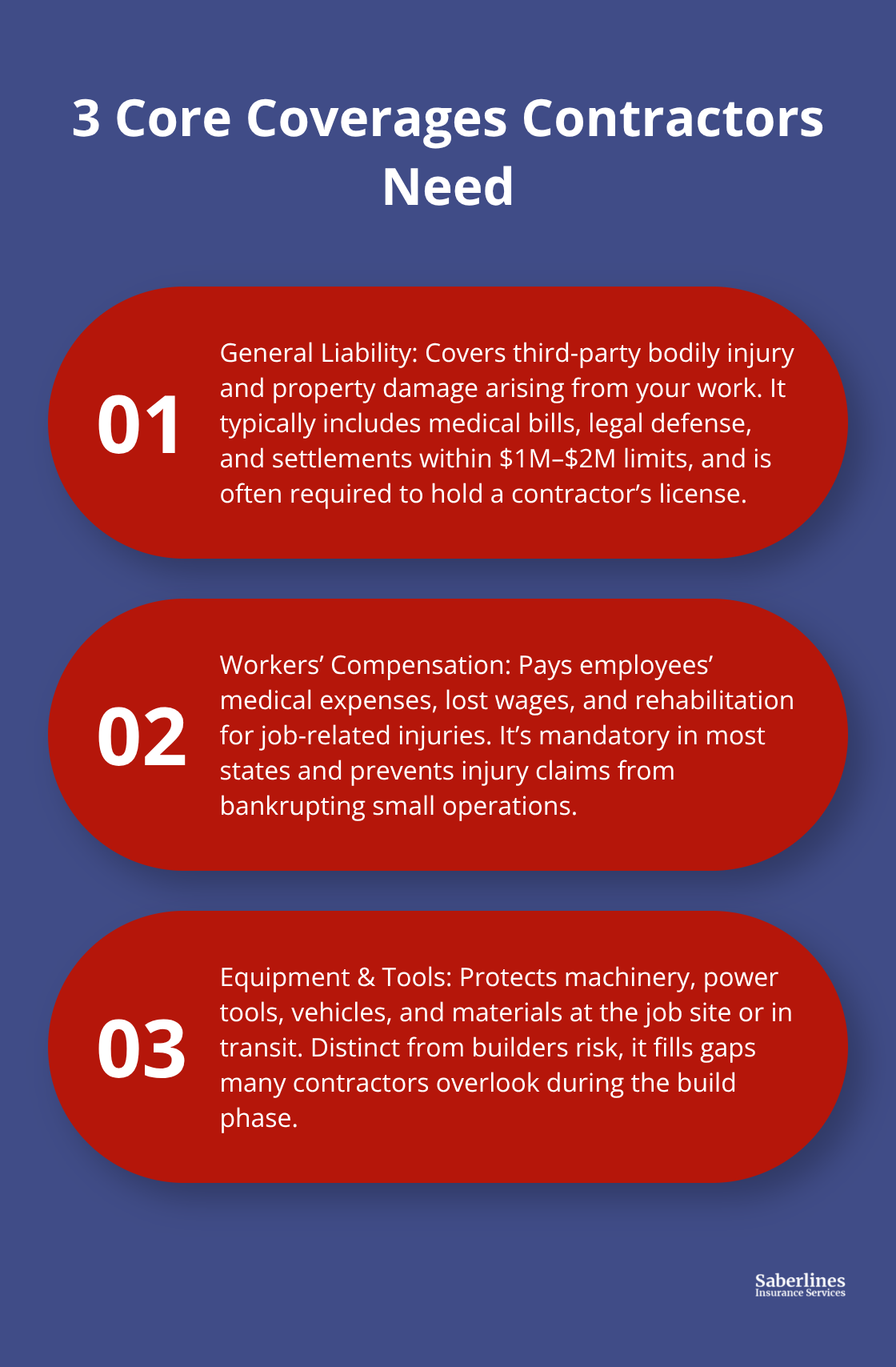
General liability insurance protects you when a third party gets hurt on your job site or their property sustains damage from your work. This covers medical bills, legal defense costs, and settlements-typically ranging from $1 million to $2 million in coverage limits depending on project size. Many states require minimum liability limits just to hold a contractor’s license, so this isn’t negotiable.
Workers’ Compensation Covers Your Team’s Injuries
Workers’ compensation is mandatory in most states and covers your employees’ medical expenses, lost wages, and rehabilitation if they’re injured on the job. In Florida, any contractor with employees must carry workers’ comp coverage, and California requires it even for solo licensed contractors. The cost varies significantly by trade and employee count, averaging $1,000 to $4,500 per employee annually, but a single serious injury claim without coverage can bankrupt a small operation.
Equipment and Tools Coverage Protects Your Assets
Equipment and tools coverage protects your investment in machinery, power tools, vehicles, and materials while they’re at the job site or in transit. This is separate from builders risk insurance, which protects the structure itself under construction. Many contractors overlook the gap between these two policies and end up uninsured when equipment sustains damage during the build phase.
What Happens When You Skip Coverage
Missing even one of these three protection layers creates massive exposure. A subcontractor falls from scaffolding without proper liability coverage behind you, and you face a six-figure lawsuit. An employee sustains an injury without workers’ comp, forcing you to cover medical costs directly and opening you to lawsuits you can’t defend. Stolen tools or weather damage to expensive equipment erases job margins fast.
The Hartford, Progressive, and Liberty Mutual rank as top carriers for construction businesses, with financial strength ratings of A+ or A, meaning they actually pay claims when you need them. Getting quotes from multiple insurers takes 15 minutes online and reveals exactly how much comprehensive coverage costs for your specific operation. This removes guesswork and lets you make an informed decision rather than gambling on partial coverage to save a few dollars per month.
Now that you understand what these core policies cover, the next step is identifying which risks pose the greatest threat to your specific projects and bottom line.
Risks That Cost Construction Contractors the Most
Weather Shutdowns Compress Timelines and Drain Budgets
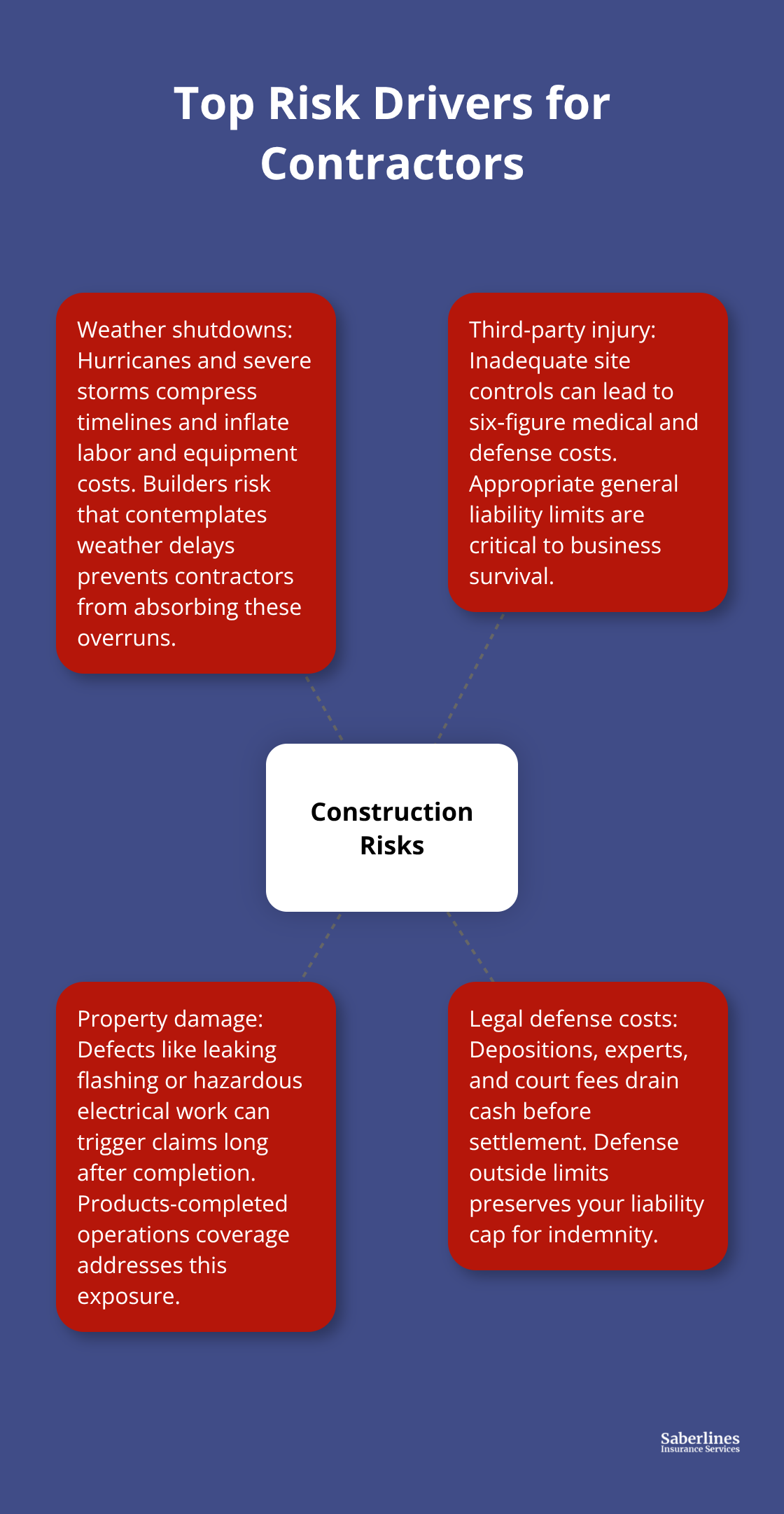
Weather shutdowns hit harder than most contractors anticipate. A Florida general contractor loses five days to hurricane preparations, and suddenly the project timeline compresses by a full week. Labor costs mount, equipment sits idle, and material delivery schedules shift. Without proper builders risk coverage that accounts for weather delays, contractors absorb these costs directly. The National Weather Service reported 28 significant weather events across the U.S. in 2024 that caused construction disruptions, with average project delays ranging from three to fourteen days depending on region and project phase. This reality makes builders risk insurance in hurricane-prone areas like Florida non-negotiable-it protects against fire, vandalism, weather events, and theft during construction. Flood insurance separate from builders risk proves critical in Florida because standard builders risk excludes flood damage, yet floodwaters cause some of the costliest construction losses.
Third-Party Injury Claims Create Immediate Legal Exposure
A third party steps onto your site without proper barriers or falls due to inadequate safety measures, and you face immediate legal exposure. Medical costs for a serious injury easily exceed $100,000, and litigation defense costs add another $50,000 to $150,000 even if you win the case. General liability with limits between $1 million and $2 million covers these medical bills, legal defense, and settlements, but only if the claim falls within your policy scope. The difference between carrying the right limit and carrying too little determines whether your business survives or closes permanently.
Property Damage Claims Extend Beyond the Job Site
Property damage claims arise when your work damages a client’s existing structure, installed equipment fails prematurely, or materials you delivered cause unexpected issues. A window flashing installation that leaks and causes interior water damage, or electrical work that creates a fire hazard months after completion, generates claims well into the future. Products-completed operations coverage attached to your general liability policy covers defects in your work even after you leave the site.
Many contractors assume their GL policy automatically includes this protection, but it doesn’t-you must request it as an endorsement. Carriers with deep construction experience specifically include this in their construction programs, and comparing quotes reveals exactly which endorsements each policy includes.
Legal Defense Costs Drain Cash Flow Before Settlement
Legal disputes over property damage drain cash flow through depositions, expert witness fees, and court costs before any settlement occurs. A practical step involves verifying that your policy includes legal defense costs outside your coverage limits, meaning the insurer pays defense costs separately from your policy maximum. This prevents a $500,000 claim from consuming your $1 million limit before settlement negotiations even begin. Understanding these cost drivers positions you to select coverage that actually protects your operation rather than leaving gaps that surface only when claims arrive.
How to Choose the Right Coverage for Your Project
Assess Your Specific Project Types and Risk Exposure
List every project type you handled over the past two years, then note the specific hazards tied to each one. A residential remodel differs drastically from commercial foundation work or heavy equipment installation, and your coverage needs must reflect those differences. Commercial general liability limits of $1 million work fine for small residential jobs but fall short on large commercial builds where clients contractually demand $2 million minimum. Review your past three years of project contracts and note the insurance requirements clients inserted into agreements. This step eliminates guesswork about what coverage actually matters for your operation.
Compare Quotes from Multiple Insurers
Request quotes from at least three carriers simultaneously using the same project specifications so you see actual price differences side by side rather than relying on estimates. Most carriers quote online in under 15 minutes, and comparing quotes from multiple providers reveals how coverage scope and pricing vary dramatically. A $1,500 annual premium for general liability at one carrier might cost $2,800 at another for identical limits, making comparison shopping non-negotiable. Online tools from major carriers walk you through project-specific questions and calculate appropriate coverage limits based on your answers.
Review Policy Limits and Deductibles Based on Contract Requirements
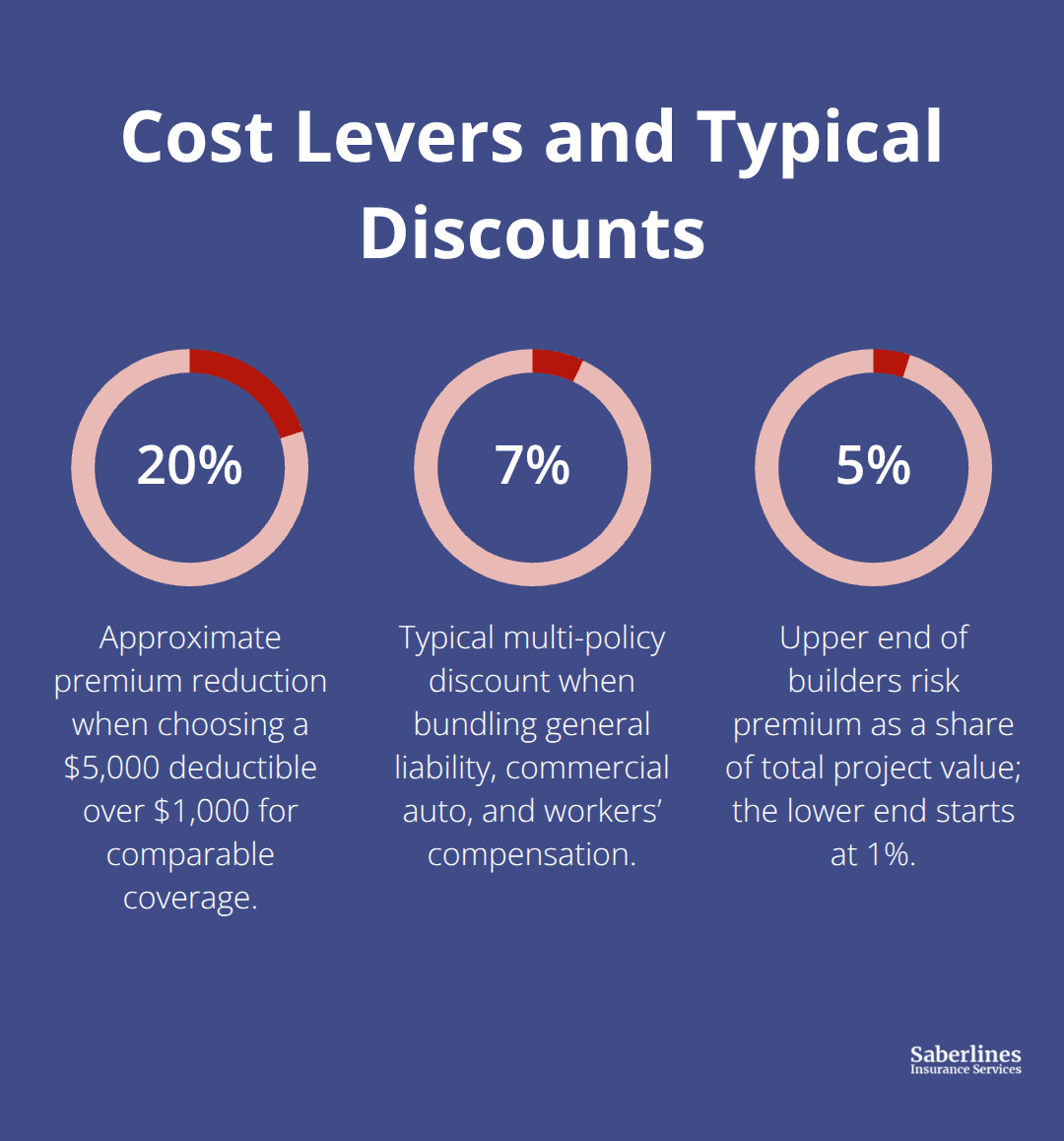
Policy limits and deductibles function as direct levers on your premium cost, but choosing wrong creates false savings. A $5,000 deductible cuts your premium roughly 20 percent compared to a $1,000 deductible, but a single claim forces you to absorb that $5,000 out of pocket before insurance covers anything. Contractors averaging one claim every three to five years should stick with $1,000 or $2,500 deductibles that won’t drain cash flow mid-project.
Compare your policy limits against your actual contract language and the scope of work to ensure adequate protection.
Calculate Builders Risk and Endorsement Costs
Builders risk insurance premiums run one to five percent of total project value according to standard industry benchmarks, so a $500,000 project carries annual builders risk costs between $5,000 and $25,000 depending on hazard classification and location. Requesting coverage endorsements like blanket additional insured status, which automatically covers your clients on project-specific claims, costs minimal premium but prevents disputes when claims arise. Verify each quote includes products-completed operations coverage as a standard endorsement rather than an optional add-on, since defects in your work after project completion generate claims you must defend.
Bundle Policies to Reduce Overall Costs
Bundling multiple policies together, such as general liability plus commercial auto plus workers compensation, typically yields multi-policy discounts around seven percent, reducing overall costs while simplifying administration through a single carrier relationship. This approach consolidates your coverage under one insurer and streamlines renewal management across your entire insurance portfolio.
Final Thoughts
Construction contractor insurance protects three critical areas of your operation: your legal liability when third parties are injured, your employees through workers compensation, and your equipment and materials on site. These three layers form the foundation of risk management for any contractor handling heavy-duty projects. Without them, a single accident or equipment loss can eliminate years of profit and force closure. Request quotes from at least three carriers using your actual project specifications, since most insurers provide online quotes in under 15 minutes and comparing side-by-side reveals exactly how much comprehensive coverage costs for your operation.
Bring your past three years of project contracts when you request quotes so you can match coverage limits to what clients actually demand (a $1 million general liability limit works for residential remodels but falls short on commercial builds where contracts specify $2 million minimums). Bundling policies like general liability, commercial auto, and workers compensation together typically saves around seven percent compared to purchasing each separately, which also simplifies administration through a single carrier relationship. The long-term benefit of adequate construction contractor insurance extends far beyond claim protection and positions your business as professional and trustworthy to clients, banks, and project owners who verify your coverage before awarding contracts.
Start your quote process today at https://saberlinesins.com or contact an insurance specialist who can walk you through coverage options specific to your projects and help you avoid the gaps that surface only when claims arrive.
The information provided in this blog is for general informational purposes only and does not constitute legal, financial, or insurance advice. Coverage options, terms, and availability may vary. Please consult with a licensed professional for advice specific to your situation.