
Contractor Equipment Coverage: Safeguarding Tools and Jobsites
Construction equipment represents one of your biggest investments, yet it’s also one of your most vulnerable assets on the job site.
At Saberlines Insurance Services, we’ve seen firsthand how quickly a single theft or weather event can derail a contractor’s finances. That’s why contractor equipment coverage isn’t optional-it’s a business necessity that protects your tools, machinery, and bottom line from the real risks you face daily.
What Contractor Equipment Coverage Actually Covers
Your Tools and Machinery Stay Protected Across All Locations
Contractor equipment coverage protects the specific assets that make your operation possible. This isn’t general property insurance tied to a fixed building-it’s inland marine coverage designed for tools, machinery, and equipment that move constantly between job sites. The policy covers owned equipment, leased gear, rented machinery, and even borrowed tools your crew uses daily. Hand tools, power equipment, heavy machinery, and specialized instruments all receive protection when you have the right policy in place. Coverage extends to employee-owned tools as well, which matters because your crew often brings personal equipment to the job.
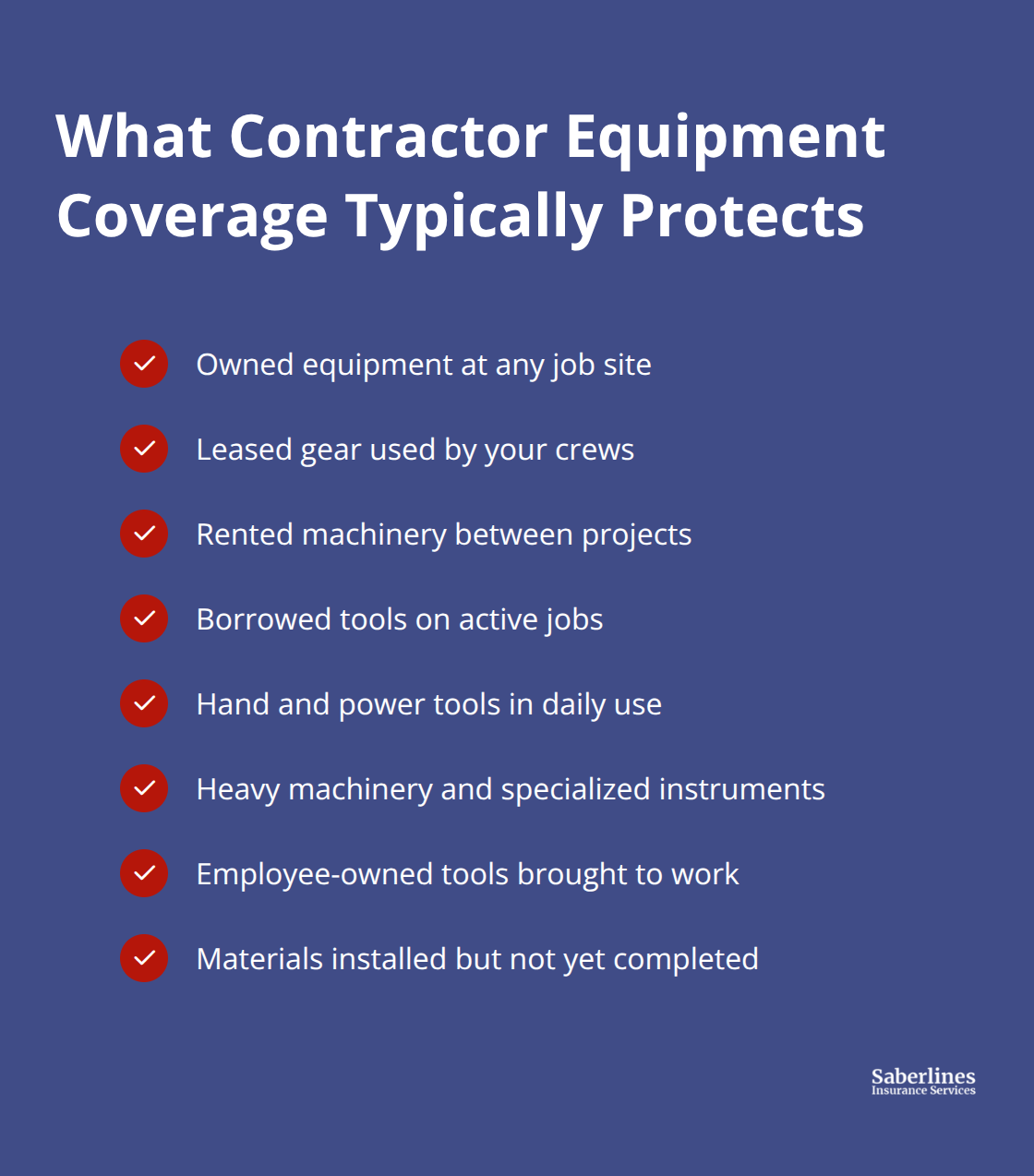
Many contractors underestimate this detail and later discover gaps when an employee’s expensive drill or saw gets stolen.
Equipment in Transit Faces Real Risks
The moment equipment leaves your shop and travels to a job site, it faces damage from accidents, theft, and weather events that occur while moving between locations. Storage and transport create vulnerabilities that standard property policies simply don’t address. Equipment sitting in a vehicle overnight, stored in a temporary on-site container, or staged at a warehouse between projects faces constant theft and environmental damage risk. Your coverage applies whether equipment sits in a locked storage shed, remains on an open job site, or travels in a work vehicle.
Theft and Weather Damage Represent Your Biggest Losses
Construction sites experience significant equipment theft. The National Insurance Crime Bureau reports that tool theft costs the construction industry hundreds of millions annually, with individual incidents ranging from minor hand tool losses to complete equipment trailer disappearances. Theft and vandalism represent the largest claim categories in this space, so the policy specifically addresses the reality that construction sites attract criminals seeking quick-to-sell tools and equipment.
Weather-related losses-water damage from unexpected rain, hail damage to machinery, wind damage during transport-get covered under most inland marine policies. These environmental threats can halt projects and drain budgets without proper protection in place.
Materials and Installed Equipment Need Coverage Too
The coverage also protects materials installed but not yet completed on a project, which prevents costly gaps between purchase and project completion where losses often occur. This protection matters because your financial exposure doesn’t end when you purchase materials or equipment-it continues until the project reaches completion and ownership transfers to your client.
Understanding what your contractor equipment insurance policy covers sets the foundation for selecting limits and deductibles that actually match your operation’s needs.
Why Equipment Costs Keep Rising and Theft Keeps Happening
Equipment Prices Have Climbed Faster Than Contractor Budgets
Equipment prices have climbed steadily over the past five years, driven by supply chain disruptions and manufacturing inflation. A basic cordless drill that cost $150 in 2020 now runs $200 or more, while heavy machinery like excavators and compressors have seen 15-25% price increases since 2021.
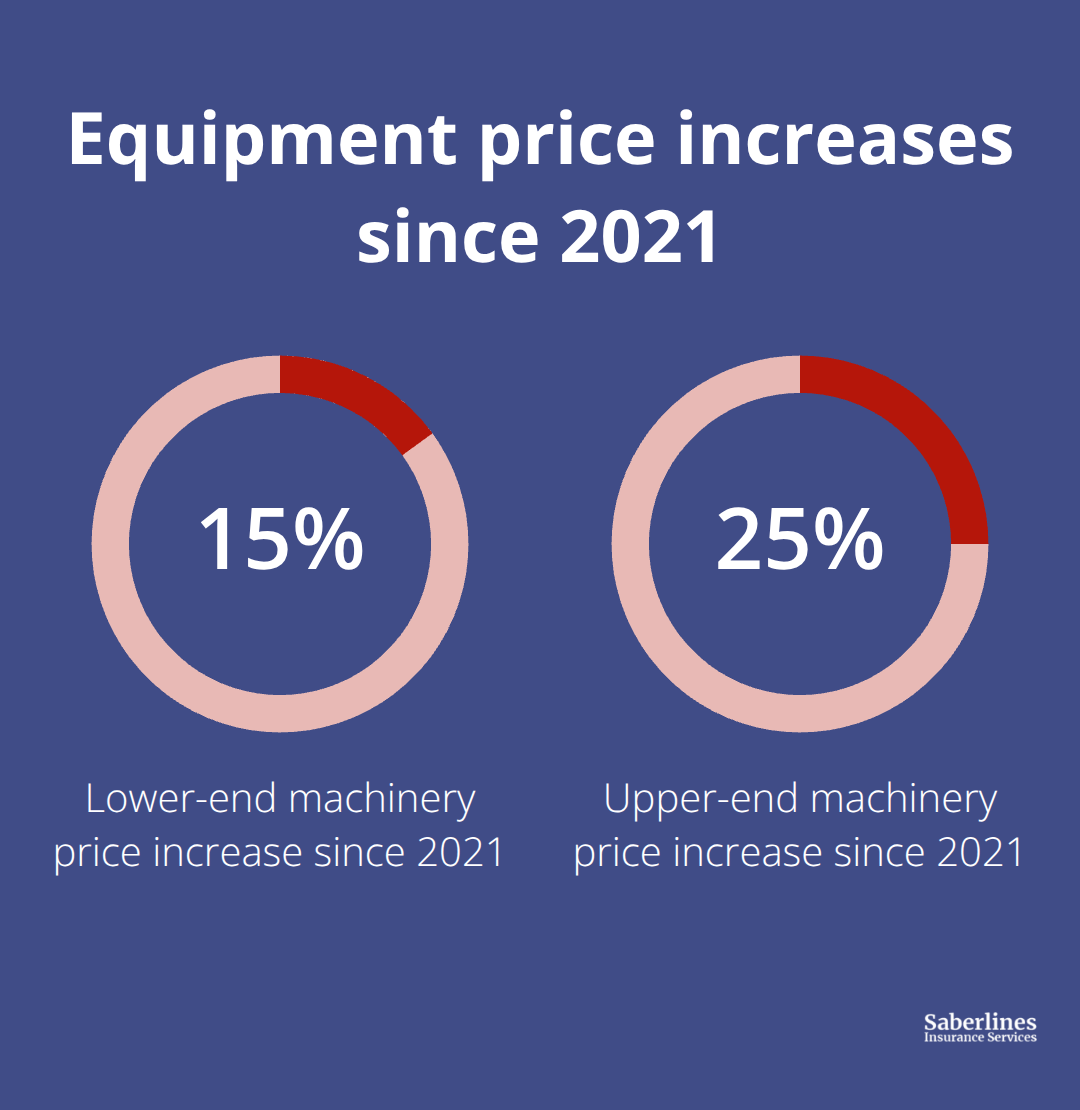
These rising replacement costs mean that losing equipment today hits harder financially than it did just a few years ago. When a contractor loses a $5,000 generator or a set of pneumatic tools worth $3,000, the financial sting extends beyond the immediate loss-it stalls projects, delays crews, and forces emergency purchases at inflated prices.
Theft Targets Construction Sites Relentlessly
Construction sites have become prime targets because thieves know equipment resells quickly and attracts minimal scrutiny compared to other stolen goods. The National Insurance Crime Bureau documents that tool and equipment theft costs the construction industry over $300 million annually, with individual job sites experiencing multiple theft incidents per year in high-crime areas. Contractors working in urban markets face compounded risks as equipment left overnight on open sites disappears regularly. Thieves understand that construction equipment moves constantly, making it harder to track than fixed assets and easier to sell through informal channels.
Weather Damage Strikes Without Warning
Severe weather damages uncovered machinery and materials stored temporarily between jobs. Water damage from unexpected storms, hail damage during transport, and wind damage to staged equipment represent predictable loss patterns that repeat across projects. Weather events don’t discriminate by equipment value, so a $200 hand tool and a $20,000 compressor face equal exposure when left unprotected. Contractors working in regions with seasonal weather volatility face compounded risks that standard property policies simply won’t address.
Triple-Layer Financial Exposure Demands Real Protection
The combination of rising replacement costs, persistent theft targeting construction sites, and weather damage means your equipment faces triple-layer financial exposure. Contractors who skip equipment coverage or carry inadequate limits absorb these losses directly, which erodes profit margins faster than most other operational expenses.
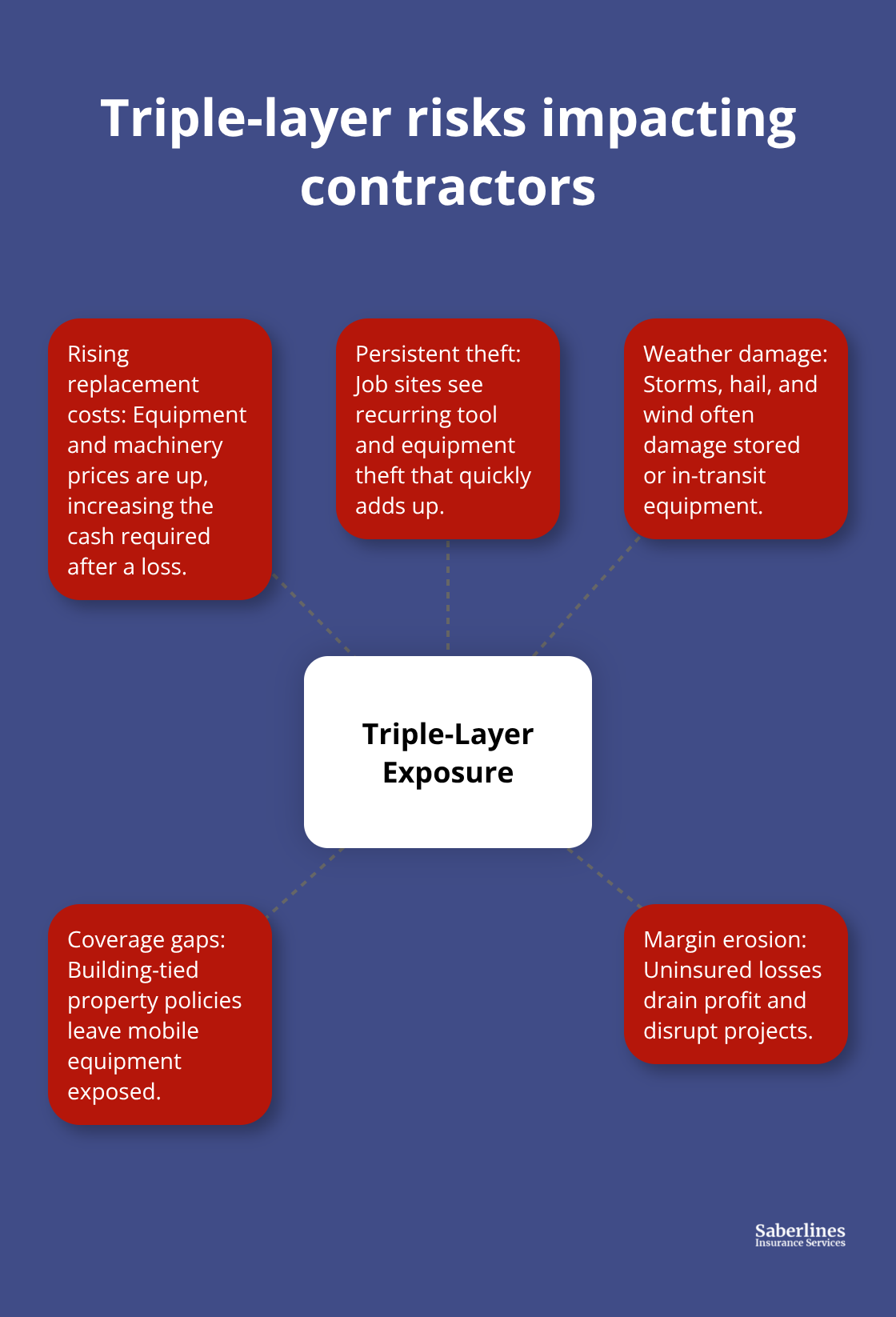
Generic property insurance tied to fixed buildings leaves mobile equipment unprotected, creating dangerous gaps in your financial defense.
Understanding these real threats sets the stage for selecting coverage that actually matches your operation’s exposure. The next step involves assessing your total equipment value and determining what coverage limits will truly protect your business from these escalating risks.
How to Calculate Coverage You Actually Need
Document Every Asset Your Operation Uses
Start with a complete inventory of every tool, piece of equipment, and machinery your operation owns, leases, or regularly uses on job sites. Walk through your shop, vehicles, and active projects with a notepad or phone camera and document everything-include serial numbers, purchase dates, and current replacement costs. This isn’t busywork; contractors who skip this step consistently underinsure their operations and face massive out-of-pocket losses when claims happen.
Equipment values shift constantly as you buy new tools, retire old machinery, and rotate gear between projects, so your coverage limits need to reflect current reality, not what you owned three years ago. Many contractors estimate total equipment value inaccurately and come up $50,000 to $150,000 short, which means they absorb those differences when losses occur.
Get Real Replacement Cost Numbers
Call your tool vendor and check manufacturer pricing for heavy machinery to obtain replacement cost quotes from your suppliers for major equipment. Factor in current market rates since inflation continues to push prices upward. A basic cordless drill that cost $150 in 2020 now runs $200 or more, while heavy machinery like excavators and compressors have seen 15-25% price increases since 2021.
Once you have your complete inventory with replacement costs, add 15-20% to that total to account for new equipment purchases and seasonal fluctuations throughout the year. This number becomes your target coverage limit and reflects what you’ll actually need to replace equipment at today’s prices.
Choose Deductibles and Coverage Types That Match Your Cash Flow
Coverage limits and deductibles work together to determine your actual financial protection and monthly premium cost. Higher deductibles lower your premium but force you to absorb more loss from your own pocket, so select deductibles you can actually afford to pay without stalling operations-most contractors find $2,500 to $5,000 deductibles strike the right balance between manageable premiums and reasonable out-of-pocket exposure.
Replacement cost coverage matters far more than actual cash value policies because it pays what equipment costs to replace today, not depreciated book value from years ago. This distinction becomes critical when you file a claim and discover that actual cash value policies leave you thousands of dollars short of what you need to resume operations.
Review Exclusions and Add Endorsements for Your Region
Review policy exclusions carefully because many inland marine policies exclude normal wear and tear, negligent operation, and certain weather events unless you add specific endorsements. If your equipment operates in hurricane-prone areas like Florida or severe-weather regions like Texas, request endorsements that cover earthquake, hurricane, or hail damage since standard policies often exclude these perils.
Ask your agent specifically about coverage for equipment in transit, temporary storage, and materials installed but not yet completed on projects-these details determine whether you have real protection or expensive gaps when claims happen. Weather events don’t discriminate by equipment value, so a $200 hand tool and a $20,000 compressor face equal exposure when left unprotected without proper endorsements in place.
Compare Quotes Across Multiple Carriers
Get quotes from multiple carriers because premium rates for identical coverage vary significantly based on each insurer’s underwriting appetite and your specific risk profile. Compare not just price but also claim handling speed, coverage flexibility, and whether the carrier offers risk engineering support to help you reduce theft and damage losses before they occur.
Final Thoughts
Contractor equipment coverage protects your most valuable operational assets from the real threats that drain contractor budgets every single day. Rising equipment costs, persistent job site theft, and unpredictable weather damage create financial exposure that generic property insurance simply cannot address. Without proper coverage in place, you absorb these losses directly, which erodes profit margins faster than almost any other operational expense your business faces.
The contractors who protect themselves effectively follow a straightforward process: document total equipment value accurately, obtain real replacement cost quotes from suppliers, select deductibles that match your cash flow, and review exclusions carefully to identify gaps in coverage. This approach takes time upfront but prevents far costlier surprises when equipment gets stolen or damaged on the job site. The difference between adequate coverage and inadequate coverage often determines whether a single theft or weather event becomes a manageable claim or a financial crisis that stalls your projects.
You need a partner who understands construction operations, recognizes the specific risks your business faces, and customizes coverage limits and endorsements to match your actual equipment movement and project workflows. We at Saberlines Insurance Services recommend working with commercial insurance specialists who can evaluate your complete risk profile and deliver contractor equipment coverage that protects your investment. The right coverage gives you peace of mind and lets you focus on running your business instead of worrying about replacing stolen tools or damaged machinery.
The information provided in this blog is for general informational purposes only and does not constitute legal, financial, or insurance advice. Coverage options, terms, and availability may vary. Please consult with a licensed professional for advice specific to your situation.