
High Risk Trucking Coverage: Access Reliable Protection in Tough Markets
Trucking companies operating in tough markets face real obstacles when securing insurance. High risk trucking coverage isn’t just about protection-it’s about keeping your business operational when standard policies won’t cut it.
At Saberlines Insurance Services, we work with fleets that others turn away. We know the specific challenges you face and how to address them.
Why Insurers Label Fleets High Risk
Underwriters don’t slap a high-risk label on your operation arbitrarily. They react to specific data points that predict claim frequency and severity. The FMCSA SAFER snapshot and Safety Measurement System (SMS BASIC scores) sit at the top of their review list, and a poor score alone triggers the high-risk classification. According to the American Trucking Research Institute (ATRI), insurance premiums represent a major cost-per-mile component, which means carriers with elevated risk profiles pay substantially more. A single pattern of violations-whether out-of-service orders, at-fault accidents, or lapsed coverage-signals to insurers that your operation has weak controls.
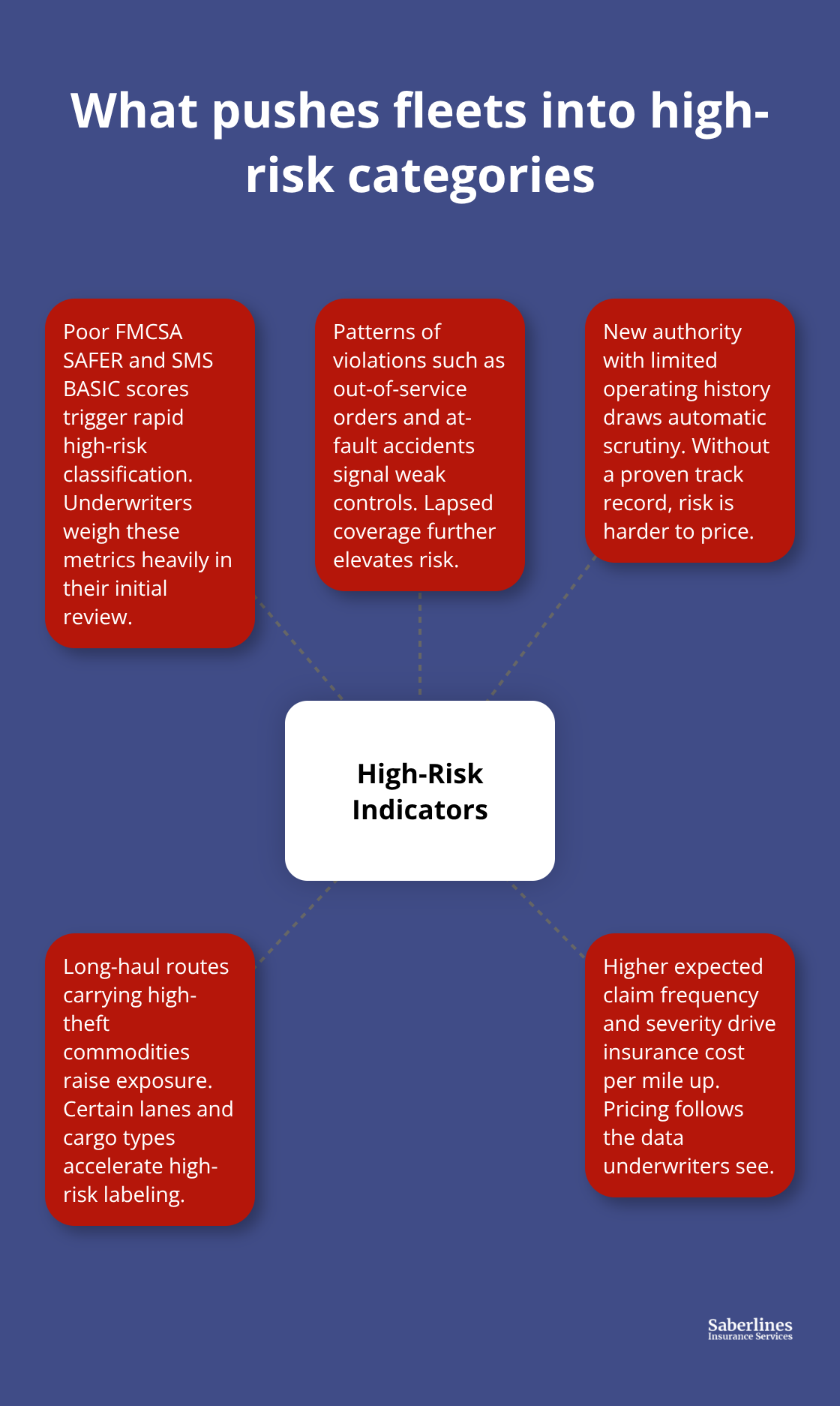
New authority holders face automatic scrutiny because they lack operating history; underwriters assume risk without a proven track record. Long-haul carriers hauling high-theft commodities through specific lanes land on the high-risk list faster than regional operators with stable routes.
Claims History Determines Your Market Access
Your loss runs from the past three to five years determine whether you qualify for standard rates or move into specialty markets. A single major claim isn’t necessarily disqualifying, but frequency matters most. Two or more claims in a 12-month period tells underwriters your operation has systemic problems-driver hiring, vehicle maintenance, or route planning-that need fixing before standard carriers will write you. Lapses in coverage create the longest-lasting damage; even a short lapse under 30 days pushes you into borderline pricing, while repeated lapses keep you in specialty or E&S markets for two to three renewal cycles. Mismatches between your stated operating radius, commodities, or garaging location and actual operations trigger audits, re-rates, and cancellations. Motor truck cargo claims drive costs upward because theft restrictions and unattended-vehicle exclusions tighten on high-loss accounts.
Cargo Type and Theft Risk Affect Your Premium
Motor truck cargo insurance often drives high-risk costs due to theft restrictions, unattended-vehicle language, and high-theft lanes. You need to review cargo limits, sublimits, and exclusions to match your actual risk. Hazardous materials endorsements require minimum liability limits often reaching $5,000,000, and even then, carrier appetite shrinks. Standard policies frequently exclude high-theft commodities or impose strict unattended-vehicle restrictions that don’t align with your operations. The mismatch between policy language and your actual hauling practices creates audit surprises and potential cancellations. Carriers that haul electronics, pharmaceuticals, or other high-value goods face tighter underwriting and higher premiums across all coverage lines.
Driver Records and Safety Culture Control Your Costs
Individual driver Motor Vehicle Records (MVRs) carry enormous weight for small fleets and owner-operators. A clean record lowers your risk tier immediately; violations on your driver roster push you up. FMCSA compliance scores, particularly CSA violations and out-of-service orders, are non-negotiable factors. New drivers or a pattern of high turnover signals weak hiring standards and training controls to underwriters. If your drivers have accident histories or multiple violations, no amount of promises about safety culture will lower your premium. Documented controls-maintenance logs, driver qualification files, telematics systems, and dashcam footage-move quotes in the right direction because underwriters reward proof, not intentions. Carriers that implement mock DOT audits and maintain meticulous compliance files demonstrate they take risk seriously and typically qualify for better rates within one to two renewal cycles.
What Comes Next: Your Coverage Options
Understanding why insurers label you high-risk is the first step. The next step involves identifying which coverage options actually fit your operation and which markets will write you. Not all high-risk carriers need the same protection, and not all specialty programs offer the same terms.
What Coverage Do High-Risk Fleets Actually Need
Primary Liability and Cargo Protection Form Your Foundation
High-risk fleets need the right combination of coverage to stay compliant and protected, not every option on the menu. Primary auto liability sits at the foundation-FMCSA requires a minimum of $750,000 for non-hazardous property hauling, but most interstate carriers operate with $1,000,000 limits because underwriters won’t write below that threshold for high-risk accounts. Motor truck cargo insurance becomes non-negotiable if you haul freight; standard carriers impose strict sublimits and theft exclusions on high-risk accounts, so you must verify your cargo limits match what you actually transport. Your cargo coverage should address the specific commodities you move-electronics, pharmaceuticals, and other high-value goods trigger tighter underwriting and higher premiums across all coverage lines.
Physical Damage and Trailer Interchange Close Critical Gaps
Physical damage coverage (collision and comprehensive) protects your trucks themselves; many high-risk carriers face $5,000 to $25,000 deductibles instead of the $1,000 standard, which means you need cash reserves to cover losses. Trailer interchange insurance fills a gap most fleets overlook: if you use non-owned trailers under interchange agreements, your standard policy likely won’t cover damage while that trailer sits in your possession or moves between drivers. This coverage protects you when you operate equipment you don’t own, a situation that standard policies frequently exclude or severely restrict. Non-trucking liability (bobtail) coverage proves essential for owner-operators leased to motor carriers because it covers personal use when you’re not dispatched-without it, you operate uninsured during off-duty business miles.
Workers Compensation and General Liability Complete Your Protection
Workers compensation and general liability round out the stack. Most states require workers comp if you have employees, and high-risk carriers pay higher rates due to industry accident frequency; the trucking industry experiences accident costs often exceeding $100,000 per incident according to industry data. General liability protects against third-party bodily injury or property damage claims unrelated to vehicle operation-a customer injured at your facility or property damage you cause off the road. The mistake most high-risk fleets make is underinsuring cargo or skipping trailer interchange entirely, then discovering mid-claim that coverage doesn’t exist.
How to Improve Your Position in the Market
Specialty/E&S markets (excess and surplus lines) often require 25 to 40 percent down payments upfront instead of the 10 to 20 percent standard carriers demand, so budget accordingly. The fastest way to improve your coverage options and rates involves maintaining continuous coverage with zero lapses, implementing telematics and dashcam systems to document driver behavior, and maintaining meticulous vehicle maintenance logs that prove you take compliance seriously. Most carriers see rate improvements within 6 to 24 months of clean claims history and documented safety controls, which means your high-risk classification isn’t permanent-it’s a starting point for rebuilding. A 9-truck carrier reduced annual premiums by approximately $100,000 after implementing driver qualification programs and safety improvements, though that same carrier had to maintain continuous coverage with zero lapses to qualify for the reduction.
Next Steps: Finding the Right Markets and Carriers
Your coverage stack is only as good as the carrier willing to write it. Not all specialty programs offer the same terms, and not all markets will accept your risk profile at the same price point.
How to Access High-Risk Markets and Secure Better Rates
Specialized Trucking Agencies Operate Differently Than Standard Brokers
Trucking-focused insurance agencies access multiple carriers in a single submission rather than shopping your file one agency at a time, which cuts approval timelines from weeks to days. The difference matters: when you work with a trucking-focused agency, underwriters already understand your operating model, FMCSA compliance requirements, and the specific risk factors that drive pricing in your segment. Standard commercial brokers often misclassify trucking operations or submit incomplete FMCSA filings, triggering delays and rejections. A complete submission includes three to five years of loss runs, current declarations pages, driver lists with MVRs, vehicle VINs and values, your true operating radius, top states and lanes you cover, specific commodities you haul, and a clear explanation of any red flags in your history.
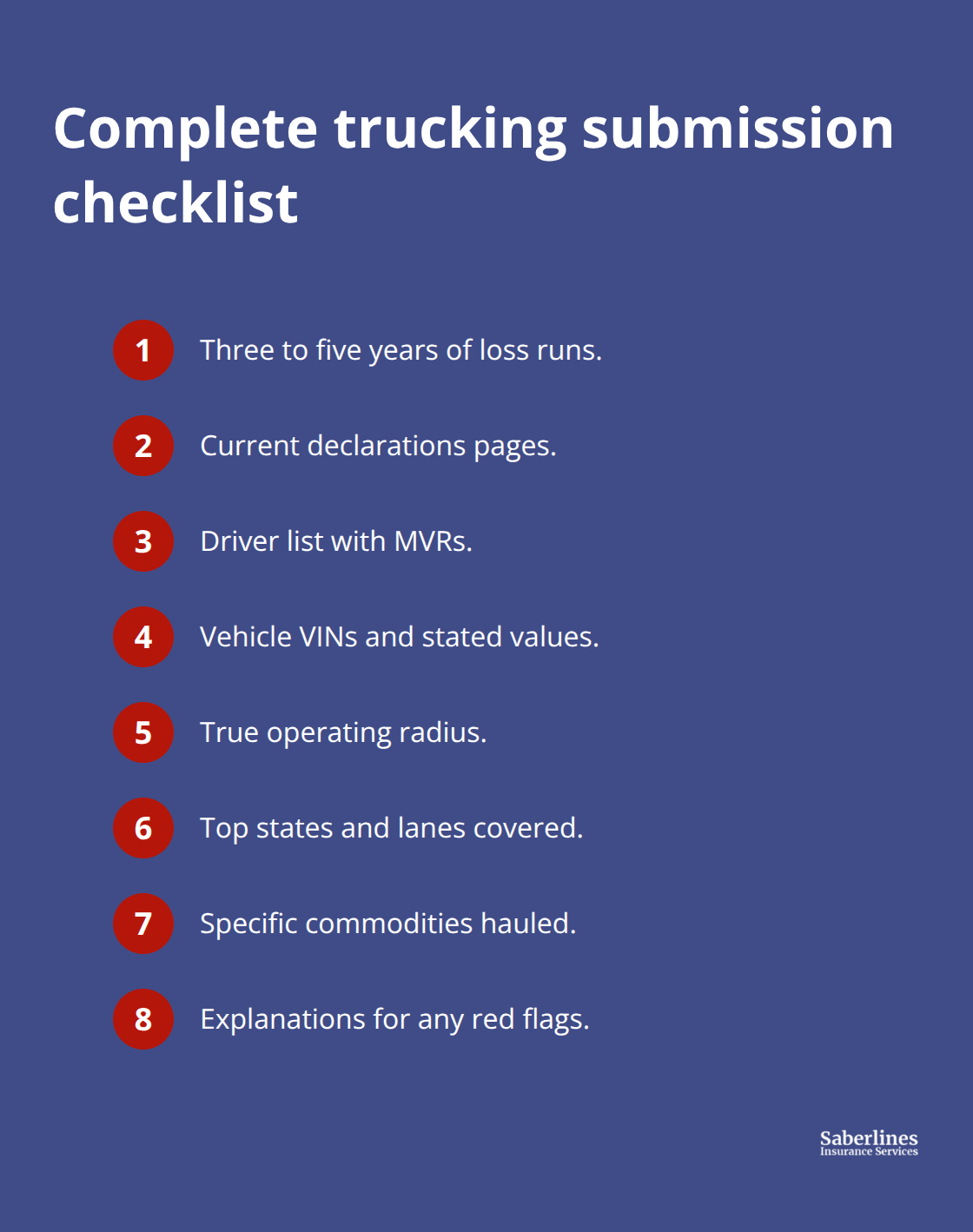
When you submit incomplete paperwork, underwriters request additional documents, which extends the process by two to three weeks per round. Carriers expect this upfront; missing information signals either inexperience or intentional omission, and either way, pricing moves against you.
Controllable and Non-Controllable Premium Factors Shape Your Quote
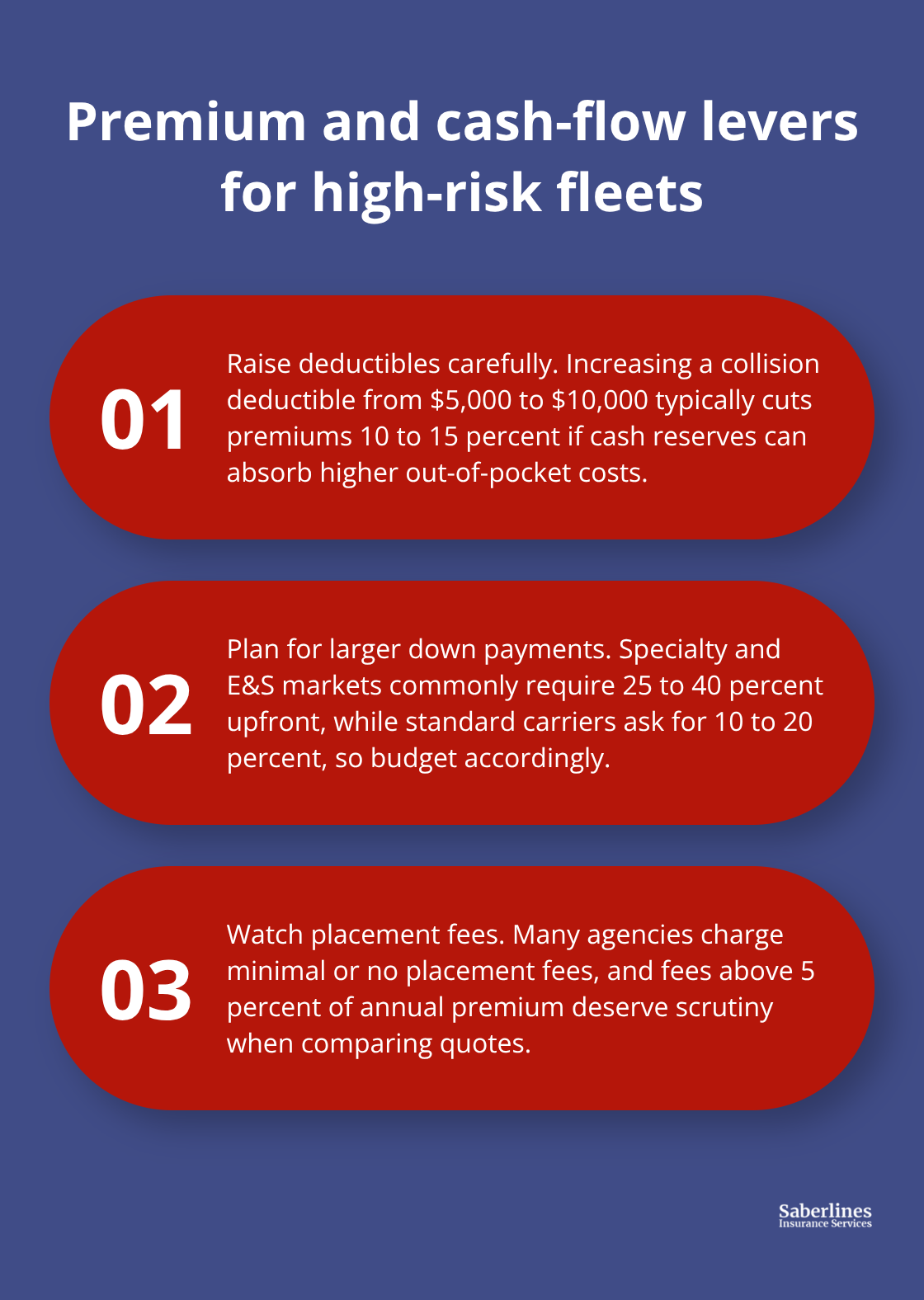
Premium factors for high-risk trucking break into controllable and non-controllable elements. Your FMCSA safety score, driver MVRs, loss history, and cargo type resist short-term change but respond to documented improvements over 6 to 24 months. Deductibles, however, sit squarely in your control: raising your collision deductible from $5,000 to $10,000 typically cuts premiums 10 to 15 percent if your cash reserves support it. Specialty and E&S markets require 25 to 40 percent down payments upfront compared to 10 to 20 percent from standard carriers, so factor that into your cash flow planning when comparing quotes.
Focus on Appetite, Not Brand Recognition, When Comparing Carriers
When comparing carriers, ignore brand recognition and focus on appetite: the best carrier is the one currently writing your specific class in your state at a price you can sustain. A major carrier might decline you while a regional or specialty program writes you at competitive rates because that regional program actively targets your risk segment. Request quotes from at least three carriers; most agencies can deliver comparison quotes within 24 hours if your submission is complete. Beware of placement fees above 5 percent of annual premium-legitimate trucking agencies absorb placement costs or charge minimal fees because volume and retention drive their revenue, not per-placement surcharges.
Final Thoughts
High-risk trucking coverage protects your fleet when standard markets won’t, but protection alone doesn’t solve the underlying problem. Your real goal is moving from high-risk classification back toward standard rates by demonstrating sustained safety improvements and clean claims history over six to twenty-four months of continuous coverage with zero lapses. The carriers and specialty programs willing to write you now expect measurable progress; they’re not betting on promises, they’re betting on data.
We at Saberlines Insurance Services work exclusively with trucking and transportation operations, which means we understand FMCSA compliance, CSA scores, driver MVRs, and the specific underwriting language that moves quotes in your favor. We market hard-to-place risks across preferred and specialty programs, which saves you weeks of shopping and positions your submission in front of underwriters who actively target your segment rather than those who’ll decline you outright. Contact us at Saberlines Insurance Services with your current loss runs, driver list, and operating details, and we’ll deliver comparison quotes within twenty-four hours.
We’ll explain exactly which coverage gaps exist in your current policy and why specialty markets require different terms than standard carriers. Your high-risk label isn’t permanent, but waiting won’t change it. The sooner you implement safety controls and maintain continuous coverage, the sooner you’ll qualify for better rates and move back toward standard markets.
The information provided in this blog is for general informational purposes only and does not constitute legal, financial, or insurance advice. Coverage options, terms, and availability may vary. Please consult with a licensed professional for advice specific to your situation.