
NEMT Coverage Considerations: Balancing Cost and Compliance
Running a NEMT operation means juggling multiple insurance needs while keeping costs reasonable. The right coverage protects your business, your employees, and your clients-but it also has to fit your budget.
At Saberlines Insurance Services, we help NEMT providers navigate these NEMT coverage considerations without overspending. This guide walks you through the coverage types you need, cost management strategies that work, and the compliance requirements that keep your operation legal.
What Insurance Must NEMT Providers Actually Carry
Commercial auto insurance forms the foundation of any NEMT operation, and this is non-negotiable. You need coverage that protects your vehicles, your liability, and your bottom line when accidents happen. The U.S. Government Accountability Office identifies vehicle maintenance and staffing costs as major expense drivers in medical transport, but insurance sits above both-one serious accident without proper coverage can bankrupt a small operation. Commercial auto policies for NEMT typically include liability coverage for bodily injury and property damage, collision and comprehensive coverage for your vehicles, and uninsured motorist protection. Wheelchair-accessible and stretcher-equipped vehicles carry higher insurance costs due to required modifications and higher repair expenses, so obtain quotes on your actual fleet configuration, not generic vehicles. Most states require minimum liability limits, but check your specific state’s Medicaid requirements because some states mandate higher limits than the legal minimum.
Protecting Your Workforce
Workers’ compensation insurance protects your employees if they suffer injuries while assisting passengers or during transport operations. This coverage is mandatory in nearly every state if you have employees, and it covers medical expenses, lost wages, and rehabilitation costs. The cost depends on your payroll, the number of employees, and your claims history. Drivers who assist passengers with mobility challenges face higher injury risk than standard commercial drivers, so insurers typically charge more for NEMT-specific workers’ compensation. General liability insurance covers bodily injury and property damage claims that arise from your business operations but are separate from vehicle accidents. If a passenger falls during boarding or a stretcher causes property damage at a healthcare facility, general liability responds. This coverage also protects against allegations of negligence in patient care, which is critical when serving vulnerable populations. Most healthcare facilities and Medicaid contracts require minimum general liability limits before they’ll work with you.
Building the Right Coverage Stack
Bundling your commercial auto, workers’ compensation, and general liability policies with the same insurer typically reduces premiums compared to shopping each separately. Professional liability or errors and omissions coverage protects against claims that your operation failed to provide safe, appropriate transport. While not always mandatory, healthcare facilities and managed care organizations increasingly request this coverage before contracting.
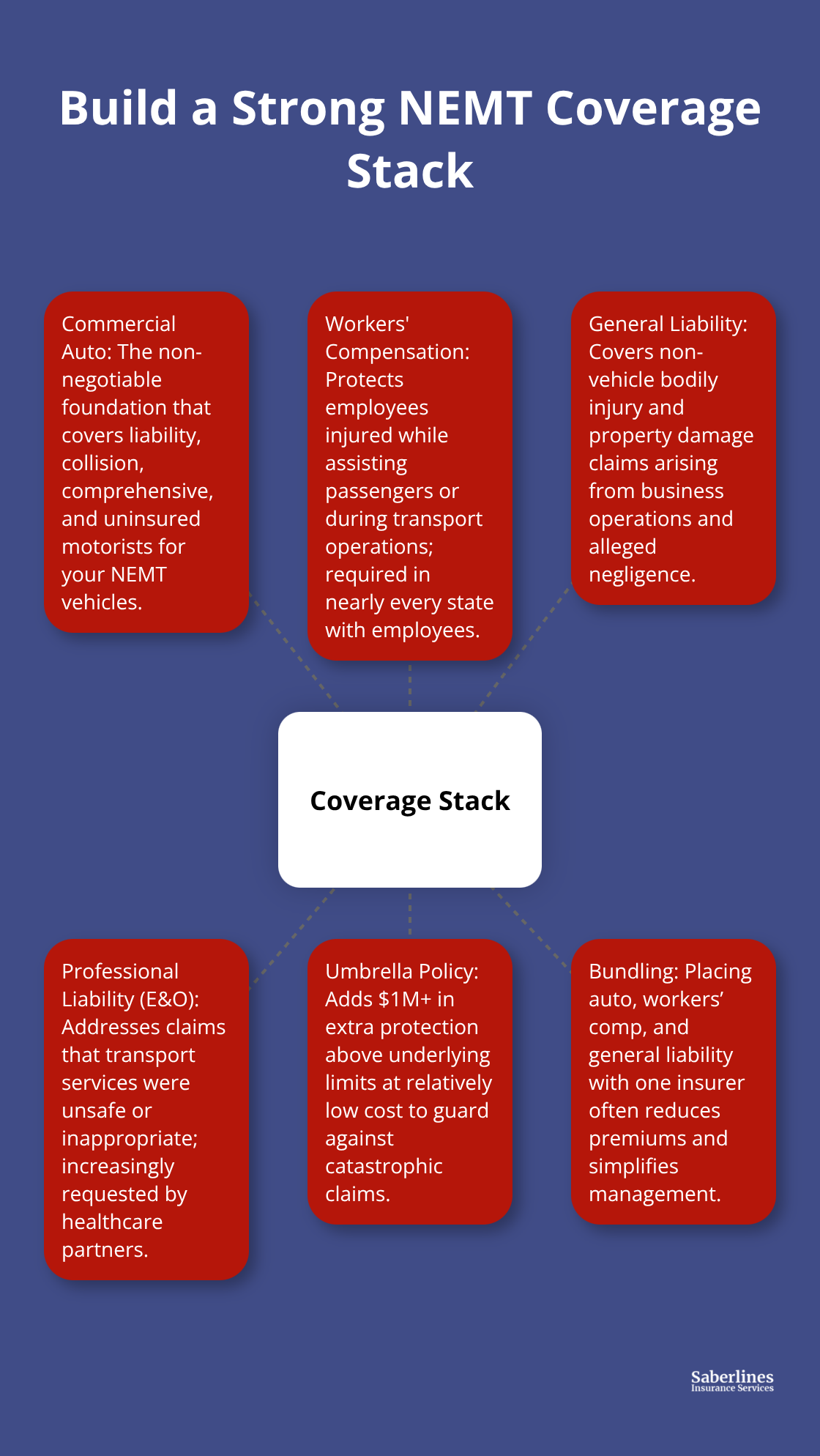
Umbrella policies add an extra layer of protection above your underlying coverage limits at a reasonable cost-typically $300 to $800 annually for $1 million in additional coverage. For multi-state operators, costs rise because each state has different regulatory requirements and insurance mandates. A provider operating in three states must maintain separate compliance documentation and potentially different coverage limits, which insurers account for in their pricing.
Reducing Premiums Through Active Risk Management
Telematics and GPS tracking systems reduce your premiums by demonstrating active risk management. Insurers view real-time monitoring as fraud prevention and safety assurance, making you a lower-risk client. Annual policy reviews catch gaps when your fleet changes, your service area expands, or your employee count shifts. Reassess coverage whenever you add vehicles or hire new drivers rather than waiting for renewal. These adjustments keep your protection aligned with your actual operations and help you avoid overpaying for coverage you no longer need. Understanding your specific risk profile-vehicle types, service areas, employee count, and claims history-positions you to negotiate better rates and identify cost-saving opportunities that don’t compromise protection.
How to Shop for Better NEMT Insurance Rates
Get Multiple Quotes from Specialized Carriers
Getting multiple quotes is the fastest way to lower your insurance costs, but most NEMT providers stop after one or two quotes and assume pricing is fixed. It isn’t. Insurance companies price NEMT coverage differently based on their underwriting appetite, claims experience with similar fleets, and how they weight specific risk factors. A provider with five wheelchair-accessible vehicles and a clean safety record might pay $8,000 annually with one insurer and $6,200 with another for identical coverage. The difference comes down to how each company evaluates your operation.
When you request quotes, provide identical information to all carriers: exact vehicle specifications including wheelchair lift configurations, your actual fleet age and mileage, employee count with specific job duties, your claims history for the past three years, and the states where you operate. Vague information leads to inflated estimates because underwriters assume worst-case scenarios. Request quotes from at least three carriers that specialize in NEMT rather than general commercial transportation. Specialized carriers understand the operational details that drive your actual risk profile. Generic commercial insurers often overprice NEMT because they lack claim data and treat medical transport as a high-risk outlier.
Reduce Your Risk Profile to Lower Premiums
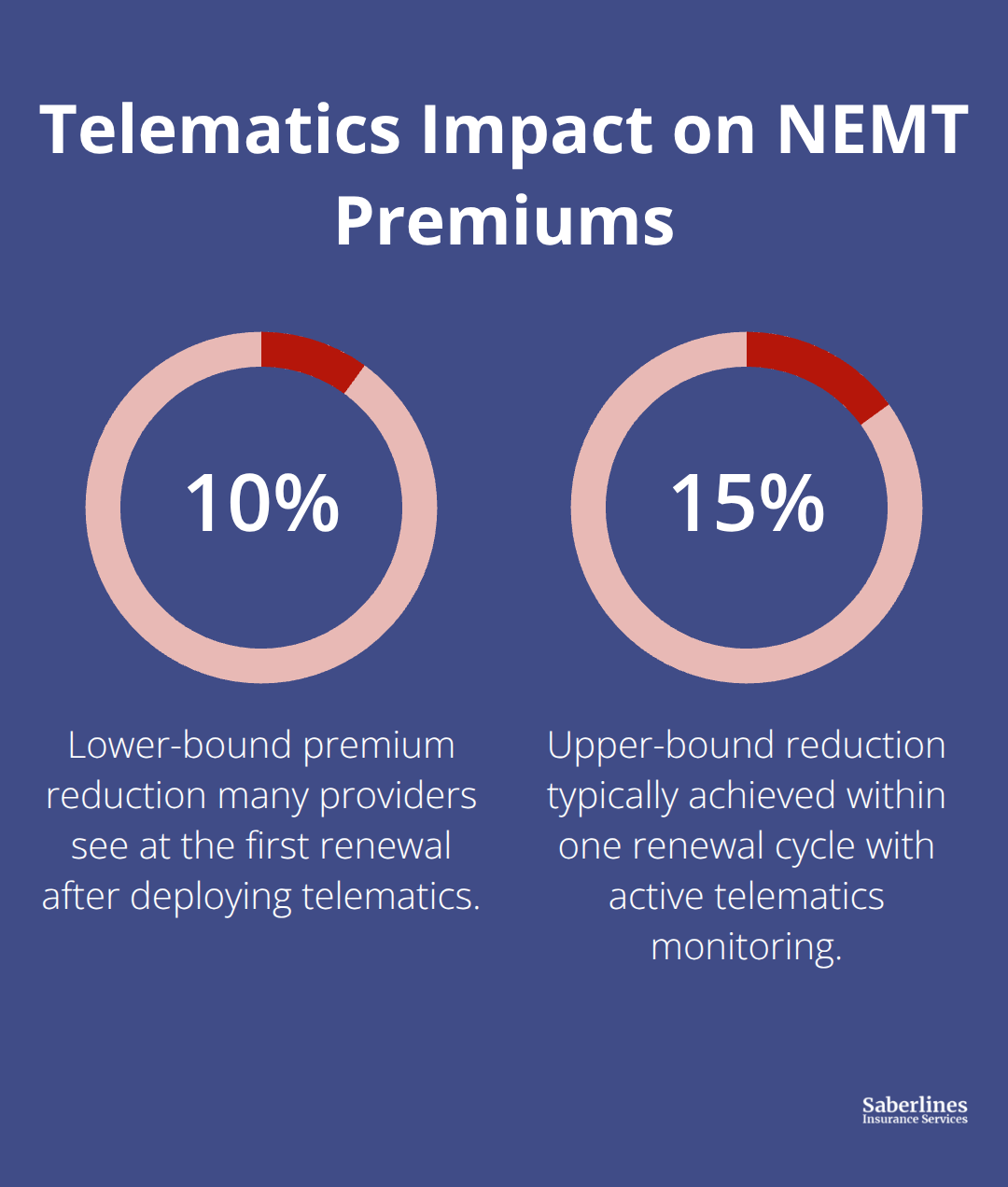
The real cost-saving opportunity emerges when you actively reduce your risk profile rather than just shopping for lower rates. Telematics systems that monitor driver behavior, vehicle speed, and route adherence demonstrate to insurers that you take safety seriously. Providers who implement telematics typically see premium reductions of 10 to 15 percent within the first renewal cycle.
Formal driver training programs specifically covering passenger assistance, vehicle safety, and emergency response also lower premiums because they reduce injury claims. Document this training with certificates and completion records to give insurers concrete evidence of your commitment to risk management.
Proactive vehicle maintenance beyond manufacturer guidelines signals that you prevent accidents rather than just react to them. Keep detailed maintenance logs showing inspections, repairs, and preventive services, then share them with your insurer during renewal conversations. A fleet with spotless maintenance records costs less to insure than one with reactive repair patterns. Background checks and ongoing driver monitoring eliminate high-risk individuals before they cause expensive claims. Insurers price your workers’ compensation coverage based partly on your claims history, so preventing injuries through rigorous hiring and safety protocols directly reduces future premiums.
Turn Risk Mitigation into Long-Term Savings
These risk mitigation investments typically pay for themselves within one to two years through lower insurance costs while also improving operational efficiency and service quality. The investments compound over time-a safer operation attracts better employees, reduces downtime from accidents, and builds stronger relationships with healthcare facilities and managed care organizations that increasingly scrutinize provider safety records. As your risk profile improves, you gain leverage to negotiate better rates at renewal or switch to carriers that reward your safety investments more generously. This positions you to scale your operation without proportional increases in insurance expense, which becomes critical as you add vehicles and expand into new service areas.
Regulations That Shape Your Coverage Obligations
Compliance in NEMT operations isn’t optional, and it directly determines whether your insurance covers claims when accidents or violations occur. Federal regulations through CMS and the Department of Transportation set baseline standards for vehicle safety, driver qualifications, and billing practices, while state Medicaid agencies layer on additional requirements that vary significantly by location. A provider operating in California faces different vehicle specifications, driver certification standards, and documentation rules than one in Texas or Florida. This regulatory complexity means your insurance coverage must align with the specific rules in each state where you operate. If your operation violates state licensing requirements or fails to maintain proper vehicle certifications, insurers have grounds to deny claims even if you’ve paid premiums faithfully.
The compliance-to-coverage connection works both ways: strict regulatory compliance reduces your risk profile and gives you leverage to negotiate lower premiums, while regulatory violations increase your exposure and signal to insurers that you’re a liability. Multi-state operators face compounding costs because compliance tracking requires separate documentation systems, state-specific driver certifications, and potentially different vehicle equipment standards. One provider operates in three states and maintains separate compliance calendars for each jurisdiction to track vehicle inspections, driver credential renewals, and billing code updates. The administrative burden is substantial, but gaps in compliance create insurance coverage gaps that cost far more than the administrative investment.
Documentation Standards Prevent Claim Denials
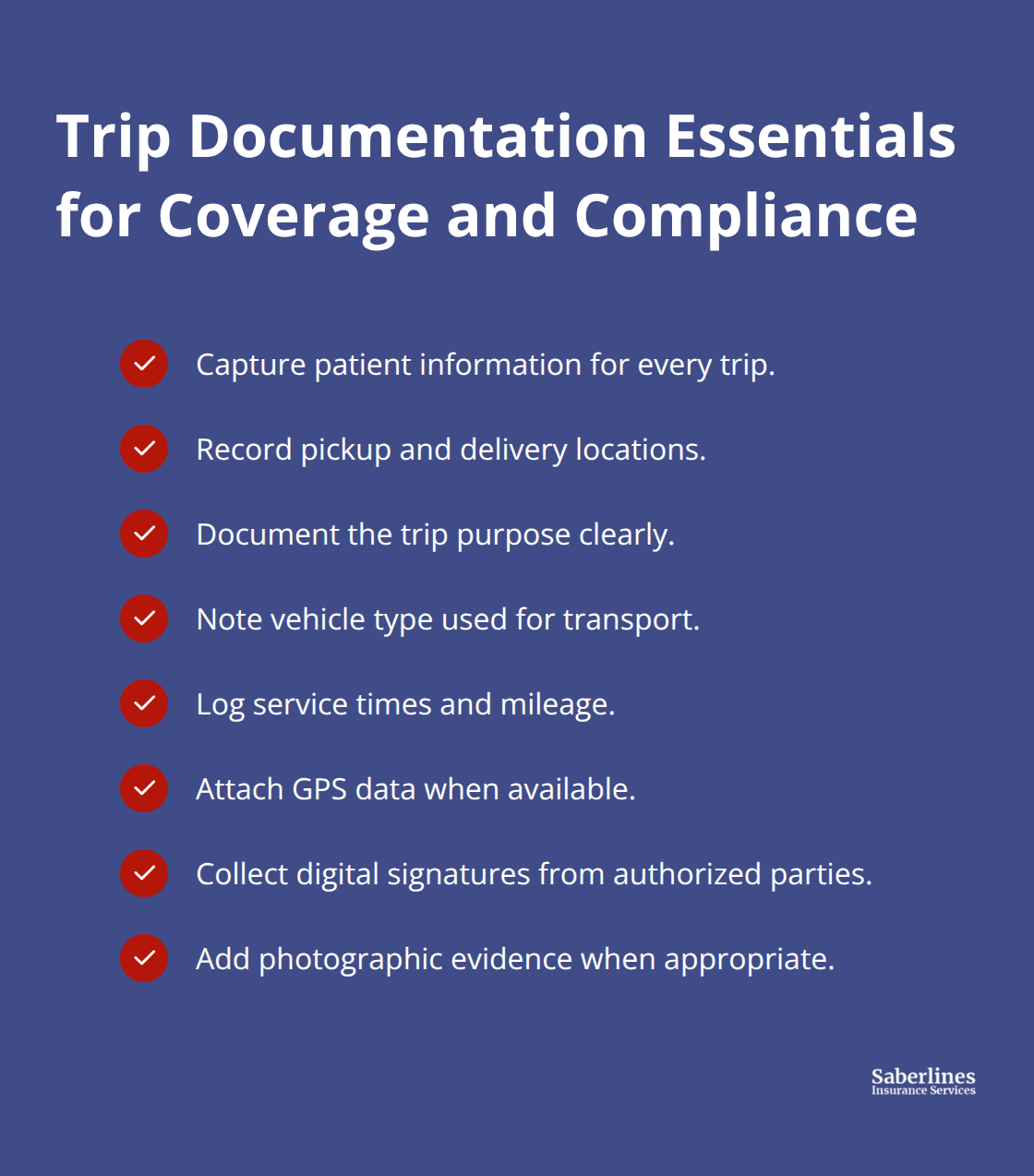
Detailed trip documentation forms the foundation of both compliance and insurance protection. CMS and state Medicaid programs require real-time records that capture patient information, pickup and delivery locations, trip purpose, vehicle type, service times, and mileage for every transport. GPS data, digital signatures, and photographic evidence strengthen your documentation and protect against fraud allegations. When an accident occurs or a claim is questioned, this documentation proves your operation followed proper procedures and your drivers acted within protocol.
Incomplete or inconsistent records trigger claim denials and open doors to allegations of improper billing or inadequate patient care. Electronic logging devices and telematics systems that integrate with your billing software create tamper-evident records that insurers and regulators trust. The investment in proper documentation systems pays dividends during renewal conversations: insurers reward clean, detailed documentation with better rates because it demonstrates you operate with accountability and transparency. State regulatory agencies increasingly audit NEMT providers’ records, and operators with electronic, timestamped documentation systems pass audits faster and face fewer compliance findings. This audit success directly protects your insurance coverage because regulators aren’t discovering violations that could void your policy.
Pre-Authorization Prevents Coverage Gaps
Real-time eligibility verification and pre-authorization integrated with payer databases prevent costly claim denials that cascade into coverage disputes. Before dispatch, confirm that your patient qualifies for the transport under their Medicaid plan, Medicare rules, or private insurance policy. Medicaid reimbursement rates and coverage rules vary by state, and Medicare generally does not cover non-emergency medical transport except in rare ambulatory cases. Private plans show substantial variability in coverage, making verification essential before your vehicles roll.
A transport you believe is covered might not be, leaving you unpaid and unable to bill the patient if you’ve already provided service. Pre-authorization also protects your insurance because it proves you followed proper procedures and didn’t transport ineligible patients. When disputes arise, documentation showing you verified coverage beforehand demonstrates you operated responsibly. State Medicaid agencies monitor providers’ pre-authorization compliance, and operators with documented verification systems avoid regulatory findings that could affect your licensing or insurance eligibility. Implement pre-authorization as a non-negotiable dispatch requirement rather than an occasional practice.
Multi-State Compliance Requires Dedicated Tracking
Operating across multiple states demands separate compliance calendars and documentation systems for each jurisdiction. Vehicle inspection schedules, driver credential renewal dates, and billing code updates differ by state, and missing deadlines in even one state creates coverage exposure. Providers who consolidate compliance tracking into a single system-whether spreadsheet-based or software-integrated-reduce administrative errors and catch renewal deadlines before they pass. This proactive approach prevents the regulatory violations that insurers use as grounds for claim denials or coverage cancellations.
Final Thoughts
NEMT coverage considerations require you to balance protection with affordability, but this balance isn’t a compromise between two competing needs. The right coverage strategy actually reduces your overall costs by preventing expensive claims, avoiding regulatory penalties, and positioning your operation for sustainable growth. When you invest in specialized insurance from carriers who understand NEMT operations, implement risk mitigation systems that lower premiums, and maintain strict compliance across all jurisdictions, you spend smarter rather than spending more.
Your insurance coverage must match your actual operational risk, your compliance obligations must align with your coverage terms, and your risk management investments must drive measurable premium reductions. Operators who shop aggressively among specialized carriers, implement telematics and formal driver training, and maintain meticulous documentation gain leverage to negotiate better rates while building stronger relationships with healthcare facilities and managed care organizations. Providers who skip the multi-quote process, operate without documented safety protocols, or treat compliance as an afterthought end up paying significantly more for weaker coverage.
Gather your current insurance documents, fleet specifications, employee count, and three-year claims history, then request quotes from at least three carriers that specialize in NEMT rather than generic commercial transportation. We at Saberlines Insurance Services help NEMT providers navigate this process and secure coverage that protects your business without draining your budget. Founded in 1999 and licensed in California, we combine deep industry expertise with fast, affordable quotes and markets for preferred and hard-to-place risks to keep small and mid-sized transportation businesses compliant and protected.
The information provided in this blog is for general informational purposes only and does not constitute legal, financial, or insurance advice. Coverage options, terms, and availability may vary. Please consult with a licensed professional for advice specific to your situation.