
Short Term Trucking Insurance: Fast Coverage for Peaks and Projects
Trucking businesses face unpredictable demand. Seasonal spikes, special projects, and temporary fleet needs require flexible insurance solutions that don’t lock you into annual contracts.
Short term trucking insurance gives you the coverage you need, exactly when you need it. At Saberlines Insurance Services, we’ve built our policies to activate fast and protect your operations during peak periods and one-off jobs.
When You Really Need Short-Term Coverage
Seasonal Peaks Demand Flexible Protection
Seasonal shipping peaks hit hard and fast. The National Retail Federation data shows that peak shipping seasons-particularly November through December-increase freight demand by 20–30% compared to baseline months. If you operate regionally or handle seasonal cargo like agricultural products or holiday goods, you know this surge arrives on a predictable schedule. Annual insurance policies force you to pay for 12 months of coverage even if you only need protection for 4–6 weeks.
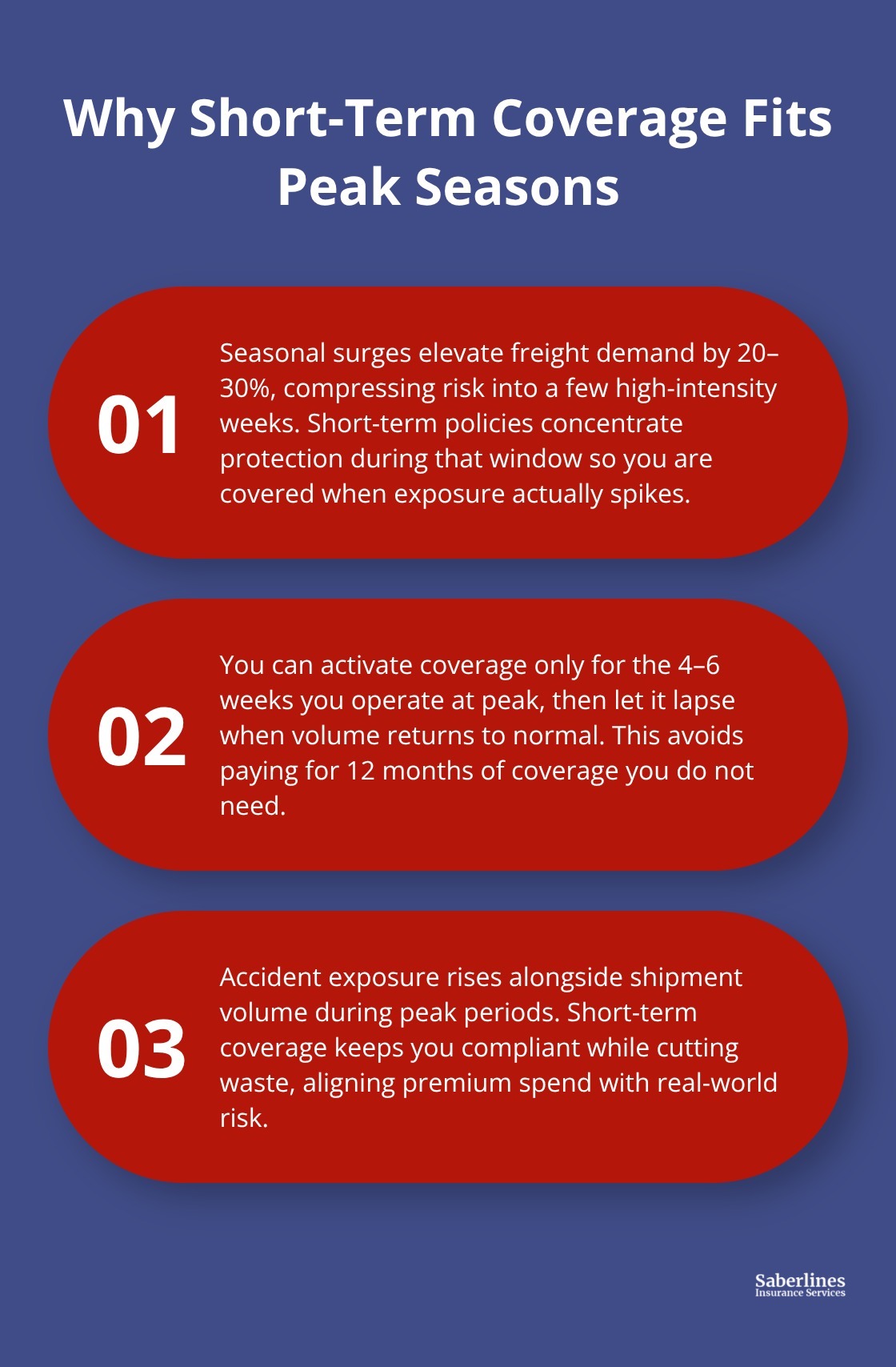
Short-term trucking insurance solves this directly. You activate coverage only during the weeks when demand actually spikes, then let it expire when volume drops. This approach cuts unnecessary spending while keeping you compliant during high-risk periods when accident exposure increases alongside freight volume.
One-Off Jobs and Special Projects
One-off jobs and special projects demand the same flexibility. A contractor calls with a single load that requires you to move a truck across state lines, or you purchase a used tractor and need coverage to drive it from the auction to your garage. These scenarios don’t justify signing a 12-month policy. Short-term policies bind in 10–15 minutes with minimal underwriting friction, so you can accept the job without delays.
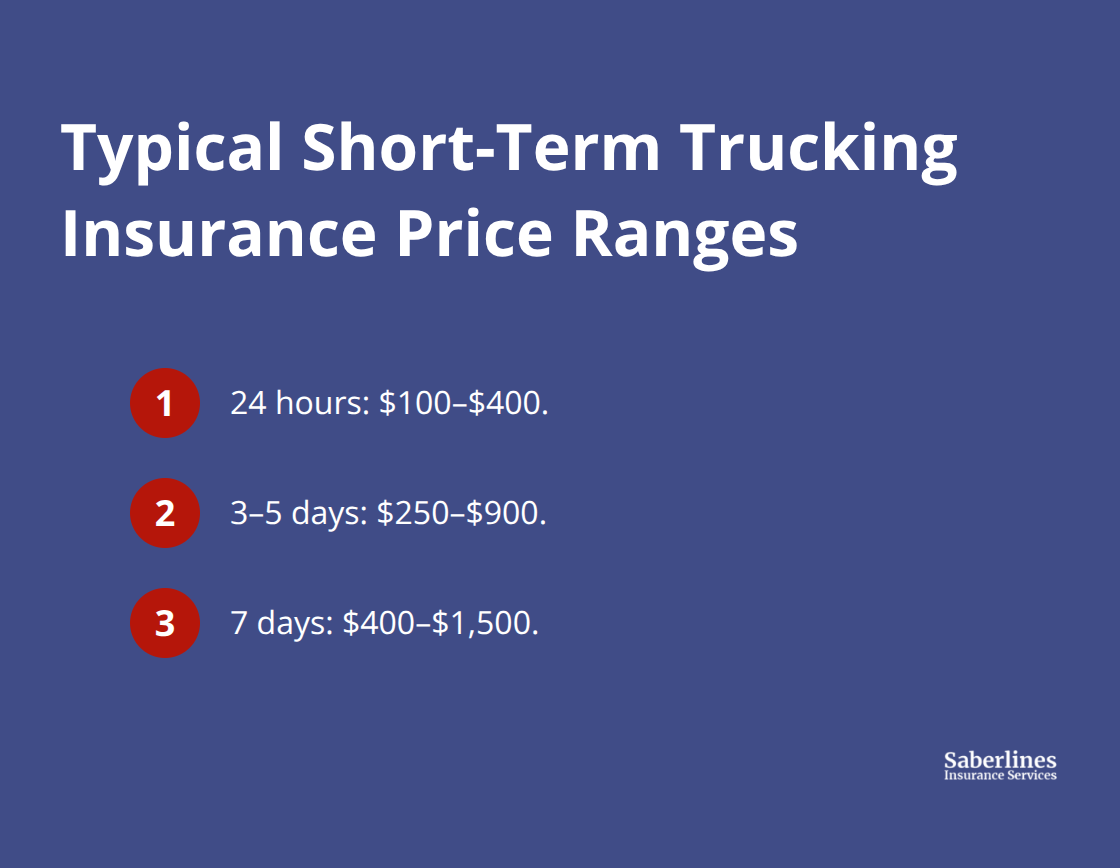
According to short-term market data, coverage costs roughly $100–$400 for 24 hours, $250–$900 for 3–5 days, and $400–$1,500 for 7 days-far cheaper than prorating an annual policy for temporary work. This pricing structure makes short-term coverage practical for contractors, owner-operators, and small fleets that handle occasional loads outside their normal operations.
Fleet Expansion Without Long-Term Commitment
When fleet expansion happens gradually, short-term coverage bridges the gap while you evaluate whether permanent additions make financial sense. You avoid locking capital into annual premiums for equipment you might sell or return within weeks. This flexibility lets you test new routes, equipment types, or service lines before committing to full-year protection.
The next section covers the specific coverages that protect your operations during these temporary periods and explains what each protection actually covers on the road.
Coverage Options and What They Protect
Commercial Auto Liability Forms Your Foundation
Commercial auto liability forms the foundation of every short-term trucking policy. This coverage handles bodily injury and property damage claims when your truck causes an accident. Federal Motor Carrier Safety Administration regulations require minimum liability limits that vary by state, but brokers typically expect $1,000,000 Combined Single Limit on your certificate of insurance to accept loads. If your short-term policy falls short of that threshold, brokers will reject it regardless of price.
Cargo Coverage Requires Precise Classification
Cargo coverage protects freight in your care from loss or damage during transit-but here’s where most operators stumble. General freight classifications work fine for standard loads, but misclassifying cargo as high-value electronics when it’s actually temperature-controlled food triggers claim denials. Reefer loads require explicit reefer endorsements that not all short-term programs include, so verify coverage before accepting refrigerated work. You must confirm that your carrier offers the endorsements your specific cargo demands.
Physical Damage Protection Varies Widely
Physical damage protection covers collision and comprehensive losses to your truck itself, but availability and pricing vary widely by provider. Unlike annual policies, short-term physical damage often carries higher deductibles or limited coverage options, so compare what’s actually included against what brokers require on the bill of lading. This comparison prevents surprises when you file a claim.
Critical Gaps Hide in the Details
The real trap with short-term coverage lies in gaps that look small until a claim hits. Bobtail coverage-protection when you drive without a trailer-isn’t automatically included in for-hire liability policies; confirm it’s part of your quote before moving an empty truck. Additional insured endorsements and waiver of subrogation clauses are standard broker requirements that some short-term carriers exclude or charge extra for, so request these upfront. If your policy expires mid-load, you’re uninsured for the remainder, so coordinate effective dates carefully to cover the full window.
Matching Broker Requirements Prevents Last-Minute Rejections
Short-term insurance works best for defined windows like one-off loads with hard start dates or seasonal peaks lasting weeks, not for continuous operations where daily costs exceed annual policy rates. TechInsurance data shows commercial auto insurance averages $816 monthly for trucking companies, which means short-term coverage at $100–$400 daily makes sense only for temporary needs. Request a certificate of insurance before dispatch and verify that the carrier name, limits, forms, and endorsements match your broker’s exact requirements-mismatches cause last-minute rejections that kill loads and damage relationships. Once you understand what coverage protects your operations, the next step involves securing that coverage fast enough to meet your load deadlines.
How to Activate Coverage in Minutes
Prepare Your Documentation Before You Apply
Short-term trucking policies bind fast when you prepare your documentation upfront. Collect your driver’s license, vehicle VIN, garaging ZIP code, operating radius, states you’ll travel through, cargo classification, and DOT or MC number before you start the application. Complete information accelerates underwriting significantly. Most providers bind policies within 10–15 minutes once they receive all required details, so a single missing item can delay coverage by hours.
Traffic violations complicate the timeline. If you’ve had more than one ticket or accident in the past three years, underwriter review adds 24–48 hours to the process. Plan accordingly when deadlines are tight.
Complete Your Application Online
The application process runs entirely online with no phone calls or in-person meetings. You enter vehicle and driver information, select your coverage limits and deductibles, and receive a quote in real time. This streamlined approach eliminates delays that traditional insurance channels create.
Progressive’s Smart Haul program offers new customers an average savings of $1,261 by allowing access to electronic logging device data, though this program isn’t available in all states and requires annual coverage rather than short-term policies.
Verify Your Certificate Before You Accept the Load
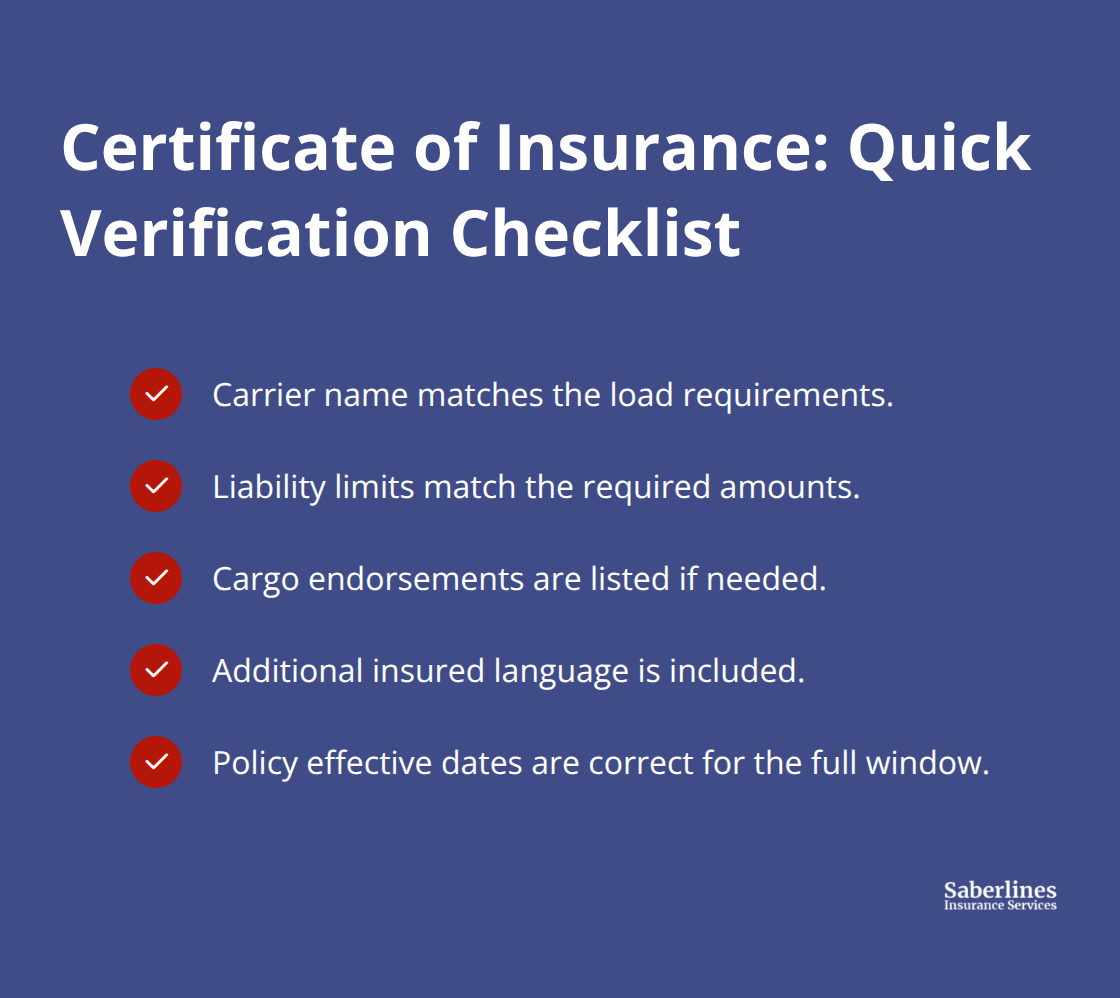
The critical step happens after you purchase coverage: verify that your certificate of insurance lists the exact coverage your broker demands. Check that the carrier name, liability limits, cargo endorsements if needed, additional insured language, and policy effective dates all match the load requirements. Request the certificate immediately after purchase and review it against your broker’s requirements before you accept the load.
This verification takes five minutes and prevents rejections that kill loads and damage your reputation with brokers. If discrepancies exist, contact the carrier’s customer service line immediately-most offer 24/7 support to correct issues before dispatch. Once you confirm the certificate matches your broker’s requirements, you’re covered and ready to move.
Final Thoughts
Short-term trucking insurance fills a real gap that annual policies ignore. Seasonal peaks, one-off loads, and temporary fleet needs demand full compliance with FMCSA liability requirements and broker expectations, yet they don’t fit the 12-month contract model. Short-term coverage lets you activate protection exactly when you need it, then walk away without paying for months you don’t operate.
Federal Motor Carrier Safety Administration regulations require minimum liability limits by state, and brokers won’t accept loads without certificates that meet their exact standards. Short-term policies bind fast enough to meet those requirements without forcing you into long-term commitments, giving you the $1,000,000 Combined Single Limit coverage brokers demand and the cargo endorsements your freight requires. This speed separates short-term trucking insurance from traditional insurance channels that demand phone calls, meetings, and days of waiting.
Prepare your driver’s license, vehicle VIN, garaging location, and cargo details before you apply, then complete the online application and bind coverage within 10–15 minutes if your driving record is clean. Request your certificate of insurance immediately and verify it matches your broker’s requirements before you move. Contact Saberlines Insurance Services to get a quote and activate coverage fast.
The information provided in this blog is for general informational purposes only and does not constitute legal, financial, or insurance advice. Coverage options, terms, and availability may vary. Please consult with a licensed professional for advice specific to your situation.