
General Liability for Movers: Essential Protections for Moving Companies
One accident on a job site can cost a moving company thousands in damages and legal fees. General liability for movers isn’t optional-it’s the foundation of a responsible business that protects both your operations and your clients.
At Saberlines Insurance Services, we’ve seen firsthand how the right coverage prevents financial disasters. This guide walks you through what you need to know to choose protection that actually fits your moving business.
What General Liability Actually Covers
The Three Major Financial Exposures
General liability insurance for moving companies protects against three major financial exposures that regularly generate expensive claims. Property damage to client belongings ranks as the most common claim type-a sofa gets scratched during loading, a doorframe gets dented, or artwork gets damaged in transit. These incidents alone cost thousands to repair or replace, and without proper coverage, your company absorbs the full expense. Bodily injury claims arise when someone gets hurt during your operations, whether a client is injured during a walkthrough, an employee sprains an ankle while unloading, or a bystander gets hit by moving equipment. Medical bills, lost wages, and legal settlements in these cases frequently exceed $10,000 and can reach six figures for serious injuries. Legal defense costs pile up separately-hiring attorneys, managing court proceedings, and handling settlements consume resources whether you win or lose the claim. General liability covers these defense costs directly, preventing legal fees from draining your operating budget while disputes get resolved.
Coverage Gaps That Matter Most
The scope of coverage matters more than the policy limit itself. A $1 million general liability policy won’t help if the exclusions eliminate protection for your actual operations. Many moving companies overlook that standard general liability does not automatically cover damage to items in your custody-that gap requires bailee coverage, which protects customer belongings while they remain in your care during loading and unloading. Similarly, damage caused by employee negligence gets covered only if the employee was acting within their scope of employment, which is why clear job descriptions and safety protocols strengthen your claims position.
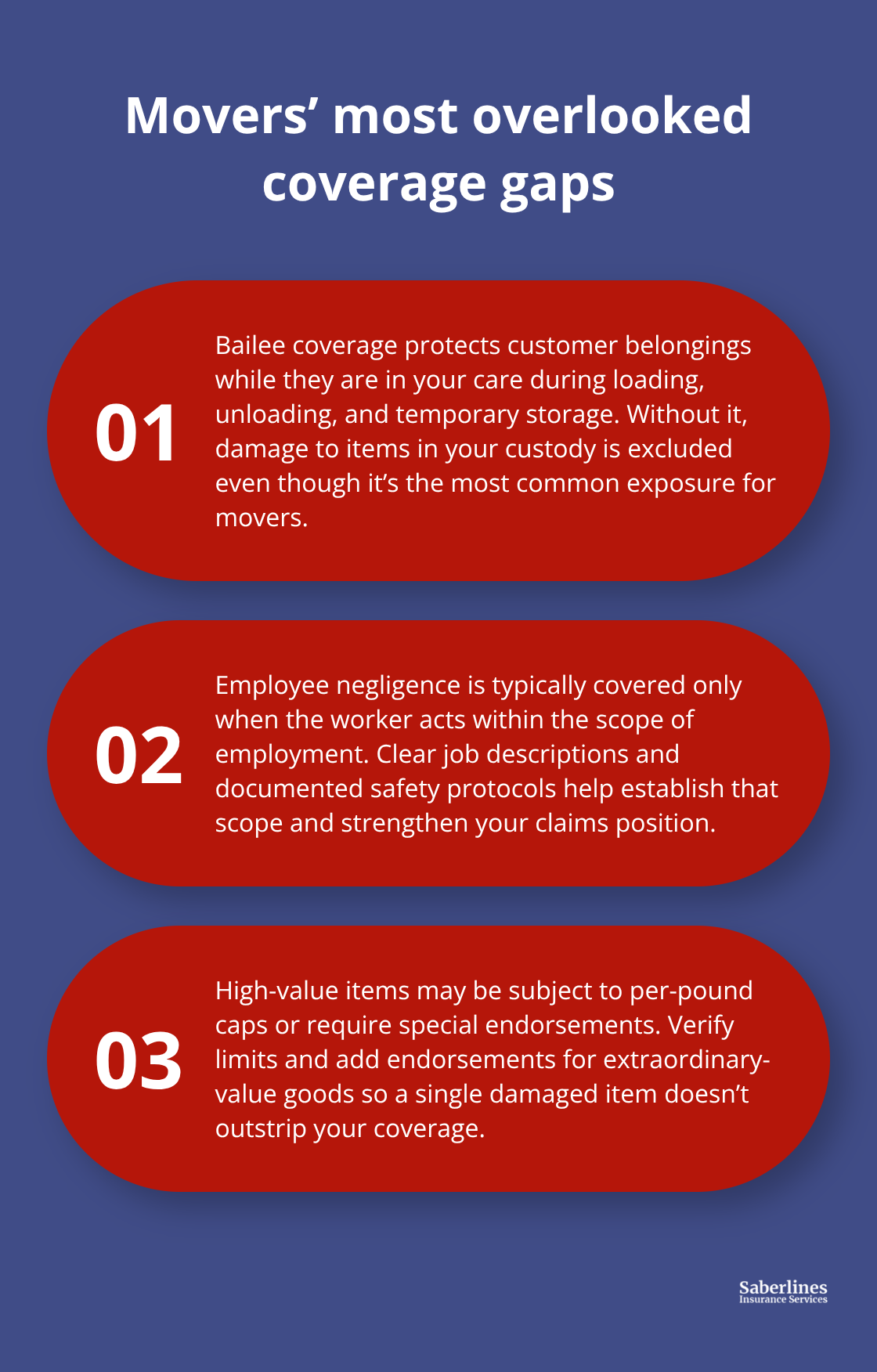
Moving companies that transport high-value items should verify whether the policy caps coverage for items over a certain value per pound or requires additional endorsements for extraordinary-value goods.
State Requirements and Policy Details
State requirements vary significantly: Florida requires movers to maintain liability insurance or a $50,000 performance bond, while Texas requires licensing through the Texas Department of Motor Vehicles. Rather than guessing which coverage gaps apply to your operation, obtain written quotes that spell out exactly what gets covered, what does not, and what additional endorsements cost. Understanding these specifics before you sign a contract prevents expensive surprises when a claim arises and ensures your business meets all regulatory obligations across the states where you operate.
Why General Liability Protects Your Bottom Line
The Real Cost of Operating Without Coverage
One lawsuit from a client claiming property damage can drain your cash reserves before you even step foot in court. A moving company in California faced a $45,000 claim when movers damaged custom cabinetry during a residential move, and that was just the settlement-legal defense costs added another $12,000 before the case closed. Without general liability coverage, that company would have written a check directly from operating funds, potentially forcing layoffs or service cuts. General liability absorbs these costs, meaning your business continues functioning while the insurance company handles the financial burden.
Client and Vendor Requirements Drive Coverage Demand
Clients increasingly demand proof of coverage before hiring movers, and many property management companies and corporate relocation services require moving vendors to carry minimum coverage of $1 million or higher. Refusing to obtain coverage isn’t just risky-it’s commercially isolating. Moving companies that lack general liability lose access to entire market segments, as facilities managers and corporate clients simply won’t contract with uninsured operators. Beyond client requirements, landlords frequently mandate general liability as a condition of your commercial lease, and banks may require proof of coverage before extending business credit lines.
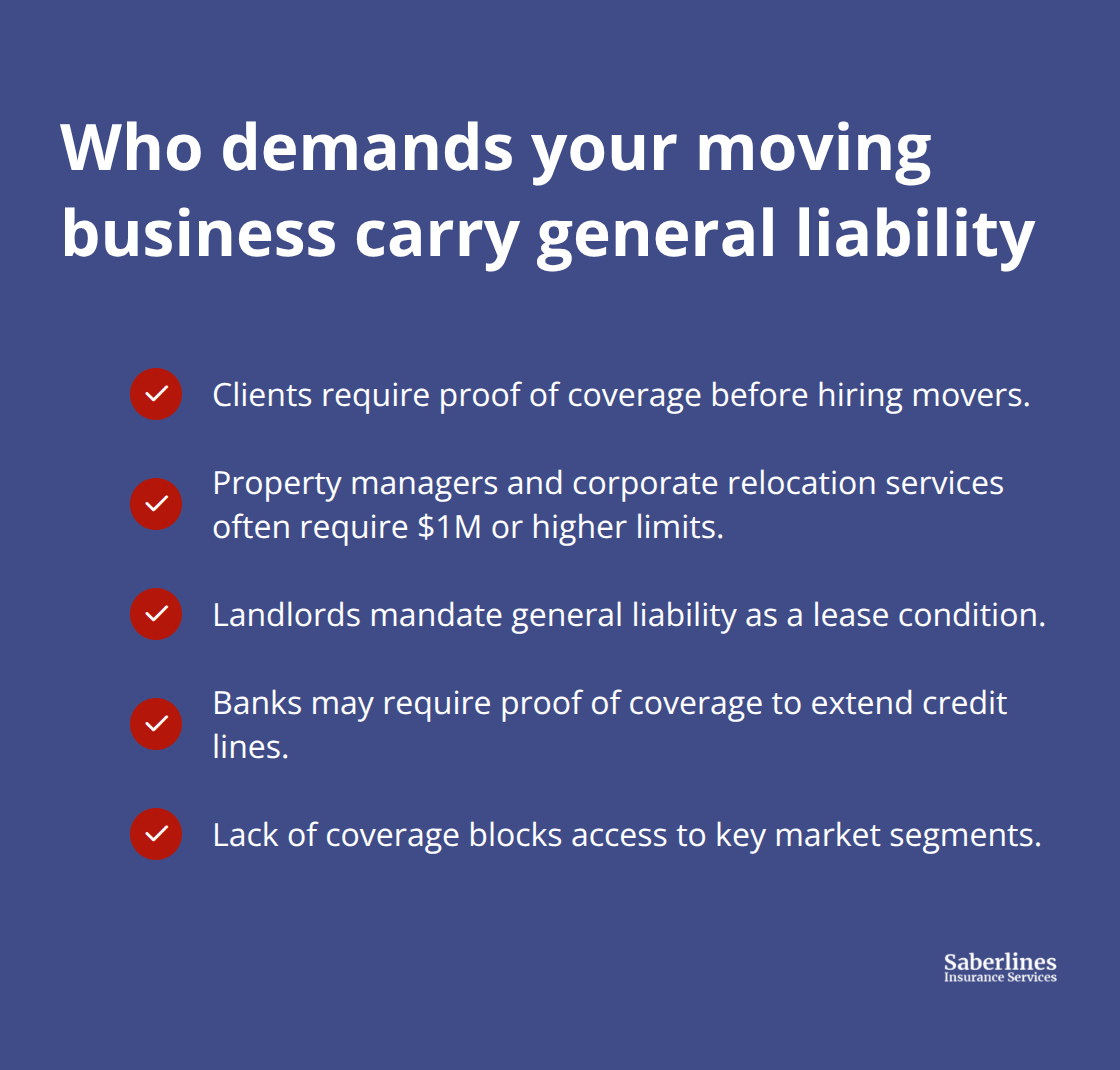
The financial reality is stark: obtaining coverage costs far less than absorbing even a single major claim or losing business opportunities because you lack required documentation.
State Regulations Make Coverage Mandatory
Compliance extends beyond client preferences into state-level legal obligations. Florida’s Department of Business and Professional Regulation requires household goods movers to maintain liability insurance or post a $50,000 performance bond, making coverage either mandatory or prohibitively expensive to replace. Texas requires moving companies to hold proper licensing through the Texas Department of Motor Vehicles, with insurance verification as part of that licensing process. Operating without the required coverage in these states exposes your company to fines, license suspension, and civil liability for damages without insurance protection.
Why the Cost Argument Fails Without Coverage
Your business faces operational vulnerability when a single incident occurs without coverage-one employee injury, one damaged client item, or one accident involving your vehicle can trigger lawsuits that exceed your liquid assets. General liability policies typically cost between $500 and $2,000 annually depending on your revenue, number of employees, and claims history, making coverage a predictable business expense rather than a catastrophic financial event. Companies that view insurance as optional often discover too late that a modest annual premium would have prevented bankruptcy.
Moving Forward With the Right Protection
Identifying the specific coverage requirements for your operating states and service models ensures compliance while keeping premiums aligned with business size and risk profile. The next step involves understanding how to select a policy that actually matches your moving operation’s unique exposures.
Selecting Coverage That Matches Your Moving Operation
Calculate Coverage Limits Based on Business Size
Coverage limits should reflect your actual business exposure, not industry defaults. A small local mover handling residential moves within a single city operates under different risk than a multi-state long-distance operation transporting high-value commercial goods. The $1 million general liability minimum that corporate clients demand may exceed what a solo operator needs, while that same limit could leave a larger company dangerously exposed.
Start with your annual revenue and average claim value across your service area. A moving company with $250,000 in annual revenue typically carries $300,000 to $500,000 in coverage, while operations exceeding $1 million in revenue should maintain $1 million or higher. Florida movers must meet the state’s minimum of $50,000 in liability coverage or post a performance bond, but that floor represents the absolute bare minimum for legal operation, not adequate protection. Texas-licensed movers face similar baseline requirements through the Texas Department of Motor Vehicles, yet real-world claims regularly exceed state minimums.
Request written quotes that specify per-occurrence and aggregate limits, then verify whether your chosen limits align with the contracts you’re signing with clients and landlords.
Identify and Fill Coverage Gaps
Standard general liability excludes damage to items in your care, custody, or control-the exact scenario that generates most moving company claims. Adding bailee coverage fills this critical gap by protecting customer belongings during loading, unloading, and temporary storage. Additional endorsements for hired and non-owned auto liability cover vehicles you rent or use that your company doesn’t own, essential for moving companies using rental trucks or employee personal vehicles for business.
Review the fine print on coverage for items you pack versus items clients pack themselves, since many policies reduce or eliminate coverage for customer-packed boxes if internal damage occurs. State-specific endorsements may also apply in your operating jurisdictions, so confirm these requirements before finalizing any policy.
Compare Quotes With Identical Specifications
Obtain three to five quotes from different carriers and request each quote in writing with identical coverage specifications so comparisons remain apples-to-apples. Compare not just premium costs but also per-item coverage limits, deductibles, and any exclusions specific to your service type. Request quotes that include bailee coverage, hired and non-owned auto liability, and any state-specific endorsements required in your operating jurisdictions.
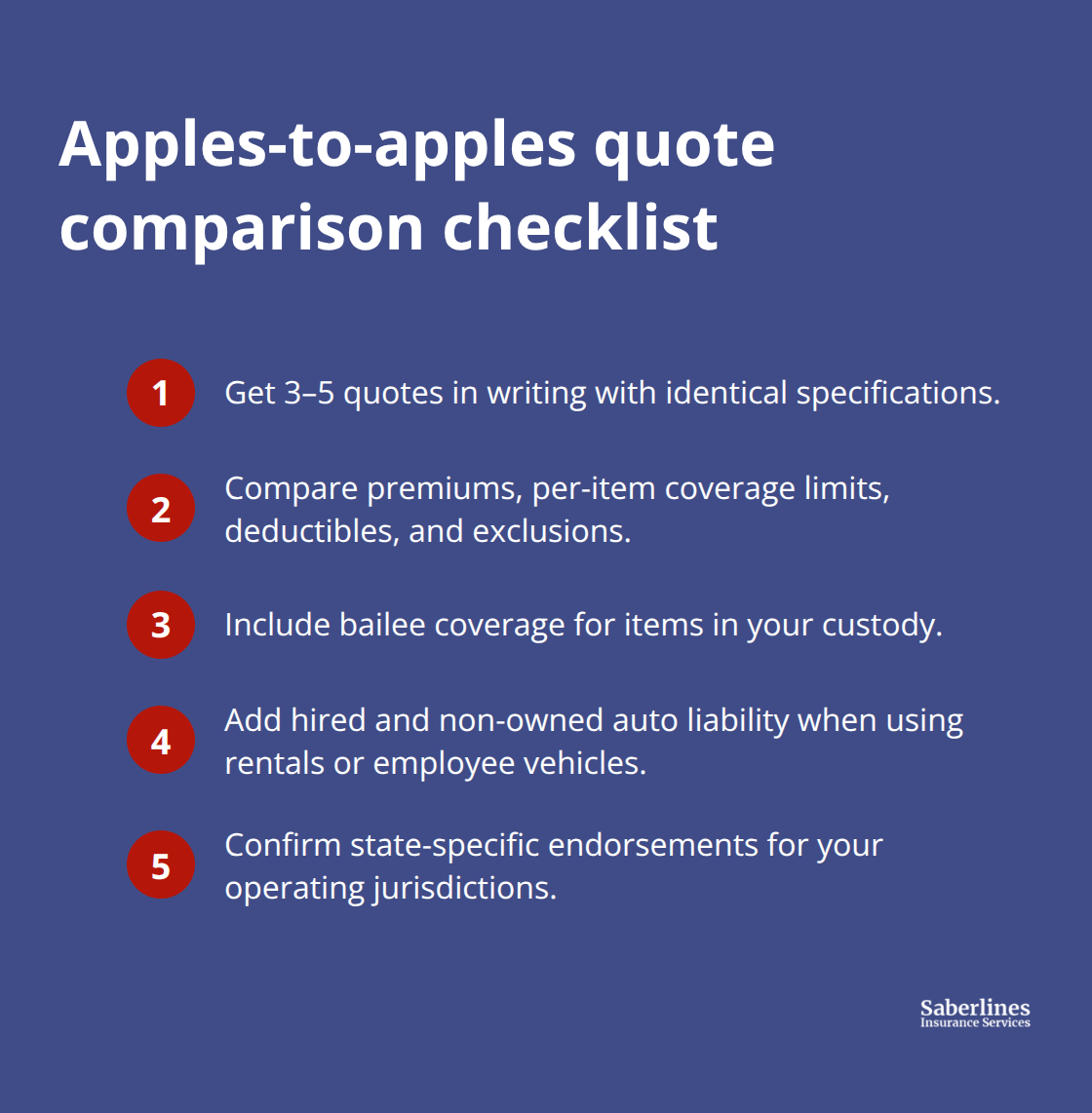
The cheapest quote rarely provides the best protection; instead, identify the carrier offering the strongest coverage for your specific moving model at a reasonable cost. Ensure your policy matches the actual value of goods you transport rather than relying on generic minimums, preventing you from sacrificing essential protection for a lower premium that leaves your business exposed when claims arise.
Final Thoughts
General liability for movers forms the backbone of a sustainable moving business, and securing adequate coverage starts with understanding your specific exposures. A solo operator handling local residential moves needs different protection than a multi-state company transporting high-value goods, yet both require bailee coverage to protect items in their custody. Request written quotes with identical specifications from multiple carriers, compare per-item limits and deductibles alongside premiums, and verify that your chosen policy covers the actual services you provide.
Contact carriers that specialize in moving company insurance and request quotes that include general liability, bailee coverage, and any state-specific endorsements your jurisdiction requires. We at Saberlines Insurance Services help moving companies secure coverage that fits their operations and budgets, and since 1999 we’ve worked with owner-operators and fleets to find affordable, comprehensive protection across preferred and hard-to-place risks. Visit us at saberlinesins.com to get started with a quote tailored to your moving business.
Risk management continues after your policy takes effect-document your safety protocols, train employees on proper handling techniques, maintain detailed records of client interactions, and photograph items before and after moves. These practices reduce claims frequency while strengthening your position if disputes arise, and you should review your coverage annually as your business grows (adding endorsements when you expand into new service areas or begin transporting different cargo types). The moving industry rewards companies that take protection seriously, and your clients will notice the difference.
The information provided in this blog is for general informational purposes only and does not constitute legal, financial, or insurance advice. Coverage options, terms, and availability may vary. Please consult with a licensed professional for advice specific to your situation.