
NEMT Provider Insurance: Tailored Solutions for Patient Transport
NEMT providers operate in a high-risk environment where one accident or patient injury can derail your entire business. The right NEMT provider insurance protects your vehicles, staff, and finances from the real threats you face daily.
At Saberlines Insurance Services, we’ve built coverage specifically for non-emergency medical transport operators. This guide walks you through the exact protections you need and how to keep costs down without sacrificing safety.
What Coverage Do You Actually Need for NEMT Operations
Commercial Auto Insurance Forms Your Foundation
Commercial auto insurance is non-negotiable for NEMT providers, but most operators select far too much of the wrong coverage and too little of what matters. The FMCSA mandates minimum financial responsibility of $1.5 million for vehicles carrying up to 15 passengers, which means your state likely requires you to prove this coverage before you operate. Your commercial auto policy must cover liability for accidents involving your transport vehicles, and it also needs physical damage protection for the vans or minibuses themselves.
Many NEMT operators make the mistake of selecting coverage limits based on price rather than actual exposure. If a passenger suffers a serious injury during transport, medical costs alone can exceed your policy limits within hours. Try selecting limits that align with the contracts your facilities require and the realistic severity of injuries in medical transport.
How Vehicle Age and Driver History Affect Your Costs
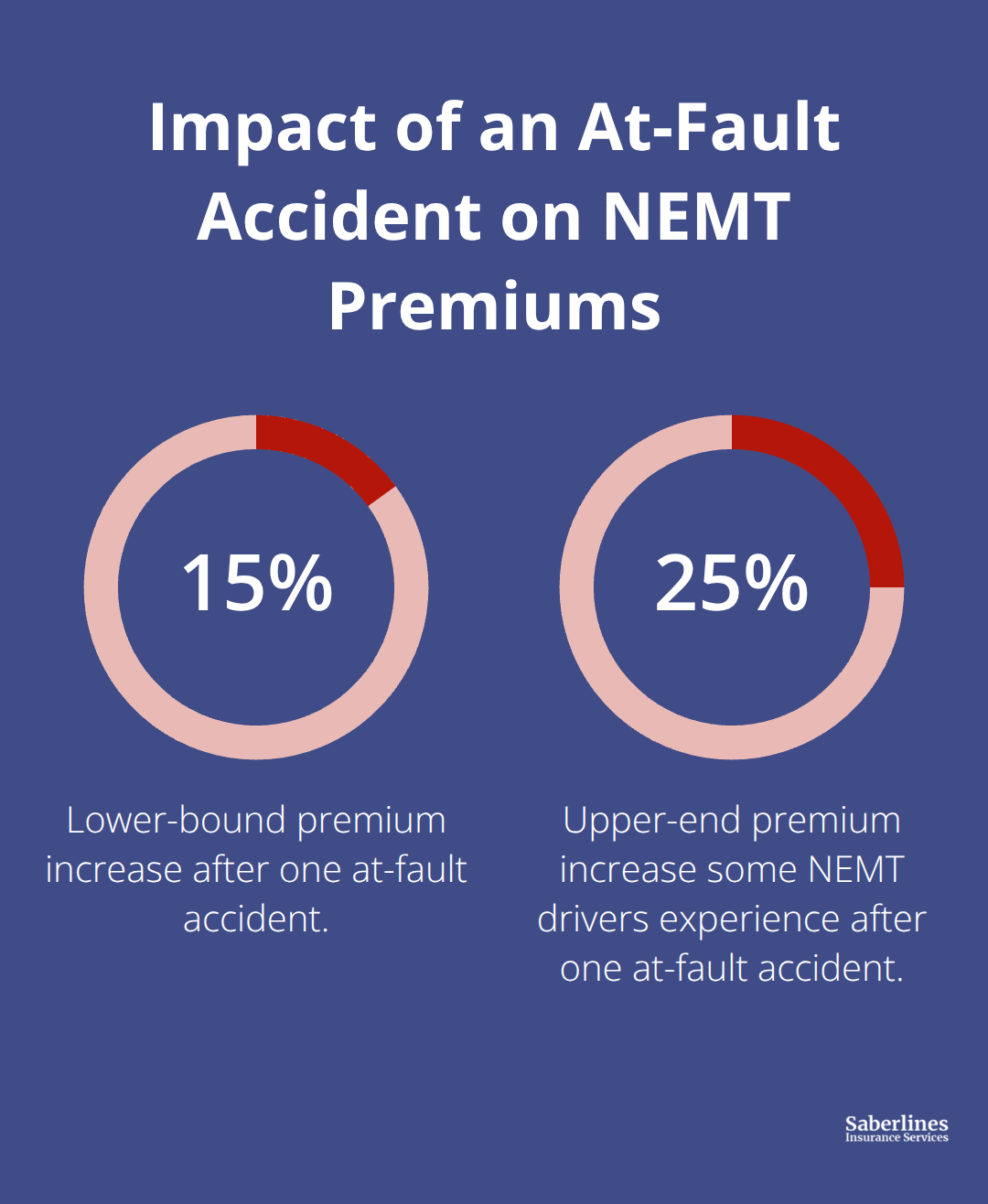
Older vehicles cost more to insure because they carry higher risk, but a 2015 minivan transporting wheelchair-bound patients represents genuinely different exposure than a 2022 model with modern safety systems. Your driver’s history matters enormously here; a single at-fault accident can increase your premium by 15 to 25 percent, so your hiring practices directly affect your insurance costs.
General Liability Covers What Auto Insurance Cannot
General liability protection shields your business when a passenger or third party claims injury or property damage from your operations. A passenger slipping during boarding, a wheelchair being damaged during loading, or a medication being dropped and lost all fall outside commercial auto coverage. These incidents happen regularly in NEMT operations, and general liability is typically the first policy small operators purchase because the costs are manageable but the protection is substantial.
Workers Compensation Protects Your Team
Workers compensation is required in most states the moment you hire your first employee, and it covers medical expenses, rehabilitation, and lost wages if a driver or staff member is injured on the job. Many operators resist workers comp because premiums feel high, but a single serious injury without coverage can bankrupt a small transport company. The premium calculation depends on your payroll, the number of employees, and your claims history, so a cleaner safety record directly reduces your costs year over year.
Understanding these three coverage types sets the foundation for compliance, but meeting state and federal requirements demands more than just selecting policies off a shelf. Your specific obligations depend on where you operate and which payers you contract with.
Regulatory Requirements and Insurance Verification
FMCSA regulations classify NEMT vehicles as for-hire passenger carriers, triggering specific insurance mandates you cannot ignore. The federal minimum is $1.5 million in financial responsibility for vehicles carrying up to 15 passengers, but your state may impose higher requirements, and your Medicaid or Medicare contracts almost certainly do. Florida Medicaid requires NEMT providers to maintain commercial auto and liability insurance as part of operational standards, and the state’s managed care organizations verify this coverage before routing rides to your company.
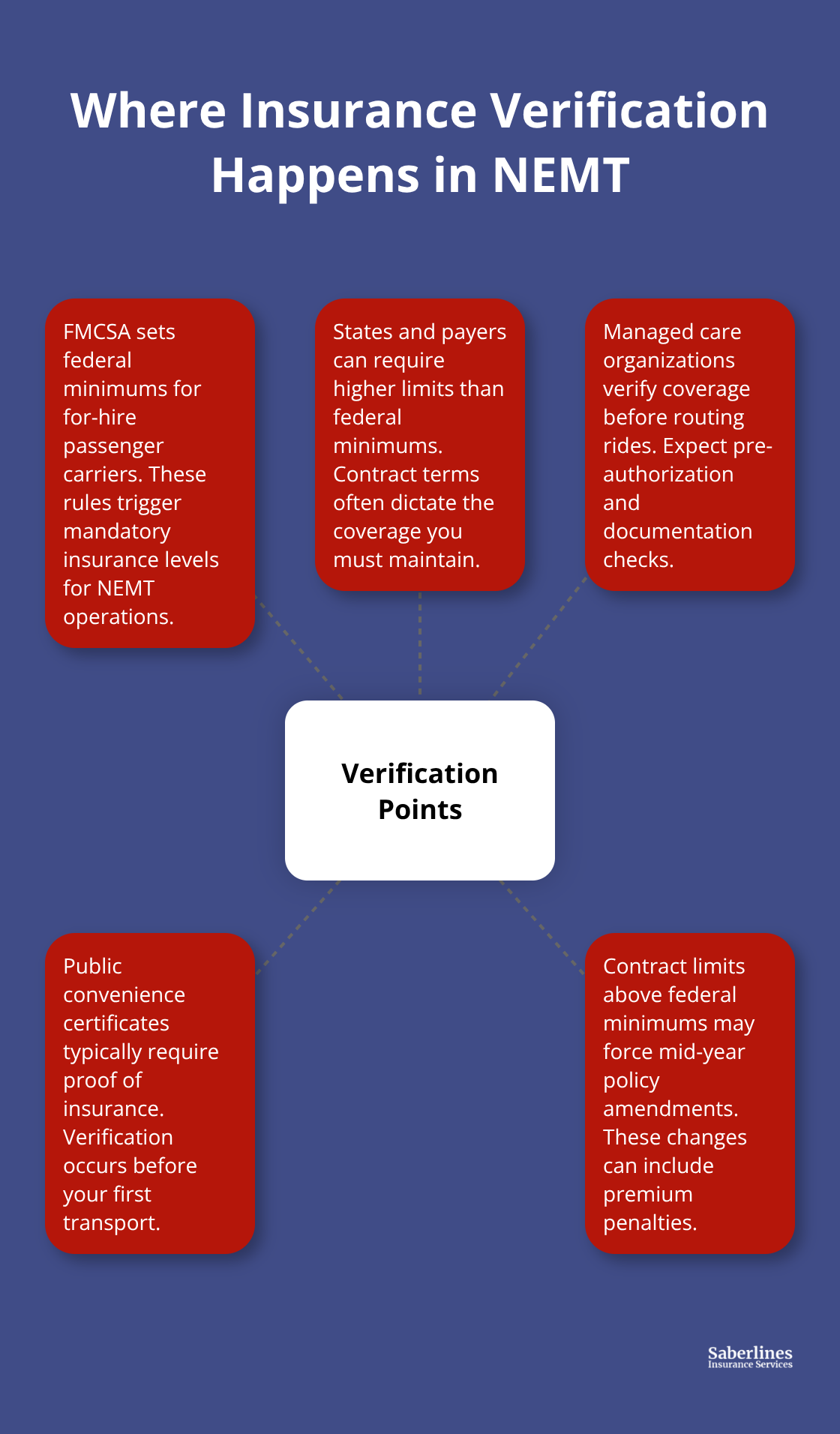
Your Certificate of Public Convenience and Necessity cannot be issued without proof of insurance, which means coverage verification happens before you transport your first patient. Many operators assume federal minimums satisfy all obligations, but that assumption costs money when a contract requires $2 million or $3 million in limits and forces a policy amendment mid-year at a premium penalty.
State Licensing Standards Shape Your Insurance Eligibility
State regulations require regular vehicle inspections, ADA compliance documentation, and HIPAA training records before you operate legally. These requirements directly affect your insurance eligibility because carriers assess whether your operations meet safety standards before quoting a policy. A vehicle without documented maintenance history or a driver without CPR certification may disqualify you from preferred rates or force you into a higher-risk program. You need to verify your state’s specific requirements before shopping for insurance because some carriers will not quote you if you lack required credentials, and others will add surcharges for missing documentation. The time to identify these gaps is during your planning phase, not after you’ve already selected a policy.
Payer Audits Verify Your Coverage Matches Your Claims
Medicaid and Medicare perform audits that verify your coverage matches what you claimed during contracting. If you let a policy lapse or reduce limits without notifying your payer, you breach your contract and lose all reimbursement authority immediately. Digital verification platforms increasingly connect directly with insurers to confirm coverage in real time, which means your carrier’s records must match your payer’s records exactly. A single discrepancy between your policy documents and what your managed care organization has on file can trigger an audit that delays payments for weeks.
Documentation Requirements Keep Your Coverage Active
Maintain a dedicated file with your current declarations page, any endorsements, proof of coverage letters, and dated records of policy renewals. Your payer’s records and your carrier’s records must align perfectly to avoid audit complications and payment delays. These documents protect you during contract reviews and demonstrate compliance when regulators request verification of your operational standards.
Your insurance obligations extend beyond simply purchasing policies-they demand active management of documentation and ongoing verification with your payers. The next section addresses how you select coverage limits that actually protect your business rather than just meeting minimum thresholds.
How to Right-Size Coverage Limits Without Overpaying
Match Your Limits to Contract Requirements, Not Federal Minimums
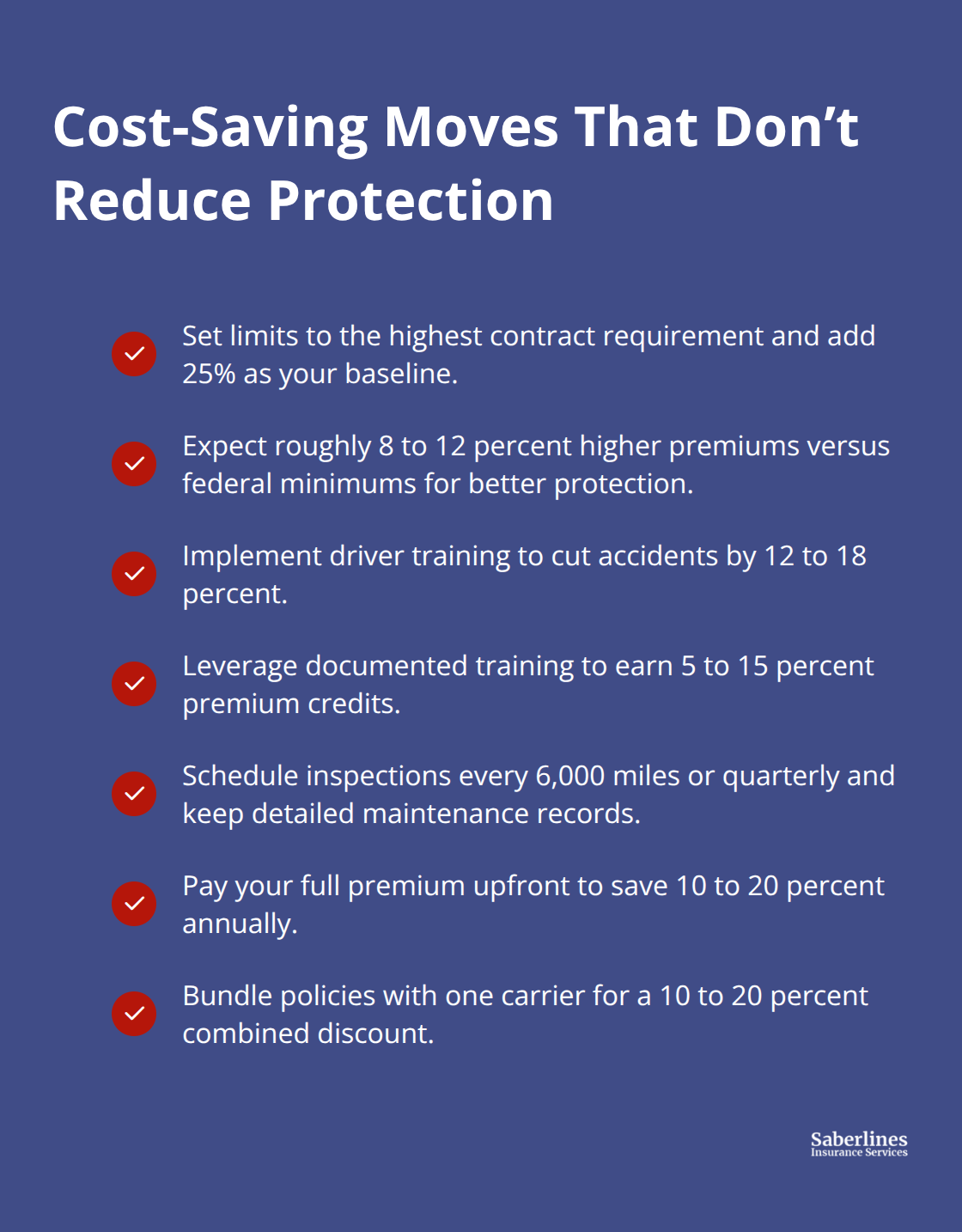
The federal minimum of $1.5 million sounds adequate until you face a catastrophic injury claim that exceeds it by half a million dollars. Your contracts with Medicaid managed care organizations and medical facilities specify minimum limits you must carry, so start there-not with federal minimums. Pull your three largest facility contracts and identify the highest limit requirement across all of them, then add 25 percent as your baseline. If your largest contract requires $2 million in auto liability, carry $2.5 million minimum.
This approach costs roughly 8 to 12 percent more per year than federal minimums but eliminates the catastrophic gap that bankrupts operators. A wheelchair-accessible van operator in an urban area faces different exposure than a rural ambulatory transport provider, yet many operators apply the same limits across their entire fleet.
Align General Liability and Workers Compensation to Your Operations
General liability limits should match or exceed your auto limits because passenger injuries during loading, boarding, or equipment handling happen regularly. Workers compensation limits are set by state law based on your payroll, so you have less flexibility here, but verifying your policy covers your actual employee count prevents coverage denial when you need it most.
Invest in Safety Programs That Carriers Reward
The most direct path to lower premiums without reducing protection is investing in verifiable safety measures that carriers reward with rate discounts. Driver training programs specifically addressing defensive driving and passenger assistance techniques reduce accident frequency by 12 to 18 percent according to data from the Community Transportation Association of America, and insurers recognize this with 5 to 15 percent premium reductions for documented training completion.
Maintain a written safety plan that covers vehicle boarding procedures, emergency protocols, and wheelchair securement, then require annual refresher training for all drivers with dated completion records. Vehicle maintenance matters enormously-carriers charge higher premiums for vehicles with missed inspections or poor maintenance histories because they fail more frequently and cause accidents. Schedule inspections every 6,000 miles or quarterly (whichever comes first) and keep detailed records showing completion dates and any repairs performed.
Reduce Costs Through Payment and Bundling Strategies
Some operators save 10 to 20 percent annually by paying their full premium upfront rather than monthly installments, so calculate whether your cash flow allows this option. Bundling your general liability, workers compensation, and commercial auto policies with a single carrier often yields a 10 to 20 percent combined discount compared to shopping each policy separately (so request bundled quotes before finalizing separate carriers).
Final Thoughts
NEMT provider insurance requires three core protections: commercial auto coverage that meets FMCSA minimums and your facility contracts, general liability that covers passenger injuries during boarding and equipment handling, and workers compensation for your staff. These three policies form the foundation of compliance, but right-sizing your limits matters far more than simply meeting federal thresholds. A $1.5 million auto liability limit leaves you exposed when a serious injury claim reaches $2 million, which happens regularly in medical transport.
Safety investments directly reduce your premiums without sacrificing protection. Driver training programs addressing defensive driving and passenger assistance lower accident frequency by 12 to 18 percent according to the Community Transportation Association of America, and carriers reward this with 5 to 15 percent premium discounts. Documented vehicle maintenance schedules and written safety procedures demonstrate your commitment to operational standards and qualify you for preferred rates with most carriers. Paying your premium annually instead of monthly and bundling policies with a single carrier can save 10 to 20 percent combined.
Connect with our team at Saberlines Insurance Services to discuss your specific operation and receive a customized quote for NEMT provider insurance that reflects your actual exposure. We specialize in non-emergency medical transport insurance and find solutions when standard carriers decline your application. Your next step is starting the conversation about securing comprehensive coverage tailored to your fleet size, service area, and risk tolerance.
The information provided in this blog is for general informational purposes only and does not constitute legal, financial, or insurance advice. Coverage options, terms, and availability may vary. Please consult with a licensed professional for advice specific to your situation.